Get in Touch with Didi Land


Premium boutique indoor playground positioning vs low price competition 2026 is an operational decision. Operators can charge higher ticket prices only when the defined group of families, not the general public, perceives greater experience and pays for it. Also, the higher ticket price must cover the added labor and space cost. The worksheets provide a means to test this.
If convenience is the main driver, lower ticket prices may still be the better business model for a neighborhood play café. The comparison here concerns realized revenue, available play hours, party turnover, and the promises staff can keep on a busy Saturday. In the worked example, all dollar amounts are illustrative operator inputs. They aren’t, and shouldn’t be, based on an expectation or average for the Didi Land equipment.
The indoor playground market shows several alternative models of operation, so choose the type of business before copying a rival’s ticket. A play café with short toddler visits has a different capacity challenge from a party café. The business venture needs a local catchment area and a delivery plan before it needs a premium positioning.
In Indoor playground and family entertainment, operators may share a customer segment, but offer different visit lengths and formats. The comparison should be made based on available space and the promise an operator can keep for the experience.
Should you position an indoor playground as boutique in 2026?
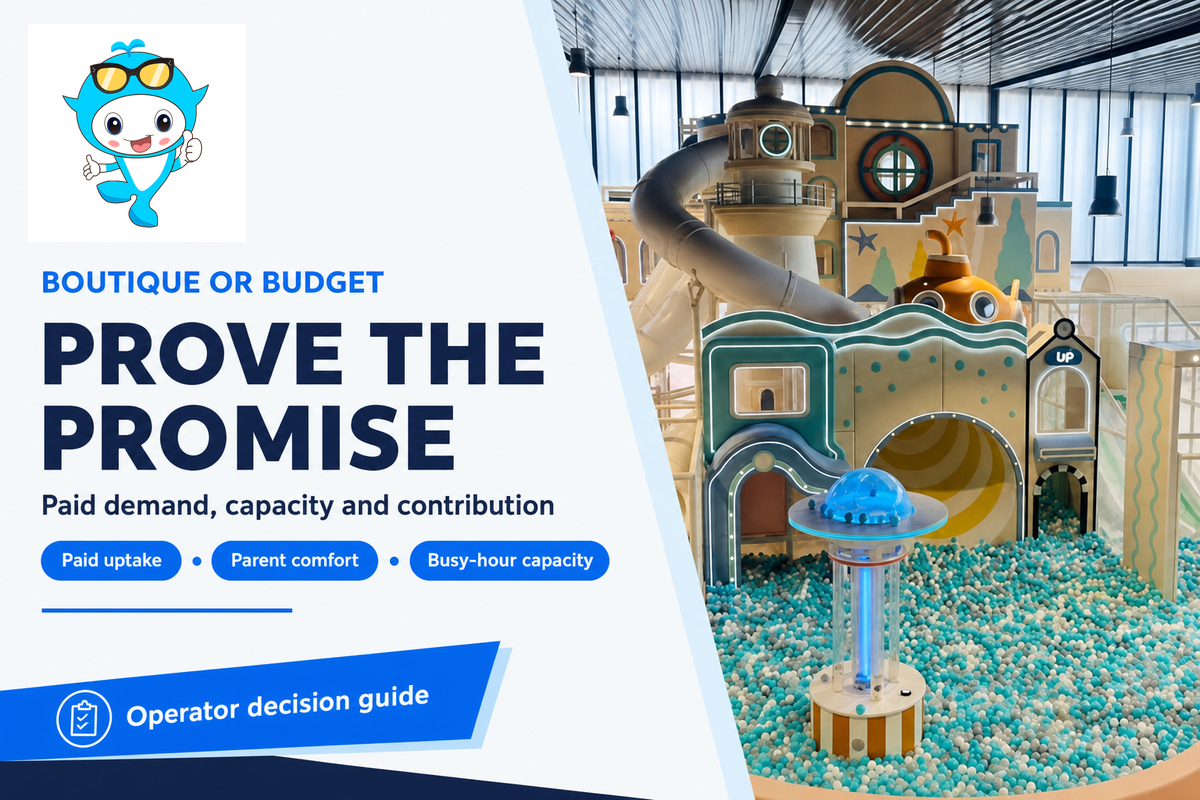
Boutique indoor playground works when a particular local segment pays for visible differences and the extra contribution recovers the cost of delivering it. Start with families, events and peak hour constraints. A premium theme on its own doesn’t create demand, and a cheaper competitor may meet a price-led visit.
Premium Permission Test
Definition: A five part check on customer need, paid uptake, visible proof, operating capacity and contribution after direct cost.
Which families need a calmer toddler visit or easier party handoff? What did they actually book at the price asked? What’s visible before the purchase is made? Can staff deliver at capacity? Does the contribution cover fixed costs? A yes to attractive design answers only the third question.
Before you build an indoor playground around an expensive theme, state what would count as a high-quality experience to the target family. A short queue and a reliable party start can be measured. A claim of uniqueness can’t replace paid demand.
A one-of-a-kind claim is especially weak if a recent review of local alternatives isn’t done. State the specific difference, show it to the potential customers and state whether they bought the offer.
Field scenario: Parents ask about toddler-zone seating more often than they ask about the obstacle course at the small play café. Before purchasing the additional structure, try testing a reservable toddler session with the current equipment. If the parents like it and choose to book the cheaper open session, that would provide evidence of customer preference and give insight to willingness to pay.
ROLLER’s 2025 Pulse Report announcement says its commissioned survey covered 2,000 attraction guests in the U.S., U.K., and Australia; 80% said a unique experience gave exceptional value for money. Those are cross-attraction responses from a vendor-commissioned survey. They don’t measure demand growth for boutique indoor playgrounds in 2026.
Questions raised by operators and available local offers can inform a demand test, but interest alone does not establish what nearby families will pay. A business owner who wants to start an indoor playground should separate the two types of evidence in the indoor playground business plan.
Decision boundary: If a nearby venue delivers the same observable promise at a lower all-in family price, collect paid pilot evidence before paying for a bespoke build. A concept board or a positive interview wouldn’t resolve this objection.
Evidence capsule: The ROLLER survey for 2,000 guests is an opportunity to probe experience value, not a local pricing elasticity. Include at least one actual paid choice with each proposed premium feature. An operator who cannot identify the buyer, the occasion, and the incremental cost should keep the feature out of the opening budget.
Find a local gap before you promise a premium experience
A local gap is an unmet visit need that families can describe and compare with the options available. Look at prices together with time limits, party inclusions, travel time, age mix, and crowding. Then show two prices and ask what customers would choose. Capture the observation date because offers change.
The U.S. Small Business Administration’s market research guide treats demand research and competitor analysis separately. The Census Business Builder can help define the surrounding catchment area. Neither tells you what specific neighborhoods will buy a premium play session. Field work is still needed to analyze travel patterns and alternatives.
A play cafe and a family entertainment center can serve different customer bases within the same catchment. The first may win with parent seating and a short toddler visit; the second may fill a larger event calendar. Benchmarking them by admissions alone masks how families use the indoor play space. For an established business, begin with its own booking records before extrapolating to a new business location.
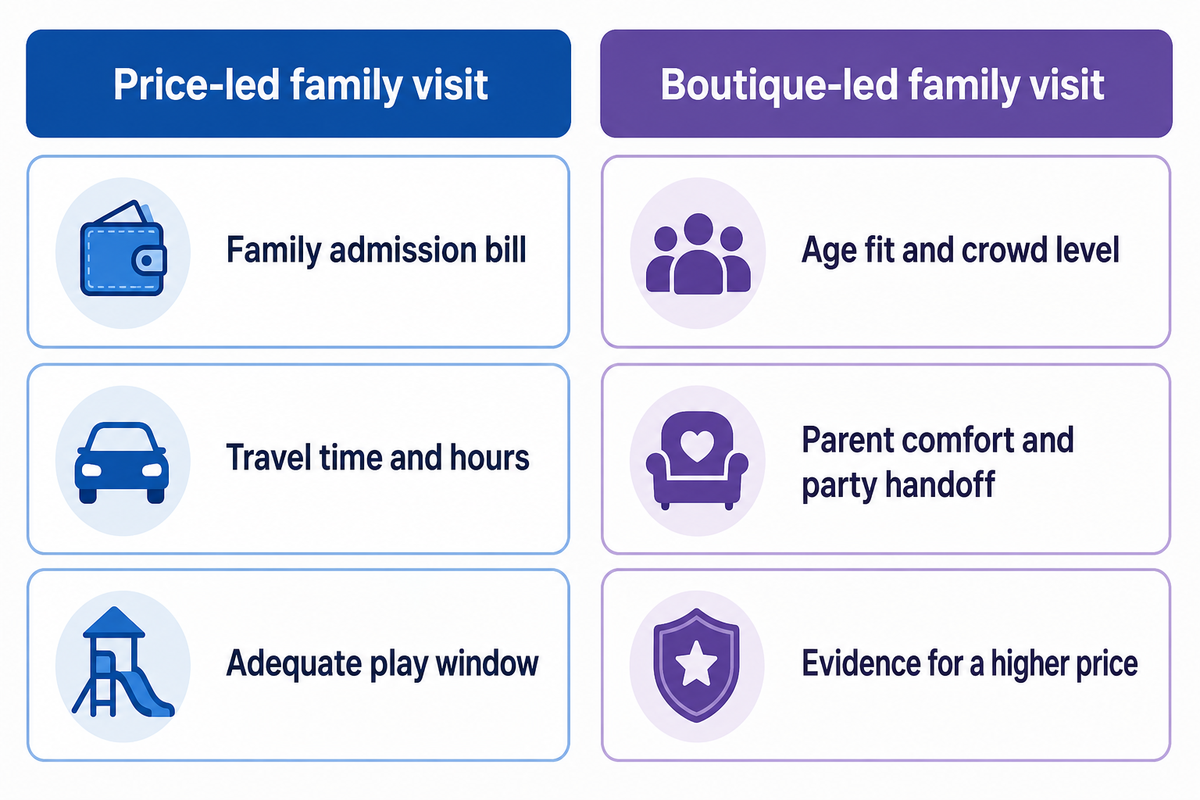
Price-led family visit
- Check the full family admission bill.
- Compare travel time and open hours.
- Check whether the play window is long enough.
Boutique-led family visit
- Check the promised age fit and crowd level.
- Compare parent comfort and party handoff.
- Ask what evidence makes the higher price credible.
Create an alternatives log to assess prices set by competitors. 15 alternatives, 10 customer conversations, and 2 offer concepts can make for valuable ‘fieldwork targets,’ but not a statistically representative sample or an industry benchmark. Record whether each respondent has children in the target age band and whether they have visited the rival recently.
Foot traffic near the site may help discovery, but it says little about conversion. Ask families where they need a place to play, how long they would stay, and what would make them stay longer. Record paid visits and examine repeat bookings to determine if an offer is able to form a loyal customer base. Just because a parent finds your concept appealing during an interview doesn’t mean that parent would choose your concept over a more convenient option during booking.
Ask both to explain what makes the environment for kids comfortable, without suggesting that seating or signs can replace supervision.
Staff design for kids and adults must address two needs simultaneously during the peak hour—kids and parents use the room differently: children need space to play and parents need seating and a clear pickup path. Capture those limitations separately in the operating plan.
One parent in a public discussion of play-place pricing said a bill for $50 for two kids for two hours was too high. That isn’t a typical price ceiling, but it does show the reason an operator should compare the total family bill rather than just price a single child ticket.
Decision Boundary: Local sample sizes are thin or respondents have only seen a rendering, paid sessions should be tested first. A quotation from a supplier should follow a tested visit promise and not replace Demand research.
Evidence capsule: A $50 family bill for a two-hour visit can feel expensive even when the per-child headline looks modest; the forum account cannot tell you how many local families agree. Your alternatives analysis sheet should show the total visit bill for a family of the same size for the same time frame for all the venues considered.
Turn “premium” into a promise-to-proof ledger
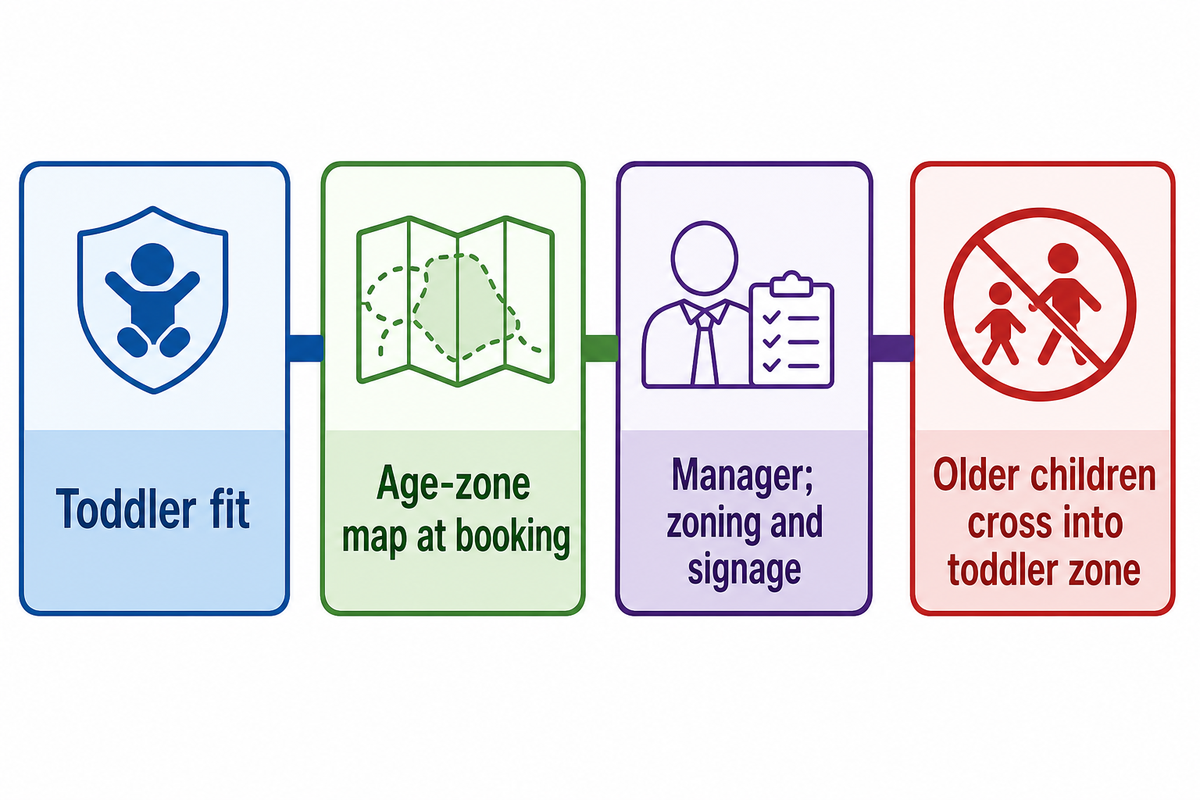
Parents can judge a premium promise only when they can see what a venue will do and staff can repeat it. Each benefit proposed should be converted into a proof point, an owner, a cost and a failure trigger. This will prevent an attractive design becoming an unfunded service obligation on opening day.
Promise-to-Proof Ledger
Definition: A register linking customer promises to evidence visible to customers, an operating owner, the operating cost, and a failure trigger.
The following rows are a sample operating design with some illustrative proof ideas. Fill your own measures and staffing plans before using the ledger in a business plan.
| Promise | Proof parents can see | Operating owner and cost | Failure trigger | Limitations / Not suitable for |
|---|---|---|---|---|
| Toddler fit | Age-zone map at booking | Manager; zoning and signage | Older children cross into toddler zone | Cannot replace active supervision |
| Calmer session | Posted booking limit | Manager; foregone peak admissions | Admissions exceed stated cap | Do not promise quiet if parties share the room |
| Clear check-in | Visible queue and staff handoff | Front desk; rostered minutes | Wait exceeds your published target | Target requires local timing data |
| Clean touch points | Logged reset between uses | Shift lead; supplies and labor | Reset log missing | Product label controls any disinfectant claim |
| Parent sightlines | Seats facing age zone | Designer; floor area | View blocked at full seating | Does not imply parents replace staff |
| Party handoff | Written room and service schedule | Party host; turnover minutes | Room unavailable at booked start | Limit sales to measured room capacity |
| Accessible entry review | Route plan and entry count | Design lead; local review | Plan omits an applicable route | Requires jurisdiction-specific review |
| Equipment uptime | Inspection and fault log | Maintenance lead; spare parts | Open defect remains unresolved | Warranty alone cannot operate the venue |
| Transparent family price | Checkout total before payment | Sales lead; pricing discipline | Mandatory extras appear at checkout | Tax treatment varies by location |
Re: circulation concerns, a playground layout guide can be useful; validating the layout is the operator’s responsibility. Information about design, manufacturing, logistics, installation and after-sales services is offered on Didi Land’s company profile. Treat that as a list of scope questions for a proposal, not an independently verified service-level commitment.
When children’s birthday parties are part of the promise, show the actual host handoff, room availability, and cleanup owner before calling a package premium. Different types of play elements (like soft play zones and ball pit) change sightlines and reset work as well. The goal is to support imagination and age-appropriate play.
Toddlers and preschoolers may need different sightlines from older children, even within the same indoor play areas. List the types of play the plan supports and whether interactive play requires staff intervention. Themed play structures should earn their floor area through the stated customer promise. Local licensing requirements should be consulted for the actual use and destination, not supplier drawings.
“Where three or fewer entry points are provided for soft contained play structures, at least one entry point shall be on an accessible route.”
The quoted federal text concerns accessible routes to soft-contained entries where those requirements apply. It does not certify a product, a layout, or a finished venue. Invite the local approval authority to review the case and entry count.
Decision boundary: Reject a “premium” promise if its owner can’t provide a weekly check or if its peak cost is missing from the model. If a rendering shows the potential for a safety or accessibility outcome, request drawings and product-specific documents prior to approving the purchase.
Evidence capsule: The U.S. Access Board states that for a soft-contained space with four or more entries, at least two must be on an accessible route where the threshold control applies. Count entries on the final document (plan). A sales image without route measurements can’t be used to demonstrate the built layout meets the requirement.
Calculate the premium price floor before comparing tickets
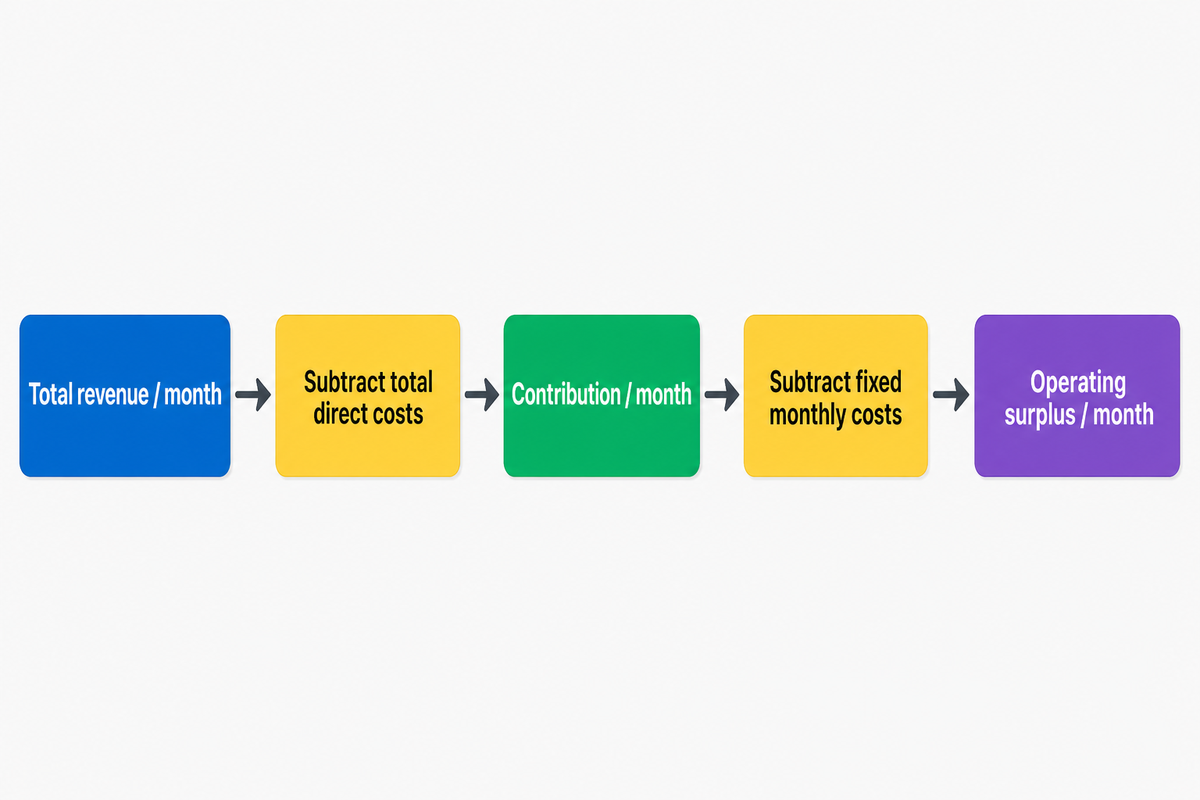
A higher ticket price has little impact unless realized admission and other spending after any lost visits cover direct costs, fixed costs, and the owner’s required return. Model the low-price and boutique concepts under the same monthly assumptions, then cut the boutique attendance and party count. The stress case often alters the decision.
Contribution Margin Floor
Definition: The visits required to cover fixed monthly costs after variable visit and party costs and other contribution are counted.
Use monthly contribution = admission receipts + party receipts + add-on receipts − direct visit costs − direct party costs − add-on cost of goods. Then subtract fixed monthly costs. The example that follows is hypothetical and complete, so an owner can replace each of the inputs with actual values from his or her business. The ticket prices shown are the actual, realized admission prices, and not the posted prices.
| Input or result | Low-price offer | Boutique base | Boutique stress | Limitations / Not suitable for |
|---|---|---|---|---|
| Paid visits / month | 1,000 | 900 | 720 | Forecast; not a local benchmark |
| Realized admission / visit | $16 | $24 | $24 | Use discounts and family mix |
| Party bookings / month | 20 | 20 | 16 | Must fit room capacity |
| Realized receipt / party | $250 | $400 | $400 | Use actual inclusions |
| Add-on receipts / month | $1,000 | $1,800 | $1,440 | Food may need permits |
| Total revenue / month | $22,000 | $31,400 | $25,120 | Before direct costs |
| Direct visit cost / visit | $4 | $6 | $6 | Do not double-count fixed payroll |
| Direct party cost / party | $90 | $160 | $160 | Include host and consumables |
| Add-on cost of goods / month | $400 | $720 | $576 | Illustrative 40% of receipts |
| Total direct costs / month | $6,200 | $9,320 | $7,456 | Costs vary with visits and parties |
| Contribution / month | $15,800 | $22,080 | $17,664 | Before fixed cost |
| Fixed cost / month | $13,500 | $18,000 | $18,000 | Get local rent, payroll and insurance |
| Operating surplus / month | $2,300 | $4,080 | −$336 | Before tax and owner distribution |
The arithmetic is explicit: boutique revenue is 900 × $24 + 20 × $400 + $1,800 = $31,400. Its direct costs are 900 × $6 + 20 × $160 + $720 = $9,320. After $18,000 fixed cost, the model yields $4,080. With 720 visits, 16 parties and proportionate add-on sales, the same concept loses $336. This is a sensitivity test, not evidence that boutique venues earn those results.
Profit margins and return on investment are different questions. This monthly model tests operating contribution; a capital return calculation would also need the opening investment, financing terms, replacement cycle, and a time horizon. Don’t call add-on sales “additional revenue streams” until you factor in food service permits, spoilage and labor. Selling snacks can create additional revenue while still reducing contribution if the service cost is too high.
In the base case, admission and add-ons contribute ($24 − $6) + ($2 − $0.80) = $19.20 per visit. Parties contribute ($400 − $160) × 20 = $4,800. The floor is ($18,000 − $4,800) ÷ $19.20 = 687.5, so at least 688 visits are needed at that mix. With only 16 parties, the floor rises to 738 visits after rounding up. Compare this with measured demand, not a rounded occupancy guess.
Build an offer ladder without giving away peak capacity
A weekday quiet session, standard peak admission, timed party package, and limited membership can address different use occasions. Rank them by contribution per constrained play-hour, not headline price. The Indoor Playground Online’s membership guide warns that low-yield members can crowd busy sessions; it offers a useful operating hypothesis, not a measured industry rule.
The comparison with an indoor playground franchise or a trampoline park needs the same discipline when reviewing franchise opportunities. Their fees, staffing and capacity may follow a different model, so neither offers a quick profit margin for a boutique indoor play business. A franchise charge should only be included in the comparison of a real franchise offer; otherwise, use the independent venue’s actual overhead costs.
Franchise owners comparing a boutique concept should classify royalties and required marketing spend by the agreement: flat charges belong in fixed costs, while percentage-of-sales charges belong in variable costs. For independent concepts, these should be left out. Either way, the contribution test should be based on the actual cost structure of the operator being compared.
A concrete test: if a sold-out Saturday hour would produce $240 in incremental contribution from single visits, an unlimited-access plan that adds only $80 of attributable contribution to that hour displaces $160. Change the peak entitlement or capacity rule before marketing the plan. All figures in this sentence are illustrative.
Birthday party packages compete with single visits for the same constrained play time. Set the booking grid for ordinary weekends and breaks separately, and then compare the party’s direct contribution with the admission it displaces. A package that fills a quiet weekday slot can be worthwhile at a price that would fail during a sold-out Saturday.
How much is a playground to build?
Separate equipment cost from the fit-out of the premises, freight, local approvals, financing, pre-opening payroll, and the operating runway. A seemingly low initial equipment cost may miss a costly building conversion. Request a detailed equipment cost scope and use the site’s equipment cost guide for the various capital cost categories; obtain local quotes for each item, prior to entering your model.
The decision boundary is whether the boutique model works with a full weekend of rooms, or stable visits, at a higher price, for example. Keep the base model in place until paid uptake validates that assumption. No equipment supplier can guarantee the local return of the operator.
Evidence capsule: The illustrative boutique model changes from a $4,080 monthly surplus to a $336 monthly loss when visits fall by 20% and parties from 20 to 16. That shift is an arithmetic warning, not a predicted outcome. Keep rent, payroll, insurance, maintenance reserve, and debt service visible on separate input lines.
Map the hidden peak-hour bottleneck with a Party-and-Reset Capacity Budget
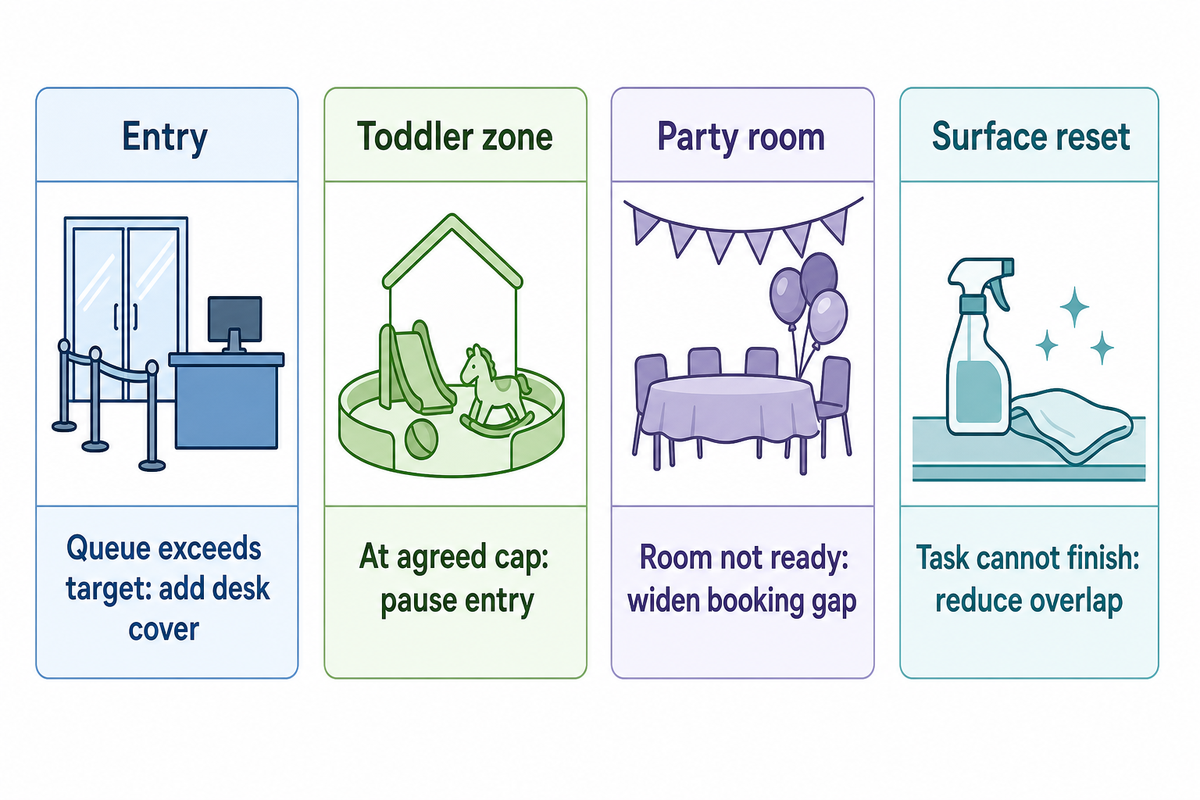
A boutique promise fails when arrivals, parties, and cleanings collide in the busiest hour. Measure each bottleneck in its own unit: guests per check-in hour, children per age zone, minutes of party-room availability, staff minutes, and seats with line of sight. Then set limits on bookings to the lowest workable capacity.
Party-and-Reset Capacity Budget
Definition: A peak-hour map of each bottleneck’s capacity, load, reset time and response before accepting a booking.
This must be filled out. A number in the “trigger” column should come from a timed pilot or an applicable product label, never from a supplier rendering.
| Bottleneck type | Capacity unit to measure | Peak observation | Trigger and owner response | Limitations / Not suitable for |
|---|---|---|---|---|
| Entry | Families checked in / 15 minutes | Arrival timestamps | Queue exceeds posted target: add desk cover | Do not infer from daily visits |
| Toddler zone | Children at one time | Timed headcounts | At agreed cap: pause entry | Layout and staffing set cap |
| Older-child zone | Children at one time | Timed headcounts | Flow conflict: stagger entry | Age mix changes load |
| Party room | Bookable room minutes | Start/end and reset logs | Room not ready: widen booking gap | Room minutes differ from party duration |
| Party host | Host minutes / hour | Roster against task log | Overlapping handoffs: add host | Cannot assume front desk is free |
| Surface reset | Staff wiping minutes | Actual task timing | Task cannot finish: reduce overlap | Separate from contact time |
| Disinfectant contact | Surface unavailable minutes | Chosen label and wet time | Label time unmet: revise schedule | Only when that product is used as labeled |
| Parent seating | Usable seats with sightlines | Occupied seats at peak | Overflow: limit reservations | Seats cannot substitute for supervision |
| Maintenance access | Safe service windows / week | Closure and fault log | Window missed: block affected area | Requires product-specific procedure |
According to the U.S. Environmental Protection Agency, to ensure effectiveness of an EPA-registered disinfectant, it must be implemented in accordance with label directions including keeping a surface wet for the contact time. A staff member’s wiping minutes and the surface’s unavailable minutes are different entries. There’s no standard 10-minute reset rule. Method of cleaning and product label determine the work.
Party overlap scenario: A room is booked for a 120-minute event. If the next family arrives while the staff cleans the room from the previous event, the booking grid must reserve the 15 minutes of staff time to clean the room. If the disinfectant being used requires a contact time of a wet surface, the unavailable time would be based on the sequence of the task and the time required. The 120 and 15 minutes in this example are scheduling examples.
A maintenance guide may provide a framework for setting inspection routines, but in order to implement the procedures, the venue would need an actual roster and a product specific procedure.
Decision Boundary: If staff are assigned as one staff member to perform check-in, party turnover and a cleaning task simultaneously during the measured peak, adjust staffing or sell fewer overlapping slots. It isn’t possible to overcome an impossible schedule through a premium price.
Evidence Capsule: A 120-minute party, followed by 15 minutes of staff cleaning, takes more than a two-hour booking slot. Any wet contact time requires its own entry in the reset plan. The EPA source defines how to follow a chosen disinfectant label; it does not prescribe a universal room-turnover duration.
Compare equipment proposals on usable scope, not the render
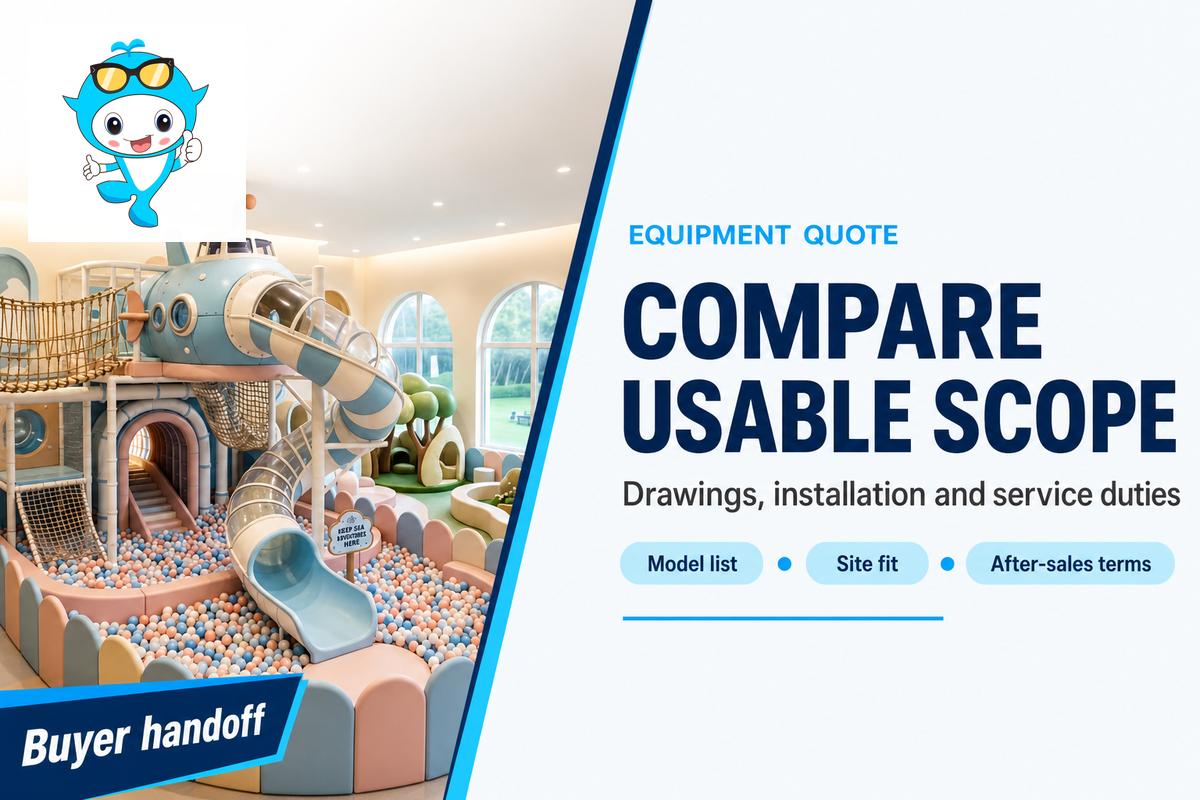
Compare potential suppliers on the same measured layout, age plan, entry routes, bill of materials, installation boundary, and service obligations. A render can show the intended appearance, but may omit freight, local approvals, spare parts, and the access staff would require to perform regular maintenance. Request documentation tied to the exact model and revision.
Supplier Scope Scorecard
Definition: A complete comparison of bid(s) that ties all elements (product, drawing, documentation, costs, services, and exceptions) to the venue plan being bid.
Send each bidder the same floor plan, clear height, target ages, and expected opening location. Require the return package to identify model or SKU, drawing revision, material schedule, freight terms, installer, acceptance tests, spare-parts lead times, warranty exclusions, and the party-room or sightline constraints you intend to sell. Compare the total delivered scope, not only purchase price.
Soft-contained play equipment are covered by ASTM F1918-21. The public scope of ASTM F1487-25 excludes soft-contained play equipment. A supplier stating “meets playground standards” has not disclosed which standard is applicable to the product in question, and/or not provided a product specific report. A report does not mean whole site approval.
The U.S. Access Board requires at least one of three or fewer soft-contained entry points to be on an accessible route for a U.S. destination where the cited accessibility provisions apply. An accessible route is required for at least two of the soft-contained entries if there are four or more. The local approval team must verify the complete site obligations.
Where can I find commercial playground equipment for sale?
Commercial equipment is available from manufacturers, integrators and distributors. Select the channel that will provide product specific drawings and documentation, and define in writing, installation and after sales responsibilities. Didi Land’s company profile describes its proposed service chain; ask it to mark exactly which steps are included in the quotation.
For a proposed indoor playground equipment package, distinguish the play structures themselves from themed surfaces, seating and service access. The indoor playground equipment range shows the product in context. A destination-specific bill of materials will determine the actual scope. A theme can attract new customers only if the visit it advertises can be delivered.
What does ongoing support mean to each bidder? To some, it may mean lead times for spare parts, remote fault triage, and who pays for a site visit. These factors will influence how rapidly an operator can re-open a closed play zone. Make the bidder put the response obligation in the quote rather than assuming it.
Decision boundary: Hold a cheaper bid if it lacks a measured drawing, model-specific documents, or a defined installation scope. Attractive designs can’t price a buyer’s own fit-out and downtime exposure.
Evidence capsule: ASTM F1918-21 and F1487-25 concern different pieces of equipment, therefore one generic badge makes for poor comparison. Report the model and report number for each quote. Should a U.S. soft-contained design move from three entries to four, the cited accessible-route entry threshold would change from 1 to 2.
Run a 30/60/90-day positioning test before expanding
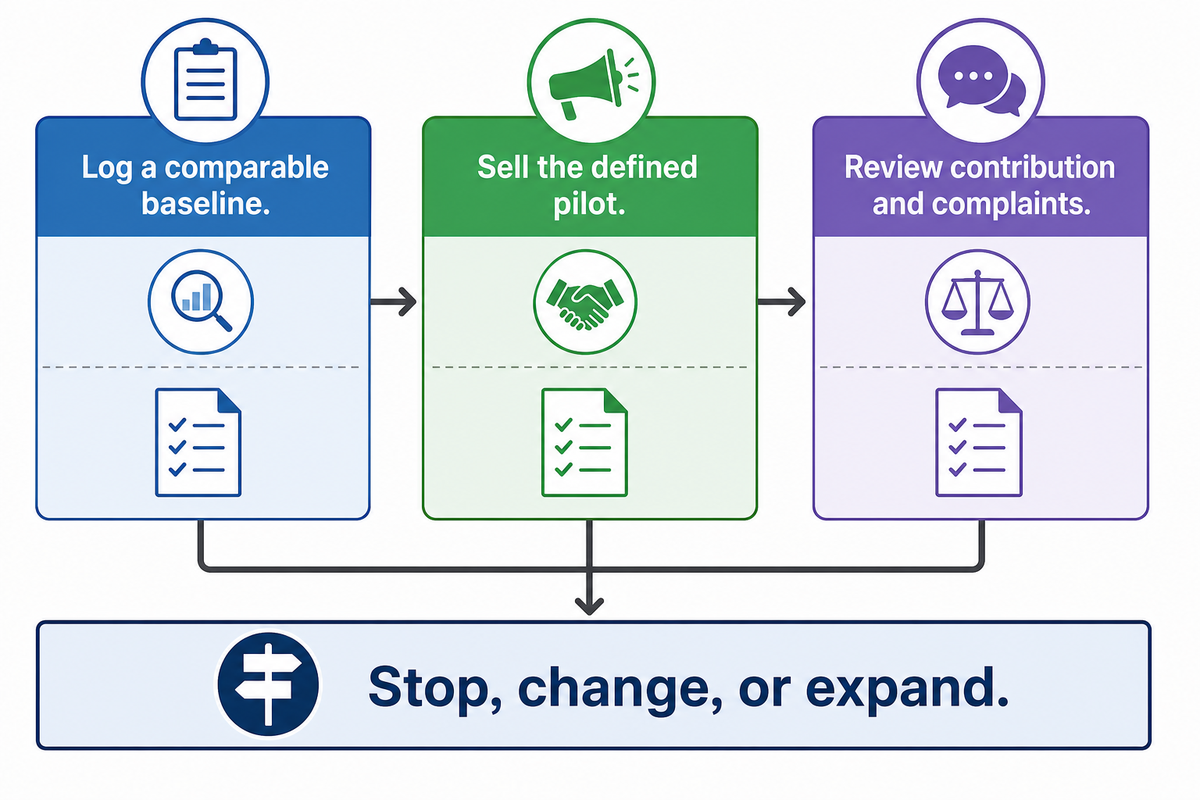
Use days 30, 60, and 90 as a basis for a review and not as evidence that a concept works. Keep track of the actual price families pay, the contribution per available play hour, repeat visits, complaints, party room use, and staff minutes. Compare matched time slots and record outside changes before attributing any lift to positioning.
Begin with a dated baseline: weekday and weekend attendance, family size, the offer shown, paid conversions, and contribution. Keep the old offer shown if feasible during the pilot, and compare weekdays, weekends, holidays and promotions. The number of observations in each group should be recorded. The NIST sample-size guidance shows the sample required to detect a change is dependent on the baseline rate, expected effect and statistical criteria; no universal venue count follows from the 30/60/90 calendar.
- Log a comparable baseline. Separate weekdays, weekends, party slots, and promotions before changing the offer.
- Sell the defined pilot. Record paid uptake, actual staffing and reset work, and failures of the stated promise.
- Review contribution and complaints. At each checkpoint, compare matched slots and sample counts; stop, change, or expand only with an explicit reason.
Small-venue pilot: A play café sells a reservable quiet toddler hour on selected weekdays. It records the old hour’s contribution, the actual price paid for the new hour, attendance, parental complaints and additional staff minutes. A single, sold out, holiday hour can be considered paid uptake, but it can’t be proven that the toddler hour position would outperform other ordinary weekdays.
The NIST guidance on randomized block designs supports controlling known sources of variation when comparing treatments. A venue may not be able to randomize perfectly, but comparing similar day types, seasons, and promotion statuses helps improve the decision. Record uncertainty and operational exceptions in the review sheet.
Decision boundary: If a 30-day lift comes entirely from one promotion or a new school-holiday period, extend the matched comparison before committing to permanent fit-out. A paid booking just indicates that one buyer accepted the offer. It doesn’t show that an increase in profit was caused by the offer.
Evidence Capsule: The 30-, 60-, and 90-day dates are management checkpoints. NIST’s sample-size method needs a baseline rate and a target effect before a count can be judged sufficient. Place cohort counts and the number of comparable play-hours beside every margin result so a small pilot does not look more certain than it is.
Buyer decision checklist and Didi Land handoff
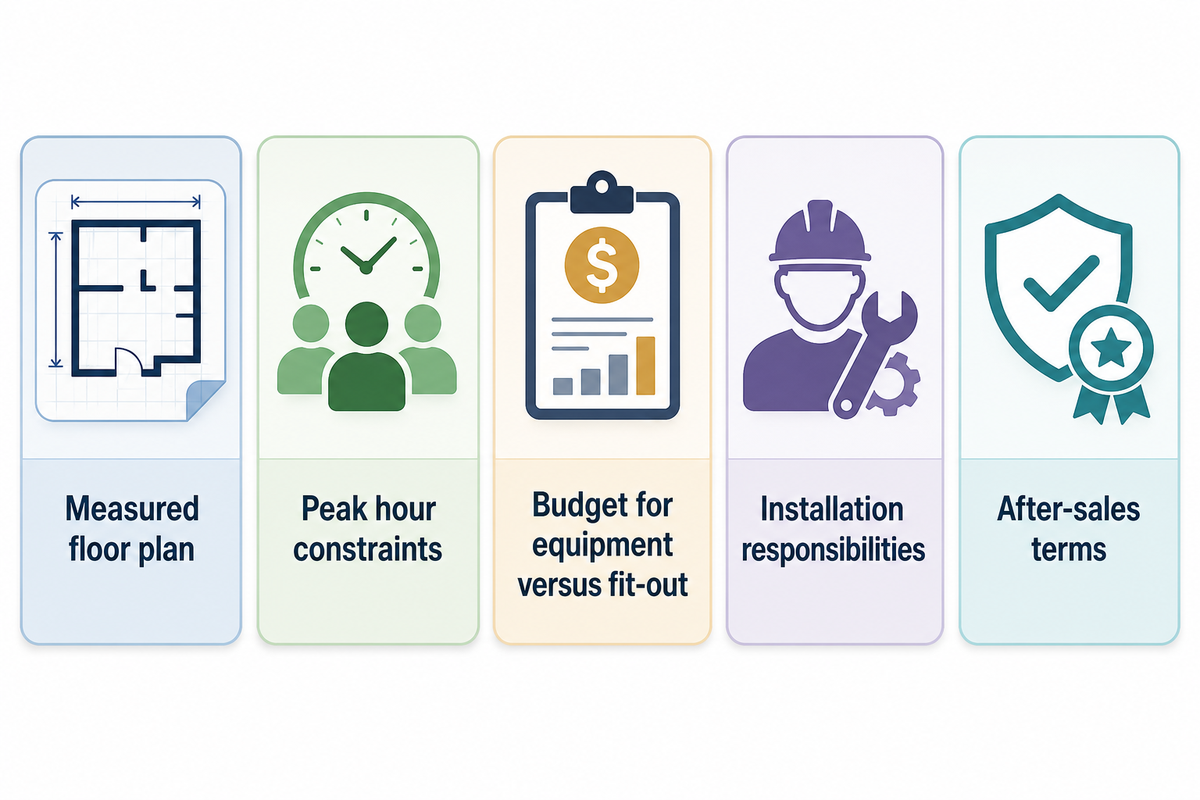
A useful quote request describes the venue and its operating promise, and states the operating constraints before asking for a design. Provide a measured floor plan, clear heights, age range, destination, value proposition, peak hour constraints, and a budget. Ask each supplier to return inclusions, exclusions, drawings, applicable product documents, installation responsibilities, and after-sales terms.
Copy the following into a request for proposal: site address and dimensions; clear height and access route; target ages and expected peak arrivals; quiet-session or party promise; parent seating and supervision plan; preferred theme; budget for equipment versus fit-out; expected opening window; local approval owner; cleaning and maintenance plan; and who will receive spare parts.
Key takeaway
A boutique playground earns permission to charge more only when paid local demand, peak-hour capacity, and contribution cover the higher service cost.
Regarding the financial side, review your assumptions with the site’s playground profitability discussion and verify your numbers with your records. The conversation with the supplier should use your confirmed promise and measured plan rather than requesting a guaranteed return.
Decision Boundary: If the site plan or budget split are missing, request a scoping discussion rather than treating unlike quotes as comparable. A supplier can’t determine local rent, wages, insurance or customer’s willingness to pay.
Ready to scope a design based on your measured layout and operating plan? Discuss a Didi Land proposal. Bring the floor plan, age mix, and the peak hour bottleneck you need the equipment to solve.
Frequently asked questions
Is an indoor playground business profitable?
An indoor playground can be profitable when admission, party and add-on receipts leave enough contribution after their direct costs to cover rent, payroll, insurance, upkeep and the owner’s required return. A busy play area alone doesn’t show that result. Build a monthly model using real visit mix and available play hours, and then test lower attendance and fewer parties to see what type of a business model would be a better fit.
Does a boutique indoor playground always need a higher admission price?
A boutique promise can include a less crowded weekday, better age zoning, smoother party hand-offs, or better parent seating. Charge more only if families can see and purchase the difference. Look at realized receipts and contribution over a constrained time slot and determine if a premium label is justified.
How do I compare a low-price equipment bid with a custom proposal?
Put both bids on the same measured floor plan. Include everything. List every included model, material, drawing, freight leg, installation task, product-specific test document, spare part and service duty. Say which standard covers the product. Add the buyer’s own fit-out, maintenance and downtime assumptions before deciding which proposal costs less to operate. Then determine which bid is lower.
Which metric reveals whether a premium concept is working?
Track contribution per available play hour and realized price against paid conversion and repeat visits. Together they show whether a higher receipt offsets any lost attendance and whether staff can keep the promised experience at busy times. Review party room availability and guest complaints before adding more capacity.
Can a small play café test a boutique concept without rebuilding the whole space?
Yes. Use the existing space to pilot one stronger party handoff or parent-service improvement. Alternatively, design and test reservable quiet sessions with a narrower age group. Establish a baseline on comparable weekdays and weekends. Sell the pilot while keeping the old offer visible where possible; monitor staffing, occupancy, bookings, complaints, and actual contribution. At the 30-, 60-, and 90-day reviews, compare matched time slots and record a stop, change, or expand decision alongside the observation count and any promotions or holidays. A successful event proves that the buyer accepted that offer; repeatable contribution and dependable delivery justify a larger build. If the pilot adds staff hours without enough paid demand, change the service promise before buying more equipment.
References and sources
- U.S. Small Business Administration: market research and competitive analysis; U.S. Census Bureau: Business Builder.
- U.S. Access Board: §206.2.17.2; ASTM F1918-21; ASTM F1487-25.
- U.S. Environmental Protection Agency: disinfectant label guidance; NIST: sample-size planning; NIST: blocked experimental design.
- ROLLER: 2025 Pulse Report announcement (vendor-commissioned, U.S./U.K./Australia survey); Indoor Playground Online: membership guide (publisher advice); Didi Land: company service description (first party).