
Get in Touch with Didi Land

Indoor Playground for Kindergartens
Indoor Playground for Kindergartens — Custom ASTM F1487 / CPSC-Compliant Equipment for Ages 3-5
Before a child comes through the door, a kindergarten indoor playground must pass three gates—state daycare licensing, your safety officer, and your fiscal officer if Head Start/Title I funding is involved. Generic FEC equipment (2-12) is out of compliance on fall zones, platform heights, and developmental suitability for ages 3-5. Each modular system is designed to those three gates from the ground up, not after the fact.
ASTM F1487-21
CPSC HANDBOOK
IPEMA
ADA §1191.5
EN 1176-1:2017
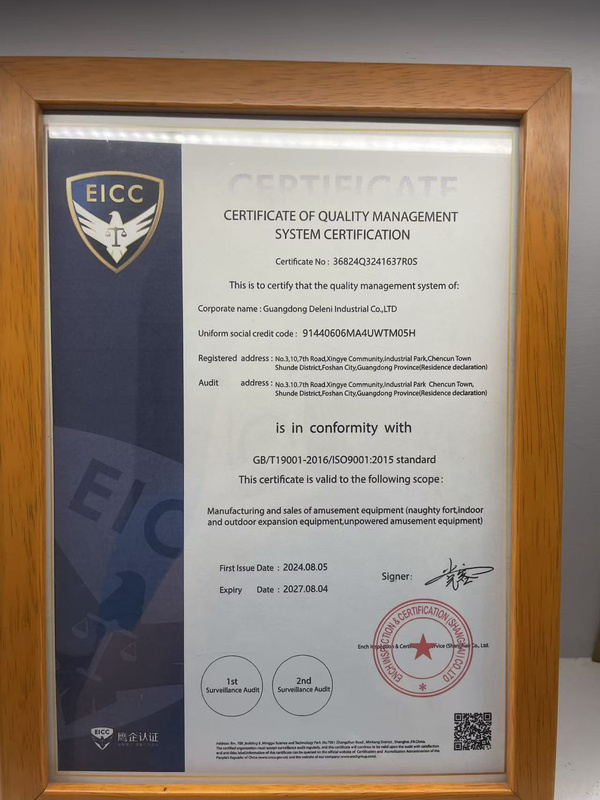
ISO 9001
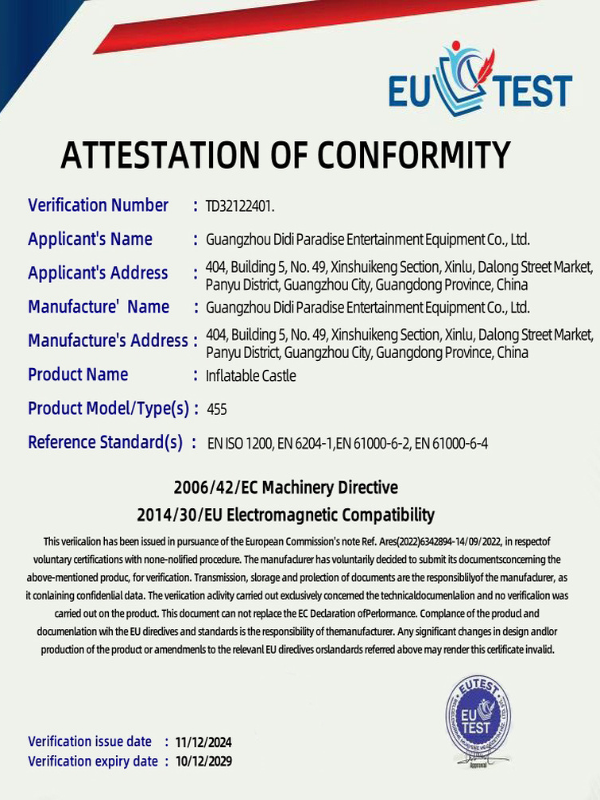
CE
3 Modular Tiers
Compact, Standard, Premium — sized for 30-300+ m² rooms and 10-100+ children
Ages 3-5 Only
Platforms ≤48″, swings ≤60″, steps ≤7″ — every dimension matched to ASTM F1487 preschool table
7 Standards, 4 Regions
US ASTM/CPSC/IPEMA/ADA + EU EN 1176 + AU AS 4685 + CA CSA Z614 — dual cert for export
Funding-Ready Quotes
Quote pack matches Head Start 45 CFR 1303, Title I-A, ARP-ESSER, USDA CACFP, state preK requirements
40+ Countries · 12 yrs
Delivered to kindergartens in France, Mexico, Sri Lanka, India, Poland, Malaysia, South Africa
24-72h Quote
Engineered drawing pack with footprint plan + fall-zone overlay + line-item budget
Standard Indoor Playgrounds Aren’t Built for Kindergartens — Here’s What’s Different
A kindergarten indoor playground sits between two categories that almost work, but not quite. Family entertainment center systems are designed for ages 2-12, with platforms that exceed the 48-inch ASTM ceiling for ages 3-5. Home Montessori climbers fit ages 3-5 anatomically but skip the impact attenuation and entrapment-test paperwork that licensing requires.
Failure 1 — Age Mismatch
FEC platforms at 60-72 inches and FEC swing seats at 84 inches put ages 3 to 5 in violation of ASTM F1487-21 §6.5 fall-zone geometry — even when nominally rated “ages 2-12.” Fall height limits and weight capacity specs are not designed for this age range.
Failure 2 — Licensing Paperwork Gap
Most catalog systems are shipped with a single regional certificate. State licensing authorities are starting to require IPEMA-validated test reports plus ADA route paperwork, both requested during the quote stage.
Failure 3 — Funding Compliance Mismatch
Use an itemized quotation that clearly identifies the project scope and cost lines.
Didi creates from these three value-blockageds in reverse. Age 3-5 specifications determine every dimension on the engineering drawing; certificate packages are scaled to every licensing review list; line-item quotes are organized so a Head Start fiscal officer can reconcile them against 45 CFR 1303.42 in one pass.
Kindergarten Indoor Playground Equipment — Modular Components for Ages 3-5
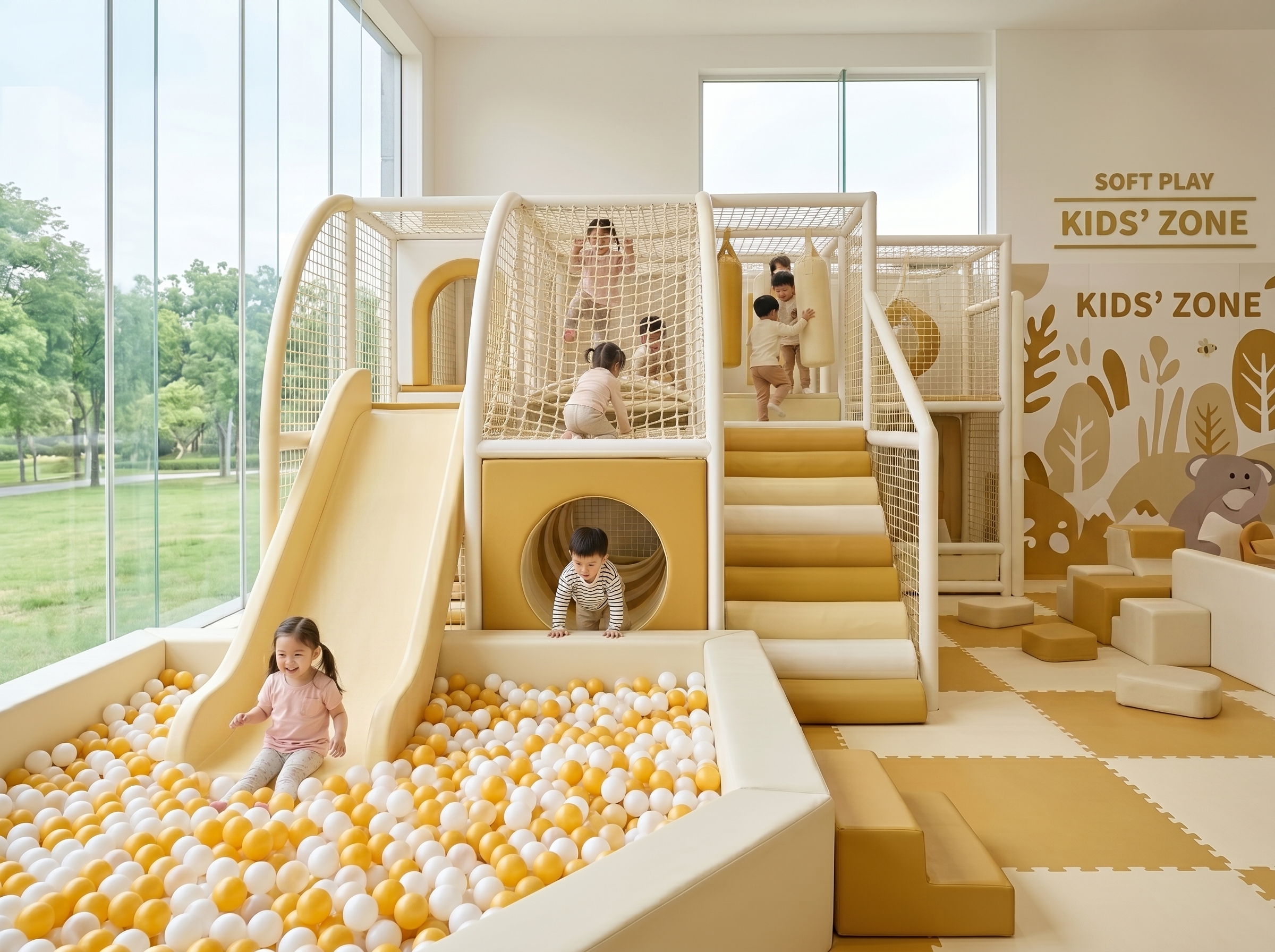
Three Didi modular tiers fit every kindergarten footprint from a 30-square-meter classroom nook to a 300-square-meter motor-developmentatorium. Each tier is a multiple configuration system, not a fixed catalog SKU – components combine to fit your floor plan, ceiling height, and supervision model. Every structure packs the same ages-3-to-5 size package.

Compact Module
30-60 m² · 10-20 children
System Components
- Soft contained play structure — single level, ≤48″ platform
- Foam climbers – 3-step, vinyl-coated foam over polyethylene (PE) core with padded barriers
- Ball pit – 1.8-2.2 m diameter, foam pads, anti-microbial liner
- Crawl tunnel — fabric-on-frame, transparent inspection panels
- Single soft slide – gradient 30, 1.2 m vertical drop
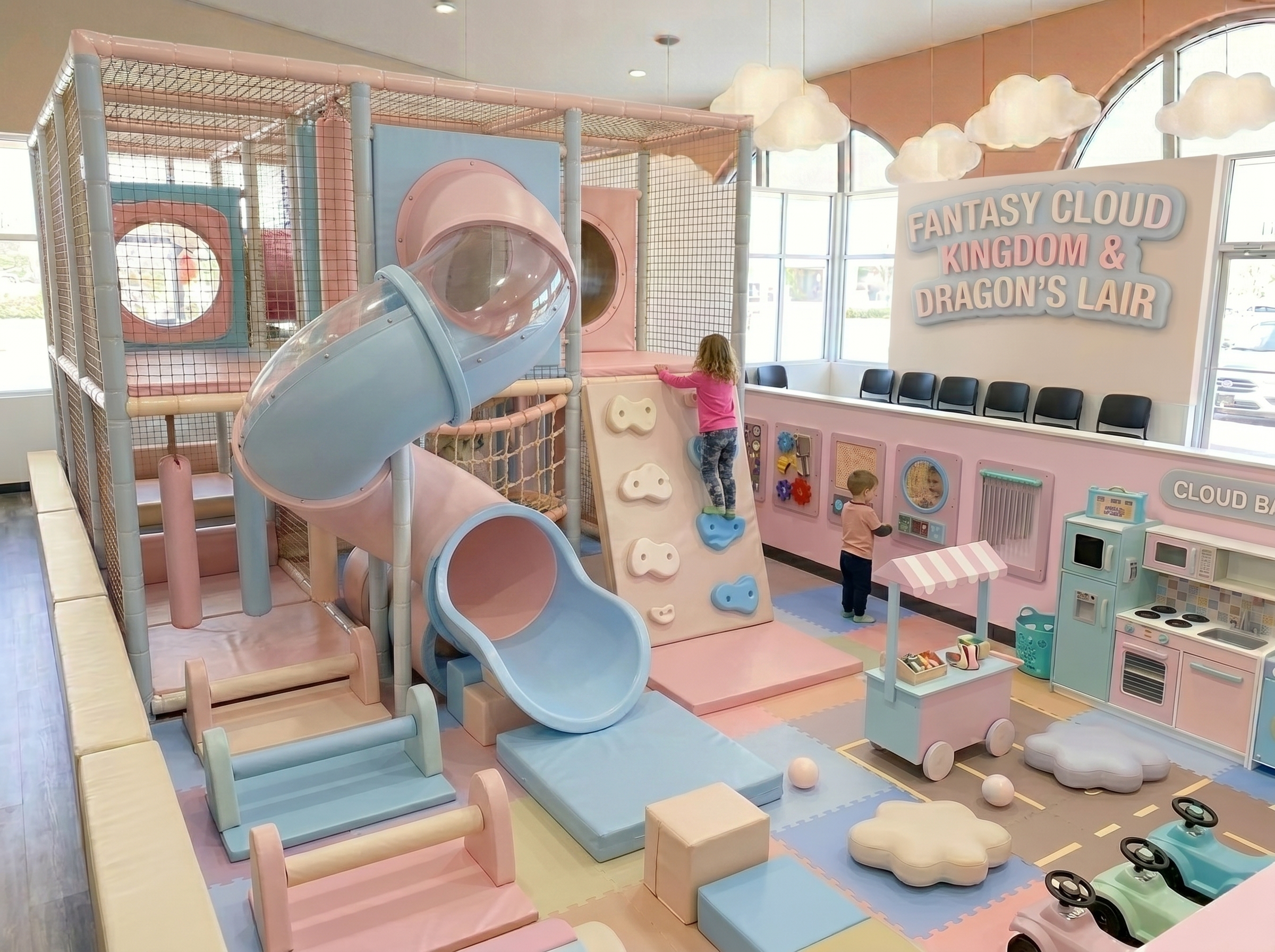
Standard Module
60-150 m² · 20-50 children
System Components
- Two-level soft play – interconnected platforms, 48″ ceiling, galvanized steel frame
- Multi-route obstacle course — 4-6 stations, parallel-play layout
- Climbing structure — graduated handholds for fine-motor development
- Themed dramatic-play zone – kitchen, store, or vehicle bay overlay
- Sensory wall panel — tactile, visual, and auditory inserts
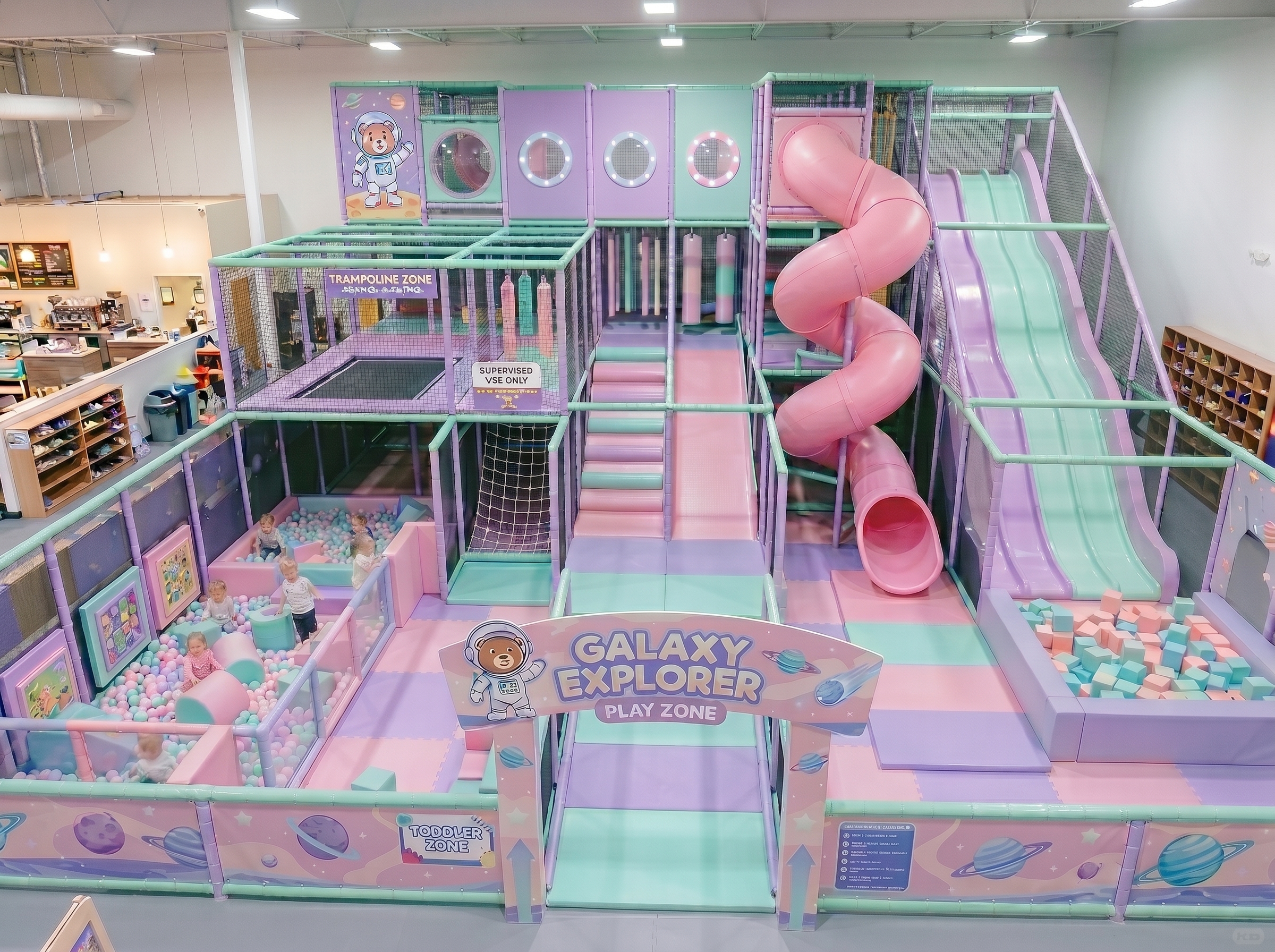
Premium Module
150+ m² · 50-100+ children
System Components
- Full multi-level soft play system – three or more zones
- Trampoline insert — ASTM F381-16 certified, supervised use only
- Spiral and wave slides — ≤30° gradient, dual-lane configurations
- Inclusive route — wheelchair-accessible entry, transfer platform
- Themed playground envelope – colors, mascot, signage to your spec
The right dimensions arise from your largest supervised group (not room size). A 200 m² room with 80 children in a pair of staggered groups fits Standard tier supervision sightlines; that same 200 m² room with a single 80-child group needs Premium-level supervision sightlines and traffic-flow zoning. Didi’s 24-72 hour drawing pack lays out both scenarios against your operations schedule before you commit.
Spec Comparison — Sizing & Capacity Guide for Ages 3-5
Indoor playground equipment for preschoolers has a dimensional envelope, age range, and appropriate fall height limits, set by ASTM F1487-21’s preschool table. Every Didi component fits within this envelope by design — fall height, platform height, weight capacity, step rise. Every row in this table is the one line a daycare licensing inspector asks for first.
| Spec | ASTM F1487 Limit (Ages 2-5) | Didi Compact | Didi Standard | Didi Premium |
|---|---|---|---|---|
| Max platform height | ≤ 48 in (1,219 mm) | 42 in | 48 in | 48 in (multi-level) |
| Max step rise | ≤ 7 in (178 mm) | 5.5 in | 6.5 in | 7 in |
| Swing seat height | ≤ 60 in (1,524 mm) | N/A | 54 in | 58 in |
| Min entry platform | < 32 in | 22 in | 26 in | 28 in |
| Fall surface (HIC) | ≤ 1,000 | 820 | 760 | 680 |
| Fall surface (g-max) | ≤ 200 | 165 | 150 | 135 |
| Footprint range | — | 30-60 m² | 60-150 m² | 150-400 m² |
| Capacity (children, ages 3-5) | — | 10-20 | 20-50 | 50-100+ |
| Static load (per platform) | — | 350 kg | 500 kg | 700 kg |
| Frame material | — | Galvanized steel frame + polyethylene foam | Galvanized steel frame + polyethylene foam | Galvanized steel frame + polyethylene foam + custom theme overlay |
| Surfacing options | — | EWF surfacing or PIP rubber | EWF surfacing or PIP rubber | PIP rubber (recommended) |
Engineering Note — Why HIC and g-max matter more than thickness
Buyers commonly size surfacing by inches of foam. CPSC’s Public Playground Safety Handbook measures the actual outcome: head injury criterion (HIC) and peak deceleration (g-max). A 4-inch dense foam pad may test worse than a 2.5-inch engineered system if compression set has degraded.
Didi reports both values from a third-party drop-test on a 1,000-mm fall—not nominal foam thickness—so your inspector reads the criteria a regulation actually prescribes.
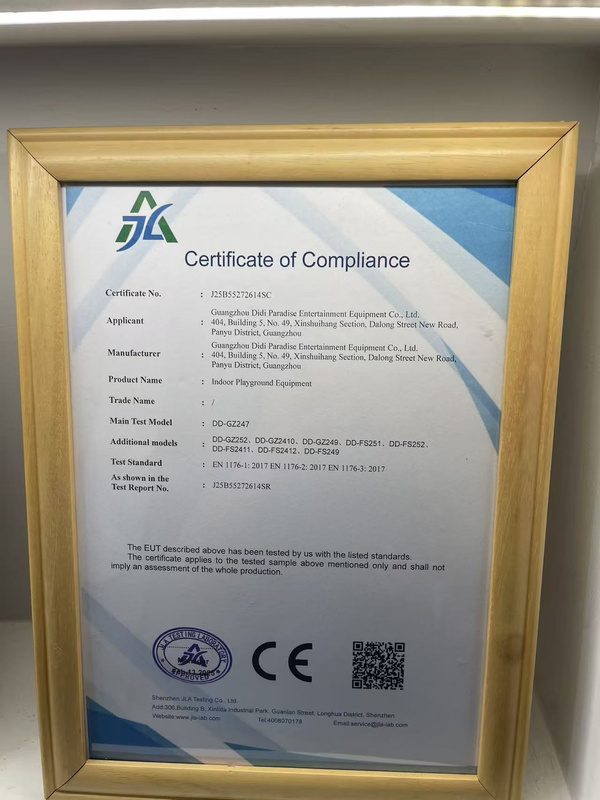
Safety Standards & Compliance — ASTM F1487, CPSC, IPEMA, ADA, EN 1176
Each jurisdiction has its own playground equipment standard, and each kindergarten administrator needs the right one in the right place on the quote. The Standards-by-Region matrix below matches each Didi assembly to the certification that the licensing reviewer in that jurisdiction actually opens. International kindergarten projects sometimes require two regional certifications stacked – the matrix shows which combinations Didi supplies in a single shipment.
Region
Standard / Code
Scope (Ages 3-5)
Didi Status
USA
ASTM F1487-21 §6.5 + §7
Performance + entrapment, public playground equipment
Tested + reportable
USA
CPSC Handbook (Pub. 325)
Federal guidance, fall surface HIC/g-max
Conformant
USA
IPEMA
Third-party validation of ASTM compliance
Available on request
USA
ADA §1191.5
Accessible route + transfer platform requirements
Premium tier conformant
EU
EN 1176-1:2017
Structural strength, entrapment, materials
Certified — PDF available
AU/NZ
AS 4685.1
Australian/NZ playground equipment safety
Certified — PDF available
Canada
CSA Z614
Children’s play equipment, surfacing
Conformant
Quality system
ISO 9001
Manufacturing quality management
Certified — PDF available
EU mark
CE
European Conformity for toys/play equipment
Marked — PDF available
Educational Play — Developmental Milestones for Ages 3-5
A daycare playground equipment investment in an early childhood center pays for itself in outcomes a family can see by enrollment month three. The component-to-milestone map below connects each Didi component to the particular gross-motor, fine-motor, cooperative, sensory, and dramatic-play milestones that ages 3 to 5 work through during early childhood education. It also connects to Head Start Performance Standards 45 CFR 1303 facility expectations on physical-activity pathways for preschool indoor playgrounds and outdoor early learning environments.
Component
Primary Milestone
Secondary Skill
Typical Mastery Window
Foam climber (3-step)
Gross motor — bilateral coordination
Risk assessment in supervised setting
3.0 – 3.6 yrs
Crawl tunnel
Spatial reasoning
Object permanence in shared play
3.0 – 4.0 yrs
Soft slide (≤30° gradient)
Vestibular regulation
Turn-taking
3.2 – 4.5 yrs
Climbing structure (graduated)
Fine motor — grip strength
Sequential planning
3.6 – 5.0 yrs
Ball pit
Sensory integration
Cooperative play (parallel → joint)
3.0 – 5.0 yrs
Sensory wall panel
Tactile/auditory discrimination
Cause-and-effect reasoning
3.0 – 4.5 yrs
Dramatic-play overlay
Imaginative + role play
Language development
3.5 – 5.0 yrs
Kindergarten & Preschool Projects — 40+ Countries
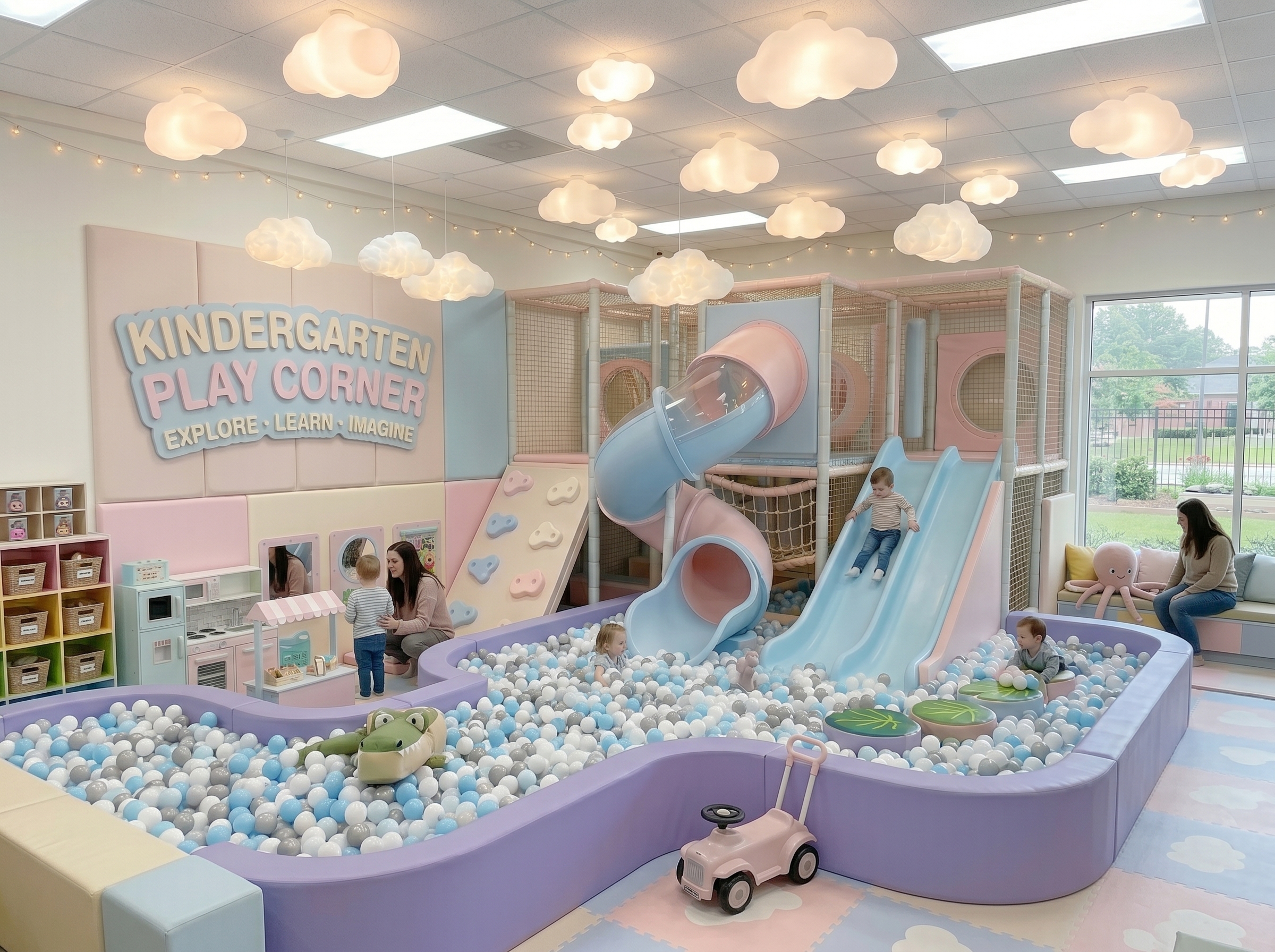
Didi has shipped indoor playground equipment to kindergartens in 40+ countries since 2014. Three projects below illustrate the modular tier mapping — Compact, Standard, Premium — applied across very different room geometries, supervision ratios, and certification stacks. The case files (room dimensions, photos, line-item quotes) are available under NDA for committee review.
Bilingual Kindergarten — Mexico City
2023 | STANDARD
110 m² | 32 children
Two-level soft play with bilingual signage overlay, EN 1176 + CSA Z614 dual cert for cross-border parent expectations, ADA-conformant transfer platform.
Outcome: enrollment increase of 24% in two semesters following installation, per the school’s reported reapplication data.

Early Years Centre — Lyon, France
2024 | COMPACT
48 m² | 16 children
Single-level soft play within a converted classroom corner, CE-marked and certified to EN 1176-1:2017, themed dramatic-play envelope matching the centre’s animal-discovery curriculum.
Outcome: passed French Ministry of Education inspection on first review with zero remediation items.
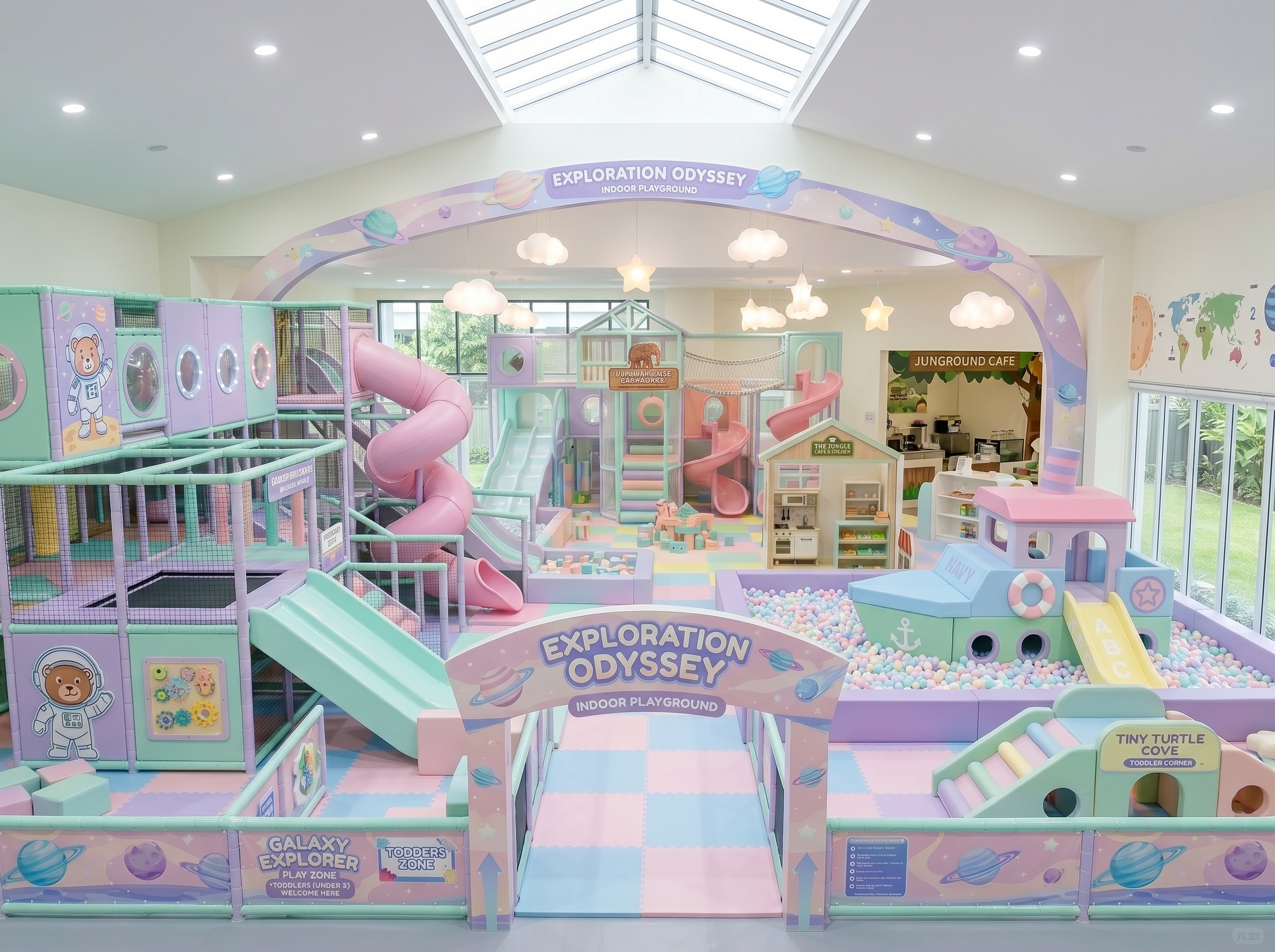
International School — Colombo, Sri Lanka
2024 | PREMIUM
220 m² | 78 children
Full multi-level soft play with an inclusive accessible route, ASTM F1487 + EN 1176 dual cert, brand-themed in school house colors and mascot.
Outcome: school added a second cohort within 12 months and credited the playground in its parent survey as a top-three enrollment factor.
Procurement Guide — Tier Pricing, Lead Time & Funding Pathways
Every published indoor playground cost number lives in its own denominator. Didi publishes the matrix below in a denominator international kindergarten directors actually budget against: per modular tier, per footprint band, per child capacity. The numbers are quote ranges from real 2024-2025 international kindergarten contracts (not retail catalog SKUs).
Total Investment + Funding Offset
Three-Tier Indoor Playground Investment Map (USD, FOB)
Compact tier
$25,000 – $55,000
Area: 30-60 m²
Capacity: 10-20 children
Standard tier
$50,000 – $120,000
Area: 60-150 m²
Capacity: 20-50 children
Premium tier
$100,000 – $250,000
Area: 150+ m²
Capacity: 50-100+ children
+$15 – $28 / sq ft PIP rubber surfacing add-on, when specified
Ranges reflect material, customization, theming, and certification stack. Didi’s 24-72h quote breaks each line item into Head Start 45 CFR 1303 facility-eligibility categories so the fiscal officer review is one pass.
| Funding Source | Reference | Playground Equipment Eligible? | Didi Documentation Match |
|---|---|---|---|
| Head Start Facility Funds | 45 CFR 1303.42 | Yes (purchase, construct, renovate) | Line items mapped to subpart E categories |
| Title I-A | ESEA §1112 | Limited (supplemental, supplement-not-supplant) | Quote shows allowable supplementary use |
| ARP-ESSER | ARP §2001 | Yes (if district has remaining liquidated balance) | Compatible documentation; deadlines applied |
| USDA CACFP | 7 CFR 226 | Indirect (physical-activity environment support) | Activity-area documentation provided |
| State Pre-K Capital Grants | State-by-state | Varies — most allow playground capex | Per-state requirements compiled on request |
Lead Time + Logistics — Real Numbers
Production cycle time: 35-55 days if the drawing is approved (Compact/Standard); 50-75 days (Premium). Ocean transit: US East Coast: 28-35 days; EU: 22-28 days; AU: 18-25 days. Land side install: 5-12 working days with Didi-supervised crew depending on the tier complexity (one-module MOQ the best for small kindergarten projects).
Most kindergarten projects will book 3-4 months out from academic-year start. Quotes pricing in 4 months of slack absorb routine customs and surfacing-curing variability without renegotiation.
“We examined seven international supplier templates against our Head Start fiscal officer checklist before choosing the Didi quote format. The line-item-to-45-CFR-1303 mapping single-handedly eliminated the additional two meetings on our internal review.”
Indoor Playground for Kindergartens Planning Tools
Footprint Tier Calculator
Accurately calculate the required floor space for your kindergarten playground based on expected visitor capacity and facility zones.
Access Tool
Funding Eligibility Estimator
Quickly evaluate your project’s potential for government grants, educational subsidies, and institutional funding opportunities.
Access Tool
Frequently Asked Questions
What safety standards must indoor playground equipment meet for licensed kindergartens and preschools?
In the US, ASTM F1487-21 governs public playground equipment (including indoor structures), with the CPSC Public Playground Safety Handbook providing federal guidance on fall surfaces and hazard mitigation. IPEMA offers third-party validation, ADA §1191.5 covers accessible routes. International kindergartens typically also require EN 1176-1:2017 (EU), AS 4685.1 (AU/NZ), or CSA Z614 (Canada). Didi assemblies are tested against ASTM F1487 and certified to EN 1176 + AS 4685.1 + CE + ISO 9001.
How much does a kindergarten indoor playground cost?
Equipment-only modules run $25,000-$55,000 for a Compact tier (30-60 m², 10-20 kids), $50,000-$120,000 for a Standard tier (60-150 m², 20-50 kids), and $100,000-$250,000 for a Premium tier (150+ m², 50-100+ kids). PIP rubber surfacing adds $15-$28/ft² installed. Exact prices depend on customizations, theming, certification stack, and shipping route — Didi publishes a 24-72h quote with every line item itemized.
What size space do I need for ages 3-5 (10, 20, or 50 children)?
For 10-20 kids at a time, plan 30-60 m² (320-650 sq ft), including circulation. For 20-50 kids, plan 60-150 m². For 50-100+ kids, plan 150+ m², with areas zoned into supervised cohorts. ASTM F1487-21 specifies at least 6-ft use zones around climbing equipment and at least 9-ft zones around swings — Didi’s 24-72h drawing pack maps these zones onto your actual room shapes before quote.
Is the equipment ADA accessible — and how does it support inclusive play?
Premium ships with ADA §1191.5 compliant routes, including a transfer platform and ground-level inclusive activity zones. Standard and Compact can be ordered with ADA-compliant features; this option is marked on the quote checklist. Inclusive features such as sensory wall panels, tactile fingertip elements, and ground-level dramatic play zones can be added to all three tiers. Both State Quality Rating & Improvement System and NAEYC accreditation portfolios make specific mention of these inclusive features.
What’s the typical lead time and shipping cost for international orders?
Production takes 35-55 days for Compact and Standard tiers, 50-75 days for Premium, starting from drawing approval. Ocean delivery takes an additional 22-35 days based on territory. Land-side installation with a Didi-supervised crew takes 5-12 working days. Total elapsed time from contract to operating playground usually lands in the 12-20 week range — plan 3-4 months in advance of the academic year start.
Can the equipment be customized to our brand colors or theme?
Yes. All three tiers include a branded thematic package covering color palette, mascot application, signage, and dramatic play overlay. A custom indoor playground theme adds 5-10 working days to production lead time and a per-tier premium on the line-item quote. Premium packages include the thematic package by default; Compact and Standard tiers can add it at the quote stage.
What is the warranty, MOQ, and after-sales support for kindergarten installations?
Didi provides a 5-year warranty on galvanized steel structural frames and a 2-year warranty on soft foam components against material defects under normal daily use. Equipment is sized to ages 2 to 5 across all three tiers. Single-tier orders carry no MOQ above 1 module; multi-tier rollouts to a school district often combine into one FCL shipment. Post-sale support is provided 24/7 online through the same Didi kindergarten solutions team that wrote the quote — not a separate ticket queue. Stock foam panels and theme overlay refreshes are available for direct reorder.
How do Head Start, Title I, ESSER, and state preK funds apply to playground purchases?
Head Start grantees may use facility funds for playground equipment under 45 CFR 1303.42 (construct, purchase, remodel eligibility) — Subpart E lists the documentation requirements. Title I-A allows supplementary use under ESEA §1112, subject to supplement-not-supplant rules. ARP-ESSER allocations (deadline to obligate 2024-09-30, deadline to liquidate 2025-01-25) are available where district balances remain. State Pre-K capital grants vary by state; most allow playground capex. Didi quotes line items into the categories your fiscal officer needs to see.
![Custom Dinosaur Playground Equipment [Design Guide]](https://didiplayarea.com/wp-content/uploads/2026/09/custom-dinosaur-playground-equipment-r2-featured-1-150x150.png)