
Get in Touch with Didi Land


📐 How we built this guide
This covers cross reference to the CPSC Public Playground Safety Handbook (Pub 325, 2025-07-30 version), the new ASTM F1487-25 revision (published June 2025), Minnesota department of health indoor play sanitation rules, and the NRPA Certified Playground Safety Inspector (CPSI) program. Where none are public safety standards (most prominently ball pit cleaning frequency), the guide states so explicitly and maps out how operators in 40+ nations keep their schedules.
Quick Specs
| Cleaning frequency floor | Daily clean + sanitize, even when surfaces look clean (MN Dept of Health) |
| Inspection cadence | 4 tiers — daily visual / weekly operational / quarterly detailed / annual CPSI audit |
| Active US standard | ASTM F1487-25 (June 2025) for equipment; ASTM F1292 for surfacing; CPSC Pub 325 (2025) handbook |
| EU baseline | EN 1176-1:2017 (equipment) + EN 1177:2018 (surfacing impact attenuation) |
| Equipment update window | 8–10 years for refresh; 15–20+ years possible with disciplined upkeep |
| Records to keep | 7-document compliance binder (manuals, inspection logs, repair logs, incident reports, training records, certifications, surfacing test reports) |
This indoor playground maintenance guide was written for the person who takes care of that room each day – the mall tenant, the FEC manager, the preschool director, the church basement operator. It covers the entire set of work activities: daily cleaning schedules, ball pit and soft play sanitation, surfacing evaluations, the 4-tier inspection routine, the documentation that defends you in a lawsuit, the replacement decision, the operations budget, and planing for transition in 2026. Each clause refers back to some public standard or is clarified as coming from manufacturers’ policies.
What “Maintenance” Actually Covers in Commercial Indoor Playgrounds
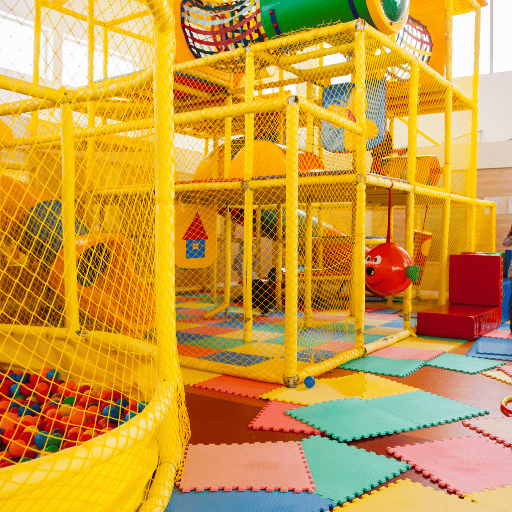
Operators commonly say “we take care of the play space” and mean five different levels of service. Recognizing them separately is important because each one occurs on a different timer, needs a different human resource portfolio, and entails specific legal liability.
Minnesota Department of Health outlines three levels for us, and they do so with specific terminology that applies to the language of mandated safety procedures: Cleaning uses soap and water to physically, chemically, and microbially clear the surface. Sanitizing applies chemicals or other validated processes to lower bacteria levels on already-clean surfaces to a safe point. Disinfecting applies chemicals to kill the bacteria and fungi and viruses specified on the product label. Minnesota Department of Health also emphasizes that these chemicals are effective only when applied to a clean surface, and not after wiping a grimy bumper rail with solution.
Add two more ranks and you can measure all indoor equipment maintenance work: inspection is the monitoring for hazards (see the 4-Bucket Inspection detail below), repair/replacement is the work performed following an inspection that finds a violation of the guide lines in the ASTM Standards or the component manufacturer’s manual. Each of these five – clean, sanitize, disinfect, inspect, repair – is the operator’s responsibility: each of those five tasks must have its own personnel hour established. By contrast, the full line of commercial indoor playground activity includes the manufacturer providing the whole designed-to-last structure, the each of a set of maintenance guides for assembly, operation, and repair, and the factory warranty when failure occurs due to models or manufacturing defects.
💡 Pro Tip
Turn these five categories into your maintenance schedule, and avoid the vagueness of “weekly upkeep.” Don’t have five run tasks on the same shift period.
Daily, Weekly, and Monthly Cleaning & Sanitation Cadence
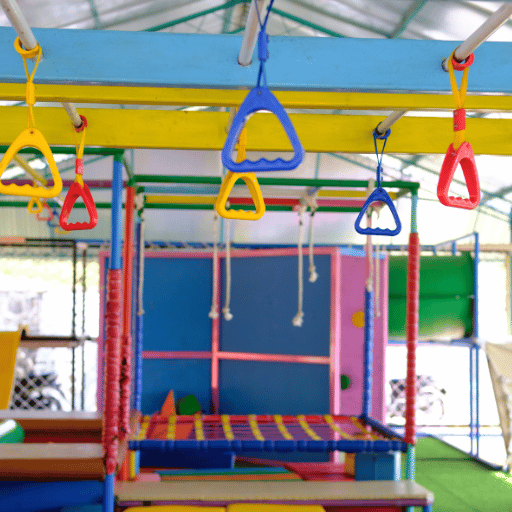
Daily cleaning is the base, not the pagoda. As stated by the Minnesota Department of Health, indoor play surfaces must be cleaned and sanitized “daily or more frequently, even if they do not appear to be dirty”. That wording can be critical when facing legal problems – “did not appear” is not considered acceptable phrasing with department of health inspector.
| Frequency | Tasks | Products / Notes |
|---|---|---|
| Daily (open + close) | High-touch surfaces — entry handles, stair edges, slide tops, panel grips; visible-soil response on any surface; rubbish removal; floor wet-mop | EPA-registered child-safe disinfectant; mild detergent + warm water for cleaning step; follow label dwell time (typically 30 seconds to 5 minutes) |
| Weekly | Full equipment wipe-down with extension brush for narrow gaps; restroom and sink deep clean; HVAC vent dust pass; checklist sign-off filed | Reach into “behind the panel” zones a daily wipe misses — the seam between vinyl pad and frame is where film builds |
| Monthly (rotation) | Deep-clean one major zone per week on rotation: Week 1 ball pit washing, Week 2 soft-play mats lifted & sanitized, Week 3 high beams & netting, Week 4 surfacing audit | Rotation spreads labour across staff hours rather than burning a single shutdown day; it also gets every zone touched once a month |
| On-demand | Body-fluid spill response: close the area, clean with soapy water first, then disinfect, follow label exactly | MN Dept of Health protocol; do not skip the cleaning step |
Disinfectant products. In addition to having a card from the EPA List N (action against SARS-CoV-2), many operators use EPA’s Design for the Environment (DFE) certified products listings in the UCSF California Childcare Health Program guidance. Follow dwell time (wipe, leave wet, do not flash dry).
⚠️ Important
Hand sanitizer should never be substituted for handwashing in a year-round indoor play group. According to MDH: “Hand sanitizers are not effective against norovirus, one of the most common causes of vomiting and diarrhea in children and adults.” Instruct staff, display signage, and make sure actual sinks are present, not just gel dispensers.
How often should ball pits and soft surfaces be deep-cleaned?
This is the question each state inspector and every parent asks, and no prescriptive national policy exists for commercial operators. An operator-tested baseline goes: visible-soil response immediately, daily surface clean plus targeted disinfection, weekly structural wipe with reach-in brushes, and a monthly full deep cycle for ball pit, foam pit, climbing nets, and under-mat drain channels. Two factors lead to a more aggressive schedule: volume of traffic (a 200-person weekend implies a bi-weekly deep cycle, not monthly) and any recent incidence (deep cycle: 24 hours, not 90 days).
Soft Play, Foam Modules & Ball Pit Hygiene Protocols

⚠️ Honesty disclosure
Commercial ball pit cleaning frequency has no federal standard: the sliding scale below combines the MDH’s daily cleaning rule for general play surfaces, a regulated protective safety system (ASTM F1487-25 covers this), with field-tested methodologies for work completion. Use this as a guide line, not a regulation.
Foam climbers, vinyl shapes, trampoline nets, and ball pits can have textured surfaces and seams that need a planned cleaning approach.
| Component | Daily | Weekly | Monthly |
|---|---|---|---|
| Ball pit balls (LDPE) | Visible-soil pull and wipe; refill any cracked or chewed | Surface-spray disinfectant pass on the top layer | Full deep cycle — drain, machine wash or hand-scrub all balls, drain pit, sanitize floor |
| Foam climbing blocks | Surface wipe with neutral cleaner; pay attention to inner corners | Rotate blocks 90° to expose under-side; wipe with sanitizer | Lift, inspect for tears or compression failure, replace covers if seams have opened |
| Vinyl/PU padding | Soapy water + child-safe sanitizer; never bleach (chloride attacks PVC) | Inspect seams for separation; spot-glue with manufacturer-approved adhesive | Full disassembly of detachable padding for back-side inspection |
| Climbing nets & ropes | Visual check for fray, knot loosening, anchor pull-out | Wipe with damp cloth + sanitizer (do not soak — fibre core retains moisture) | Tension and anchor torque check against manufacturer spec |
| Trampoline park beds & springs | Surface check for tears, pad displacement | Spring tension audit (replace any showing >10% deflection difference) | Frame weld inspection per manufacturer interval |
Plan ball-pit cleaning around actual use, the equipment instructions, and applicable local requirements.
— Indoor playground operations consultant, paraphrased from field interviews summarized in industry rotation methodology
A commercial ball washer is a mechanized contraption that treats the interior with either ozone or electrolyzed water (saline solution) to kill all remaining live bugs. Manufacturers claim that automated washing: up to 70% fewer labour hours spent on manually scrubbing, every ball lasts 25% longer, ROI is within a year for mid-to-large FECs. Think of those figures as guided numbers, not independently verified measures – the rationale that mechanized washing is gentler on the fragile skins of the balls is sound, but vendor numbers are specific to their machines. Our soft play maintenance load planner shows how ball inventory, traffic intensity, and staff hours interact.
For the umbrella category, this page on soft play equipment shows what modules work against which protocols.
Surfacing Maintenance — Loose Fill, Poured-in-Place, Turf, and Mats
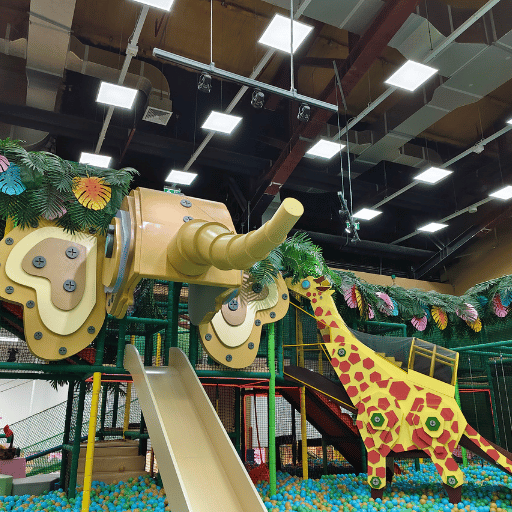
An impact-absorbing surface stands between a fall and the hospital. ASTM F1292 is the relevant benchmark, and it provides every surface with a “critical fall height” capacity – the maximum equipment fall height the surface can accommodate. Address loose-fill maintenance in CPSC Public Playground Safety Handbook (2025 edition), section 4.3.
| Surface type | Maintenance task | Frequency | Replace signal |
|---|---|---|---|
| Loose fill (engineered wood fibre, rubber mulch) | Rake to redistribute; top up high-traffic zones (slide exit, swing arc) | Weekly rake; quarterly top-up | Compaction below 9 in/23 cm depth, or visible ground at fall zone |
| Poured-in-place (PIP) rubber | Visual crack inspection; clean with neutral pH detergent | Monthly visual; annual professional patch as needed | Cracks >3 mm wide, surface delamination, fade indicating UV brittleness |
| Synthetic turf with cushioned underlay | Brush fibres upright; vacuum debris; flush infill if soiled | Weekly brush; quarterly infill check | Fibre matting that does not recover after brushing; underlay compression >15% |
| Modular foam mats / interlocking tiles | Lift, clean both faces; check seam alignment; rotate high-wear tiles | Monthly rotation | Permanent deformation, edge curl, separation between tiles wider than 5 mm |
📐 Engineering Note
ASTM F1292 requires your compliance label to match or exceed your equipment height – if you add the 18″ slide tower to your wood-chip platform, re-test or re-certify your surface; the F1292 you accepted 4 years ago may no longer be applicable. Keep the label with the maintenance binder – it is the first thing a state inspector will request.
Surface maintenance is the most commonly-doctored category, yet it also is the most vulnerable to lawsuit. PAA-frequent question: how often should I replace wood chips in my playground? No less than the minimum thickness prescribed by your supplier’s F1292 certification.
The 4-Tier Inspection Schedule — An Operator’s Framework
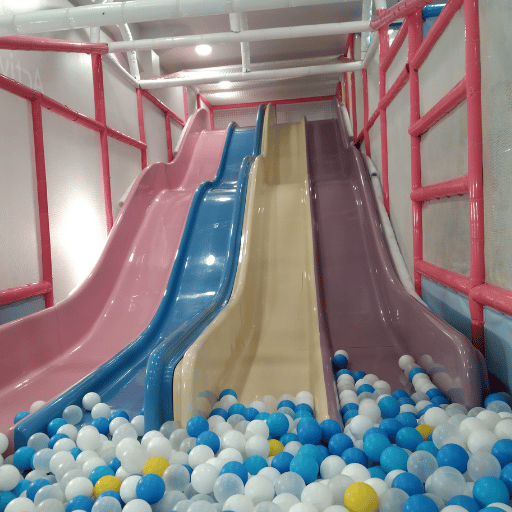
Operators have the same problem – too many “inspection” definitions floating around, nobody on the floor has a common language. CPSC Pub 325 (2025) states that while inspections are low- or high-frequency, ASTM F1487-25 has a regular structural review, and the NPRA CPSI program constitutes the formal annual review. None of these alone is enough to give the person on the floor a guide to action on any given Tuesday morning.
Our 4-Tier Inspection Schedule below synthesizes those citations into one cadence. It specifies the inspector, the scope, the product and the turnaround time for each tier.
| Tier | Inspector | Scope | Time | Deliverable |
|---|---|---|---|---|
| Tier 1 — Daily Visual | Floor staff (any trained team member) | Walk the room before opening: broken parts, loose anchors, debris, exposed hardware, surface displacement | 10–15 min | Signed daily log entry |
| Tier 2 — Weekly Operational | Shift manager | Every Tier 1 item plus: bolt torque sample, padding seam check, electrical for any powered modules, surface-depth measurement at high-wear zones | 45–60 min | Weekly checklist with photos of any flagged items |
| Tier 3 — Quarterly Detailed | Internal trained inspector (manager who completed manufacturer training) | Full structural review against manufacturer’s manual; surface F1292 depth/density check; ballast/fastening audit; record retention review | 3–4 hr | Quarterly written report with action items + due dates |
| Tier 4 — Annual CPSI Audit | Certified Playground Safety Inspector (third-party or NRPA-certified internal) | Full ASTM F1487-25 + CPSC Pub 325 audit; written non-conformance list with remediation timeline; documentation review | 6–8 hr (medium FEC) | Signed CPSI report — the document insurers and lawyers ask for |
How often should playground equipment be inspected?
Use the equipment documentation and applicable local requirements to establish inspection and maintenance responsibilities. Consult a qualified safety professional where required. Operators can review the ASTM/EN 1176 compliance checker.
Compliance Documentation — ASTM F1487, EN 1176, CPSC & CPSI Records
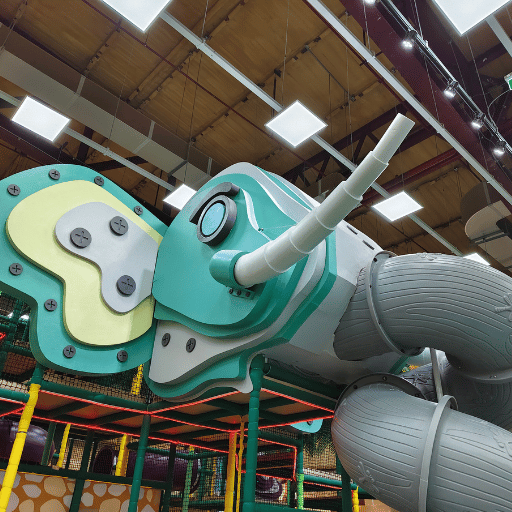
If the inspection schedule is the work, the documentation is the evidence the work got done. State and federal regulators and the plaintiff’s lawyer request the same files. Create your binder once, update it.
| Standard / Body | Jurisdiction | Latest version | What it covers |
|---|---|---|---|
| ASTM F1487 | United States — voluntary consensus, treated as de facto by most state child-care licensing | F1487-25 (June 2025) — supersedes F1487-21 | Public-use playground equipment safety + performance, including new spinning-equipment and rotational-element clearance requirements added in 2025 |
| ASTM F1292 / F2373 | United States | F1292 (impact attenuation), F2373 (public-use equipment for ages 6 months–23 months) | Surfacing critical fall height + soft-contained play infant equipment |
| CPSC Public Playground Safety Handbook | United States — federal guidance | Pub 325, 2025-07-30 reissue | Government safety guidance covering layout, hazards, surfacing, and the maintenance schedule in Appendix A |
| EN 1176-1 | European Union | EN 1176-1:2017 | Playground equipment + surfacing general safety requirements, with EN 1177:2018 as the surfacing impact-attenuation companion |
7 documents every operator needs to meet compliance:
- ✔
Manufacturer’s installation and maintenance manual — the binding document for what a “proper” repair looks like - ✔
Daily inspection log — signed, dated, with non-conformance flags - ✔
Repair log — every part replaced, with date, repairer, and reference to manufacturer manual section - ✔
Incident reports — every injury reported by parent or staff, with photos and resolution - ✔
Staff training records — who completed manufacturer training, who completed first aid, dates - ✔
Annual CPSI audit report — signed by the certified inspector, with non-conformance remediation dates - ✔
Surfacing test certificate — F1292 critical fall height value with installation date
What records do operators need to keep to protect against liability claims?
Keep maintenance and incident records in line with the equipment documentation and the requirements that apply to your operation. Seek qualified legal or safety advice for retention obligations. See the kindergarten indoor playground.
Repair Issues & the Repair-vs-Replace Decision
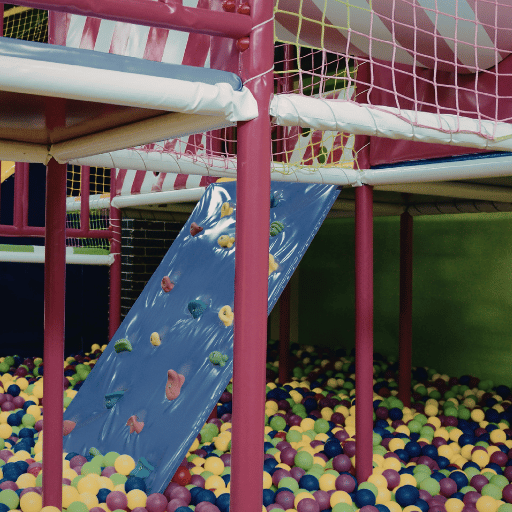
Wear in the field inevitably results in a mechanical decision: repair the part or replace the unit. An easily remembered five-category matrix, represented below, approaches the same problem with the critical durability perspective: by parts, by failure mode, by industry rule.
Inspect components for wear and plan maintenance or replacement based on the equipment documentation, actual condition, and qualified assessment.
| Decision criterion | Repair if… | Replace if… |
|---|---|---|
| 1. Safety-critical wear | Wear is cosmetic — coating, padding cover, edge cap | Wear affects structural integrity (cracked weld, frayed climbing rope core, deformed slide bed) |
| 2. Structural compromise | Manufacturer-approved retrofit kit exists | Original load path is broken and no documented retrofit returns it to spec |
| 3. Cost ratio | Repair cost < 30% of replacement equivalent | Repair cost > 50% of replacement; or third repair to the same part |
| 4. Equipment age | Under 8 years and well-maintained — repair is the default | Past 15 years and the second non-cosmetic failure inside 18 months — accumulated risk is climbing faster than repairs can chase |
| 5. Standard non-conformance | Component still meets the standard active when installed; manufacturer offers an upgrade path | Equipment fails ASTM F1487-25 or local-jurisdiction standard with no available retrofit |
Review equipment condition, available parts, and applicable inspection requirements before planning refresh or replacement. See indoor play structures.
Maintenance Cost Planning — In-House Staff vs Outsourced Service
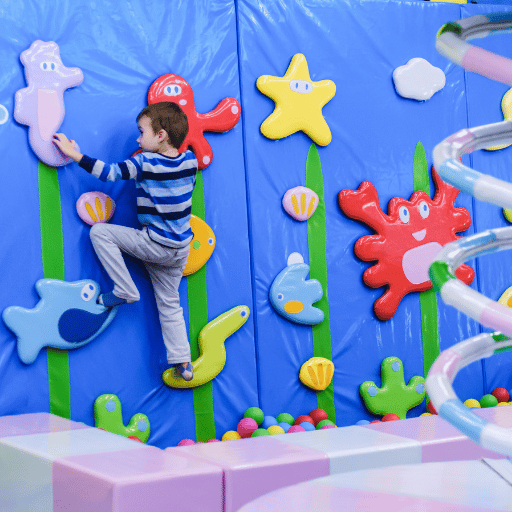
⚠️ Honesty disclosure
Cost ranges discussed are sample-wide pre-writer ratios based on 2Q26 industry references and vary widely by region, square footage, and foot-traffic. Use as a starting point for your budget – get quotes from 2-3 vendors before making the final decision.
Include maintenance as a visible operating-cost line when planning an indoor playground budget.
| Cost line | In-house option | Outsourced option | Notes |
|---|---|---|---|
| Daily cleaning labour | 2 hr/day × 7 days × FTE rate | Janitorial contract, typically billed monthly | Outsourcing wins for very small or very large rooms; in-house wins in the middle band where a part-time hire absorbs the work |
| Cleaning supplies | Direct purchase — EPA-registered disinfectants, brushes, pads | Bundled in service contract | Direct purchase 20–40% cheaper if storage and ordering discipline exist |
| Quarterly detailed inspection (Tier 3) | Manager-completed, manufacturer training required | Service contract add-on | In-house only viable if the manager has a CPSI-aligned training certificate |
| Annual CPSI audit (Tier 4) | Not recommended — internal CPSI is a conflict of interest in most disputes | Third-party CPSI engagement, fixed fee per visit | Always outsource — the third-party signature is what carries weight in claims |
| Repair parts & consumables | Manufacturer parts ordering | Bundled in extended service plan | Service-plan bundling rarely beats direct ordering once the room is past warranty |
| Surfacing top-up / repair | Loose fill yes; PIP no — PIP repair is specialist work | Specialist surfacing contractor for PIP and turf | Mismatched PIP patches fail F1292; pay for the specialist |
Decide which maintenance tasks to handle internally or with qualified external providers based on the equipment documentation and applicable requirements. Use the indoor playground ROI payback calculator or contact the aftermarket service team for planning support.
Industry Outlook — 2026 Trends, Automation & Stricter Compliance
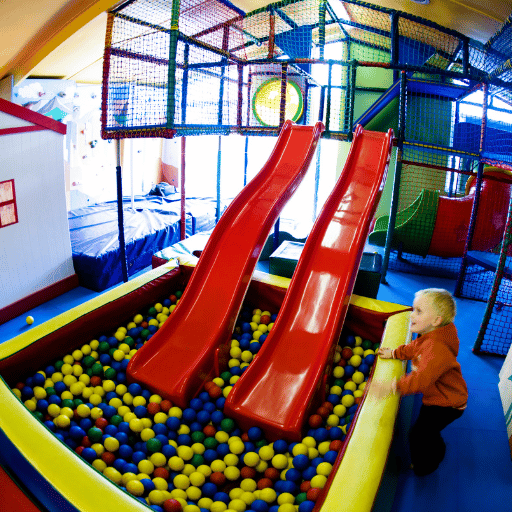
Currently, two forces are influencing indoor playground maintenance in the year 2026, each pulling in subtly opposite directions.
Compliance is escalating. ASTM F1487-25, published in June 2025, added new clearance and crush/entrapment-zone specifications for spinning equipment and rotational features – a category that has expanded sharply in FEC build-outs over the last three years. CPSC reissued its Public Playground Safety Handbook (Pub 325) on July 30, 2025, bringing risk-based advice for surfacing and ramp-up routine maintenance schedules. Several states have since begun citing the revised playground safety handbook as a standard in licensing and inspection guidelines. Operators who are planning a 2026 build and those booking a Tier 4 audit are encouraged to request review against F1487-25 be explicitly specified rather than relying on the older F1487-21. Many independent CPSIs still work from the older iteration and will need to be asked specifically.
A potential interpretation: ASTM is indicating that facilities with recent rotational play features; gyroscopic equipment, spinners or rotating climbers, are generating injury reports the old version did not address. A safety focused shop from procurement onward will find the new requirements easier to understand than those trying to catch up after the fact.
Acceleration is happening, but selectively. The most obvious case: automated ball-pit cleaning equipment – vendor reported data cites 70% reduction in labor hours and 25% extension of ball lifespan, with payback inside a year for mid-capacity sites. Those figures are vendor provided and require firm validation, but the logic behind them – machines provide more uniform dwell time and less abrasive handling than human cleaning – is accurate. Secondly, digital inspection record-keeping (a tablet with a QR code-enabled equipment register) is the trend in progress, and it is moving faster, because it costs next to nothing and makes an audit trail that lawyers find irresistible.
Lastly, both of the progress fronts noted above are in a market that is booming. Allied Market Research projects the U.S. family entertainment center segment will grow from $5.25B in 2024 to roughly $10.55B in 2034. Compound annual growth rate percentile slightly less than 7% the rule of thumb in the biz has always been: more sites translates into increased aftermarket maintenance requirements and ever-harder fight for the experienced CPSI inspector talent pool. Booking a Tier 4 inspector for 2026-2028 now will pay off, operators who do so will be happily surprised they did.
💡 Action for 2026
Here are three concrete actions you should take if you’re in the budgeting phase: (1) explicitly schedule the F1487-25 Tier 4 audit, not the F1487-21; (2) before September 2026, schedule your annual CPSI window – third-party inspector capacity is more limited in the final quarter of the year; (3) before you roll out digital inspection logs to the other rounds, test on the daily Tier 1 – while it’s modest, a cheap pilot with a high upside for audit-trail reports.
Frequently Asked Questions
Q: How often should ball pits be cleaned?
View Answer
No standard determines a ball pit maintenance frequency. It seems there isn’t one nationally – the best-practices I’ve been able to uncover lean toward daily surface cleaning + targeted disinfection, weekly brushing of the surfaces that can reach into gaps (all sides, leading and trailing edges, underneath), and monthly full deep cycles (drain, machine wash or hand-dry the balls, service the pit floor). Under extraordinarily high traffic, or when your user’s hygiene appears challenged, do bi-weekly deep cycles for at least 3 months afterward.
Q: How often should I replace wood chips or rubber surfacing?
View Answer
In loose-fill surfaces (engineered wood fibre, rubber mulch), rake twice weekly and top up quarterly, replacing when depth in the highest-trafficked zone dips below the manufacturer’s recommended minimum (often cited at 9 inches (23cm)). In poured-in-place rubber, visual monthly and conduct a professional patch when the cracks break 3 mm, or the surface delaminates in a discernible way. No matter what the surface, the critical hazard number is the ASTM F1292 critical fall height on the manufacturer’s certificate, which should be appropriate for the underlying equipment after any layout change.
Q: What permits or certifications are needed to operate an indoor playground?
View Answer
Local permits differ country-by-country, city-by-city, building-by-building. In the United States, an inspection from the relevant department for the prevailing occupancy class, a certified food-service permit if in the U.S. you permit food, child-care licensing if you permit children unaccompanied by a guardian, a certificate of health department inspection under the state code if you permit a business served by the health departments’ local jurisdiction. At least two of those are not “permit” but required where you are, the other two may be. Equipment compliance is documented by the manufacturer’s declaration of conformance against ASTM F1487-25 plus the surfacing certificate against F1292, neither of which constitute a permit for that equipment but both of which positive inspector will require you bring. In the EU two documents exist, the EN 1176-1:2017 declaration of compliance plus the EN 1177:2018 surfacing document. In the United States at minimum, an annual CPSI inspection (NRPA-approved) is legal – two or three EU member states require it annually as well.
Q: Is professional inspection legally required?
View Answer
Legal requirements differ, but most insurance carriers and plaintiffs’ attorneys will treat an annual CPSI inspection (NOA-approved) as the best case reasonable level of care in the United States. Most EU member states regularly value an EN 1176-compliant certified inspector visual inspection once per year as the legal floor.
Q: Can I clean soft play foam modules with bleach?
View Answer
That’s a no for three reasons. Sodium hypochlorite (bleach) degrades PVC vinyl and PU coatings – the surface gets chalky, pale, and finally cracks out. Use the child-safe EPA-registered disinfectant that the equipment supplier recommends for your maintenance manual; absent an explicit mention, a DfE-labelled quaternary ammonium or hydrogen peroxide prep might be gentler.
Q: When should playground equipment be replaced rather than repaired?
View Answer
Employ the five-criterion reading in the Repair-vs-Replace section: replace when 1) it has crossed into a question of structural integrity, 2) no retrofit available from standard manufacturers restores the load path to spec, 3) repair cost reaches50%of replacement, unless this is the third repair to the same part, 4) it is over15years old and have logged a secondnon-cosmetic failure during the last 18 months, or5) a current standard such as astm F1487-25has moved beyond the as-installed configuration and retrofit has not been applied. Any one of those by itself would do.
Plan Your Maintenance Strategy with Didi Land
Before you scope out a new room, refresh an existing installation that has reached the year eight milestone, or create a maintenance plan high enough to pass a Tier 4 CPSI audit—the conversation to begin with is always the equipment-and-standards one. We build in accordance with ASTM F1487-25 and EN 1176-1:2017, and always supply a written maintenance handbook with each installation.
Explore Commercial Indoor Playground Equipment →
About this analysis
This guide is from the manufacturer’s point of view – Didi Land has been manufacturing commercial indoor playground equipment since 2014 and we ship to operators in more than 40 countries; our safety team develops the guidelines that span our production-to-delivery process, certified to ASTM, EN, IPEMA standards. The cleaning and inspection cadences in this article reflect operator practices that we see across that installed base, cross-referenced to the public standards listed below. We are not operating the rooms ourselves – to develop site-specific cleaning protocols, defer to your child-care licensing body in your jurisdiction and to the maintenance manual that shipped with your equipment.
References & Sources
- Public Playground Safety Handbook (Pub 325, 2025-07-30 ed.) — U.S. Consumer Product Safety Commission
- Public Playground Safety Checklist — U.S. Consumer Product Safety Commission
- Indoor Play Area Maintenance and Sanitation — Minnesota Department of Health
- Selected EPA-Registered Disinfectants (List N) — U.S. Environmental Protection Agency
- ASTM F1292 Guide — Georgia Department of Early Care and Learning
- Safer Cleaning, Sanitizing, and Disinfecting Products — UCSF California Childcare Health Program
- ASTM Publishes Revised Consumer Safety Performance Specification for Playground Equipment (F1487-25) — SGS Safeguards 09/25
- Certified Playground Safety Inspector (CPSI) Program — National Recreation and Park Association
- CPSI Candidate Handbook — National Recreation and Park Association
- Cleaning, Sanitizing, and Disinfection Frequency Table — National Association for the Education of Young Children
- July 2025 CPSC Playground Safety Updates — Playground Professionals
- 2025 Playground Safety Updates: CPSI Services & Legal Insights — Rimkus
- When Should You Update or Replace Old Playground Equipment? — Miracle Recreation
Related Articles
- Indoor Playground Equipment for Family Entertainment Centers — sizing the maintenance plan to traffic
- Restaurant & Hotel Indoor Playgrounds — maintenance considerations for hospitality verticals
- Shopping Mall Indoor Playgrounds — high-traffic FEC maintenance scheduling
- Indoor Playground Themes & Custom Design — surface and finish considerations for themed installations

![Custom Dinosaur Playground Equipment [Design Guide]](https://didiplayarea.com/wp-content/uploads/2026/09/custom-dinosaur-playground-equipment-r2-featured-1-768x512.png)

![Custom Dinosaur Playground Equipment [Design Guide]](https://didiplayarea.com/wp-content/uploads/2026/09/custom-dinosaur-playground-equipment-r2-featured-1-150x150.png)