Get in Touch with Didi Land


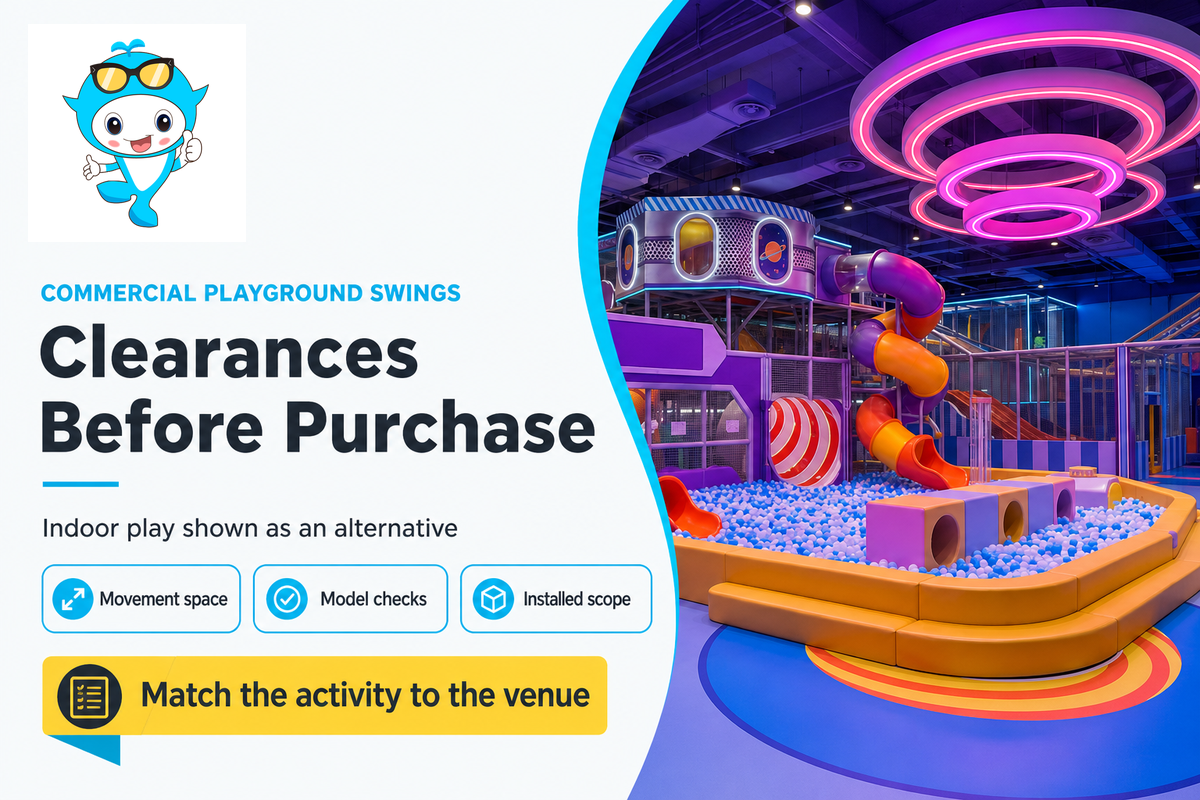
Commercial playground swings are commercial playground equipment broken down by age, movement and installation. A playground and family fun center can call for different solutions. Start with the activity children should experience, then check the complete protected area and installed scope before comparing frame prices.
Commercial playground swings require a site-specific use zone, surface system and plan. CPSC specifies belt-swing front and back zones of at least twice the pivot height in both directions. Full-bucket and multi-axis rules require separate checks.
Quick buyer checks
- Full-bucket use-zone calculations use the sitting surface as their lower reference.
- CPSC’s belt-swing front and rear zones extend at least twice the pivot height in each direction.
- Swing fall height runs from the pivot to the protective surface.
- A frame price can exclude seats, surfacing, freight and installation.
Choose Commercial Playground Swings by Movement and User
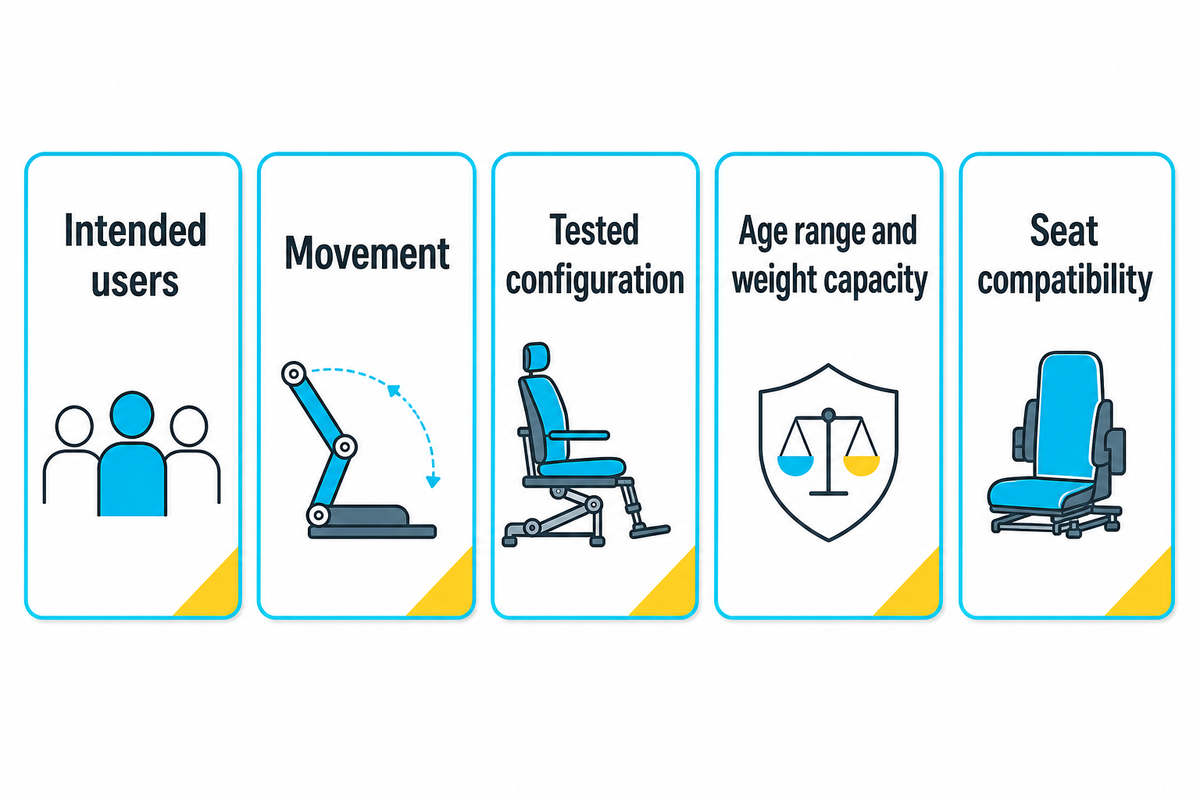
Other considerations hinge on the intended users and movement. Different types of swing sets have different clearance and supervision needs. Same holds for seats and models designed for multiple users. Heft and size of a frame don’t determine who uses a piece.
What makes a heavy-duty commercial swing set different from a backyard set?
Installation requirements, tested configurations and intended use are major differentiators. Steel posts, powder-coated finishes and replaceable mounting hardware are useful buying details, but tube diameter alone is a poor selection rule. Compare the age range and weight capacity for which a piece is intended, as well as seat compatibility and the maintenance requirements of the proposed model. Both Wooden swing sets and metal swing sets require this review.
Compare quality materials against the specified finish and connectors. Check composite playsets as a complete configuration too.
For a new playground, write down the outdoor space available and the intended outdoor play schedule. The best commercial swing for that brief is the model whose users, layout and upkeep suit the site. Choose commercial playground swing sets by that complete brief. A traditional playground replacement also requires the existing surface and foundations to be checked before the old equipment is removed. Confirm the equipment’s intended outdoor use.
ASTM F1487-25 addresses public playground equipment within its stated 2-to-12-year-old percentile range. Public equipment for younger children has a separate branch: ASTM F2373-24 covers its 6-through-23-month percentile range and includes to-fro swings in indoor classroom settings and outdoor playgrounds. Juvenile infant swings are among its exclusions. The label “baby swing” leaves too much unanswered.
For a daycare serving both toddlers and older children, put each user group on the equipment schedule. Specify a full bucket swing where the selected model calls for it and plan the adult’s access. For a primary school, check the belt swing seat, bay configuration and supervision arrangement. Equipment advertised for kids and adults needs an explicit manufacturer rating for that use.
Safety standards set requirements for defined equipment categories. ASTM’s public-use and soft-contained scopes differ, and a commercial play area can contain more than one category. Public playgrounds are designed for stated users; resolve the category for each ordered play component before accepting one report for the entire project.
Calculate Safety Clearances for the Actual Swing Type
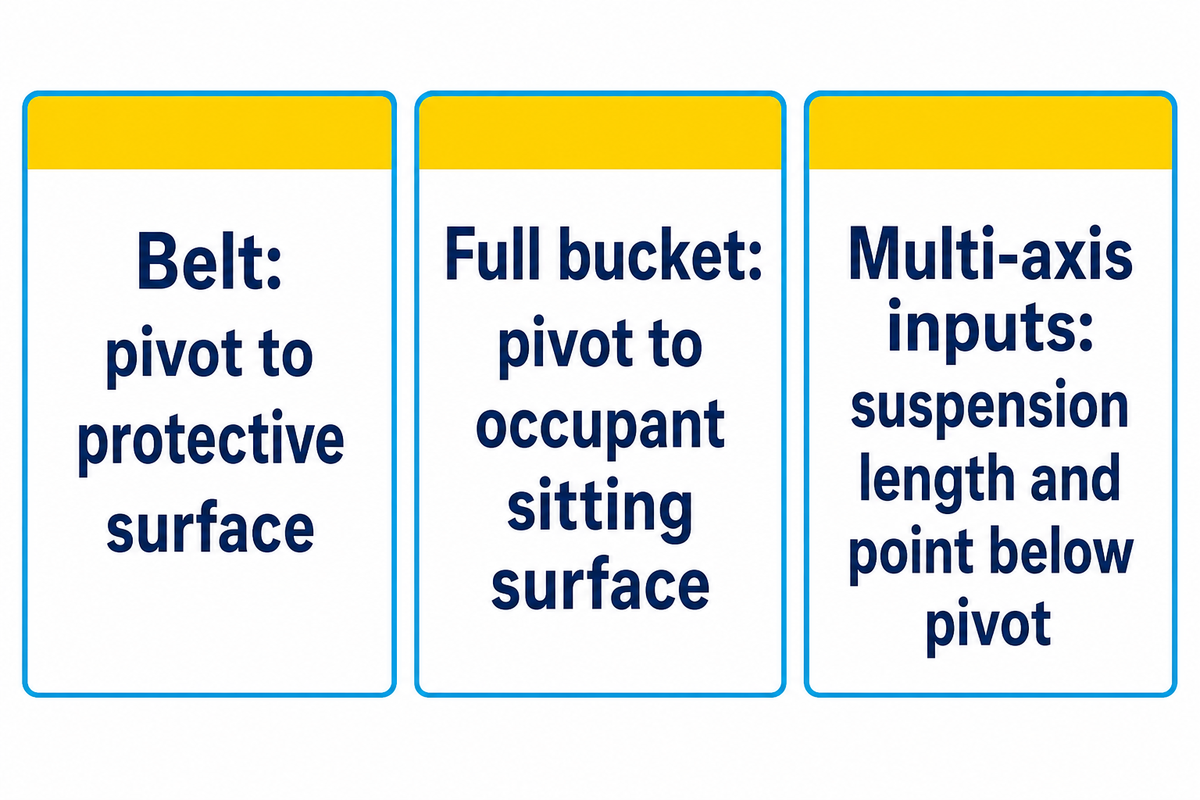
Calculate swing clearances from the pivot and the correct reference surface. Place the protected area on the site drawing. The July 2025 edition of the CPSC safety handbook uses different inputs for belt, full-bucket and multi-axis swing. Keep the movement area apart from frame footprint, fall height, seat spacing and the route people use to access the equipment.
“The use zone in front of and behind swings should never overlap with any other use zone.”
Use the 3-Origin Swing Clearance Map
Measure vertically from a belt swing’s pivot to the top of the protective surface. Call that distance H. CPSC’s front and rear use zone extends at least 2H in each direction from the point beneath the pivot. An 8 ft pivot height therefore gives a minimum of 16 ft forward and 16 ft behind: a minimum of 32 ft along the direction of travel.
For a full-bucket seat, measure from the pivot to the top of the occupant’s sitting surface. In a hypothetical layout with a 7 ft pivot and a sitting surface 2 ft above the protective surface, that distance is 5 ft. Twice 5 ft gives a minimum of 10 ft in each front and rear direction. The swing’s fall height remains 7 ft because CPSC measures fall height from the pivot to the protective surface.
For multi-axis swings, CPSC uses a minimum distance of the length of the suspending members plus 6 ft in every direction from the point beneath the pivot. This accounts for movement that exceeds a simple arc that’s forward and back. The moving swing’s use zone can’t overlap another equipment use zone; the separate minimum 6 ft supporting-structure zone has an overlap allowance described in §5.3.8.4.1.
| Check | Published basis | Drawing instruction |
|---|---|---|
| Belt front/rear use zone | CPSC: at least 2 × pivot-to-surface height, each direction | Dimension forward and rearward from beneath the pivot |
| Full-bucket front/rear use zone | CPSC: at least 2 × pivot-to-sitting-surface distance, each direction | Record the selected seat’s sitting surface |
| Multi-axis movement zone | CPSC: at least suspension length + 6 ft in every direction | Draw the full surrounding movement area |
| Single-axis side use zone | CPSC: at least 6 ft from the swing perimeter | Use the support layout and handbook Figure 25 |
| Swing fall height | CPSC: pivot-to-protective-surface vertical distance | Use this input for the surface review |
| Belt swings per bay | CPSC: no more than 2 recommended | Show the actual seat and bay arrangement |
| Full-bucket pivot height | CPSC: greater than 47 in and no more than 96 in | Check the intended full-bucket configuration |
| Accessible transfer seat or entry | 2010 ADA §1008.4.4: 11–24 in where applicable | Measure from the clear floor or ground space |
| Ground-level accessible route | 2010 ADA §1008.2.4.1: generally at least 60 in clear width, with stated exceptions | Resolve exceptions on the project access plan |
Engineering note
CPSC’s full-bucket guidance places the pivot above 47 in and no higher than 96 in. Record the actual pivot and finished protective-surface level on the drawing. Use the selected equipment instructions together with the handbook’s configuration-specific guidance.
Seat-to-seat and seat-to-support dimensions require separate checking against CPSC Table 7 and Figure 23. The values for these change depending on if the configuration is for toddler full-bucket or preschool/school age belt. Be sure to mark the actual location of the pivot on the swing beam. A single post still needs its full protected area shown. An access distance in that diagram isn’t the same as fall height.
For an 8 ft belt-swing pivot, CPSC’s method allocates at least 16 ft ahead and 16 ft behind before the remaining site checks. A buyer with only 20 ft available along that axis needs to change the proposed equipment or layout. Squeezing the frame into the plot doesn’t resolve the missing use zone.
Match Safety Surfacing and Foundations to the Site
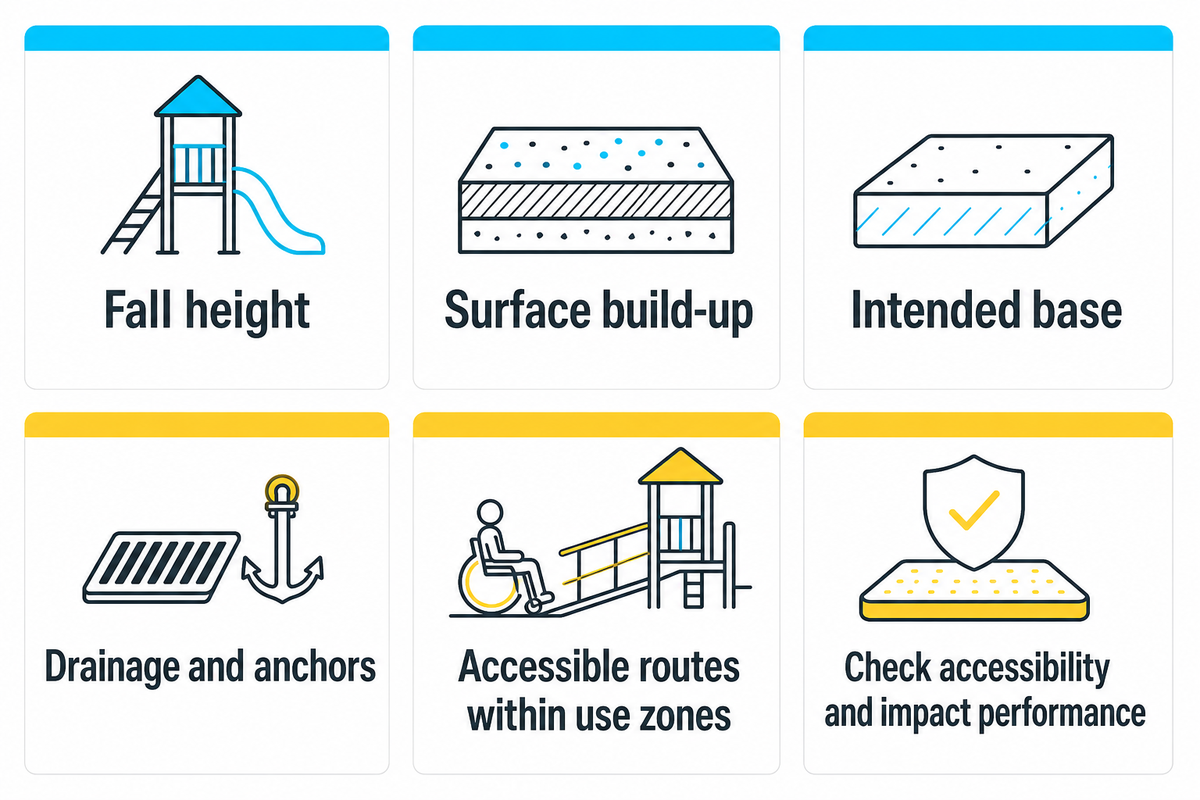
List the complete surface and foundation system connected to the chosen swing, its use zone, and fall height. Impact attenuation addresses different questions from, for example, accessible travel, drainage and anchorage. The equipment installer and surfacing contractor should agree on finished levels before excavation, because changes in surface level affect the dimensions measured above it.
Engineered wood fiber, rubber mulch, tiles and poured-in-place systems have different installation and upkeep needs. Ask the surface supplier to match the proposed build-up to the swing’s fall height and intended base. Product thickness is a vague specification. For surface systems along accessible routes within use zones, review both accessibility and impact performance.
The Access Board’s summary of a 2008–2012 field study reported poured-in-place impact-attenuation failure and tile buckling or separating seams in its sample. Better accessible travel didn’t necessarily accompany acceptable impact attenuation. These historical findings give owners useful inspection targets; they don’t predict a current product’s failure rate.
Review footing and excavation (including the existing base, drainage and reinstatement, anchors and concrete) in addition to safety. For a proposed slab, obtain the model-specific anchorage design and review the project. An inconsistency in footing detail in another swing frame can be costly.
A bucket swing with a hypothetical 7 ft pivot still requires its surface to be assessed using that 7 ft fall height, even when its front/rear use-zone calculation uses a shorter sitting-surface distance. Keeping those two inputs on separate drawing lines helps the installer and surface supplier price the same configuration.
Compare Indoor Alternatives When a Swing Will Not Fit
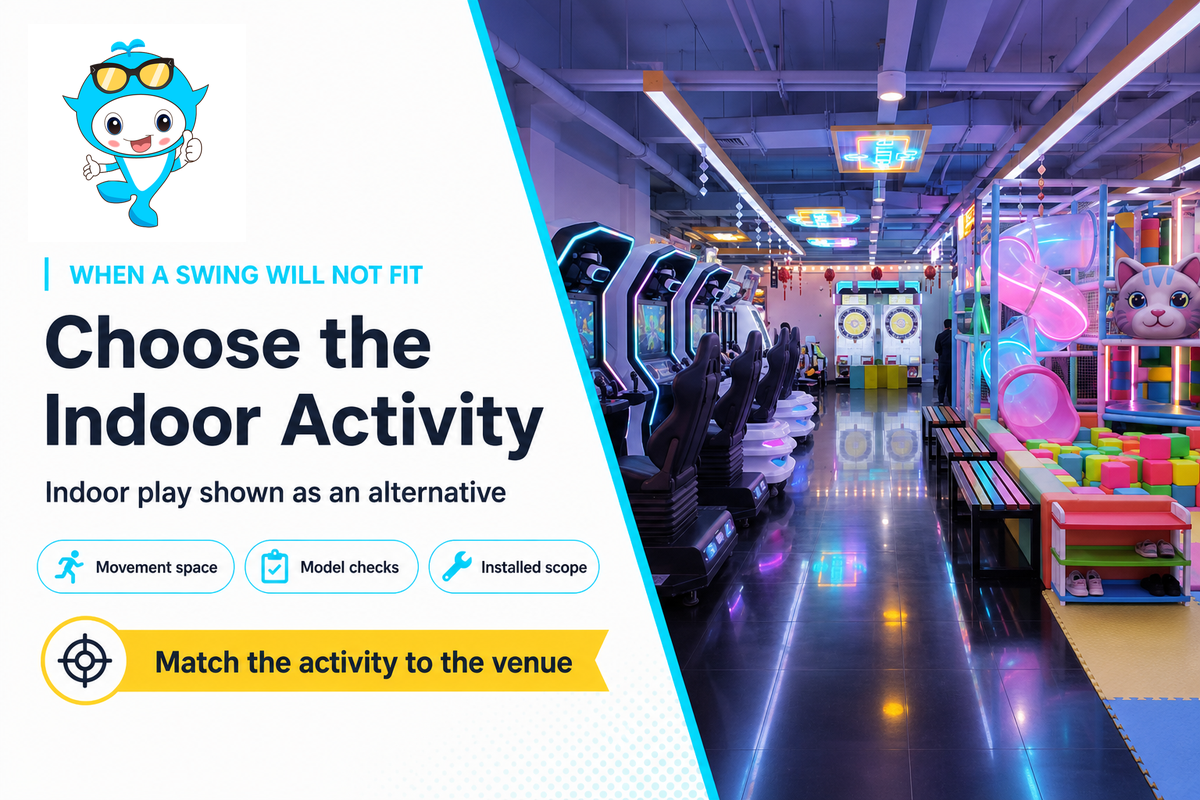
Look at the play activity required and the room available. Climbing and crawling offer different experiences than swinging. If a protected swing area conflicts with a doorway or circulation, or building structure constraints, opt for another activity or commission an indoor swing design.
The family entertainment center may want to provide active play without providing a large moving arc. DidiPlayArea’s indoor play equipment families include jungle gyms, slides, and modular structures and toddler playgrounds. Bring your room plan and intended age group to the discussion. Check each climber and slide against its intended user. An indoor location, soft padding or shorter chain does not automatically settle the equipment category or suspension design.
| Option | Activity or support goal | Space or document check | Buyer decision |
|---|---|---|---|
| Belt swing | Independent forward/back movement | Pivot height, front/rear use zone, user rating | Reserve its movement area first |
| Full-bucket swing | Supported sitting with adult assistance | Sitting-surface reference, seat fit, adult access | Check the exact age and model scope |
| Multi-axis swing | Movement in multiple directions | Suspension length and surrounding use zone | Check the full area around the pivot |
| Adaptive swing seat | Model-specific postural support | Transfer approach, support, rating and compatible frame | Retain the actual swing’s geometry checks |
| Generational/shared-use swing | Shared swinging where the model permits | Intended users, capacity, impact testing and layout | Use the specific model’s documentation |
| Indoor jungle gym | Climbing and linked adventure activity | Room height, access and supervision sightlines | Choose for climbing goals |
| Indoor slide | Sliding between defined entry and exit points | Entry access, exit space and nearby circulation | Choose for sliding goals |
| Modular indoor play structure | Several connected play activities | Full layout, rescue access and evacuation arrangement | Review the complete system |
| Toddler playground | Age-appropriate low-level play | Intended ages, separation and adult supervision | Match the system to the youngest users |
Adaptive and shared-use descriptions can often intersect with the movement categories described above. They’re procurement pathways, not mutually exclusive engineering classifications. A toddler room designed around commercial soft-play units also needs its own layout evaluation. Define the actual system category with respect to the soft contained equipment scope. For the sequencing, see the soft play layout and launch checklist.
Swing solution: advantages and limits
- Delivers the specified swinging activity.
- Needs room for the complete movement zone.
- Requires the selected seat, frame and installation documents.
Indoor alternatives: advantages and limits
- Offer climbing, sliding or toddler-play activities.
- Need their own access and operating spaces.
- Require a category-specific system and venue review.
For a room facing an 8 ft belt-swing pivot’s minimum 32 ft front/rear allocation, the useful comparison is the activity delivered within the complete venue plan. If a proposal includes a climbing or sliding activity, it needs to show the space required for that activity. Offer those activities to meet a different play brief; promise swinging only when a suitable swing is actually included.
Compare Installed Cost Before Ordering
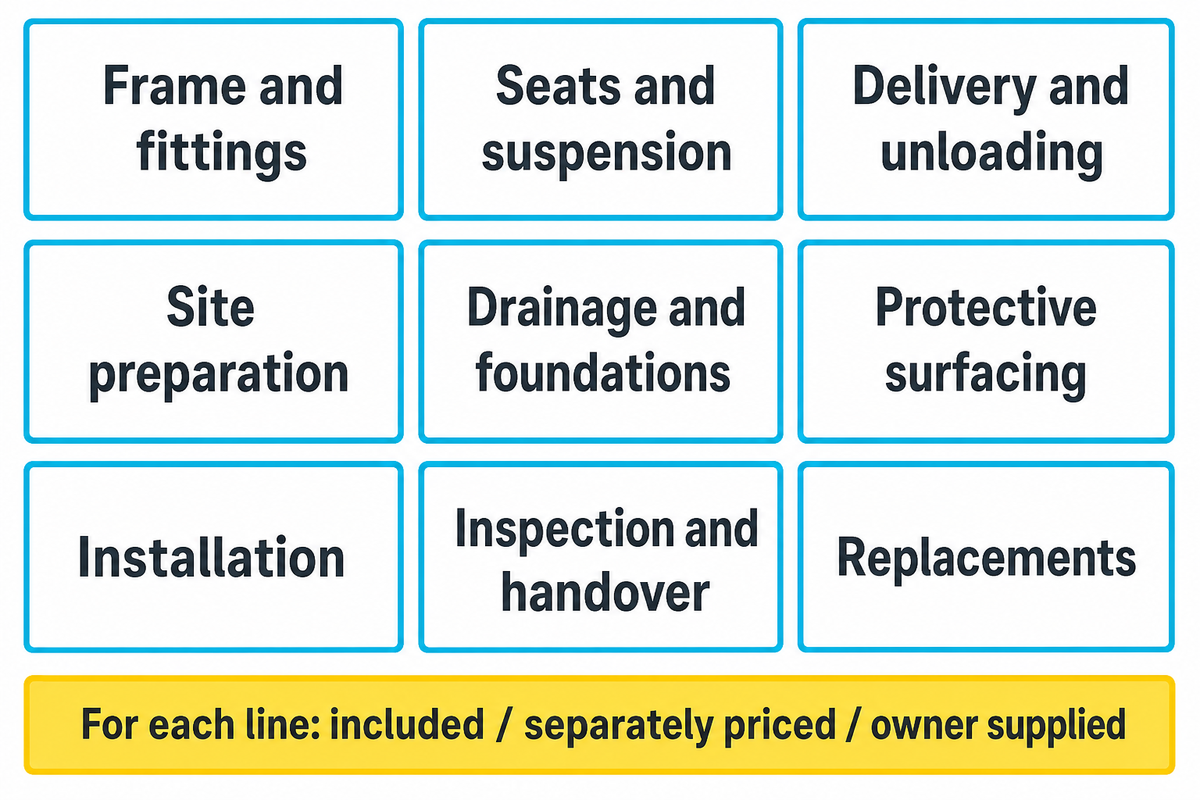
Compare complete swing quotes for a commercial scope, fixed model and seat configuration. A quote for a swingset frame leaves many costs open-ended. Have each bidder identify supplied items, freight, groundworks, surface system, installation and handover so finance can see what’s included and who’s responsible for the remaining costs.
How much do commercial swing sets cost for elementary schools?
The cost of school swing equipment is dependent on the site work and the equipment selected. One concrete reference is Little Tikes Commercial’s LT0930 3.5-inch 2 Seat Arch Swing: its page displayed an approximate US$2,921 on October 20, 2026. The seats are sold separately, and the listed price doesn’t include surfacing, installation, shipping or sales tax. Prices may change.
The same manufacturer lists 32 ft × 23 ft 7 in of required space and an 8 ft fall height. Those published model details help identify the proposed configuration. They don’t turn US$2,921 into a completed-school-project budget. Have the bidder price the chosen seats and the whole site scope against the approved drawing.
Provide a scope of work showing these cost lines to purchase: frame and fittings; seats and suspension components; delivery and unloading; demolition or site prep; drainage and foundations; protective surfacing; installation; inspection and handover; and replacements. For each line indicate if it’s included, separately priced, or owner supplied. Ask whether the swings sold in the offer include every seat and suspension component. If a bid states equipment is in-stock, then verify the exact configuration and delivery commitment. Leaving a scope line blank makes apparently similar offers hard to compare.
Actively Play’s one-bay arch-frame listing illustrates why site quantities matter: it lists an 11 ft 10 in × 4 ft 6 in equipment footprint beside a 24 ft × 33 ft safety zone. Use the selected model’s drawing to request surface quantities, rather than multiplying frame footprint by a generic flooring price. Check the movement-area method against the CPSC swing use-zone guidance.
A manufacturer listing near US$3,000 can leave seats, freight, surface work and installation outside the number. Finance should evaluate completed scope and ongoing upkeep before authorizing the order. Where reserve funding is tight, separate essential opening work from optional expansion; keep the protected layout in either case.
Check the Supplier, Model and Test-Report Scope
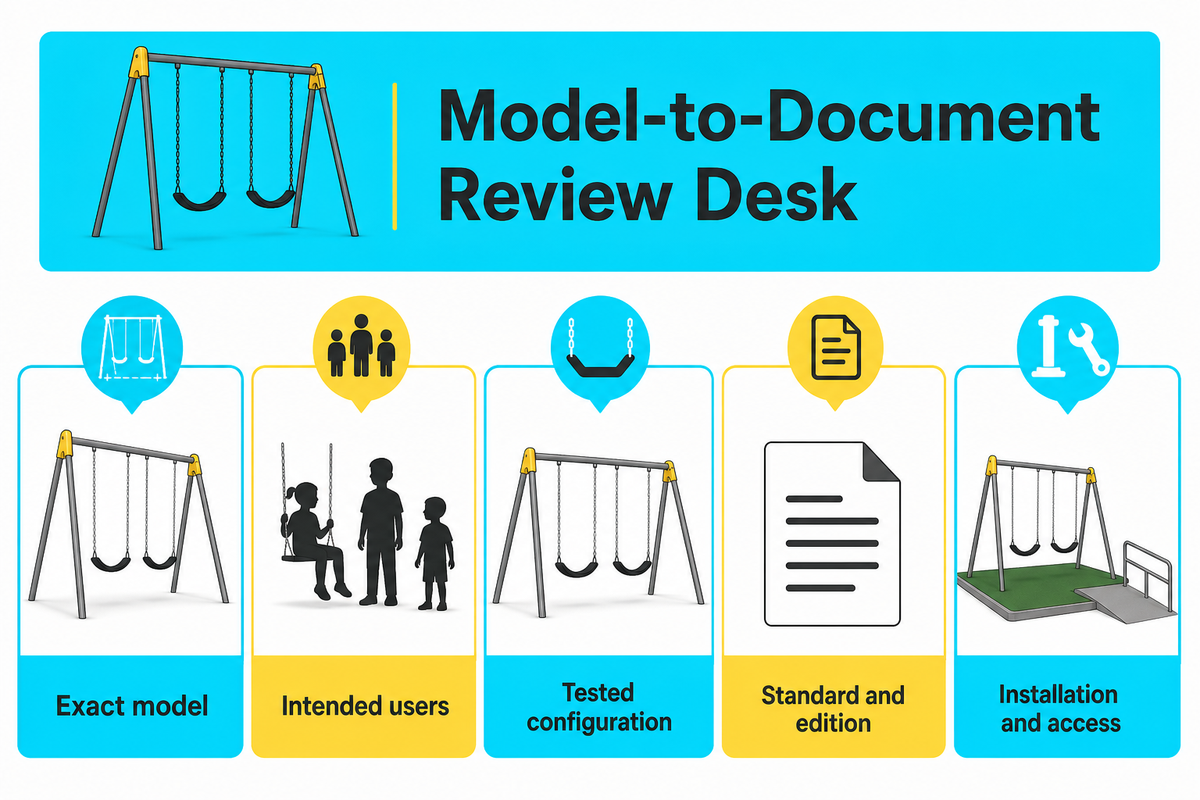
Verify the exact ordered model against its reports, instructions for installation, and intended-use statement. Provide the supplier a list of configurations, and request applicable documents for each. Public playground equipment, soft-contained systems and surfaces have different scopes, while accessibility also depends on the installed route and the way users reach the seat.
The right playground equipment supplier provides the manufacturer and model name, type of seats and suspension, intended age and user groups. Specify the standard and edition, reporting number, and tested configuration and issuing organization. Ask about optional seats or anti-wrap hangers and how these affect the submitted drawing. Retain the warranty and spare parts identification. Separate safety and durability questions when reviewing that warranty.
Accessible swings require compatible seats and a useable approach. Inclusive playgrounds need access planning for both users and caregivers. Choosing the right commercial configuration begins with that fit. To select the best transfer arrangement, review it with intended users and the access designer.
IPEMA’s product certification program lists explicit exclusions from its ASTM F1487-25 certification. Review the certificate with the proposed product, and the site’s installation and access requirements. A company membership, material report or a general badge answers a different question from a certificate for ordered configuration.
For components within 2010 ADA Standards §1008.4 review the seat interface as well as the route. Turning space is immediately adjacent to the swing. Where transfer to an entry or seat is required, §1008.4.4 states 11-24 inches from the clear floor or ground space, and §1008.4.5 states at least one transfer support is required. Fit the applicable provisions into the model’s layout.
ASTM F1918-21 is the published standard for soft-contained equipment. Review the actual system scope as well as the site requirements. Indoor project and service introduction for DidiPlayArea sets the stage for supplier discussion; playground standards comparison addresses the other questions.
An accessible transfer seat within the cited provisions uses an 11–24 in measurement from clear ground space; a swing’s fall height uses the pivot above its protective surface. Keeping those references separate prevents the procurement drawing from answering one question while the access reviewer is checking another.
Inspect Installation Before Opening the Play Area
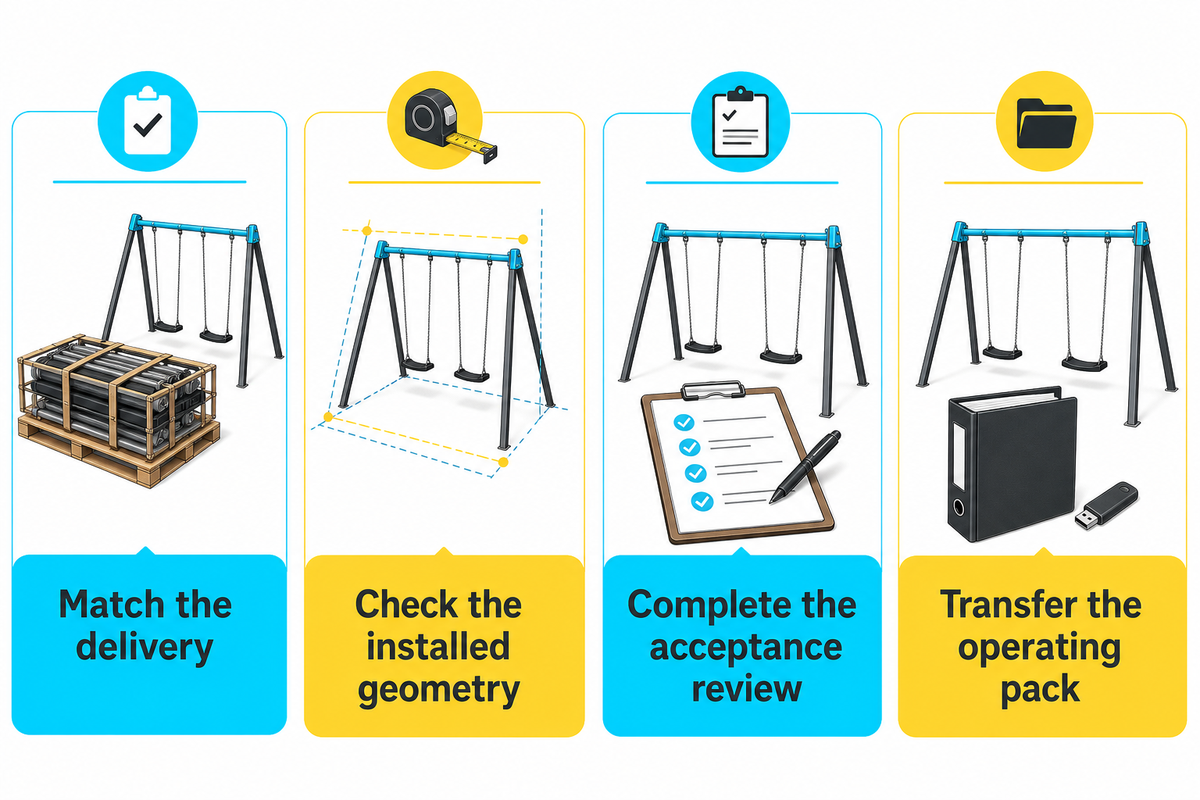
Review the approved drawing and manufacturer’s instructions to inspect the installed swing prior to opening. Verify that the seat arrangement and the finished surface level, anchors and protected space are as approved. The handover should indicate who inspected the installation, what issues are remaining, and who’s responsible to resolve them. Keep the area closed until the remaining acceptance work is completed.
- Match the delivery. Check model labels, supplied seats, suspension components and fittings against the order.
- Check the installed geometry. Measure from the actual pivots and finished surface; review the access route and nearby equipment.
- Complete the acceptance review. Resolve anchorage, surface and equipment findings with the responsible contractors.
- Transfer the operating pack. Give the owner instructions, inspection records, warranty details and identified replacement parts.
A last-minute seat substitution warrants a configuration check. The support seat or suspension may affect the relevant geometry or user fit. Contact the manufacturer to confirm compatibility and update the drawing. Keep CPSC’s installation and maintenance guidance in the owner’s reference pack. For safety and quality checks, keep acceptance records for surfaces and other equipment together. Color approval isn’t configuration approval.
Imagine an installation of replacement park equipment where the frame and surface were ordered separately. The owner’s final check should bring both contractors back to one drawing with matching finished levels. An 8 ft pivot entered on the equipment sheet and a later surface-level change need reconciliation before the layout and fall-height records are signed off.
Plan Maintenance and Review New Safety Guidance
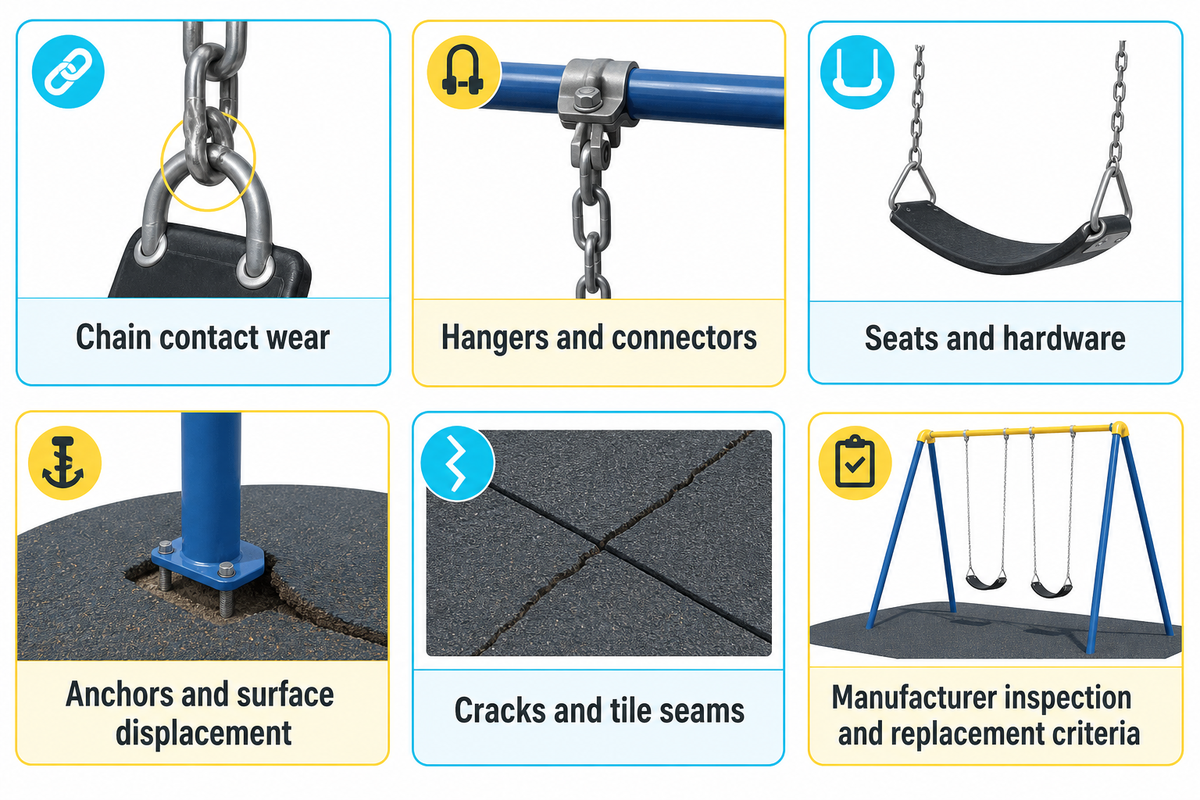
Plan equipment maintenance around site use and surface condition, with a named individual responsible for records and repairs. Inspect the connections along the swing path and the area under it. Seat and surface repairs and modifications to playgrounds, as well as changes to suspension and connections, should also be reviewed as part of configuration. A playground is changed during operation and also during the installation process.
CPSC’s maintenance guidance and Playworld’s swing maintenance checklist identify chain contact wear, hangers, connectors, damaged seats, loose hardware and modifications as concerns. Check anchors and surface displacement as well. Follow the manufacturer’s inspection and replacement criteria, adjusting the equipment use and maintenance schedule to actual use and conditions.
List unitary surfaces in the inspection record. Cracks, edges of tiles, and separated seams merit review, in addition to loose-fill depth. A smooth-looking route and an impact-attenuating surface need their own checks. Assign a named operator to maintain the conditions for safe play. For other work tasks, the indoor play maintenance guide can assist an indoor venue’s schedule.
The August 2025 CPSC update notice provides information on changes to several areas, including swing-seat impact-testing guidance and treatment of multi-axis designs. The notice states that the handbook isn’t a rule. Keep current guidance, the applicable requirements and the selected equipment instructions in the owner’s review process.
Key takeaway
Reserve the complete movement area before buying a swing. For indoor projects where that area does not fit, choose the activity and equipment category first, then compare a fully dimensioned layout and an itemized installation scope.
Looking to create an indoor play area?
Send DidiPlayArea your room dimensions, clear height, doors and columns, target ages and desired play activities. Describe what you want children to enjoy. Start with the indoor equipment range, then request a layout and a quote that names the installation responsibilities.
Frequently Asked Questions
What age group are commercial playground swings designed for?
Select the age range and intended-use category stated for the actual seat and frame.
Use the selected model’s stated age range and intended-use category. ASTM F1487-25 addresses its 2-to-12-year-old percentile range, while ASTM F2373-24 covers public equipment for its 6-through-23-month percentile range. A bucket-shaped seat does not settle the standard by itself. Confirm the actual seat, frame, supervision needs and permitted users before ordering.
How do you add accessories to a commercial swing set?
Use accessories approved for the specific model, with any required drawing and compatibility updates.
Add accessories through the equipment manufacturer’s approved configuration and instructions. Identify the exact frame, seat and suspension components, then check how the change affects user fit and the installed layout. Treat a new seat, altered chain length or extra bay as a configuration change. Keep the approval and revised drawing in the maintenance file.
Do you want standard or multi-user swing sets?
Choose the documented user capacity and activity that fit your playground brief.
Choose according to the intended activity and the specific model’s permitted users. CPSC’s belt-seat guidance calls for one user per seat. Shared-use or generational equipment needs its own capacity, layout and impact-testing documentation. A wider seat alone does not establish multi-user suitability. Check how people approach, transfer to and leave the selected equipment.
How many swings should a school playground have?
Plan the number around users, protected space and supervision, then check the bay arrangement.
Set the number from the age groups, expected use, available protected space and supervision plan. CPSC recommends no more than two single-axis belt swings per bay. That recommendation is a bay-layout check, rather than a swings-per-student formula. Price the proposed configuration and review the full site before adding another bay.
Can an outdoor swing be installed inside a family entertainment center?
Install indoors when the selected equipment and project design support that application.
Use an indoor installation only when the selected model and project design allow it. Review suspension or anchorage, movement space, surface requirements, circulation and the applicable equipment category. Where the room cannot accommodate that proposal, compare climbing, sliding or toddler-play alternatives against the venue’s activity goals.
References & Sources
- CPSC Public Playground Safety Handbook, July 2025, §5.3.8 and maintenance guidance.
- ASTM F1487-25 public scope; ASTM F2373-24 public scope; ASTM F1918-21 public scope.
- U.S. Department of Justice, 2010 ADA Standards, §1008.
- U.S. Access Board, Play Areas guide and play-surface field-study summary.
- IPEMA certification program and scope exclusions.
- CPSC 2025 handbook update notice, August 13, 2025.
Source and product-page review: October 2026. Current publisher editions and the editions incorporated into applicable requirements can differ; record the project specification explicitly.