Get in Touch with Didi Land

Family Entertainment Center Business Plan: Attraction Mix, Revenue Model, and Equipment Budget

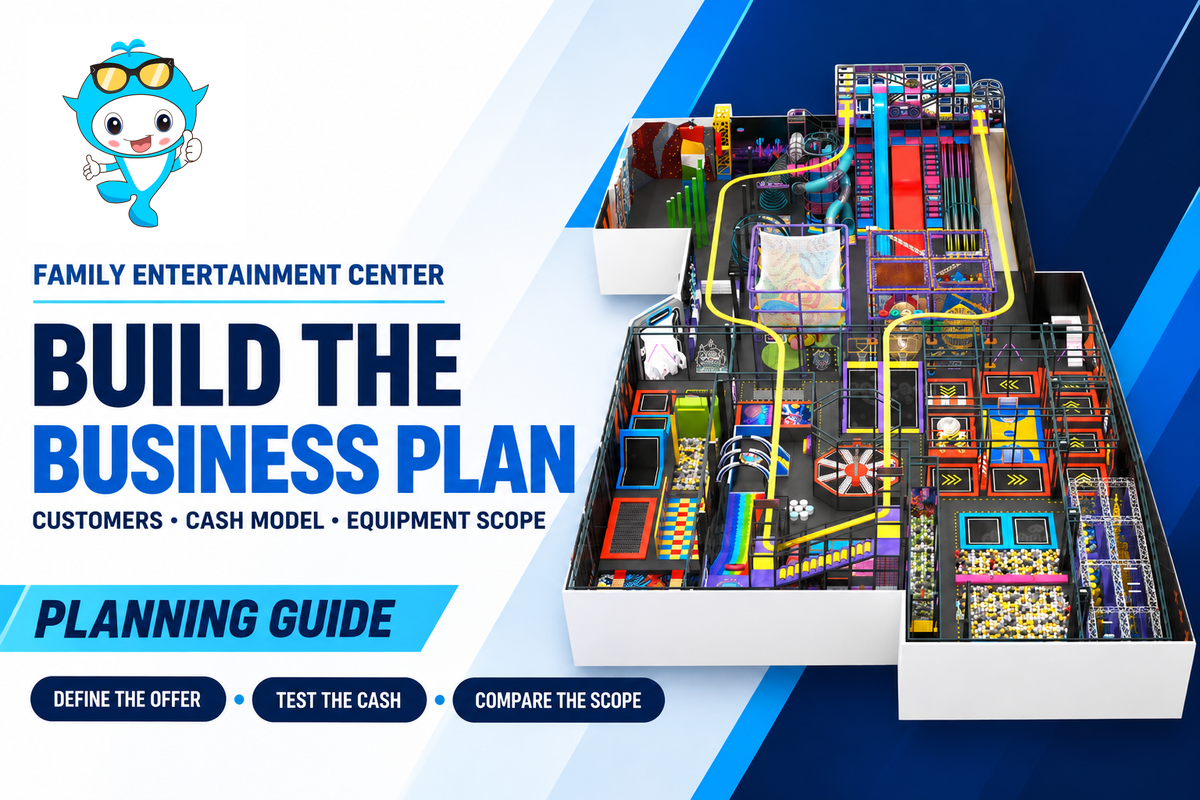
Your family entertainment center business plan should link the customers you want to serve with the space, staff and cash to serve them. Start with paid visits and bookable party slots, then price the equipment and building work. Starting with equipment can leave you flush with an impressive attraction mix and no money to open. This guide turns a parent-accompanied play concept into a monthly cash model and an equipment brief. For the sequence from site selection to opening, see our step-by-step indoor playground startup guide.
Updated October 2026
A family entertainment center business plan links local demand, attraction capacity, operating costs and funding. Separate 3 revenue streams: paid admissions, parties and extras. Test slower sales before committing to the lease and equipment order.
Planning essentials
- Equal monthly revenue can produce different cash results when the sales mix changes.
- A party package that includes entry must not generate a second admission sale in the forecast.
- Equipment, building fit-out and cash for the opening period belong on separate budget lines.
- The example below models parent-accompanied indoor play in a leased unit, with no drop-off childcare.
Start the family entertainment center business plan with a defined customer
A family entertainment center business plan begins with one primary customer group and a visit occasion. A toddler-led weekday venue would require a different layout and staffing plan from an entertainment business for older children. Identify who pays, who plays, and how long the visit lasts and then consider products and services.
“Family fun” is a broad promise. A clearer concept might be parent-accompanied play for younger children, birthday parties, and a small game area for siblings. Explain the entertainment experience in plain language. What can the entire family do together? Where can an adult sit to supervise?
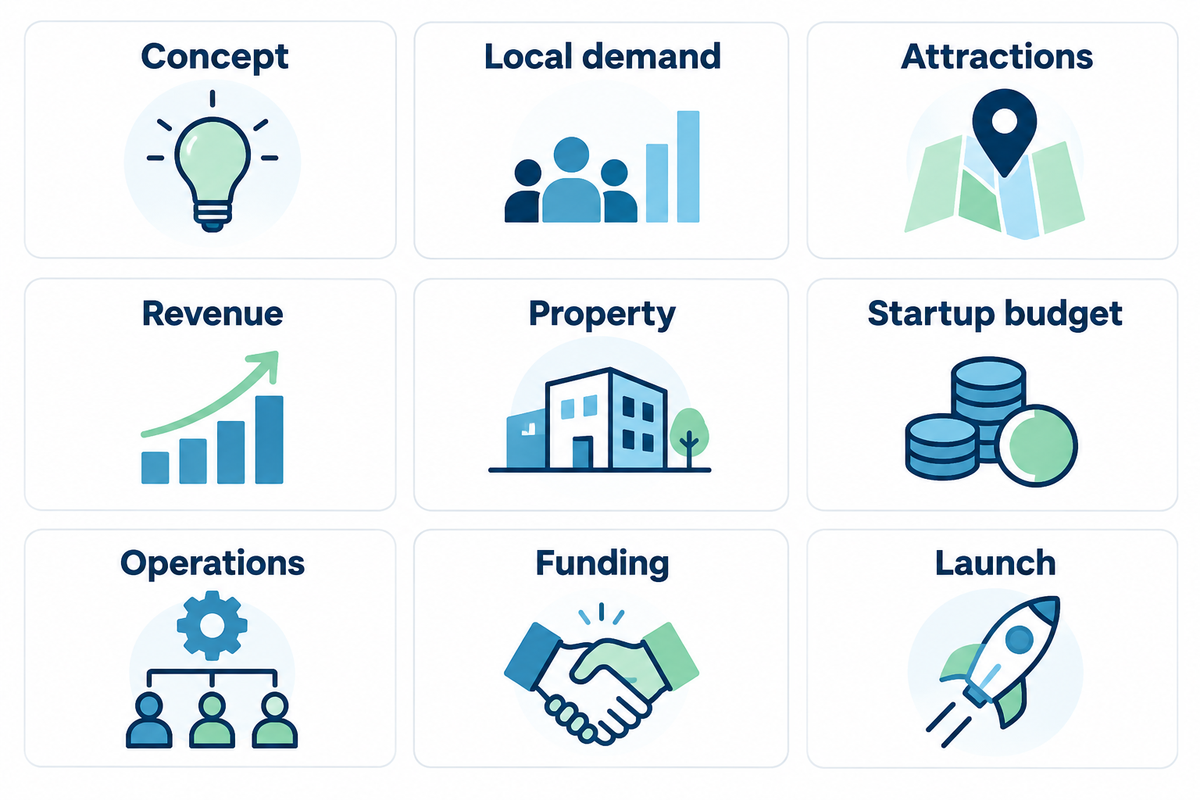
You can adapt the center business plan template below to suit your needs. Each row has a decision and supporting rationale, so the executive summary can state the project’s business goals without replacing the financials.
| Plan section | Decision to make | Working record |
|---|---|---|
| Concept | Primary ages and visit occasion | One-page customer brief |
| Local demand | Reachable customer base | Catchment and competitor notes |
| Attractions | Phase-one games and activities | Equipment and operating comparison |
| Revenue | Paid units and package pricing | Monthly sales model |
| Property | Usable space and permitted use | Measured plan and approval route |
| Startup budget | Total project cash requirement | Quotes and payment dates |
| Operations | Staff posts and maintenance cover | Opening and peak-hour roster |
| Funding | Equity, borrowing and cash timing | Funding schedule and downside case |
| Launch | Conditions for opening and expansion | Dependency list with owners |
Planning framework: Didi Land synthesis, using U.S. Small Business Administration business-planning guidance.
A family fun center with two party rooms needs a reason for daily visits. Position your business around that reason first, and then use parties to schedule a purchase occasion. If the weekday offer doesn’t draw the target families, a second party room won’t increase forecasted demand.
Validate demand before committing to a lease
Local market research should assess how many reachable households will pay to visit the facility to determine the viability of the business. Consider demographics in combination with visits to competitors, price and distance comparisons, and conversations with target customers. Population describes the possible audience; travel time, competing activities and a workable price determine how much of that audience the venue might serve.
The U.S. Census Bureau’s small-business data resources provide some demographic and economic data. Using practical travel time, determine the surrounding areas and note household composition and the location of schools and retail businesses. Record leisure time activities and note the location of potential competition. A citywide population number may mask a challenging road condition or the presence of a stronger competitor located closer to the families of interest.
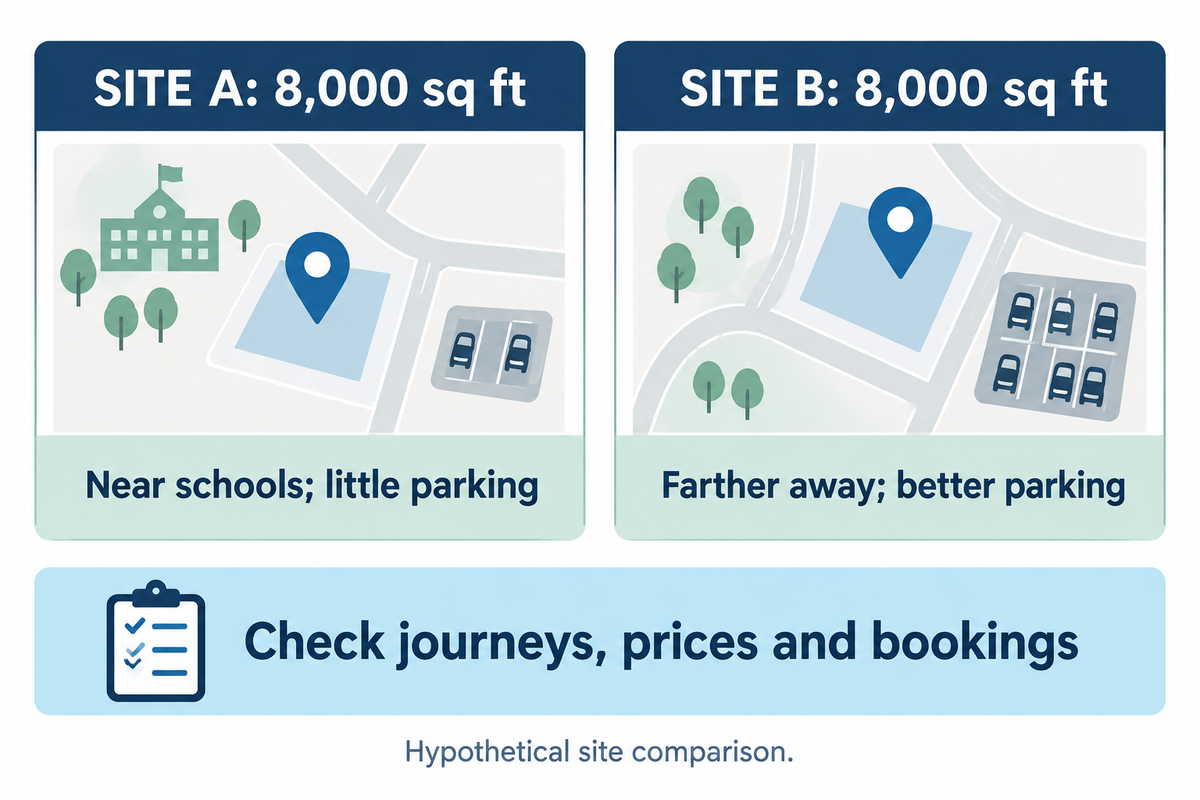
Example: Two candidate units each provide 8,000 square feet. One is situated near schools, but has little parking for after-school pick-up; the other is slightly farther, but has better parking for the target households. Visit each during the times you’re considering selling there, including a quiet weekday and a birthday-party changeover. Record queues, actual admission prices, adult-entry charges, party package contents and any constraints on access. Find out what journey families would repeat, what occasion they’re celebrating, how much they typically spend, and what they usually get for that money. Treat these responses as a first test, then compare them with enquiries or bookings from a clearly described offer before accepting higher rent.
Separate marketing from site selection. School relationships and offers can attract more families, but a promotion can’t create parking spaces or change a poor entrance. Track your campaign’s enquiry to booking conversion, as opposed to copying a competitor and assuming conversion rate.
For a two-site comparison, use the same customer ages, hours of operation and visit prices in both projections. Otherwise, a lower-rent property can appear stronger simply because its spreadsheet assumes more customers. Separate weekday and weekend demands until actual trading justifies combining them.
Choose the attraction mix your team can operate
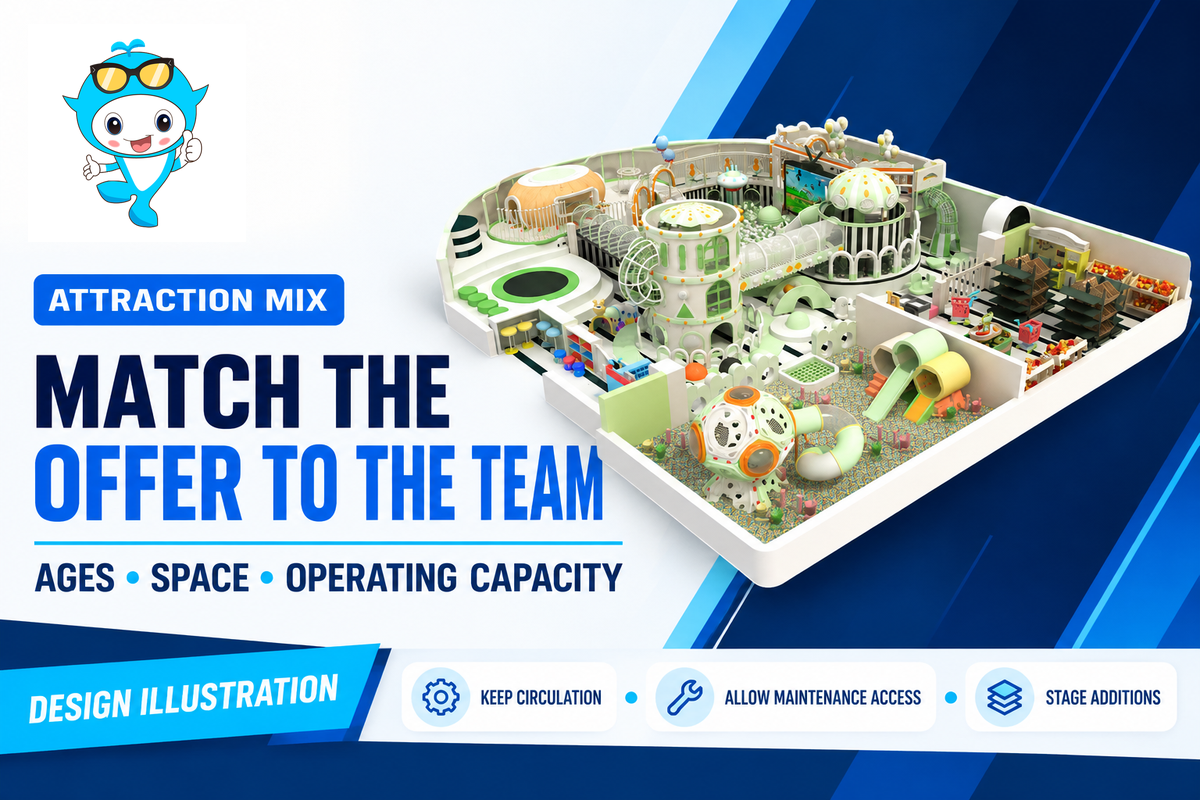
Match customer ages, available space, and operating capability when selecting between attractions. Soft play, arcade games, laser tag, and a bowling alley create different staffing, maintenance and booking demands. Start with the offer that meets demand for the main visiting occasion and add a second offer only if its expected contribution covers the additional operating burden.
A toddler zone requires separation from faster play. It requires adult line of sight for accompanying adults. Older siblings may prefer an arcade or other structured activities. Some families want to skate or bowl rather than buy a short playground visit, which changes the building brief and the purchase list.
Indoor playgrounds for family entertainment centers can provide the core play offer. For equipment selection, compare commercial soft play equipment against the intended ages and measured layout. “Kids of all ages” is too vague to size a toddler area, choose obstacles or plan supervision.
ASTM F1918-21 helps address safety performance of soft-contained play equipment. Match the equipment category to the prescribed standard, and maintain the operating plan with installation instructions, inspection, and training of staff.
Adding another row of high-quality games may look good, but consider access for maintenance. When equipment works, it may be generating revenue, but access for removal and repair needs to be considered. An amusement activity may be very popular, but compare its contribution per occupied space with equipment support, part availability, and downtime, rather than by its ticket price.
During the first phase dedicated to one indoor playground and two party rooms, maintain circulation and service access, and allocate the remaining space for functions to be added later. An additional activity in the first phase is useful only if it can be accessed by families and operated by staff during the busiest hour of the day. Useful equipment can’t compensate for an unworkable staff roster.
Build revenue from visits, party slots and paid extras
Model revenue as paid units multiplied by the price actually collected, with direct costs deducted for each stream. Keep admissions, parties, and extras separate to maintain visibility to package inclusions. A party center can count the same child twice and a membership can mix up repeat visits and new admissions.
3-Stream Party-Slot Revenue Check
The 3-Stream Party-Slot Revenue Check separates admissions, parties, and extras to evaluate their contribution toward fixed operating costs.
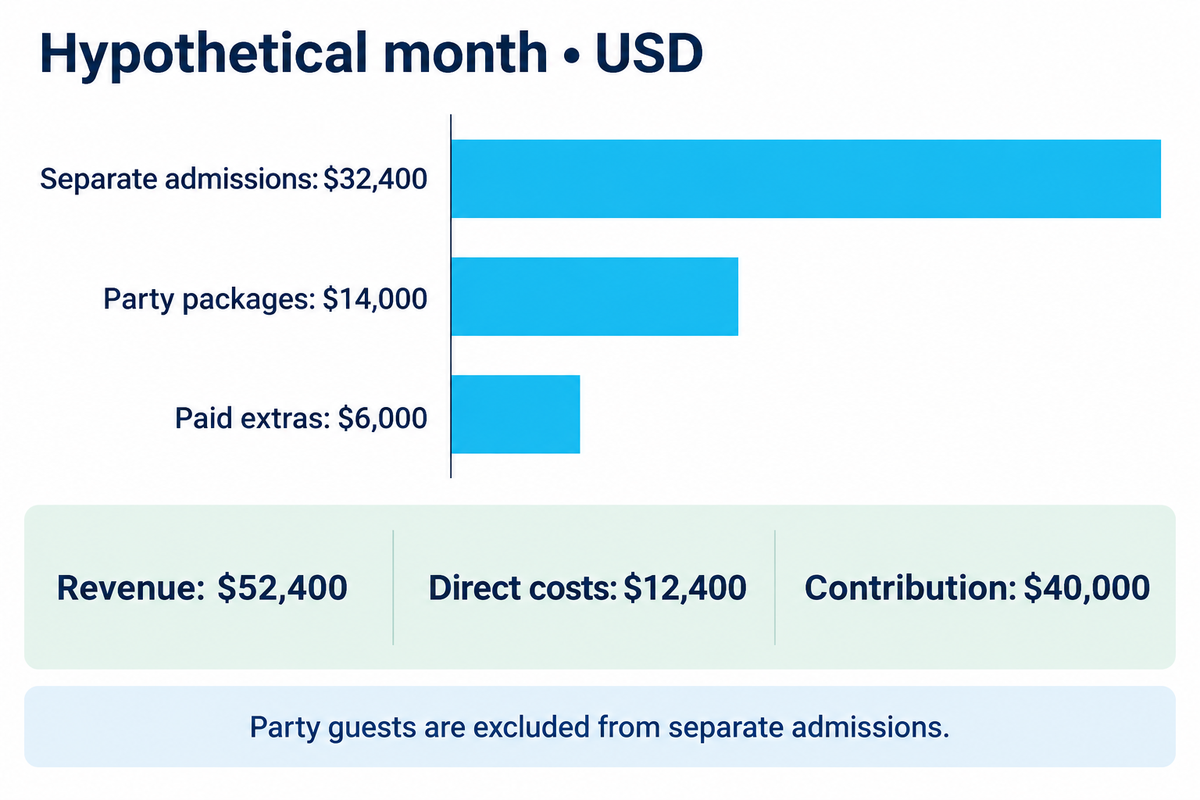
Assumed inputs: one month, U.S. dollars, 1,800 separately paid admissions, 40 party packages, and 1,200 extras. Party guests are excluded from the 1,800 admissions. Extras are purchases outside package inclusions. Revenue is stated prior to sales tax; no membership receipts or drop-off services are included.
| Revenue stream | Paid units × price | Revenue | Direct cost per unit | Contribution |
|---|---|---|---|---|
| Separate admissions | 1,800 × $18 | $32,400 | $3 | $27,000 |
| Party packages | 40 × $350 | $14,000 | $100 | $10,000 |
| Paid extras | 1,200 × $5 | $6,000 | $2.50 | $3,000 |
| Total | Separate sales units | $52,400 | $12,400 total | $40,000 |
Source: original worked example. Contribution equals revenue minus the listed direct costs; the assumptions are inputs to replace with your own prices and costs.
Subtract $35,000 in fixed monthly cash operating costs and the example leaves $5,000 before debt service, taxes, depreciation and replacement investment. Assign each expense once: direct party labor belongs either in package cost or in the fixed roster calculation, never both.
Are family entertainment centers profitable?
Yes, a family entertainment center can be profitable when the contribution from its sales covers operating costs and the remaining financial charges. In the example, $40,000 contribution covers $35,000 fixed cash operating costs, leaving $5,000 before the excluded charges. A profitable investment still requires enough cash through construction, opening and slower trading months.
At the same sales mix, break-even revenue for those fixed cash costs is $35,000 ÷ ($40,000 ÷ $52,400) = $45,850 per month. An explanation of multi-product break-even by OpenStax discusses the sales mix. Different products contribute toward fixed costs differently.
Now change the month without changing ticket prices. If every sales volume falls 25%, revenue becomes $39,300 and contribution falls to $30,000; the same $35,000 fixed cost leaves a $5,000 shortfall. A different test keeps revenue at $52,400 but changes the mix to 1,400 admissions, 40 parties and 2,640 extras. Contribution then becomes $21,000 + $10,000 + $6,600 = $37,600, leaving $2,600. The second venue month looks just as strong on a revenue dashboard, yet provides $2,400 less toward borrowing, tax and reinvestment. Review sales mix alongside total sales when deciding whether to expand.
Party capacity also needs to be checked. Two rooms with two bookable sessions on each of 20 offered days create 80 room-slots; selling 40 means 50% slot occupancy. Allow setup and cleaning within the timetable. Capacity calculations help determine available inventory, and the local demand test helps determine if the available slots will be purchased.
Separate equipment, fit-out and opening cash
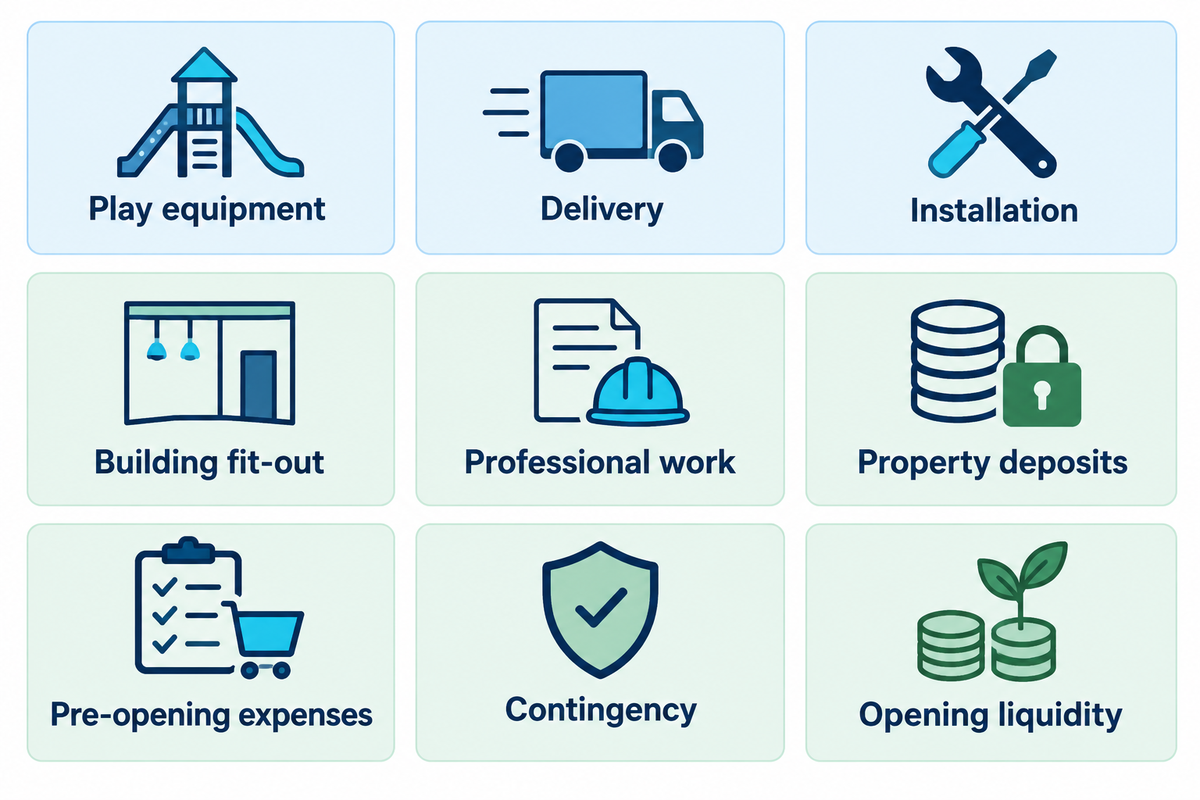
The first budget needs to distinguish the purchase of equipment, building work in-situ, and cash flow before the business becomes self-supporting. All payments must be allocated a specific date and a named supplier. The lowest cost of equipment can still mean a larger initial investment due to the cost of electrical work and ventilation and the provision of delivery access, or delays in opening the business.
The Small Business Administration startup-cost guidance classifies one-time costs and recurring costs differently. Apply this classification and develop a cash schedule for the new business.
“One-time expenses are the initial costs needed to start the business.”
How much does it cost to build a family entertainment center?
There are nine categories of cash outlays: equipment, delivery, installation, fit-out, professional work, property deposits, pre-opening expenses, contingency, and opening liquidity. Compare the costs of leased facilities with other leased facilities. Constructing a new building or purchasing land alters the boundaries of the investment.
| Budget category | Include | Evidence to obtain |
|---|---|---|
| Play equipment | Named items, quantities and options | Itemized equipment quotation |
| Delivery | Agreed freight, import and final delivery scope | Delivery term and named destination |
| Installation | Labor, access equipment, travel and site readiness | Installation scope and exclusions |
| Building fit-out | Partitions, services, finishes and required alterations | Site-specific contractor estimate |
| Professional work | Design, permits, inspections and specialist advice | Fee proposals and approval schedule |
| Property deposits | Lease and utility deposits paid before opening | Lease terms and cash due dates |
| Pre-opening expenses | Recruitment, training, insurance and launch activity | Costed launch plan |
| Contingency | Identified scope and timing uncertainties | Risk register with cost allowances |
| Opening liquidity | Funding for the forecast cash deficit after opening | Monthly downside cash schedule |
Cost classification: original planning synthesis using SBA guidance. Deposits and retained cash are cash requirements, and not automatically operating expenses.
Example: an owner has $60,000 left after committed equipment and fit-out payments. A delayed handover creates two additional months of $15,000 pre-opening rent, insurance and retained payroll. That consumes $30,000 before the first admission sale. If the following two months each produce the $5,000 operating shortfall in the revenue example, only $20,000 remains before debt service, tax and other excluded payments. Cutting a decorative upgrade by $5,000 helps, but changing the payment schedule or resolving the building delay may matter more. Put the delay case beside the equipment quote when deciding how much funding is required.
How do you get funding for a family entertainment center business plan?
Compare financing options, including owner equity, eligible business borrowing and investor funding, against the cash schedule. A lender needs repayment capacity; an investor needs a credible return and ownership arrangement. Angel investors may also seek control rights. Keep funding costs and repayment dates in the model rather than treating available credit as operating profit.
When evaluating an acquisition or franchise, include the purchase terms, ongoing costs and existing obligations in your analysis. For more on the decision to purchase a business vs. starting a new one, see our guide on starting a new indoor playground business versus buying a business. Buying a franchise pays for a specific arrangement and doesn’t give freedom from local demand and property constraints.
Check the building before freezing the layout
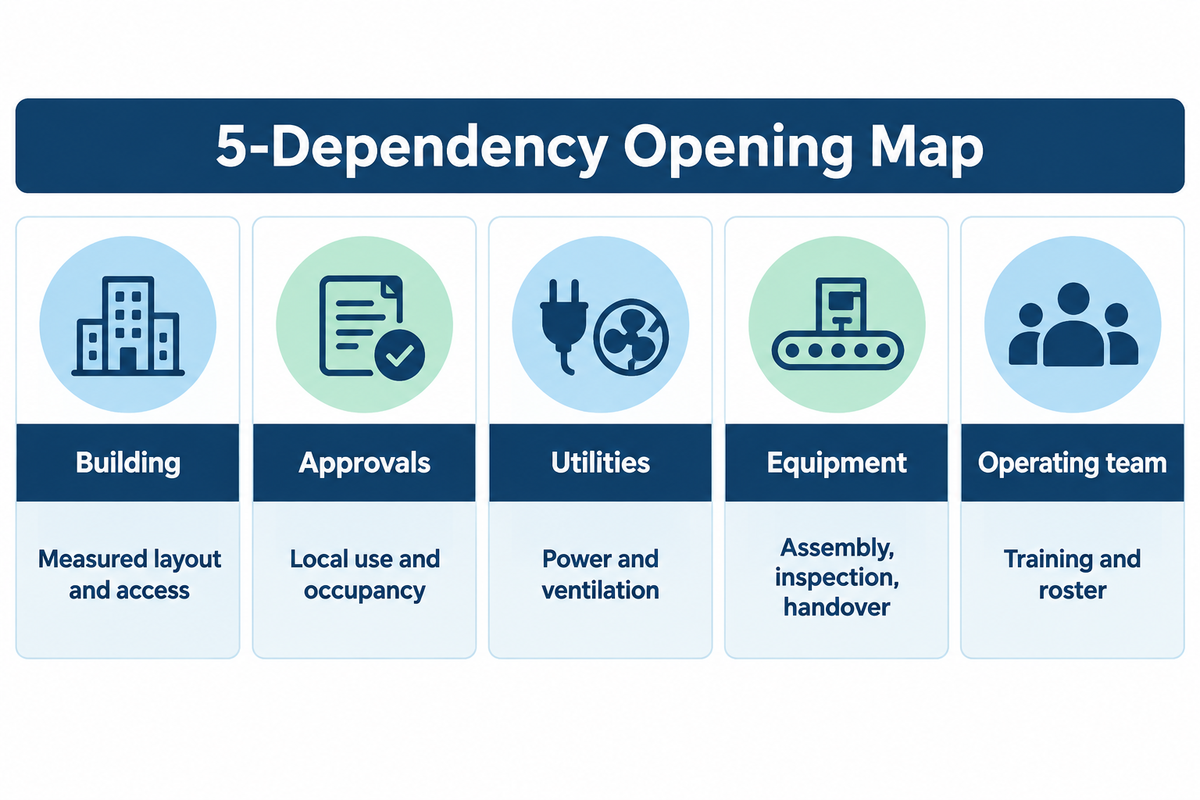
The building will help determine how much of the proposed attraction mix can operate. Review measured dimensions, clear height, column layouts, access, utilities and the approval route prior to committing equipment locations. Gross square footage includes non-play space, such as circulation and service areas.
The play area guidance by the U.S. Access Board describes play components and accessible routes. Treat accessibility constraints as layout inputs, including height and clear width. For a local occupancy example, refer to Fairfax County’s commercial occupancy guidance. The project’s own jurisdiction will determine the approvals process.
5-Dependency Opening Map
The 5-Dependency Opening Map aligns the building, utilities, approvals, equipment and the operating team to an objective opening date.
| Dependency | Required decision | Opening consequence |
|---|---|---|
| Building | Measured layout, access and service areas | Equipment can enter and fit as planned |
| Approvals | Local use, occupancy and applicable equipment requirements | The intended activities can lawfully operate |
| Utilities | Power, ventilation and other required services | Installed activities can run during peak demand |
| Equipment | Delivery, assembly, inspection and handover | Each activity is ready for its intended users |
| Operating team | Training, insurance, roster and emergency procedures | The venue can serve its first customers |
Dependency Map: Original project planning synthesis; Local design and approvals govern each location.
Run the FEC layout and zone calculator as an early allocation exercise. Reconcile calculated zones with the measured plan. A support-space mix may include a café amenity, storage room or additional toilet, even if they aren’t ticketed.
For simultaneous events, follow both groups from arrival through shoes and bags, play, and room changeover. Make sure both groups won’t need the same narrow access point at the same time. Change the schedule or the layout before buying. The opening plan needs to account for the flow of attendees through the venue, as well as the placement of equipment.
Turn supplier quotes into a complete delivery scope
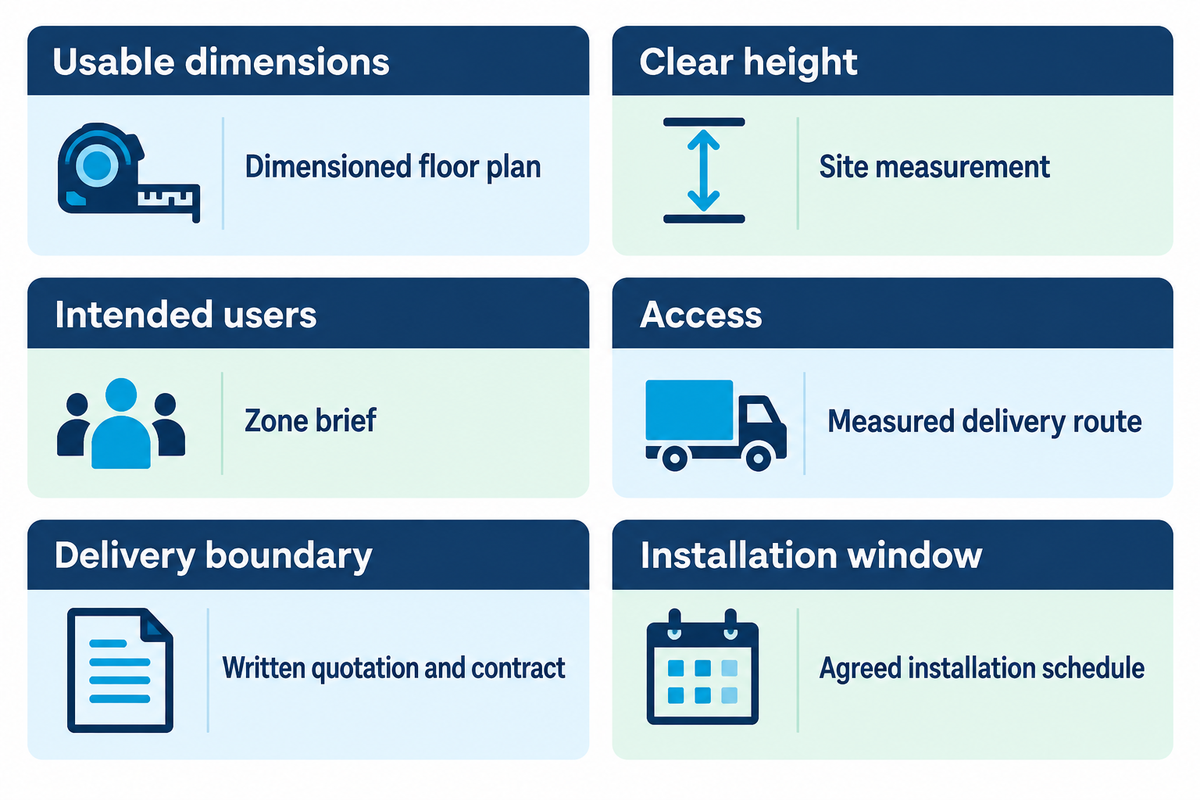
Similar quotes from suppliers describe the same equipment, destination and the extent of installation and handover. Set boundaries and request these in writing prior to comparing totals. A one-stop offer may include services that another quotation prices separately; a lower headline figure may not be relevant unless the quantity, responsibilities and payment milestones also align.
Delivery terms make a difference. In an ICC Academy article on EXW and DDP, Miguel Angel Bustamante, an ICC-certified trainer, states that under DDP, the buyer takes the final risk for unloading and the costs to unload may already be included in the transport contract. The scope of work for installation and training still needs to be defined in writing.
Copy this quote boundary sheet into your request and fill measured values rather than selecting a generic package based on floor area.
Quote Boundary Sheet — information for a comparable equipment proposal
| Parameter | Recommended range | Why it matters | How to verify |
|---|---|---|---|
| Usable dimensions | Measured length and width in m or ft | Separates equipment space from service space | Dimensioned floor plan |
| Clear height | Measured minimum height in m or ft | Accounts for beams and services | Site measurement at constraints |
| Intended users | Age range in years for each zone | Guides activity and separation choices | Zone brief and equipment proposal |
| Access | Door and route clearances in mm or in | Determines delivery and assembly access | Measured delivery route |
| Delivery boundary | Named place and agreed trade term | Allocates transport and unloading duties | Written quotation and contract |
| Installation window | Available dates and working hours | Links assembly to site readiness | Agreed installation schedule |
Ask for the equipment list, installation exclusions, inspection and handover documents, warranty and spare parts, and payment milestones, all at the same time. Confirm who will supply lifting equipment and who will accept the finished play-equipment installation. High-quality play equipment and a complete delivery contract solve different aspects of the opening task.
When presented with a choice between two (or more) proposals, the bid with the lowest price may not be the most competitive. Sometimes, choosing the less expensive bid can lead to surprises. For example, imagine one bid includes the cost of labor to install the equipment, but the other bid doesn’t. Comparing their totals directly conceals a real cost. Keep the optional upgrades separate, especially if a later design change adds equipment to the base package.
Plan staffing, maintenance and the first 90 days
For the first operating plan, assign employees to entry, supervision, parties, cleaning and maintenance during the most demanding periods. Construct the roster from those responsibilities and cost it. The SBA business-planning guidance recommends quarterly or monthly financial projections for the first year. Customer service suffers if the same employee is expected to check in a party, clean the room and supervise an activity, all at the same time.
List operating checks, cleaning intervals, reporting of defects and repair escalation. Outline the conditions that would lead to removal of the equipment from service. A waiver is an administrative document; it does not perform an inspection or train an employee. Insurance scope and any permits required for the operation and inspection of the equipment must be kept with the opening documents for the venue.
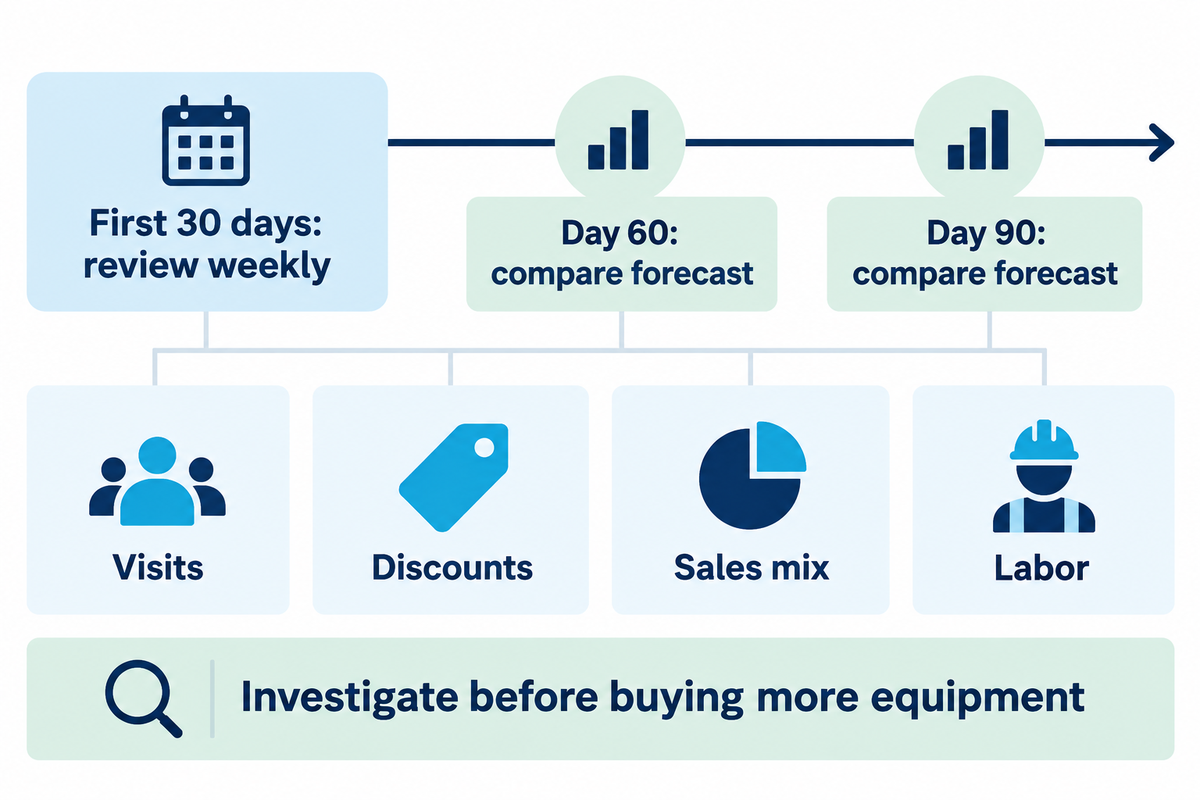
Within the first 30 days, take a look at paid admissions, party bookings, average collected price, direct costs, staff hours, and downtime each week. On days 60 and 90, compare the results with the original cash forecast. Look into why a miss occurred. Was it due to less foot traffic, bigger discounts, a sales mix change, or additional labor? Make the equipment purchase only after investigating fewer visits, heavier discounts, a changed sales mix or additional labor.
An offer during a community gathering or on weekdays can help use quiet hours, but cost the added opening period first. Set your business targets based on contribution and cash as well as attendance. A larger crowd can help decrease profitability if the offer adds labor and package costs faster than collected revenue.
Industry outlook: stage investment around proven demand
Stage your investments based on the customer demand and operating capacity your own venue can demonstrate. New attractions compete for floor space, staff attention and cash, so expansion should follow a measured operating review. Opening a family entertainment center with room for a later addition can preserve options if the first months show a different customer mix.
IAAPA’s 2025 entertainment-center benchmark report includes attraction, admission, staffing, revenue and expenses for the 2024 operations. Match the operating period and business model prior to using any benchmark for a 2026 forecast.
A venue centered on younger children shouldn’t inherit the revenue mix of a large multi-attraction destination. Likewise, an admission-led operation and a game-credit-led operation may show similar sales but different direct costs. Keep the comparison tied to the activities you want to run.
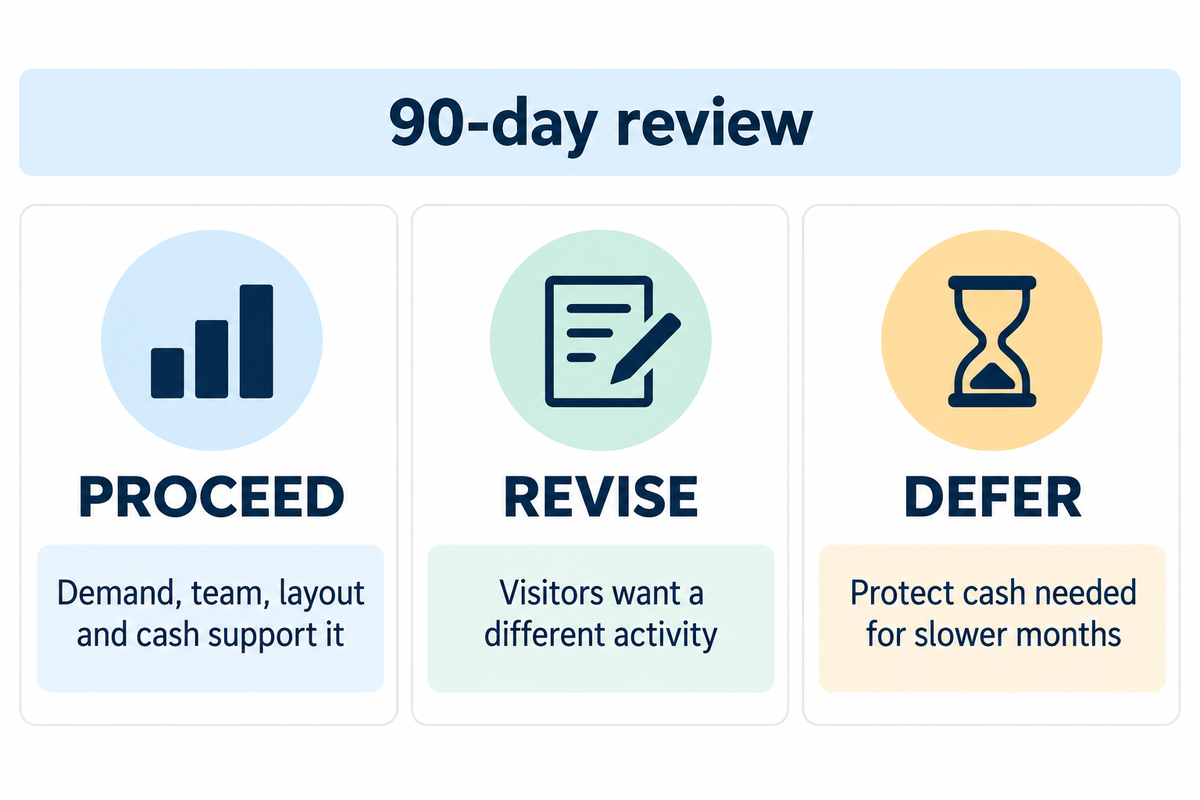
Use a staged decision at the 90-day review: proceed with an addition when the demand record, operating team, revised layout and cash forecast support it; revise the offer when visitors want a different activity; defer when the addition would consume the liquidity needed for slower months. Reserve the possible space during design without treating a future attraction as committed revenue.
For an operator preparing to open an FEC, the next step is a measured, complete brief and cash model. Both can be changed while proposals are compared. Once the base layout and delivery scope are agreed, control changes through a revised opening schedule and cost so an attractive upgrade does not delay the launch.
Key takeaway
In the worked example, a 25% fall in sales volumes turns a $5,000 operating surplus into a $5,000 shortfall. Fund the downside case before expanding the attraction list.
Frequently asked questions
What is a family entertainment center?
A family entertainment center combines activities families can enjoy at one venue.
The mix can include an indoor playground, arcade games, bowling, laser tag and party rooms. A new project can start with a narrower offer that matches its main customer group. Define the intended ages, visit occasion and operating model before choosing attractions. FECs also need support spaces for circulation, toilets, storage, staff and accompanying adults, which reduce the area available for equipment.
How do I avoid counting party revenue twice?
Exclude party guests from separate admission sales when entry is included in the package.
Forecast the package as one paid sale, with its included admission, food and staff costs recorded together. Count only genuinely additional purchases in the extras stream. For example, 40 packages at $350 produce $14,000 in party revenue. The children attending those parties don’t create another ticket sale unless the contract actually charges admission separately. Use the same rule for membership visits and bundled promotions.
What should an equipment budget include?
Include the specified equipment and every agreed cost needed to deliver and install it.
Separate equipment quantities from freight, import duties where applicable, final delivery, unloading, installation labor and any required access equipment. Record which party pays each item and when. Keep building fit-out, professional fees, deposits and opening cash elsewhere in the total project budget. That structure lets you compare two equipment proposals without losing sight of the complete amount needed to begin trading.
Can I use a free business plan template?
Yes, use a template for structure and replace its assumptions with your own operating model.
Keep the nine decisions above, then attach local demand notes, a measured layout, comparable quotes and monthly cash projections.
Should I buy every attraction before opening?
No, buy the phase-one mix that your demand forecast, premises and operating team can support.
Reserve expansion space where practical. Add the next attraction when actual sales and contribution justify its purchase and continuing costs.
What should I send to an equipment supplier?
Send a measured floor plan, intended ages, destination and a clear description of the opening offer.
Include ceiling and beam heights, columns, entrances, delivery access and the area reserved for toilets, storage, seating and party rooms. Add the proposed installation window and the division of responsibilities between your contractor and equipment supplier. State whether you need equipment only or installation support, then request a written list of included items, exclusions, handover documents and payment milestones. A short, consistent brief makes competing proposals easier to compare.
Turn the plan into an equipment brief
Didi Land supplies commercial soft play equipment and develops layouts for family entertainment projects. Send your measured floor plan and equipment brief to discuss the play zones, intended ages and delivery scope.
About the examples: the financial models are original planning illustrations, not customer operating results or equipment quotations. For inputs, replace example costs, demand and funding terms with project-specific costs, demand and funding terms. Examples depict U.S. situations; project locations control local requirements.
References & Sources
- U.S. Small Business Administration, planning, startup costs and funding
- U.S. Census Bureau, small-business data resources
- OpenStax, multi-product break-even and sales mix
- ASTM International, F1918-21 public scope
- U.S. Access Board, play-area accessibility guidance
- Fairfax County, commercial occupancy guidance
- ICC Academy, Miguel Angel Bustamante on EXW and DDP
- IAAPA, 2025 entertainment-center benchmark report description
SYS.00 // E-E-A-T Disclosure
Why I Write This
As the CEO and Co-Founder of a specialized manufacturing facility, my objective is to provide unvarnished, factory-direct technical insights into commercial indoor playground engineering, safety compliance, and project planning. I aim to bridge the information gap for global buyers seeking reliable structural and material data, ensuring you make informed, ROI-driven decisions without the marketing fluff.
About My Business
Guangzhou Didi Land Amusement Equipment Co., Ltd. (Brand: Didi Land) is a commercial indoor playground equipment manufacturer founded in 2014. Operating from Panyu, Guangzhou, China, we engineer, produce, and export commercial-grade play structures to over 40 countries worldwide. Our production lines strictly adhere to international safety frameworks, ensuring durability and safety for high-traffic environments.
Our Services
We provide end-to-end B2B commercial solutions: from custom 3D spatial design and OEM manufacturing to worldwide export logistics and compliance testing. Our focus is on empowering Family Entertainment Centers (FECs), shopping malls, kindergartens, and hospitality venues with reliable, high-capacity play infrastructure.
DATA_MATRIX // MANUFACTURER_PROFILE
Name:
Cherry
Role:
CEO & Co-Founder
Brand Name:
Didi Land
Company:
Guangzhou Didi Land Amusement Equipment Co., Ltd.
Location:
Guangzhou, Panyu, China
Founded:
2014
Products:
Indoor Playground Equipment, Soft Play Equipment, Themed Playground Design, FEC Play Zones, Trampoline Modules, Ninja / Obstacle Course Modules
Email:
conglizhang1@gmail.com
Phone:
+86 199 2587 9517
Website:
didiplayarea.com
COMPLIANCE & STANDARDS:
ASTM F1487 · ASTM F1918 · EN 1176 · CPSIA · CE · ISO 9001 · IPEMA
Contact Factory Direct
ASTM F1487 · ASTM F1918 · EN 1176 · CPSIA · CE · ISO 9001 · IPEMA
Related Posts
Trending now