Get in Touch with Didi Land


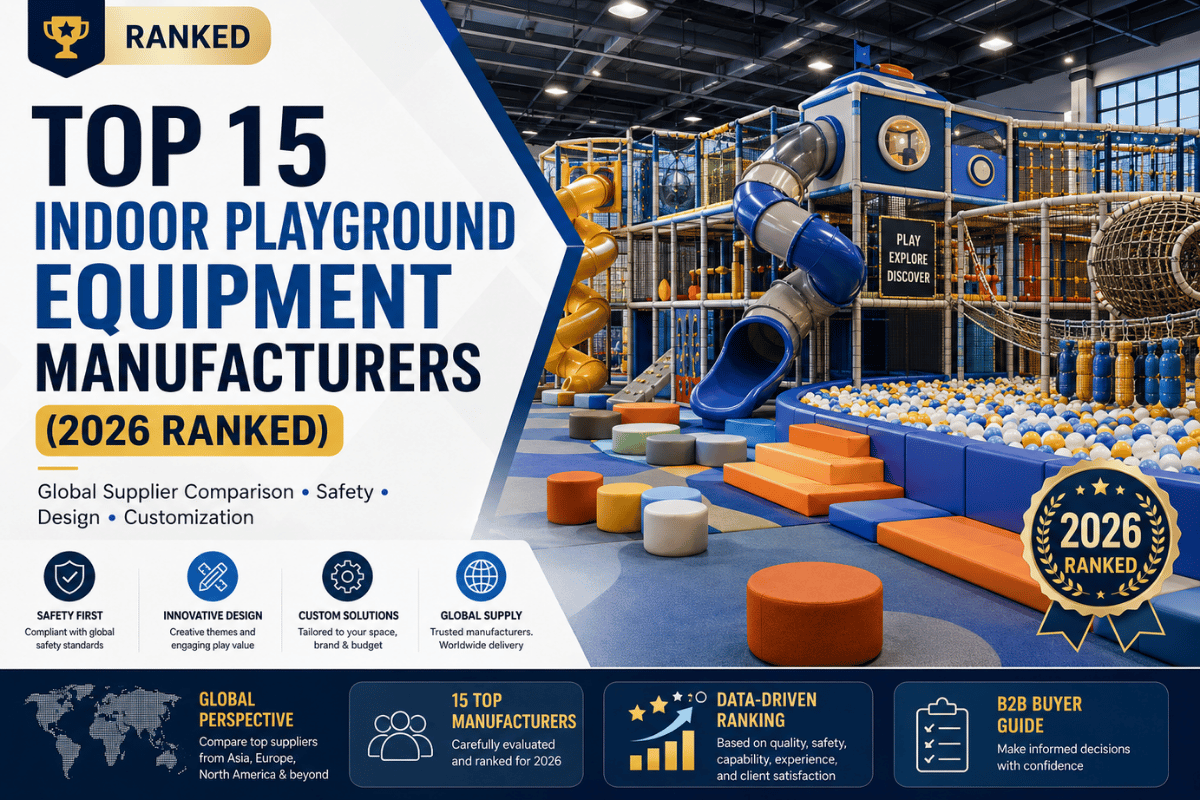
Selecting from indoor playground equipment manufacturers is the biggest single gamble you take before your family entertainment center, mall, or daycare opens for business. The structure will outlast your lease; the certification papers mean if you’ll pass the building inspector, and your after-sales call will determine whether a cracked panel in your third year of operation is an inconvenience or a lawsuit. With the market growing-the indoor children’s playground equipment segment is projected to be worth almost $7.3 billion by ²0²6 and the family entertainment center sector is growing at roughly 10% annually-the number of companies holding themselves out as “manufacturers” is also rapidly increasing. Here is a ranking of the 15 of them based on our six-criterion scoring system; their founding dates; their product offerings; their pros and cons; where to find them online; and our 6-Lens Supplier Vetting Framework which you can use for yourself to assess any vendor.
📌 Disclosure
This ranking is created and published by Didi Land, an indoor playground equipment manufacturer itself. We ranked ourselves at #1, and explain why we merit that position relative to the same six criteria that we applied to every other company, even where we were newer to the list. We link to company homepages here to allow you to research further. We link to one competitor only, to #².
How We Ranked These Manufacturers: A 6-Lens Supplier Vetting Framework
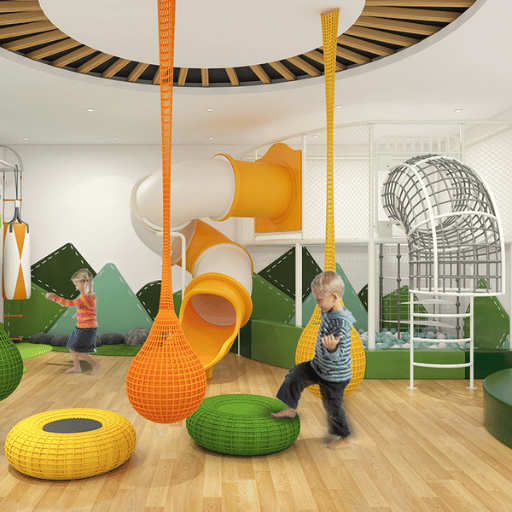
Most “top manufacturers” rankings focus solely on brand recognition or longevity. This isn’t ideal for your particular facility. We approached this ranking like any real procurement manager would. We scored each company based on six criteria, a process that you can adapt to your own decision-making using the 6-Lens Supplier Vetting Framework, which we use for any and all vendors that respond to a quotation request.
- 1. Safety Compliance: Does the equipment comply with relevant standards for public play, such as ASTM F1487, ASTM F1918, or EN 1176-1? Does the manufacturer provide third-party verification from an organization like IPEMA? Are Children’s Product Safety Improvement Act (CPSIA) lead and phthalates test results available?
- ². Origin and Factory Status: Is the company truly a direct factory manufacturer, or are they a reseller distributing products made by other facilities? Are they an established manufacturer with their own production lines?
- 3. Customization Capabilities: Do they offer a fully customizable solution, complete with 3D rendering and engineering verification for your unique design? Or are they strictly selling from a fixed product catalog with standard SKU numbers?
- 4. After-Sales Service and SLA: What are the warranty terms for the equipment? Do they have readily available replacement parts for older installations? How quickly can you expect responses from customer support during your operational hours?
- 5. Track Record and Experience: How long has the company been in operation? In how many countries have they successfully completed installations? What is the size and scale of their installation base?
- 6. Total Landed Cost Transparency: Is the pricing transparent, including all associated costs such as FOB, CIF, and DDP? Or is the initial price an attractive but potentially misleading headline figure that balloons with hidden shipping and installation surcharges?
💡 Pro Tip
No single factor should be a dealbreaker. Daycare operators should prioritize Safety and Customization (lenses 1 and 4), while a high-volume FEC could put more weight on Origin, and After-Sales Service (lenses 3 and 5). After rating each potential supplier on each criterion using a 0-² scale, then compare their total scores to one another before you even start looking at price sheets.
15 Indoor Playground Equipment Manufacturers At a Glance — Comparison Scorecard
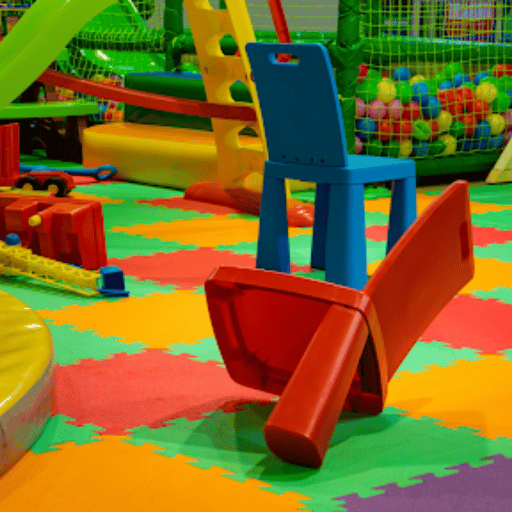
To help, here’s a quick snapshot of our top 15 rated companies based on these criteria: founding year, headquarters, key product types, certifications they emphasize, and the target audience for each. A more in-depth review follows for each company.
| # | Manufacturer | Founded | HQ | Core Products | Key Certifications | Best-Fit Buyer |
|---|---|---|---|---|---|---|
| 1 | Didi Land | 2014 | Guangzhou, China | Soft play, themed structures, FEC modules, trampoline | ASTM F1487/F1918, EN 1176, IPEMA, CPSIA | Custom FEC / mall / daycare |
| 2 | Weiroo | 2015 | Wenzhou, China | Indoor playground + trampoline park | ASTM F1918, EN 1176, TUV/SGS | Trampoline-park + play combos |
| 3 | Soft Play LLC | 1984 | Huntersville, NC, USA | Soft contained play, custom structures | ASTM, IPEMA | US brands wanting a domestic name |
| 4 | iPlayCO | 1999 | Langley, BC, Canada | Indoor structures, themed FEC, trampoline | ASTM, CAN/CSA-Z614 | North American FEC builds |
| 5 | KOMPAN | 1970 | Denmark | Playground + fitness (mostly outdoor) | EN 1176, ASTM | Premium institutional buyers |
| 6 | Landscape Structures | 1971 | Delano, MN, USA | Commercial playground (outdoor-led) | ASTM, IPEMA | Schools, parks, municipalities |
| 7 | Cheer Amusement | 1994 | Nanjing, China | Indoor playground, soft play, themed FEC | ASTM, EN 1176 | Themed FEC projects |
| 8 | NinescapeLand | c. 2008 | Wenzhou, China | Playground + trampoline + ninja course | ASTM, EN 1176 | Multi-attraction FEC |
| 9 | ELI Play | 1994 | Boxtel, Netherlands | Trampoline parks, soft play, ninja | EN 1176 | European builds |
| 10 | Dreamland Playground | ~2010s | Wenzhou, China | Custom indoor playground, turnkey | ASTM, EN | Custom mid-size projects |
| 11 | Angel Playground | 1994 | Guangzhou, China | Indoor playground, soft play, trampoline | ASTM, EN 1176 | Budget-conscious custom |
| 12 | Playworld (PlayPower) | 1971 | Lewisburg, PA, USA | Commercial playground (outdoor-led) | ASTM, IPEMA | Institutional / municipal |
| 13 | Next Level Parks | 2024 | USA | Soft play, trampoline, interactive games | ASTM | US custom + interactive |
| 14 | Indoor Playgrounds International | N/A (distributor) | USA | Distributed indoor playground equipment | Varies by source | US buyers wanting stock + speed |
| 15 | Pro Playgrounds | N/A (US-based) | USA | Made-in-USA indoor systems | ASTM, IPEMA | US buyers wanting domestic warranty |
“N/A” means no founding year is published by the company; no assumptions are made. Certifications listed are ones published by the manufacturer-be sure to get the latest version of the actual test report prior to placing any order.
The 15 Best Indoor Playground Equipment Manufacturers (2026, Ranked)
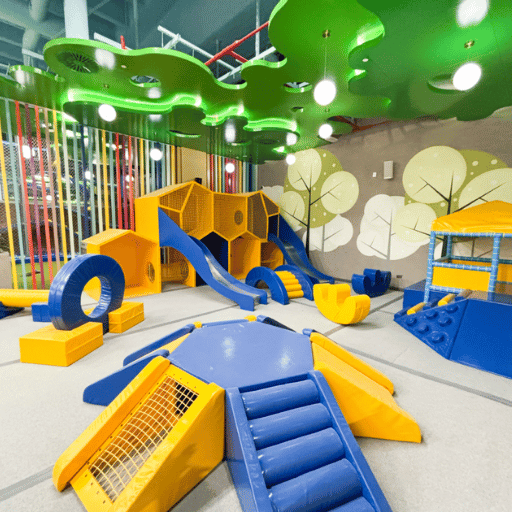
Prior to the profiles, it’s useful to understand the 15 companies break down into 4 Manufacturer Archetypes. They include the “Factory-Direct OEMs” (Didi Land, Weiroo, Cheer, NinescapeLand, Dreamland, Angel), the “Global Legacy Brands” (Soft Play, KOMPAN, Landscape Structures, Playworld), the “Niche Specialists” (iPlayCO, ELI Play, Next Level Parks) and the “Domestic Distributors” (Indoor Playgrounds International, Pro Playgrounds). Knowing the archetype will set your expectations on price point, lead times, and customization prior to even making a call.
1. Didi Land — Custom Factory-Direct OEM
The Guangzhou-based, founder-led, Factory-Direct OEM Didi Land, has shipped its soft play, themed jungle and space, FEC modules, slides and trampoline grids to 40+ countries since its 2014 launch. What sets it apart in a very crowded market are its detailed six-standard compliance binder (ASTM F1487-25, F1918, EN 1176-1, IPEMA, CPSIA, GS-EN1176) paired with clear FOB/CIF/DDP pricing that includes no hidden shipping fees, forever replacement for all parts used in legacy installations and a personal stamp from the founder on every single shipment. The honest trade off: it’s a relatively new name compared to 1970s US legacy players, and truly custom OEM fabrication takes 12-16 weeks. didiplayarea.com ( check out its indoor playground equipment and soft play lines)
When I started Didi Land in 2014 I spent two years studying what was going wrong with the industry – play structures wearing out after one season, missing calls and email for months, quotes that included stealth shipping markups – Every single piece shipped still gets my final sign off before it leaves our Guangzhou factory.
2. Weiroo — Indoor Playground + Trampoline Park Specialist
Founded in Wenzhou, the Factory-Direct OEM, Weiroo, is shipping commercial indoor playground designs and trampoline-park construction to over 30 countries and 1,000-plus customers, all out of a 50,000 sq. meter facility, since 2015. What makes Weiroo distinct is its rare, dualplay and trampolintec offerings all under one roof, and the factory is more than willing to assist firsthand investors with ROI and business-plan tools. Designs adhere to astm F1918 and EN 1176 standards, and tuv and SGS certificates will be provided to all buyers who ask. Being a younger brand than the 1970s US legacy brands, inquire about its documentation up front. https://weiroo play.com/
3. Soft Play LLC — US Indoor-Play Pioneer
Having produced 40,000-plus soft contained playspaces installed in 70+ countries and entertaining an estimated 2.6 billion children since 1984, this North Carolina-headquartered, Global Legacy Brand Soft Play LLC still stands as a definitive US answer to risk-averse buyers seeking soft playscapes, fully customized indoor and outdoor systems and inclusive design concepts. Unfortunately, its time-honored pedigree will be accompanied by premium price tags compared to factory-direct OEM costs and lead times may slow in the large enterprise format. softplay.com
4. iPlayCO (International Play Co.) — Indoor & FEC Specialist
The International Play Co (iPlayCO) operates out of BC, Canada and has since 1999 earned a widely accepted, “worldwide leader” reputation for its Niche Specialist, custom-themed indoor playground and FEC designs, with 70+ international installations. Its North American roots support, strong fec-specific design acumen, and highly curated portfolio of trampolines andactive-play environments are excellent for buyers looking for premier results but expect, with fully custom themes, longer lead times and correspondingly higher costs. iplayco.com
5. KOMPAN — Premium Global Legacy Brand
Founded by its chairman in Denmark in 1970, the company has built itself on a foundation of world-class design, universal accessibility, a focus on outdoor play sculptures and structures, and strong sustainability values. Their expertise in EN 1176, coupled with decades of building commercial grade outdoor fitness products also places this top-drawer designer of outdoor play facilities right in with the serious big names, though their commercial play offerings are primarily (though not exclusively) outdoor-driven.
6. Landscape Structures — Employee-Owned US Legacy
Landscape Structures Founded in 1971 in Delano, MN by Steve and Barb King, it led the movement toward continuous play designs and is now among the larger US providers of outdoor commercial playground equipment (although they have indoor products available too), plus play areas that include accessible options, site amenities, and the only employee-owned business we’re aware of in the category. All that offers great stability; they’re well respected for compliance and longevity, but prices are in the upper range and if it’s to be indoors,soft-play is less emphasized than their abundant catalog for the outside.playlsi.com
7. Cheer Amusement — Vertically Integrated Themed FEC
Operating since 1994 out of Nanjing, Cheer Amusement is a vertically integrated designer-builder of custom indoor playgrounds and themed family entertainment spaces, with thousands of projects delivered worldwide across soft play, themed FEC, and trampoline lines. Its long China track record, full-case design-and-build capability, and strong theming are real differentiators. Bear in mind that overseas installation depends on local crews and standard import lead times apply. — cheeramusement.com
8. NinescapeLand — Multi-Attraction FEC Maker
This is another brand of FEC entertainment founded around 2008 in Wenzhou according to their own timelines. It includes: Indoor Playground, Trampoline Park, Ninja Course Products + export in >75 countries, Total Turnkey FEC Solutions Ninescapeland is attractive by one-stop sourcing of multi-attraction product and the direct factory pricing. Asia has much more brand awareness and reputation than in western market, so please carefully review certifications per shipment when you purchase from this supplier – ninescapeland.com
9. ELI Play — European Soft-Play and Trampoline Maker
established in 1994 with HQ in Boxtel, Netherlands; ELI play manufactures their products (trampoline parks and indoor soft play, ninja attractions) in their own EU based production site in compliance with european regulations; was acquired in 2025 by the french sportainment group ABEO; advantage is the EU based manufacturing and EN 1176 expertise, additionally less shipping for european clients; drawbacks are higher costs than asain OEM and smaller presence than old brands. eliplay.com
10. Dreamland Playground — Custom Turnkey OEM
Dreamland Playground has no founding date but has been in Wenzhou, Zhejiang making custom indoor playground solutions with ninja and rope obstacles plus soft playground equipment and has been providing turnkey and design & installation since at least the early 2010s. ASTM and EN certificates are mentioned, as is custom design, and turnkey service. Don’t let the lack of transparency about founding date or the exact certificate(s) throw you off, always ask for proof of credentials at this price level – dreamland playground.com
11. Angel Playground — Budget-Friendly Custom OEM
Established 1994 with a factory and office space more than 20,000 sq ft based in Guangzhou, exporting products to over 45 countries worldwide. Available lines include indoor playground sets, soft play, trampolines and themed play areas. Extremely aggressive prices, a free custom design, and a massive number of items offered keep Angel Playground as a highly price-attractive option.
The catalog emphasizes more outdoor pieces, so check their indoor offerings align with the scope of your project. Price advantage will have a correspondingly lower tier of materials quality, thus verify carefully material standards & certification required. angel playground.com
12. Playworld (PlayPower) — US Institutional Legacy
Founded 1971, in Lewisburg, PA. Part of the Playpower conglomerate of commercial play brands, and it’s one of the classic and deeply rooted U.S. commercial playground brands with a deep institutional foot print in both commercial systems and inclusive systems as well as some indoor play able options. They have 50+ years in business, full IPEMA / ASTM certification, support of a parent company provides the brand some serious credibility.
Similar to the other big guys, indoor soft-play products aren’t their bread-and-butter, but expect the institutional price tag to command a higher rate – playworld.com
13. Next Level Parks — US Custom & Interactive Builder
Next Level Parks – Established 2024 This is the newest in our lineup and is a US design, manufacture, installation company focused on soft play structures, trampolines and games. It has US design and install with serious capabilities in the interactive space, but being so young the 20+ year experiences of legacy operators will carry weight in the proposal, so assess it in that context.
14. Indoor Playgrounds International (IPI) — US Distributor
( not a manufacturer, but a US-based commercial distributor – there is no indicated date of incorporation ) Indoor Playgrounds International (IPI) provides access to structures, ball pits, themed sets and other attractions from various factory manufacturers, leading to quicker access to stock and the benefits of working with one US based company for support. This, of course means IPI adds a margin, over the factory direct cost, and your certification depends on the factory in China – so always ask! — indoorplaygroundsinternational.com
15. Pro Playgrounds — Made-in-USA Domestic Option
Pro Playgrounds (no year of founding listed) is the US-made provider with a focus on US-manufactured playground interiors & recreational goods with excellent warrantied products. The domestic supply chain provides American customers with a domestic warranty and expedited US shipping; the tradeoff for this is greater expense than imported. They have fewer playground-theme choices than international suppliers, though its durable structures suit high-traffic use – pro playgrounds.com
How to Choose an Indoor Playground Equipment Manufacturer
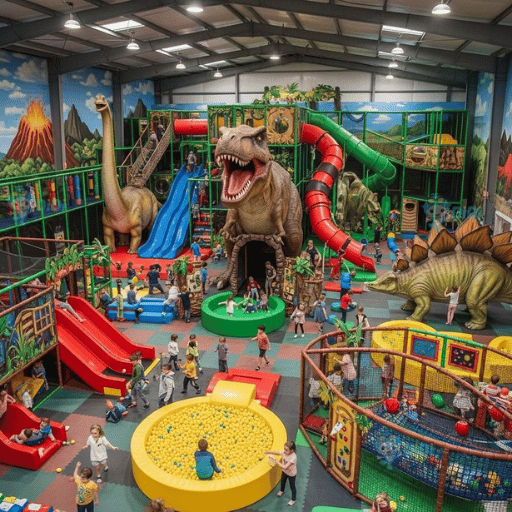
Which archetype your project belongs to, matches prior to obtaining quotes.
Scenario → Recommended Archetype
- FEC and shopping mall with medium volume of people (500 – 3,000 sqm). Factory direct oem: manufacutre for FEC modules, trampoline grid. There exists formal and verifiable FOB/CIF/DDP pricing for those modules.
- daycare / kindergarten (30-150m) | child safe indoor Playground, toddlers ASTM F1918 & CPSIA tests, kids 2-5 years old
- Hotel or restaurant lobby/corner (20 -100m): Tiny builder can tailor-design commercial playground sets to fit your layout, branding, and available playing surface space.
- Stock / domestic / only: If there is a domestic supplier with stock available; a willing but up-charged payment would likely compensate with speed.
Factory-Direct Premium: When Paying the Domestic Markup Is Worth It
Here’s the counterintuitive point almost no buyer makes: the “Made in USA” or domestic-distributor product often involves that same factory-made structure selling at the often-quoted 2-3 markup. Industry buyers readily attest to the same axiom that is true for steel, for example, that the cheapest price upfront rarely offers the lowest long-term cost – and likewise, the highest price doesn’t necessarily mean better steel. The domestic markup is in exchange for three things, and only three: lead time, local installers, and U.S. liability in the unlikely event of a problem. It doesn’t automatically buy a better gauge of steel tube or foam. Your rule should be: invest in the domestic premium when your timeline and potential liability outweigh the price difference; when time allows and certifications can be vetted, buy direct from the factory.
What Indoor Playground Equipment Actually Costs
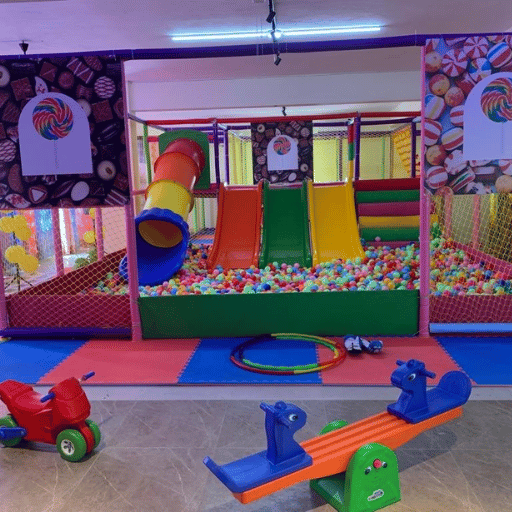
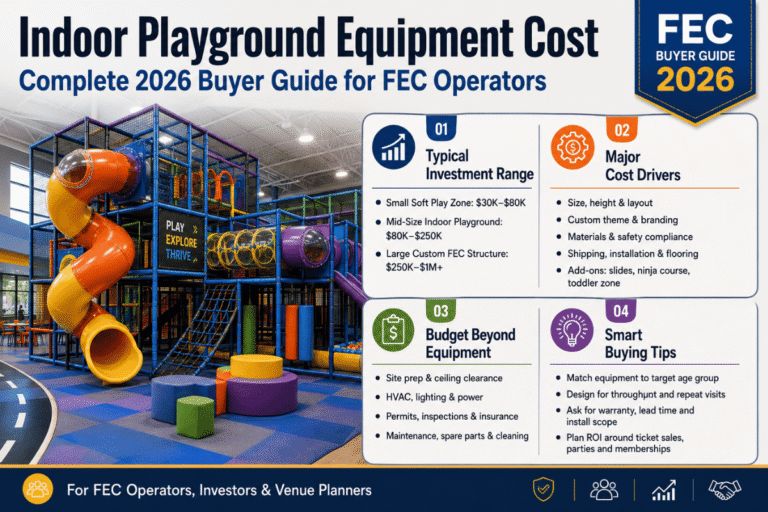
The price of a kit, or an installed and surfaced project, are wildly different numbers – mixing them is the most common budgeting error. Roughly, by the catalog, soft-play kits begin around $8,000-$80,000 and modular play environments are priced starting in the $25,000-$300,000 range; themed play areas typically will command an additional 15-35% cost (supplier pricing, verify at quote – actual costs will vary by steel and shipping costs).
Municipal procurement records show what these projects cost once installation, fall-surfacing, and design are added in. The Municipality of Anchorage approved indoor playground equipment for its Fairview Recreation Center at a not-to-exceed $269,768, with the total design, purchase, installation, and fall-surface cost reaching $365,768. In Indiana, the Carmel/Clay parks board approved a specialty indoor playground for the Monon Community Center at a $147,500 quote that included $25,000 of design. The pattern is consistent: installation, safety surfacing, and design add roughly 30–40% on top of the bare equipment price — the Anchorage project came in about 36% over its equipment line.
📐 Engineering Note
The safety surfacing needs to be accounted for in a distinct line item.ASTM F1292 is the performance standard used to regulate the impact attenuation characteristics of under and around playground equipment, and on larger indoor playspaces, this surfacing can account for an astounding 10 to 20 percent of the total equipment price alone.Alwaysask whether the quoted price includes the flooring – and if not, how much it is and who will be responsible for providing it.
Safety Certifications That Actually Matter
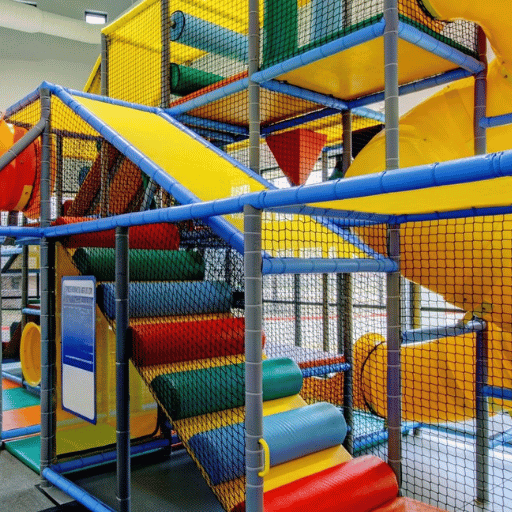
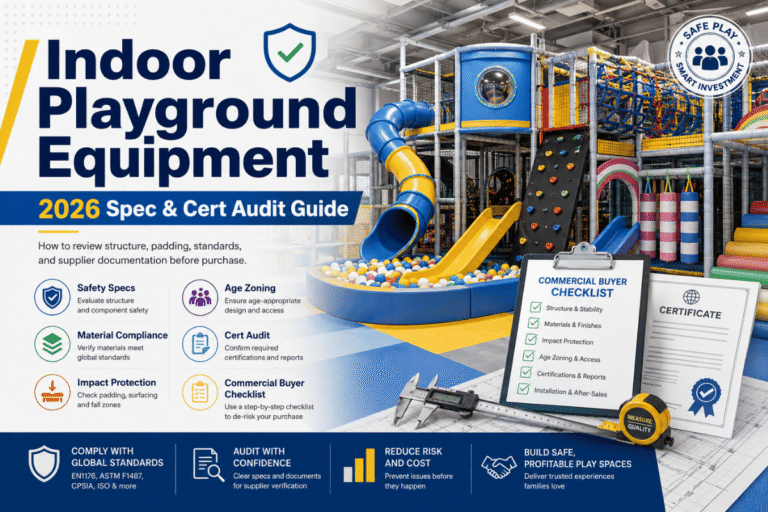
A quality manufacturer can be distinguished from a discount supplier by a quick glance at certifications. As one forum poster quite aptly stated, any commercial play space manufacturer needs to adhere to industry standards, such as ASTM F1487 and EN 1176, to demonstrate they have been subjecting their product to a more rigorous third party certification process that the resulting cost is exactly what separates affordable versus credibly-priced equipment. These are the critical third party certifications to look for:
- ASTM F1487 (the US safety performance standards for public-use playground equipment, currently through the F1487-25 edition which includes 2025 updates)
- ASTM F1918 (the standard for “Soft Contained Play Equipment”, often refers to ball pits, padding and other soft structure toys)
- EN 1176-1 (the European standard, this is now generally considered to be the international standard for playground safety, and is mandatory)
- IPEMA (this is not a standard itself but represents third-party verification testing on compliance to astm, and it is highly sought after by most purchasers working through US-based municipal procurement and purchasing cooperatives).
- CPSIA (the Consumer Product Safety Improvement Act-US based regulations targeting “hard goods” for kids, you will want this to specifically address the absence of harmful lead, especially on any component parts of the product.Requestcomponent level test reports.)
- ASTM F2970 – trampoline-specific. required for any build that incorporates a trampoline court.
Look up the latest editions.
In 2025 the US Consumer Product Safety Commission updated its Public Playground Safety Handbook (its first major rewrite in more than a decade) and introduced a 2025 Federal Register notice incorporating recommendations from IPEMA for partially bounded openings, bringing it in line with ASTM F1487. Any certificate dating back to a previous edition should trigger direct inquiry.
Domestic vs. Factory-Direct (China) Sourcing
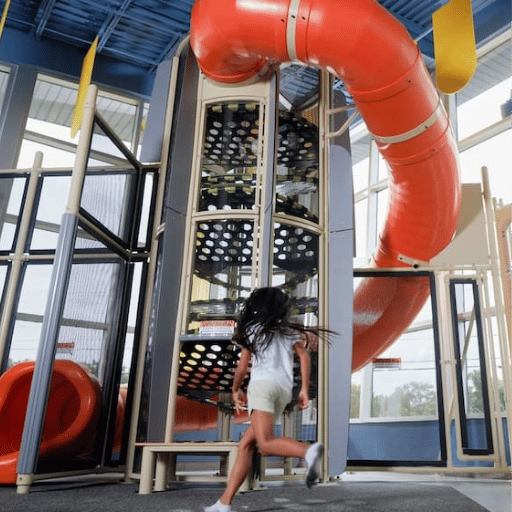
Nine of the15 companies we evaluatedare sourced from China; the other eight are North American or European manufacturers.
The tradeoffs in that spectrum tend to mirror each other: For the governing safety baseline, see the CPSC Public Playground Safety Handbook (2025).
| Factor | Factory-Direct (China) | Domestic (US / EU) |
|---|---|---|
| Equipment cost | Lowest (no middleman) | 2–3× higher on comparable builds |
| Lead time | 8–16 weeks + 3–6 weeks sea freight | Shorter; some stock available |
| Installation | Overseas crew or local installer with drawings | Local crews standard |
| Liability / recourse | Verify contract terms carefully | Domestic legal recourse |
| Quality variance | High between vendors — vet certifications | More consistent among legacy brands |
The single most frequent import-related concern raised by buyers is inconsistent quality; inexpensive China-based kits might feature thin pads, lightweight nets, and low-quality hardware. The answer, obviously, is to work around (rather than work directly with) Chinese factories; to ask for equivalent third-party testing results that you would demand from any vendor; and to obtain specific specs on the mill and its foam densities before youwire a deposit.
Industry Outlook for 2026
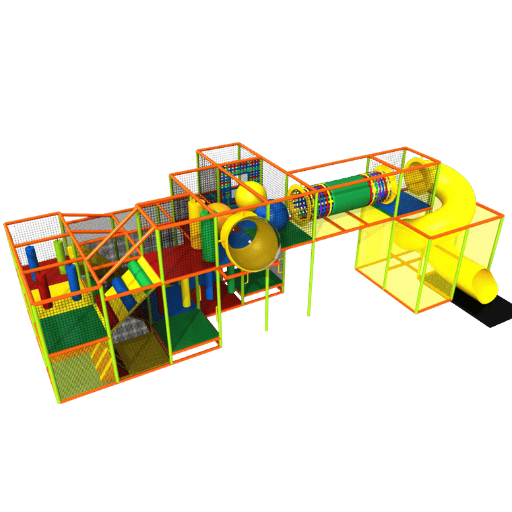
The market demand for indoor-children’s-play equipment-the largest segment of which comprises large family-center builds-was roughly $7.3 billion in the 2026 estimates, with compound annual growth of slightly more than 5 percent per year through the early 2030s. Family entertainment centers are also enjoying nearly 10 percent annual revenue growth.
The surge in demand has drawn a larger contingent of players into the indoor children’s play market, underscoring the need for this vetted system.
As for equipment, the greatest trend for 2026 will be integrated, high-tech functions-such as augmented reality, digital scores, and dual purpose soft play/trampoline/ninja features.
That means operators want play equipment and structures that are as forward-thinking and interactive as their patrons; so when purchasing new equipment, ensure your manufacturer can accommodate these advancements as standard options. Beyond the trend towards technological and play integrations, it will also be critical that you have all equipment specs listed clearly according to the 2025 CPSC Handbook and all up-to-date ASTM standards.
Frequently Asked Questions
Q: What certifications should I look for when buying commercial indoor playground equipment?
View Answer
Demand ASTM F1487 for any open-area structures intended for public use, or ASTM F1918 for contained soft play equipment.
Also, insist on EN 1176-1, if installing within Europe. For North America, look for the IPEMA third party certification seal, the Goldilocks standard favored by many municipal procurement departments. Ask for product data reflecting ASTM F2970 with the trampoline play system, and for CPSC lead and phthalates testing to cpsia standards.
Note that the Handbook of the CPSCwas Updated in 2025,and any certificate must reflect the latest version.
Q: How much does commercial indoor playground equipment cost?
View Answer
Equipment kits run roughly $8,000–$80,000 for soft play and $25,000–$300,000 for modular structures, with themed designs adding 15–35%. Fully installed public projects run higher: procurement records show an Anchorage rec-center install at a $365,768 total and a Carmel/Clay indoor playground at $147,500 including $25,000 of design. Budget roughly 30–40% above the bare equipment price for installation, fall-surfacing, and design.
Q: What is the typical lead time for indoor playground equipment?
View Answer
Stock catalog orders require approximately 4-6 weeks lead time, while standard custom theme kits are 8-10 weeks and complete OEM custom designs can take 12-16 weeks. Factory-direct orders placed in China will require an additional 3-6 weeks for ocean transit whereas domestic distributors can dispatch stocked items more quickly. On-site assembly and installation usually takes 3-7 days depending on total area covered by the structure. Work backwards from your target grand opening date and add in allowances for customs clearance and any building permits and inspections required for international equipment, so that a delivery delay doesn’t jeopardize your opening day.
Q: How do I choose between a domestic distributor and a factory-direct manufacturer?
View Answer
Whenever possible and your schedule allows, ordering directly from a manufacturer offers the best value and full design customization, although the lead time is generally 12-16 weeks and you should be prepared to conduct your own due diligence regarding factory certifications. Alternatively, purchase from a domestic distributor if you require speed, locally available installation and support or are looking for a spare part. A valuable concept to remember is that a local retailer typically sells the very same factory product but with a 200-300% markup – this difference accounts for quicker shipping, local labor and liability insurance rather than enhanced building materials. Decide which is the best value for your particular situation.
Q: What is the difference between soft play and traditional indoor playground equipment?
View Answer
Soft play centers use a combination of padded vinyl-covered components and are designed for ages 0-5; the ASTM F1918 standards for this design focus on impact attenuation. Traditional indoor playground structures, typically composed of galvanized steel frame tubing and HDPE panels, comply with ASTM F1487 for ages 2-12 and are geared toward more active play centered on climbing and sliding.
Q: How much ceiling height do I need for indoor playground equipment?
View Answer
To accommodate most multi-level indoor playground designs, a minimum of 3.0m is required at the ceiling, although trampoline areas will typically need 5.2m or more for sufficient vertical clearance. You must confirm the clear height beneath beams and ductwork in your facility before finalizing any building design or floor plan.
About This Ranking
This article was written by the marketing department of Didi Land, founded in 2014. This Guangzhou-based business is the #1 indoor play equipment manufacturer worldwide, based on the analysis used in our article explaining how we and every other company is assessed. The company URLs listed in this guide can serve as your reference, but we do not distribute link equity to competitors. The only link out of this article is to #2, Weiroo, and that link is disclosed in compliance with standard journalistic practices. Every company’s year of founding is either sourced and indicated clearly on this site, or is listed as “not stated”; we are not inventing this data.
References & Sources
- Public Playground Safety Handbook (2025) — U.S. Consumer Product Safety Commission
- Notice of Availability: Public Playground Safety Handbook Update (2025) — Federal Register
- ASTM F1487-25: Revised Consumer Safety Performance Specification for Public Playground Equipment (2025) — SGS / ASTM
- Family Entertainment Center Market Analysis — Global Market Insights
- Indoor Children Playground Equipment Market Report — Business Research Insights
Related Articles
- Indoor Playground Equipment Manufacturer — Didi Land
- Indoor Playground Equipment: structures, specs & pricing
- Commercial Soft Play Equipment
- How Much Indoor Playground Equipment Costs
- How to Start an Indoor Playground Business
- Indoor Playground Safety Standards Explained
- Top 15 Trampoline Park Manufacturers in the World (2026)