Get in Touch with Didi Land

Indoor Playground Safety Standards: 2026 Compliance Guide

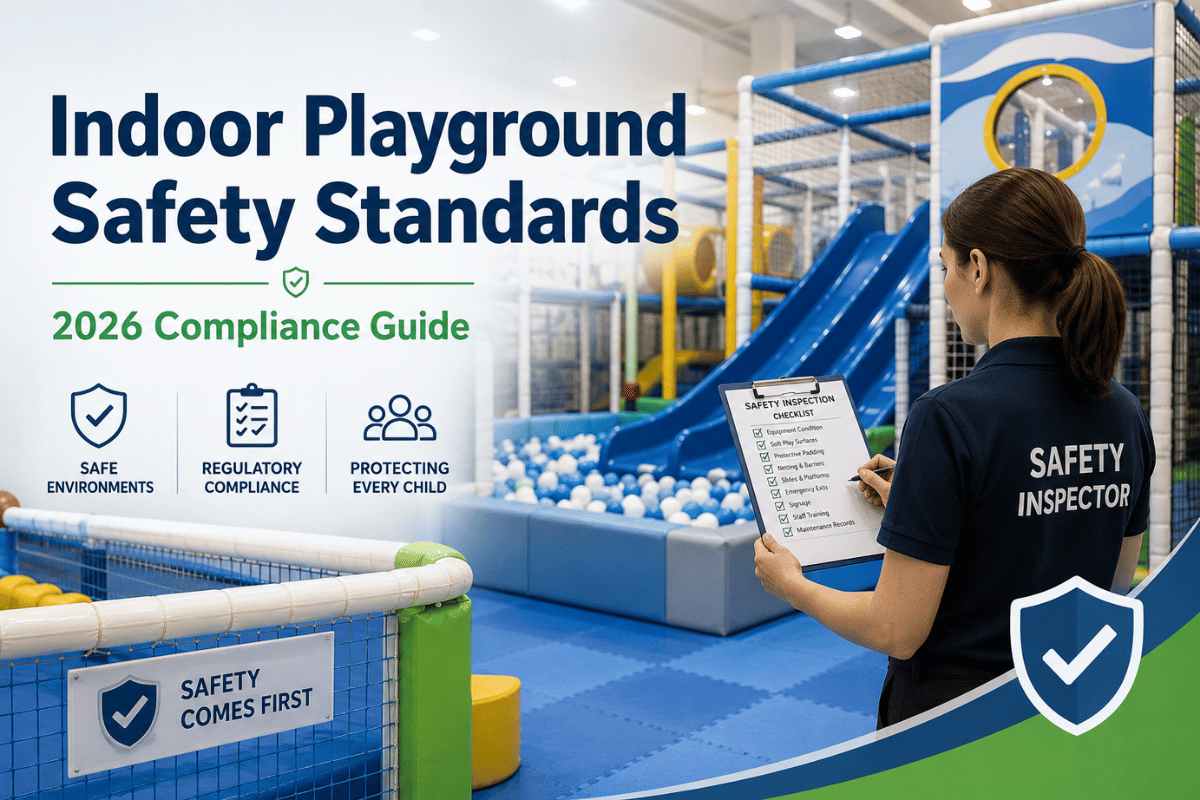
Indoor playground safety standards are not one document. They are a stack of equipment standards, surfacing tests, local building and fire rules, installation records, maintenance logs, and staff procedures. Buyers who treat them as a single badge often miss the items that insurers, inspectors, and parents ask for later.
This guide is written for family entertainment centers, shopping malls, schools, kindergartens, restaurants, hotels, and other operators comparing commercial indoor play structures. Use it before approving drawings, paying a deposit, or accepting an installation handover.
Quick Specs: Which Standard Applies?
| Situation | First standard to check | Buyer action |
|---|---|---|
| Soft-contained indoor play equipment for ages 2-12 | ASTM F1918-21 | Ask for the test report and edition named in the contract. |
| Public-use playground equipment outside the soft-contained category | ASTM F1487-25 | Confirm whether each component is inside or outside F1487 scope. |
| Toddler or under-2 public-use zones | ASTM F2373 | Separate toddler equipment, layout, surfacing, and supervision review. |
| Impact-attenuating surface under and around equipment | ASTM F1292-22 or EN 1177 | Match tested critical fall height to the installed play structure. |
| EU/UK-style public play area projects | EN 1176 series plus EN 1177 | Confirm the exact part numbers for swings, slides, nets, surfacing, and inspections. |
The Standards Stack: Which Indoor Playground Safety Standard Applies?
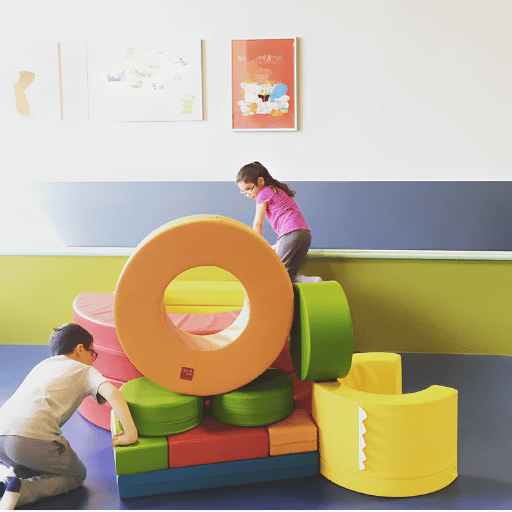
Start with equipment type, user age, and jurisdiction. Many family entertainment centers include a soft-contained climbing maze, a trampoline or ninja zone, toddler play panels, ball pits, seating, food service, fire exits, and event rooms. Each part can pull in different safety standards, permit reviews, and operations records.
In 2025, the U.S. Consumer Product Safety Commission updated its Public Playground Safety Handbook for childcare personnel, school officials, parks and recreation teams, equipment purchasers, installers, designers, parents, and other users evaluating public playground safety. In an indoor venue, that audience list matters: inspectors and insurers may judge not only the equipment, but also the way the facility selected, installed, supervised, and maintained it.
Didi’s commercial indoor playground pages position the company around ASTM and EN compliance paths, project design, installation support, and buyer tools such as the ASTM and EN 1176 compliance checker. Use those tools as a starting screen, then request the proof documents listed later in this guide.
| Layer | What it controls | Who usually checks it |
|---|---|---|
| 1. Product safety standard | Equipment design, dimensions, containment, openings, barriers, entrapment, and performance criteria | Supplier, test lab, buyer’s safety reviewer |
| 2. Surfacing standard | Impact attenuation, fall height, use zone, installation, and field performance | Installer, lab, owner, insurance reviewer |
| 3. Building and fire code | Occupancy, egress, sprinklers, fire resistance, materials, spacing, and local permits | Authority having jurisdiction, architect, fire marshal |
| 4. Installation quality | Anchoring, floor condition, mat fit, clearance, net tension, fastener covers, and handover checks | Installer, supplier project manager, owner representative |
| 5. Operations evidence | Inspection schedule, maintenance logs, staff supervision, cleaning, incident records, and corrective actions | Owner, manager, insurer, regulator after an incident |
ASTM F1918, ASTM F1487, and ASTM F2373: Do Not Mix These Up

Three ASTM references appear often in indoor playground discussions, but they are not interchangeable. Treat them as routing rules, not marketing labels.
ASTM F1918-21 is the soft-contained play equipment standard. ASTM’s page describes it as a safety and performance standard for soft-contained play equipment, with age coverage from the 5th percentile 2-year-old to the 95th percentile 12-year-old. This is the core U.S. reference for many indoor playground structures with enclosed climbing, crawling, sliding, and foam-protected elements.
ASTM F1487-25 covers public-use playground equipment and dimensional requirements for clearance and use zones, but ASTM’s scope excludes soft-contained play equipment and public-use play equipment for children 6 to 24 months. That exclusion is the point many buyers miss. If a proposal says only “ASTM F1487 compliant” for a soft-contained indoor playground, ask what standard covers the soft-contained system itself.
ASTM F2373 covers public-use play equipment for children 6 months through 23 months. CPSC explains that F2373 was developed for age-appropriate equipment, playground layout, safety surfacing, and performance needs that are distinct in childcare settings. Indoor toddler zones deserve separate drawings, labels, mat specs, supervision plans, and inspection checklists.
Engineering Note: write standard editions into the purchase file
A buyer file should say “ASTM F1918-21 soft-contained play equipment review” or “ASTM F1487-25 public-use component review,” not simply “ASTM compliant.” Standard editions change, and the edition named in the quote, test report, certificate, and installation checklist should match.
In a mixed facility, split the review by zone. Toddler crawl panels, multi-level soft-contained frames, free-standing slides, and impact surfaces may each need a different standard path. Didi’s indoor jungle gym standards checker is useful when the concept moves beyond a simple soft play room.
Surfacing, Fall Height, and Impact Attenuation: What Must Be Verified

Surfacing is where many safe-looking indoor playgrounds become weak. Foam padding, mats, unitary rubber surfaces, synthetic turf systems, and loose-fill materials are not equivalent unless the installed system has been tested for the relevant fall height and use zone.
ASTM F1292-22 sets impact attenuation performance requirements for surfacing materials within the use zone of playground equipment. ASTM describes two test contexts: critical fall height testing and installed surface performance testing. Buyer takeaway: a lab report for a material sample is not enough if the installed surface thickness, subfloor, seams, wear, or maintenance differs from the tested condition.
EN projects should treat BS EN 1177:2018 as the impact attenuating playground surfacing test reference. Equipment and surfacing in the EN system also need the EN 1176 series, not a generic “European standard” statement.
CPSC’s 2025 handbook estimates almost 200,000 emergency-room-treated playground equipment injuries annually in the U.S. It also references surfacing standards such as ASTM F1292, ASTM F1951, ASTM F2075, ASTM F2223, ASTM F2479, ASTM F3012, and ASTM F3313. That list shows why surfacing review should be its own line item.
| Surfacing proof | What to ask for | Why it matters |
|---|---|---|
| Critical fall height | Tested height tied to the actual installed surface system | A surface that passes at one height may fail under taller equipment. |
| Use zone drawing | Plan showing equipment footprint, fall zones, mats, barriers, and transitions | Collisions and edge falls often happen at borders and transitions. |
| Installed surface signoff | Installer record after mats, seams, anchors, and floor levels are checked | Field conditions can differ from the drawing package. |
| Maintenance schedule | Replacement and inspection triggers for wear, gaps, compression, and contamination | Impact attenuation can degrade with wear and tear. |
Layout, Clearances, Entrapment, Fire Resistance, and Egress

Product safety standards do not cancel local building and fire review. Indoor playgrounds sit inside buildings, often near food service, party rooms, retail circulation, mall corridors, stairs, elevators, and emergency exits. Local authorities can ask questions the supplier’s standard test report does not answer.
As one jurisdictional example, building-code provisions for children’s play structures can limit area and separation from egress elements. New York City Building Code Section BC 424 states that children’s play structures must not exceed 300 square feet in area, must keep at least 5 feet from building walls, partitions, and means-of-egress elements, and must keep at least 20 feet between children’s play structures. That same section addresses fire protection and materials. These numbers are not universal U.S. rules, but they show why local fire/code review must happen before fabrication.
Ask your architect, code consultant, or fire marshal how your project treats occupancy load, travel distance, exit access, sprinkler coverage, smoke detection, flame spread, emergency lighting, and accessible routes. If a supplier cannot adjust the structure around code review comments, the project can stall after the fun design work is already done.
During early budgeting, connect safety and layout choices with commercial planning. Didi’s cost tier calculator and ROI payback calculator help frame how safety-driven layout decisions affect the business model.
The 12-Document Compliance Packet to Request Before You Pay a Deposit
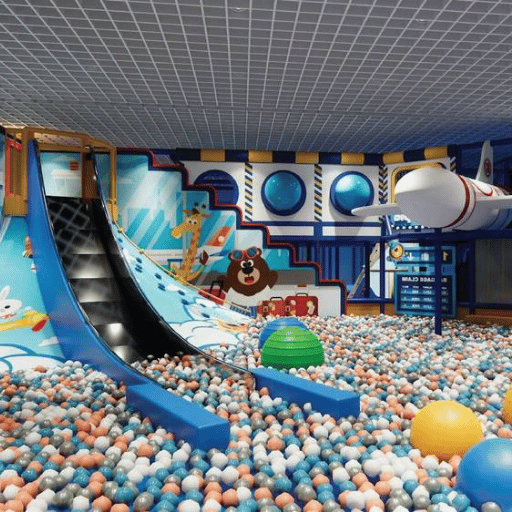
A commercial indoor playground proposal is not complete until the buyer can file evidence. Use the packet below to make that evidence visible before money, schedule, and tenant-opening pressure make corrections harder.
| Document type | What it proves | Red flag if missing |
|---|---|---|
| 1. Standards applicability matrix | Each zone is mapped to ASTM, EN, CPSC, code, and surfacing requirements. | One broad “ASTM compliant” claim covers every item. |
| 2. Product test report | Equipment was assessed against the named standard edition. | Report names a different model, date, or standard edition. |
| 3. Surfacing test report | Impact attenuation matches the fall height and installed system. | Only a catalog sheet for foam or rubber is supplied. |
| 4. Layout and clearance drawing | Use zones, circulation, barriers, exits, and sightlines are visible. | The drawing is a rendering without dimensions. |
| 5. Material specification sheet | Foam, PVC, netting, steel, fasteners, mats, and covers are identified. | Materials used are described only as “premium” or “safe.” |
| 6. Fire and code review notes | Local requirements for egress, sprinklers, flame spread, and occupancy have been considered. | The supplier says fire code is only the landlord’s issue. |
| 7. Installation method statement | Anchoring, floor preparation, sequencing, tools, and handover checks are defined. | Install details appear after shipment. |
| 8. Installer checklist | A qualified person signs off on the built condition. | No post-install punch list or photos are required. |
| 9. Inspection checklist | Daily, weekly, monthly, and annual checks are ready before opening. | Operations team must invent a checklist from scratch. |
| 10. Cleaning and sanitation procedure | High-touch surfaces, mats, ball pits, shoes, and body-fluid incidents have a procedure. | Only opening-day cleaning is discussed. |
| 11. Staff supervision plan | Age zoning, capacity, sightlines, incident escalation, and parent rules are assigned. | Rules are posted, but no staff role is assigned. |
| 12. Warranty and parts plan | Wear items, replacement parts, response time, and covered defects are documented. | Repairs depend on informal chat messages. |
How to use the packet during procurement
Request the first four documents before final layout approval. That early screen catches the largest gaps: wrong standard scope, missing surfacing proof, unmeasured clearances, and code conflicts. If the supplier cannot connect standards to zones at this stage, the buyer is still shopping a concept, not a build-ready project.
Move the next four documents into the deposit milestone. Material sheets, fire/code notes, installation method, and installer checklist should be attached to the purchase file before production begins. That timing gives the venue owner, architect, landlord, or fire consultant a chance to flag changes while drawings and materials can still be adjusted.
Keep the final four documents for opening readiness. Inspection, cleaning, supervision, and parts plans turn the installed structure into an operational system. Managers can train staff from those records, insurers can review them, and owners can track corrective action instead of relying on memory after a busy weekend. Put revision dates on every file, because a drawing change, mat substitution, or relocated exit can make an older safety record misleading.
FEC owners should also ask who will attend the on-site handover and how the team will confirm material quality before opening. When local regulation requires a permit, inspection, or third-party signoff, the buyer should know which party is responsible and which document proves that the facility can comply.
CPSC’s business guidance says there is no specific CPSC certification requirement for playground equipment, while products considered children’s products or children’s toys may need a Children’s Product Certificate. That is why the document packet matters: it gives the owner a record that goes beyond a broad certification badge.
IPEMA certification can be valuable for public playground equipment and surfacing materials, and IPEMA’s certification program lists standards such as ASTM F1487-25 and ASTM F1292-22. It also lists exclusions and does not replace local permits, installation checks, or maintenance records. Treat certification as one piece of the file, not the whole file.
Inspection and Maintenance Schedule: Daily, Weekly, Monthly, Annual

Inspection is not a single annual visit. Safe indoor playground operation needs frequent checks for visible hazards, plus scheduled maintenance for wear, surfaces, barriers, fasteners, moving parts, and cleaning.
Minnesota’s health department guidance for indoor play areas recommends routine physical inspections for broken, worn, loose, damaged, or missing parts, hazardous debris, loose anchoring, surfacing problems, and vandalism. It also calls for daily cleaning with soap and water before sanitizing or disinfecting, and immediate response to body-fluid incidents.
| Cadence | Checks | Record to keep |
|---|---|---|
| Before opening each day | Loose mats, exposed edges, broken covers, debris, wet floors, blocked exits, damaged netting, ball pit condition | Daily inspection log with corrective actions |
| During operations | Capacity, age-zone mixing, rough play, food/drink control, hygiene incidents, staff coverage | Shift supervisor notes and incident records |
| Weekly | Fasteners, barriers, gap checks, wear points, signage, removable mats, cleaning equipment | Maintenance checklist with photos |
| Monthly | Anchoring, structure movement, surface compression, net tension, high-wear components, emergency lighting coordination | Manager review and parts request log |
| Annual or after major change | Independent or qualified review, surfacing reassessment, code/permit change review, staff refresher training | Annual safety file and renewal checklist |
If your project includes soft play sets, plan replacement and cleaning access from day one. On the operations side, Didi’s soft play maintenance load planner can help teams estimate inspection and upkeep work before opening.
Staff Supervision, Age Zoning, and Incident Documentation

Supervision is part of the safety system. Even well-built indoor playgrounds can fail operationally if toddlers mix with older children, birthday-party groups exceed the planned capacity, staff cannot see blind spots, or incidents are not recorded.
Design the operating plan around three records: posted rules for families, staff instructions for live decisions, and incident forms for review. Posted rules should identify age zones, height or weight limits where relevant, socks and footwear policy, food and drink boundaries, sickness policy, rough-play response, and emergency procedures.
Incident records should capture date, time, zone, equipment item, staff present, what happened, immediate response, parent communication, photos if appropriate, and corrective action. Those records help managers detect repeat hazards such as a collision point, gap, worn mat edge, or supervision blind spot.
Regional Compliance Map: U.S., EU/UK, Canada, Australia, and Multi-Market Projects
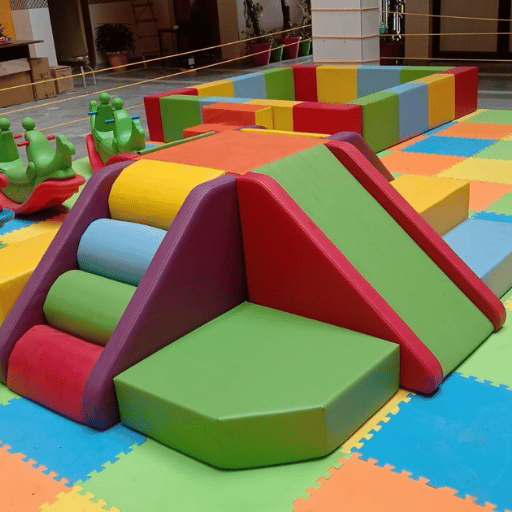
International safety standards are not a copy-paste exercise. Market, product type, site use, and local authority determine the right standard. Use the table below as a routing map, then verify it with the local professional responsible for permitting and inspection.
| Market or project type | Common safety references | Practical buyer check |
|---|---|---|
| U.S. soft-contained indoor playground | ASTM F1918-21, CPSC handbook, surfacing references, local code | Separate F1918 report from fire/code review. |
| U.S. public-use components outside soft-contained scope | ASTM F1487-25, ASTM F1292-22, IPEMA where applicable | Confirm exact component scope and certificate exclusions. |
| U.S. under-2 or childcare-adjacent zone | ASTM F2373, CPSC childcare notes, health department rules | Do not let toddler zones inherit older-child assumptions. |
| EU/UK public play area | BS EN 1176 series, BS EN 1177:2018, local inspection practice | Name the exact EN 1176 parts for equipment type. |
| Canada | CSA Z614, local building/fire requirements, surfacing tests | Check whether supplier certificates match Canadian requirements. |
| Australia or multi-market export | AS playground references, EN/ASTM evidence as support, local approval | Build a country-specific compliance file instead of one global claim. |
BSI describes BS EN 1176 as a multi-part document for playground equipment and surfacing, including Part 1 for general safety requirements and test methods, Part 2 for swings, and Part 3 for slides. Operators buying across regions should treat the phrase “EN 1176 compliant” as useful only when the relevant parts and test records are named.
2026 Outlook: Safety Evidence Is Becoming a Sales Asset
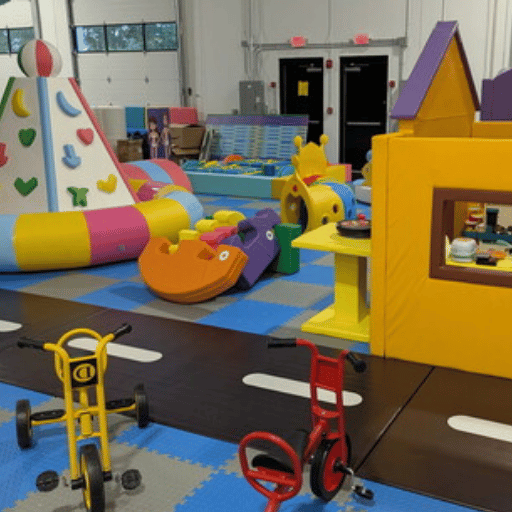
Parents rarely ask for an ASTM report at the front desk. Landlords, insurers, inspectors, franchise partners, and investors do. Commercial value comes from being able to answer fast: which safety standards apply, which edition was used, who installed the equipment, what was checked, and how the site is maintained.
New venues can use a well-organized safety file to shorten internal approvals and support the opening plan. Existing venues can use it to explain why a facility deserves repeat school trips, mall traffic, birthday bookings, and group events. Safety standards are not only a compliance issue; they are part of trust.
One practical move is to turn the compliance packet into a sales-room asset after it has served the approval process. Keep a clean public version at the front desk or in the party booking office, with technical test reports stored separately for managers and inspectors. Parents do not need every lab page, but visible care around inspections, cleaning, staff rules, and age zoning can reduce friction when families are comparing venues.
Didi states that it has supported 600+ projects in 30+ countries and offers 35-50 day production, 24h quote response, and a 3-year warranty on its indoor play structure page. Treat those as supplier capabilities to discuss alongside drawings, compliance documents, and operating support, especially for family entertainment centers, kindergartens, and shopping mall projects.
FAQ
Which ASTM standard applies to indoor playground equipment?
Soft-contained indoor play equipment used by children roughly ages 2-12 usually starts with ASTM F1918-21. Public-use playground components outside soft-contained scope point to ASTM F1487-25. Public-use equipment for children 6 to 23 months points to ASTM F2373. Mixed facilities may need more than one review, and the purchase file should state the exact edition applied to each zone.
What are the safety guidelines for playgrounds?
Use the 5-Layer Indoor Playground Safety Stack: product standard, surfacing standard, building/fire code, installation quality, and operations evidence.
What permits are needed for an indoor playground?
Permit needs vary by jurisdiction and project scope. Many projects involve building permits, fire review, occupancy or change-of-use review, electrical or mechanical work, signage, food-service approvals if food is offered, and local business licensing. A mall tenant may also need landlord design approval and coordination with base-building fire protection. A freestanding family entertainment center may need more direct city review of occupancy, parking, restrooms, exits, sprinklers, and assembly use. Ask the authority having jurisdiction before fabrication because code comments can affect layout, clearances, materials, and opening date.
Are indoor playgrounds safe?
They can be safe when standards, surfacing, installation, supervision, and maintenance records all line up. Safe-looking playgrounds without records are harder to defend after an incident.
Does EN 1176 apply to indoor playgrounds?
EN 1176 can apply to public play equipment and surfacing in EN-system markets, including shopping outlets and other public play settings. Buyers still need to name the correct parts of EN 1176 and pair surfacing with EN 1177 where impact attenuation is relevant. Slides, swings, climbing nets, and surfaces do not all rely on the same part of the standard series.
What documents should I request from an indoor playground supplier?
Request the standards applicability matrix, product test reports, surfacing test reports, layout and clearance drawings, material specs, fire/code review notes, installation method, installer checklist, inspection checklist, cleaning procedure, supervision plan, and warranty/parts plan. Store them together, because the value is not just possession of one certificate; it is the ability to trace every zone from design to daily operation.
How often should an indoor playground be inspected?
Use daily pre-opening checks, live shift checks, weekly maintenance checks, monthly manager reviews, and an annual or post-change qualified review.
Related Didi Resources
References
- CPSC Public Playground Safety Handbook, July 2025
- Federal Register notice for the 2025 CPSC handbook update
- CPSC playground equipment business guidance
- CPSC handbook note on ASTM F2373 for indoor childcare facilities
- ASTM F1487-25 public-use playground equipment
- ASTM F1918-21 soft-contained play equipment
- ASTM F1292-22 playground surfacing impact attenuation
- IPEMA certification program
- BSI BS EN 1176 playground equipment and surfacing series
- BSI BS EN 1177 impact attenuating playground surfacing
- Building-code provisions for children’s play structures
- Minnesota Department of Health indoor play area maintenance and sanitation
- National Program for Play Area Safety research
SYS.00 // E-E-A-T Disclosure
Why I Write This
As the CEO and Co-Founder of a specialized manufacturing facility, my objective is to provide unvarnished, factory-direct technical insights into commercial indoor playground engineering, safety compliance, and project planning. I aim to bridge the information gap for global buyers seeking reliable structural and material data, ensuring you make informed, ROI-driven decisions without the marketing fluff.
About My Business
Guangzhou Didi Land Amusement Equipment Co., Ltd. (Brand: Didi Land) is a commercial indoor playground equipment manufacturer founded in 2014. Operating from Panyu, Guangzhou, China, we engineer, produce, and export commercial-grade play structures to over 40 countries worldwide. Our production lines strictly adhere to international safety frameworks, ensuring durability and safety for high-traffic environments.
Our Services
We provide end-to-end B2B commercial solutions: from custom 3D spatial design and OEM manufacturing to worldwide export logistics and compliance testing. Our focus is on empowering Family Entertainment Centers (FECs), shopping malls, kindergartens, and hospitality venues with reliable, high-capacity play infrastructure.
DATA_MATRIX // MANUFACTURER_PROFILE
Name:
Cherry
Role:
CEO & Co-Founder
Brand Name:
Didi Land
Company:
Guangzhou Didi Land Amusement Equipment Co., Ltd.
Location:
Guangzhou, Panyu, China
Founded:
2014
Products:
Indoor Playground Equipment, Soft Play Equipment, Themed Playground Design, FEC Play Zones, Trampoline Modules, Ninja / Obstacle Course Modules
Email:
conglizhang1@gmail.com
Phone:
+86 199 2587 9517
Website:
didiplayarea.com
COMPLIANCE & STANDARDS:
ASTM F1487 · ASTM F1918 · EN 1176 · CPSIA · CE · ISO 9001 · IPEMA
Contact Factory Direct
ASTM F1487 · ASTM F1918 · EN 1176 · CPSIA · CE · ISO 9001 · IPEMA
![Custom Dinosaur Playground Equipment [Design Guide]](https://didiplayarea.com/wp-content/uploads/2026/09/custom-dinosaur-playground-equipment-r2-featured-1-768x512.png)
![Custom Dinosaur Playground Equipment [Design Guide]](https://didiplayarea.com/wp-content/uploads/2026/09/custom-dinosaur-playground-equipment-r2-featured-1-150x150.png)