Get in Touch with Didi Land


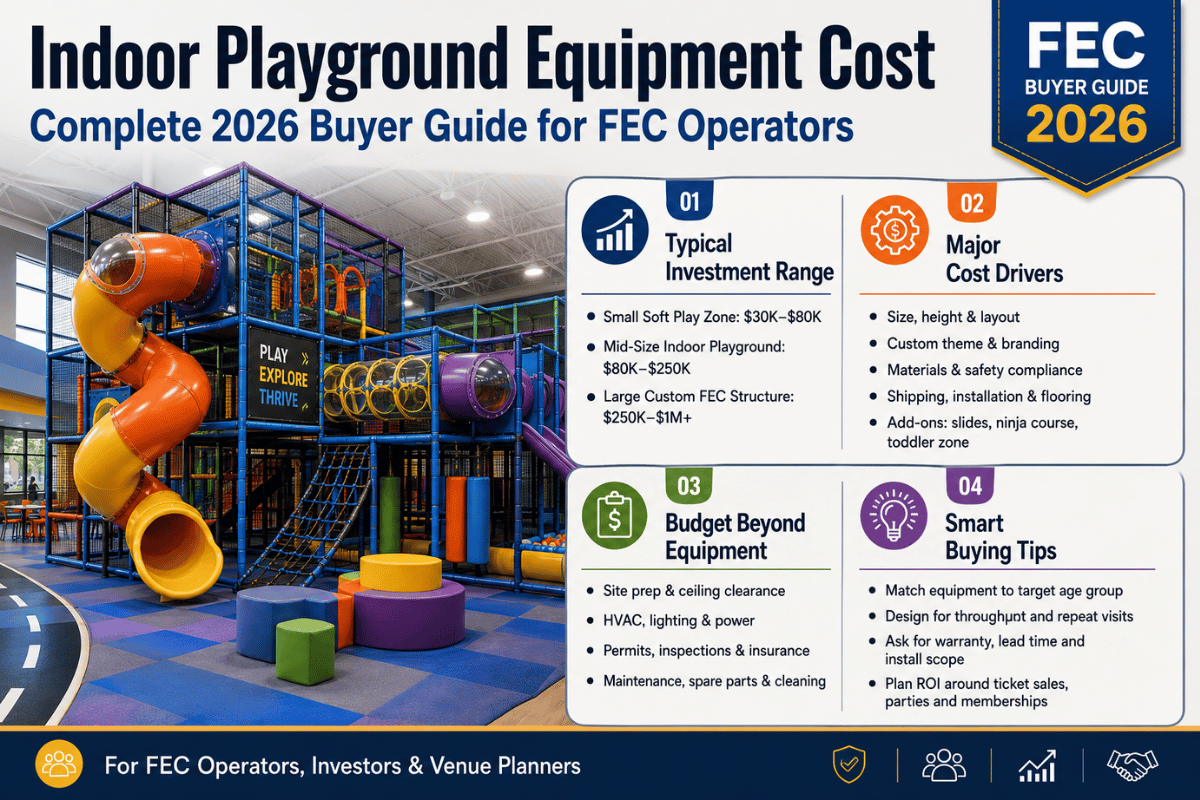
Indoor playground equipment cost runs from about $5,000 for a mall toddler corner to $500,000 or more for a flagship family entertainment center, but the equipment quote is only the part of the bill you can see. Freight, customs, installation, flooring, and a landlord’s deposit can add 30% to 100% on top before you open the doors. This guide breaks down what FEC operators, mall developers, and daycare owners actually pay in 2026, where the hidden money goes, and how to read a quote so a low headline number doesn’t blow your first-year budget.
Quick Cost Snapshot, Commercial Indoor Playground Equipment (2026)
| Equipment only (per m² / per sq ft) | $80–$200 / m² ($7–$19 / sq ft) |
| Turnkey landed (incl. freight, customs, install) | $180–$450 / m² ($17–$42 / sq ft) |
| Mall / hotel toddler corner (30–100 m²) | $5,000–$15,000 equipment |
| Mid-size FEC (200–400 m²) | $25,000–$75,000 equipment |
| Flagship destination park (800–1,500+ m²) | $150,000–$500,000+ equipment |
| Add for landed/turnkey costs | +30% (freight, duty, install) and up |
Ranges are 2026 industry estimates compiled from manufacturer pricing and operator reports; equipment figures reflect commercial indoor playground equipment direct from the factory. Prices move with steel, freight, and tariff conditions.
How Much Does Indoor Playground Equipment Cost in 2026?
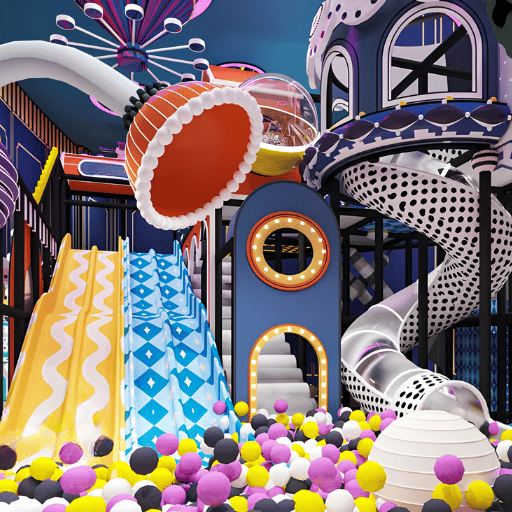
For a commercial venue, indoor playground equipment cost in 2026 generally falls between $80 and $200 per square meter ($7–$19 per square foot) for the structure itself, before shipping and installation. That spread is wide because a 40 m² toddler soft-play insert and an 800 m² multi-level adventure structure aren’t the same product class, they share a steel-and-foam construction method but little else. The practical way to budget is by venue size and the equipment mix that size support.
| Venue type | Floor area | Typical equipment mix | Equipment cost |
|---|---|---|---|
| Mall corner, hotel kids zone, restaurant | 30–100 m² | Toddler unit + soft-play insert | $5,000–$15,000 |
| Daycare, kindergarten, early-ed center | 80–200 m² | Play structure + toddler area + small slide | $10,000–$30,000 |
| Mid-size FEC, community rec center | 200–400 m² | Jungle gym + slides + soft play + ball pool | $25,000–$75,000 |
| Large FEC with trampoline zone | 400–800 m² | Full lineup + trampoline module | $60,000–$180,000 |
| Flagship destination park | 800–1,500+ m² | Themed custom + ninja + climbing + multi-level | $150,000–$500,000+ |
Two things drive the per-square-meter figure down as you scale up: large structures share central towers, stairs, and decks across more play value, and bulk orders absorb fixed setup costs. At the small end, a 60 m² toddler build often lands near the top of the $80–$200/m² band, while a 600 m² FEC build sits closer to the bottom. For first-time operators, the 200–300 m² mid-FEC range tends to give the best capacity-for-the-money: enough variety to hold 90-minute average dwell times without the staffing and energy load of a flagship.
How much does soft play equipment cost?
Soft play, the foam-padded, low-platform systems for ages roughly 6 months to 5 years, is the most affordable category because it skips tall steel structures and complex netting. Standalone commercial soft play equipment for a mall corner or daycare typically runs $5,000–$30,000 depending on footprint, with ball pits, sensory panels, and rounded foam shapes priced as modular add-ons. Because soft play carries lower platform heights, its installation and freight costs are also lighter than a multi-level jungle gym of the same floor area. For a budget-led toddler space, soft play delivers the most usable play area per dollar.
💡 Key takeaway
Budget by venue size first, then by equipment mix. Per-square-foot figures only mean something once you know what class of structure they cover.
What’s Actually in the Price: Equipment-Only vs Turnkey Cost
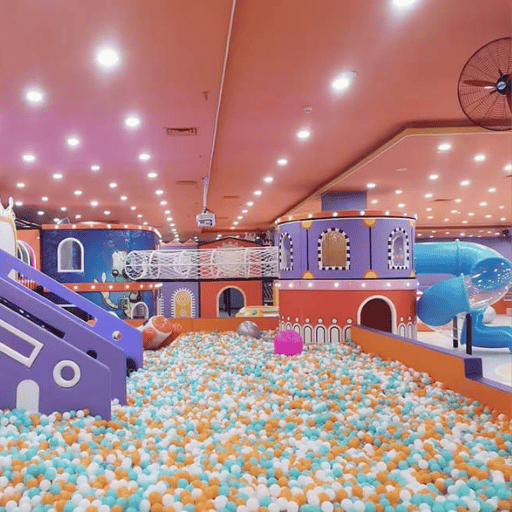
The single most common budgeting error is reading an equipment quote as the project cost. That quote cover only the structure leaving the factory floor. Getting it into your venue and ready for opening day adds several layers most first-time buyers underestimate. Here’s the rule that keep operators honest with themselves.
📐 The 30% Landed-Cost Rule
Take any equipment quote and add at least 30% for ocean freight, customs/import duty, and installation before you compare it to anything. That gives your landed equipment costthe number you’ll actually wire out, and it’s still before flooring, HVAC, rent, and fit-out. Distant ports, complex multi-level installs, and rush timelines push the add-on past 30%.
For a full venue build, a useful way to picture where the money goes is as a share of total project capital expenditure. Across typical mid-size FEC builds, operators and manufacturers report a split roughly like this:
- ✔ Play equipment: 30–50% of project capex
- ✔ Flooring & surfacing: 10–15%
- ✔ Shipping & installation: 15–20%
- ✔ Renovation, HVAC, lighting: 20–25%
That’s why a $50,000 equipment order can become a $120,000–$160,000 venue. Installation labor alone usually runs 15–25% of the equipment price, and a freight container of play structures can cost $3,000–$15,000 to ship depending on destination and how tightly it packs. Ordering direct from the factory with a delivered-duty-paid (DDP) shipping option folds freight, customs clearance, and import duty into one published band, typically $4,000–$12,000 by region, so you compare a complete number instead of a stack of surprises.
How much does it cost to start an indoor playground (not just the equipment)?
Equipment is one line on a much longer startup budget. Realistic all-in figures for a mid-size FEC include the landed equipment cost, a build-out (flooring, HVAC, restrooms, reception), point-of-sale and ticketing systems, first-year insurance, signage, marketing, and several months of rent and payroll held in reserve before revenue stabilizes. Catalog-style guides that quote “$10,000 to $70,000 to start” describe distributor catalog units for a school or church corner, not an all-in commercial FEC build, which commonly reaches the low-to-mid six figures once the venue is finished. If you’re weighing a branded model against a build of your own, our indoor playground franchise vs. independent cost guide breaks down where each route’s money goes.
The Hidden Costs That Wreck First-Year Cash Flow
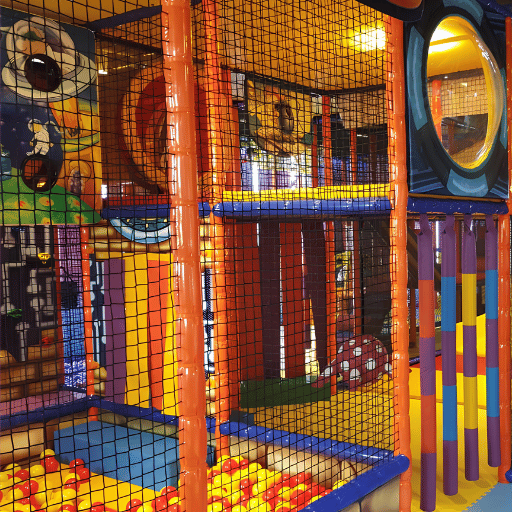
The costs that hurt are the ones missing from the equipment quote. They rarely appear on a glossy product page, and they tend to arrive in the worst order, clustered around opening, when cash is tightest. Operators planning a build consistently report the same handful of surprises.
Consider a common scenario. An operator signs a lease on a 9,000-square-foot unit and budgets carefully for the play structure. Then the landlord, treating a playground as a higher-risk tenant, asks for a 3–6 month security deposit, at $10,000 a month, that’s a $30,000–$60,000 check before a single bolt is installed. When the container arrives, the truck driver allows about two free hours to unload roughly 10 tons of steel and foam; without a pre-arranged forklift at $300–$500 a day, demurrage fees start stacking. None of this was on the equipment invoice.
⚠️ The line items first-time buyers forget
- Customs & destination charges: port handling $1,000–$2,000 per container, plus import duty (playground equipment imports classify under HS code 9506990000).
- Site prep: a sloped or cracked floor needs self-leveling concrete, commonly $2,000–$5,000, or the install crew waits on your clock.
- HVAC upgrade: a busy play hall needs air handling; upgrades run $10,000–$50,000 in older retail shells.
- Consumables: ball pits lose roughly 10% of their balls a year and need a $1,500–$3,000 cleaning machine to stay hygienic.
- Insurance: general liability for a play venue commonly runs $5,000–$12,000 a year, and uncertified equipment raises the premium.
There’s one more trap worth naming: installation pricing. That tidy “$150 per engineer per day” line sounds cheap until you add the crew’s international flights, visas, hotel, and meals, which can roughly double the real cost of supervised installation. Build a maintenance reserve too; once open, expect to set aside 1–5% of revenue annually for wear parts, slide liners, and soft-cover panels. Our indoor playground maintenance guide covers how to keep that reserve realistic.
What Makes One Playground Cost Three Times Another
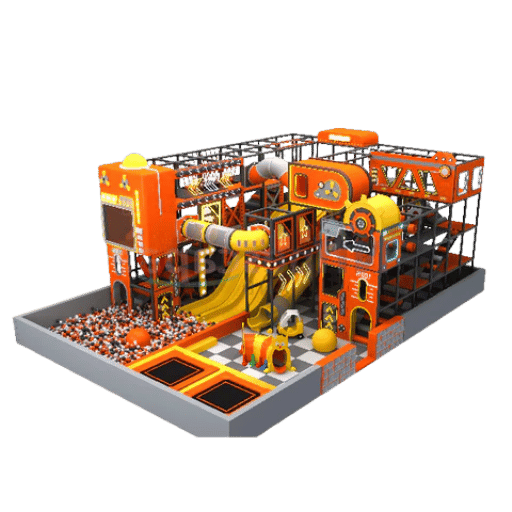
When two suppliers quote the same floor area and one is half the price, the difference is almost always buried in the material specification, and that’s exactly where it’s hard for a buyer to see. Every play structure is a steel frame wrapped in foam and vinyl; thinner steel, lighter foam, and unstamped fasteners look identical in a 3D render and a photo, but they behave very differently at the third platform tier after two seasons of heavy use.
📐 Engineering Note — the material spec floor that sets the price
Durable commercial structures start from a published minimum: hot-dip galvanized frame pipe at Ø48 mm outer diameter with a 2.0–2.5 mm wall (cut-corner suppliers quietly ship 1.6 mm), EVA padding foam at 60–80 kg/m³ density with an EN 13501-1 B-s1,d0 fire rating, 1100 GSM PVC tarpaulin with a 1000D nylon weave, and Grade 8.8 zinc-plated bolts with nylon-insert anti-loosening nuts. Drop the wall thickness from 2.0 mm to 1.6 mm and the headline price falls, along with the structure’s stiffness.
“We tested four pipe-wall thicknesses against three years of installation data before we settled on the 2.0–2.5 mm Ø48 band as our floor. Anything below that creates wobble at the third platform tier, and customers feel it long before any inspector flags it. We specify the floor, not the ceiling, on every quote, so a buyer comparing us to a 1.6 mm offer can see exactly what they’re giving up.”
Why are indoor playgrounds so expensive?
Three factors stack up. First, materials: certified-grade steel, fire-rated foam, and phthalate-free vinyl cost more than uncertified substitutes, and a heavy-traffic commercial structure uses a lot of them. Second, labor: these are largely custom builds welded, wrapped, and assembled to a venue’s specific floor plan, not mass-produced off a single mold. Third, certification and testing: meeting standards such as ASTM F1487-21 and EN 1176 requires documented load testing and quality systems that a backyard play set never touches. Theme complexity adds the final layer, a custom jungle or space theme with sculpted decor costs more than a standard color palette. You are paying for a structure engineered to carry children safely for 8–12 years, not a toy.
Where You Buy Changes the Price: Distributor vs China OEM vs Factory-Direct
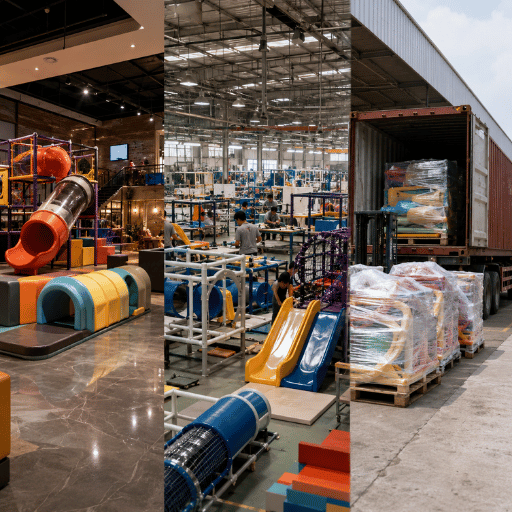
The same physical structure can carry three very different price tags depending on how many hands it passes through before it reaches your venue. Understanding the channel is one of the biggest levers an operator has on the cost of commercial playground equipment.
| Channel | Per-m² equipment (mid-FEC) | Lead time | What you trade |
|---|---|---|---|
| US / EU distributor | $80–$140 | 60–90 days | Local point of contact; pays a markup; certs often shown as logos only |
| Generic China OEM | $25–$45 | 35–60 days | Lowest headline price; documentation and after-sales often thin |
| Factory-direct OEM (with docs) | $30–$55 | 30–45 days | Direct pricing plus full test PDFs and a spare-parts price hold |
✔ Buying factory-direct
- Lowest price for the same build quality
- Test certificate PDFs per standard, not logos
- Shorter lead time, no re-import leg
- Free 3D custom design and a 24-month structural warranty
- Spare-parts price held for 24 months
⚠ The trade-offs
- You manage shipping unless you buy DDP
- Time-zone gap on support (mitigated by 24/7 messaging)
- Generic OEMs may add spare-parts and rush-freight surcharges later
- Franchise-approved packages run 20–30% above factory-direct
The distributor markup buy you a local relationship and someone to call, which has real value, but it’s often layered on top of cert opacity, because the distributor didn’t fund the original testing. Generic OEMs win the headline-price comparison by cutting documentation, then recover margin through spare-parts surcharges and air-freight rush orders when a component fail. To see how individual suppliers stack up on price and documentation, compare the field in our roundup of the top indoor playground equipment manufacturers and the leading soft play equipment manufacturers.
Will It Pay for Itself? ROI and Payback by Venue Tier
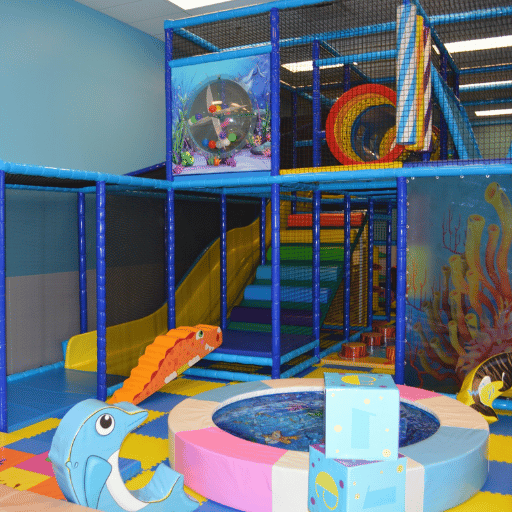
Equipment cost only matters relative to what the venue earns back. Well-run indoor playgrounds recover their investment on a timeline that scales with tier and, more than anything, with revenue mix. Most operators see payback in 18–30 months, with the fast end driven by parties and food, and the slow end by admission-only models.
| Venue tier | Equipment investment | Typical payback |
|---|---|---|
| Toddler corner in a mall or restaurant | $5,000–$15,000 | 8–14 months |
| Mid-size FEC (200–400 m²) | $25,000–$75,000 | 18–30 months |
| Large FEC / flagship park | $100,000–$500,000+ | 30–48 months |
The lever that move payback isn’t admission, it’s the secondary revenue around it. Operators consistently report that birthday parties carry 60–80% margins and are the financial engine of a healthy FEC, while food and beverage can lift revenue per visitor by roughly 30% without adding floor space. General admission alone is the slow road. Idle hours drag the other way: weekday mid-mornings are dead air you still pay rent on, and insurance running above 10% of revenue can stretch payback by 6–12 months. For a deeper model, see our breakdown of indoor playground ROI and profitability, or run the numbers for your floor plan with the indoor playground pricing tier calculator.
💡 Key takeaway
Buy the tier your revenue plan can fill, not the biggest structure you can afford. Certified equipment also tends to lower liability premiums — a payback factor most buyers overlook.
How to Budget Smart and Avoid Overpaying
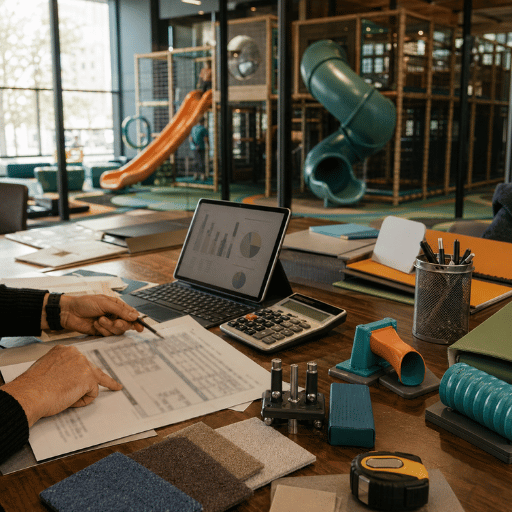
You don’t lower indoor playground equipment cost by chasing the cheapest quote, you lower it by removing the surprises that turn a cheap quote into an expensive project. Run any supplier through this checklist before you sign.
- ✔ Demand the spec floor in writing. Ask for steel wall thickness, foam density, vinyl GSM, and bolt grade as minimums. Without those numbers in writing, a quote is a guess, not a price.
- ✔ Get test-report PDFs, not logos. A real factory hands over the ASTM F1487 or EN 1176 report for the components it cites; a reseller usually can’t.
- ✔ Ask for a DDP band, not just FOB. A delivered-duty-paid number by region lets you compare landed cost instead of guessing at freight and duty.
- ✔ Apply the 30% rule before comparing. Add freight, customs, and install to every quote so you compare like with like.
- ✔ Lock a spare-parts price hold. Confirm how long parts pricing is held after install, 24 months is a reasonable benchmark, and ship a small parts kit in the same container.
- ✔ Right-size the tier. The 200–300 m² mid-FEC band usually offers the best capacity-for-the-money for a first venue.
Two more habits separate operators who land on budget from those who don’t. Hold a deposit buffer of three to six months of operating expenses in reserve, landlords and slow opening weeks both demand cash before revenue arrives. And confirm your floor is level before the install crew flies in, because idle installers and emergency concrete work are pure margin loss. None of these steps cuts equipment quality; they cut the avoidable spending around it.
Indoor Playground Equipment Costs in 2026 and Beyond
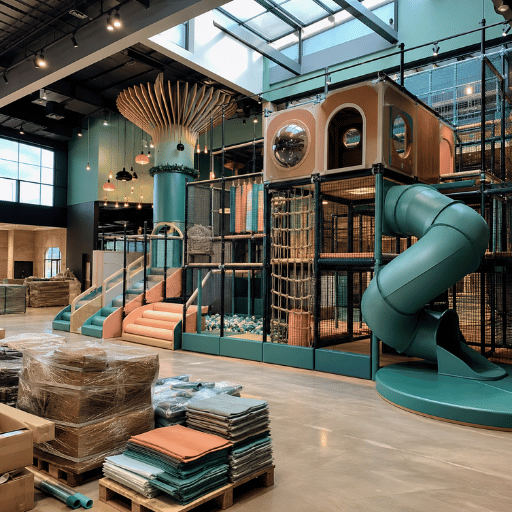
Demand is the tailwind behind 2026 pricing. The global family entertainment center market was valued at about USD 28.2 billion in 2023 and is projected to reach USD 70.1 billion by 2032, a 10.5% compound annual growth rate, according to Global Market Insights; Technavio independently projects a 14.0% CAGR through 2030, with North America holding roughly 35% of the market. Growing demand like that keeps equipment orders steady and puts little downward pressure on prices.
On the cost side, two forces are worth watching as you plan a 2026 buy. Freight rates remain volatile and region-specific, and tariff conditions on imported equipment (classified under HS code 9506990000) can shift the landed math quickly, which is why locking a DDP quote early protects your budget against mid-project rate swings. On the regulatory side, the U.S. Consumer Product Safety Commission (CPSC) released an updated Public Playground Safety Handbook in 2025, and ASTM F1487-21 remains the current US performance standard; compliance stays voluntary in the US but is increasingly demanded by insurers, so certified equipment is becoming the practical baseline rather than a premium upgrade.
The operating model is shifting too. Industry events such as the IAAPA family entertainment center community point to hybrid, lower-maintenance venues, cashless RFID wristbands, and party-and-food-led revenue mixes. The practical takeaway for a 2026 buyer: spend on certified structure quality and party-friendly layout, lock your freight and duty terms before peak shipping season, and treat the equipment quote as roughly 70% of your true equipment outlay.
Get a real number for your floor plan
Send your space and venue type and Didi Land returns a transparent equipment quote with a spec floor, a DDP shipping band, and a free 3D design, so you compare landed cost, not headline price.
Frequently Asked Questions
How much would it cost to build a small indoor playground?
View Answer
Expect $5,000–$15,000 for the equipment in a small toddler or soft-play corner of 30–100 m², plus roughly 30% on top for shipping, customs, and installation.
How much does shipping and installation add to the equipment cost?
View Answer
Plan for at least 30% on top of the equipment price, and sometimes more. Installation labor commonly runs 15–25% of the equipment cost, an ocean container ranges from $3,000 to $15,000 depending on destination and how tightly it packs, and import duty applies on arrival. A delivered-duty-paid option bundles freight, clearance, and duty into one published band, often $4,000–$12,000 by region, so you can compare a single landed number instead of a stack of separate invoices.
What is the minimum budget or order to get started?
View Answer
With a factory-direct supplier the minimum order is usually one set, with no minimum dollar value and no premium-tier gating. A 30–50 m² hotel or restaurant corner is a perfectly normal first order.
Does certification such as EN 1176 or ASTM F1487 make equipment cost more?
View Answer
Certified equipment costs more to build because it uses tested materials and documented load testing, but the difference usually pays back through lower insurance premiums and fewer failures in service. In the United States, compliance with ASTM F1487 is technically voluntary, yet insurers increasingly require proof of it before they write a policy. That makes certification a practical baseline for any commercial venue rather than an optional premium you can skip to save money up front.
What is the typical lead time from order to opening day?
View Answer
Factory-direct production runs about 30–45 days for entry and mid tiers, sea freight adds 25–35 days, and on-site installation takes 5–15 days. From signed contract to opening day, plan for roughly 90–120 days, and longer for large custom themes.
How long does commercial indoor playground equipment last?
View Answer
Built to a proper spec floor, a structure lasts 8–12 years of all-day commercial use with routine maintenance and fastener checks every three months. Wear items get replaced periodically; the galvanized steel frame is the long-life part.
Why We Publish Real Price Bands
There’s no government or industry benchmark for indoor playground equipment cost per square foot, every figure in this guide is an industry estimate, and we’ve labeled it that way rather than dressing vendor numbers up as facts. The equipment, DDP, and lead-time bands here are the actual figures Didi Land’s factory quotes against, shipped to operators in 40+ countries since 2014. If you find a discrepancy with a current quote, tell us so we can correct the page.
References & Sources
- Public Playground Safety Handbook (2025, Pub. 325)U.S. Consumer Product Safety Commission
- Guidelines, Standards and Best PracticesNational Program for Playground Safety, University of Northern Iowa
- Family Entertainment Centers ConstituencyInternational Association of Amusement Parks and Attractions (IAAPA)
- Family Entertainment Center Market AnalysisGlobal Market Insights
- Family Entertainment Center Market 2026–2030Technavio
Related Articles
- Indoor Playground ROI: Is It Worth the Investment in 2026?revenue models and payback math
- Indoor Playground Franchise vs. Independentcost, profit, and risk compared
- Top Indoor Playground Equipment Manufacturers (2026 Ranked)how suppliers compare
- Soft Play Centre vs Indoor Playgroundfootprint, CapEx, and compliance
- The Indoor Playground Maintenance Guide for Operatorskeeping the upkeep reserve realistic