Get in Touch with Didi Land


United States planning guide
Updated by GW · October 2026
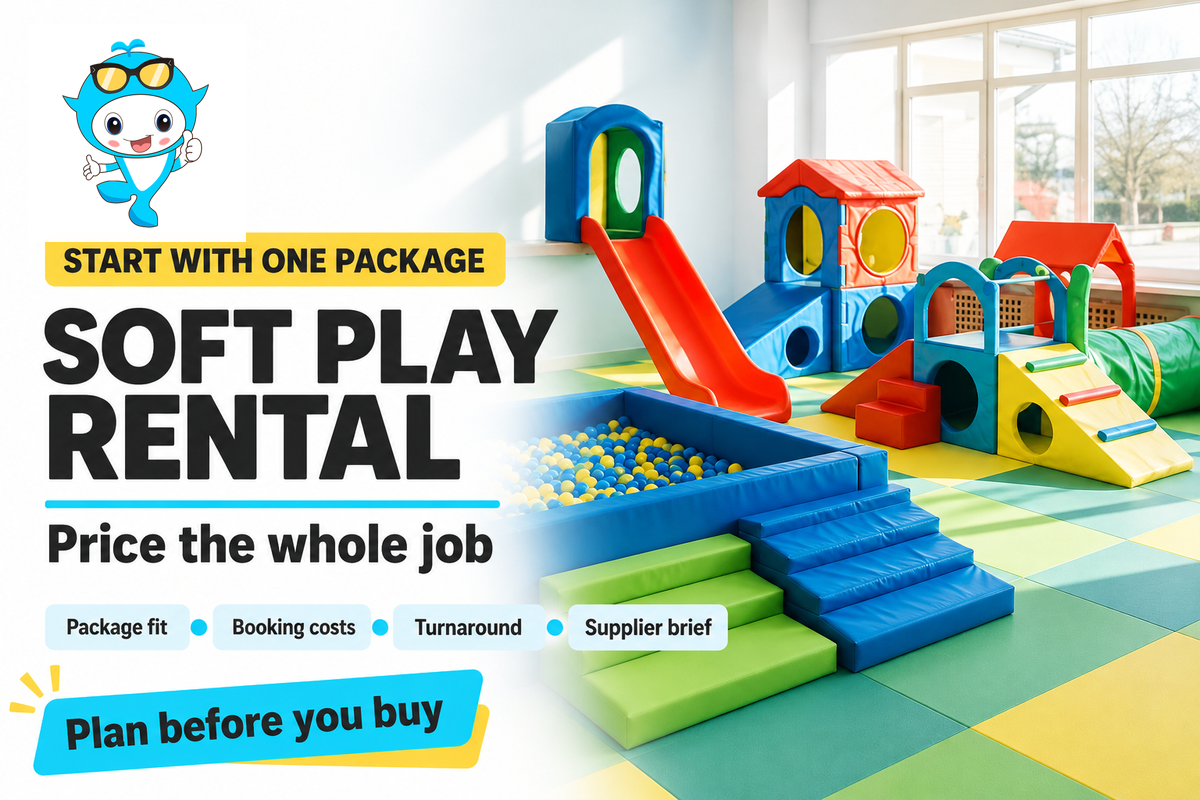
A soft play rental business offers reusable padded play equipment for events, with delivery, setup, collection and care in between events. Price the entire job, document one package, and test local demand before increasing stock.
Owners’ schedules can be full with collection activities and time spent drying and prepping equipment for the next rental. This guide provides a practical buying brief and operating model for the jobs identified.
Before you buy
- Choose equipment for its documented users and complete operating conditions.
- Compare the assembled layout with the packed load and available cleaning space.
- Charge for labor, travel and turnaround as well as the event itself.
- Separate monthly operating break-even from the initial investment recovery.
Soft Play Rental Business: Start With a Local Operating Plan
Begin with a defined customer, service area and delivery process. A mobile business model needs a clientele whose dates, locations and budgets fit the work you can deliver. It needs permissions to operate from chosen locations. Ownership of equipment alone doesn’t indicate local demand or readiness to trade.
Your target audience might be families arranging birthday parties, event planners serving community events, or a daycare seeking occasional indoor play. Choose a target market you can reach repeatedly. Parents and event organizers are a good source to learn about what they’d really book, including available floor space and access times, rather than assuming a popular photograph will sell.
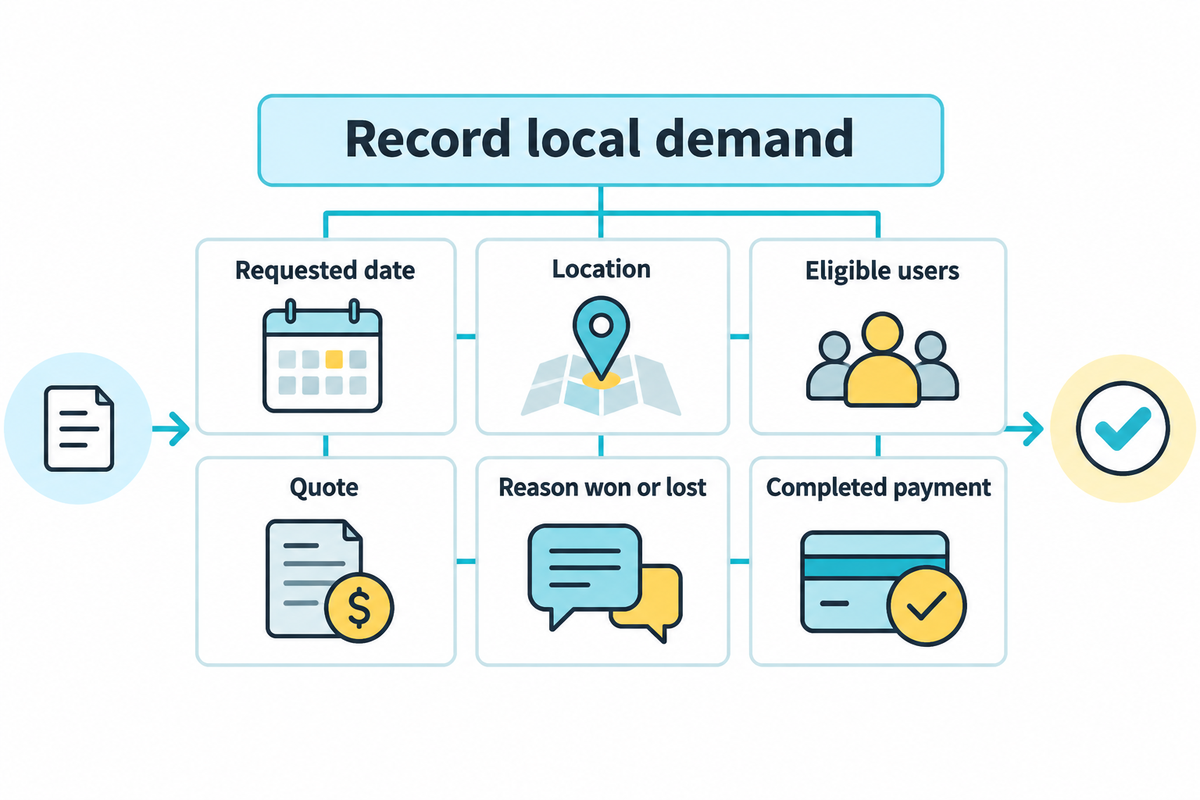
The Small Business Administration’s market-research guidance separates demand, location, competition and pricing. Turn those questions into a local inquiry record: requested date, location, eligible users, quote, reason won or lost, and completed payment.
Set the delivery radius from route time and cost. Include local registration and setup expenses in your startup costs. Check business structure, tax treatment, licenses, permits and home-storage zoning with the relevant local offices. SBA’s launch guidance explains why these requirements depend on location and activity. Obtain written insurance terms for the actual mobile service; forming an LLC doesn’t answer the equipment or coverage questions.
If your plan includes a permanent indoor play center with admission income, a lease and daily staffing, use the separate indoor playground business planning guide. A budget to deliver an event would be separate from these costs.
Soft Play Equipment: Build One Package That Fits
Consider the smallest complete setup that accommodates the users, venue and the transport and care process. An attractive play area can still be an unsuitable purchase if it can’t pass through the delivery vehicle’s door or return to service between events. Keep those separate decisions in The Four-Fit Rental Brief.
What equipment do I need for a soft play rental business?
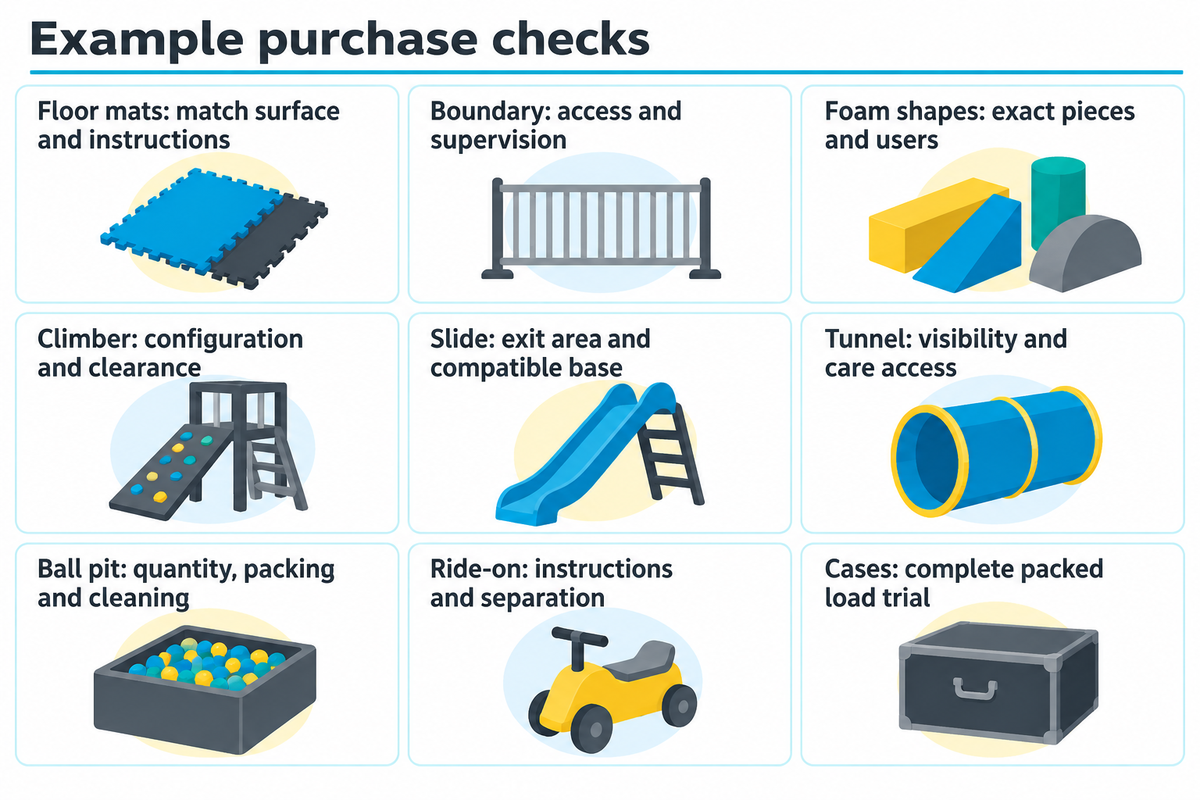
A starter package can combine an appropriate mat system, documented foam modules and boundaries, with a ball pit or slide, where the layout and care process support them. Choose items based on their use and the users. Protective packing, cleaning supplies and storage equipment should be included in the purchase, as opposed to considering them as later add-ons.
| Item | Operating purpose | Purchase condition |
|---|---|---|
| Floor mats | Define the usable floor | Match the surface, layout and equipment instructions |
| Boundary and gate | Manage access and separation | Keep access routes clear; a fence does not replace supervision |
| Foam shapes | Create the core activity | Specify the exact pieces and intended age group |
| Climber | Add a climbing activity | Confirm the complete configuration and required clearances |
| Slide | Add a sliding activity | Provide its specified exit area and compatible base |
| Tunnel | Offer a crawling route | Keep users visible and the interior accessible for care |
| Ball pit | Add contained ball play | Include ball quantity, packing and cleaning access in the quote |
| Ride-on or hopper | Offer a separate movement activity | Check product instructions and separation from other play |
| Cases and covers | Protect the complete load | Include every item in the packed inventory and load trial |
This is a purchasing framework, not a universal equipment list or child-capacity standard. The CPSC checklist’s use and size recommendations provide a starting point for user suitability. Compare commercial soft play set options with the individual foam play modules you need. Custom colors and pastel finishes can support your brand, but they don’t establish material performance or suitability for commercial rental.
Hypothetical transport problem: An owner selects a coordinated set that fits the photographed party room. At loading, the largest piece doesn’t fit through the cargo opening and the other pieces take up space reserved for clean covers. Purchasing a trailer changes the launch budget and storage plan. The best next step would be to modify the module selection or transport plan before ordering. Compare the packed item list with the actual door opening, load space and vehicle loading limits. A modular layout is only valuable if the pieces of the layout can be transported through that delivery route.
Soft Play vs Bounce Houses: Compare the Full Operating Job
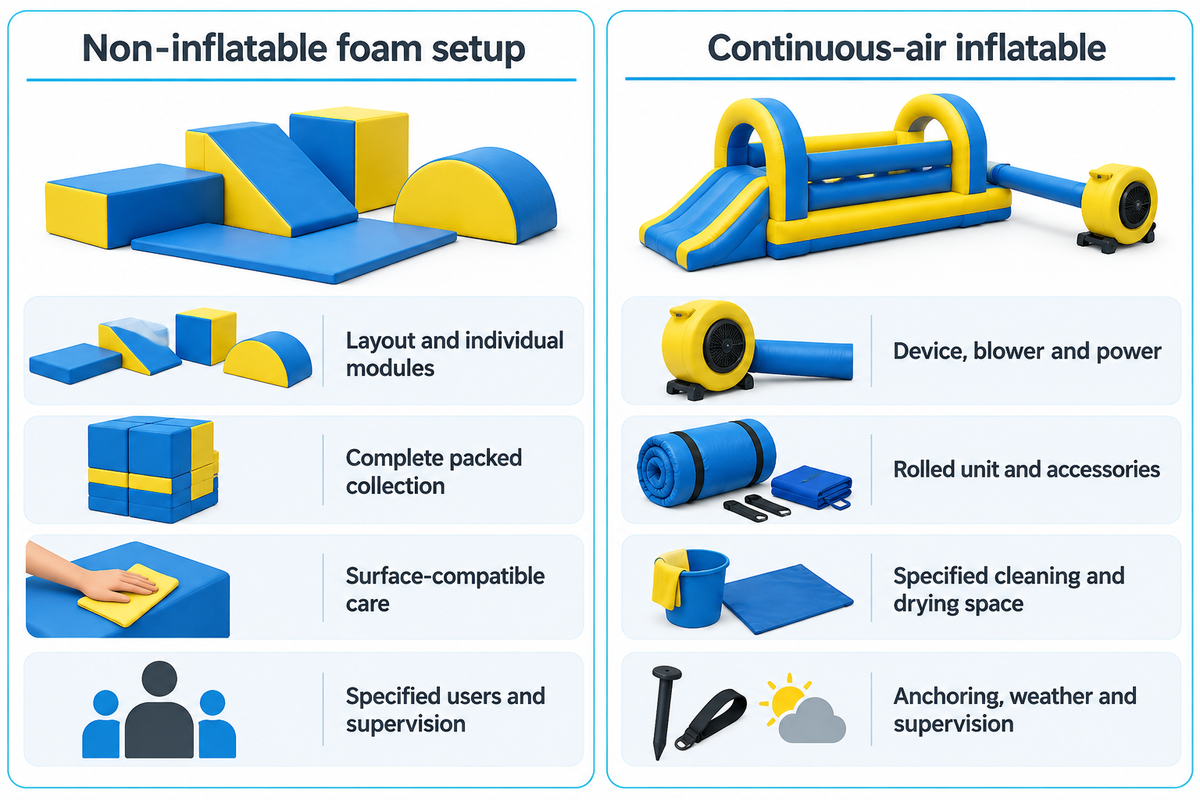
Compare the work required to deliver and operate each product family. Non-inflatable foam pieces and a continuous-air bounce house have different setup and equipment demands. Neither category removes the need for suitable users, inspection, supervision or compatible care. Choose the equipment whose complete operating requirements your crew and locations can support.
The Consumer Product Safety Commission’s constant-air guidance categorizes devices powered by continuous air pressure. It identifies different commercial and home-use standard pathways. A bouncy castle adds a blower, as well as device-specific instructions for power, anchoring and weather. Those instructions can’t be copied onto foam equipment, and can’t be disregarded, simply because an event is indoors.
Non-inflatable foam setup
- Plan the layout and individual modules.
- Measure the complete packed collection.
- Arrange surface-compatible care for each material.
- Use the specified users and supervision arrangements.
Continuous-air inflatable
- Plan the device, blower and power provision.
- Measure the rolled unit and all operating accessories.
- Arrange the specified cleaning and drying space.
- Use its anchoring, weather and supervision procedures.
For party rentals serving mixed ages, consider if you can run separate activities without having to lose supervision or create conflicting access routes. Older children shouldn’t be added to toddler play to simply increase the advertised guest count. The CPSC soft-contained checklist directs users to follow size recommendations and to keep larger children out of the toddler section.
A fair comparison for the next event is loading, travel, setup, collection, and release. Shorter inflation or assembly times can’t determine which of the equipment rental services is better.
Soft Play Rental Prices: Calculate Contribution Before Payback
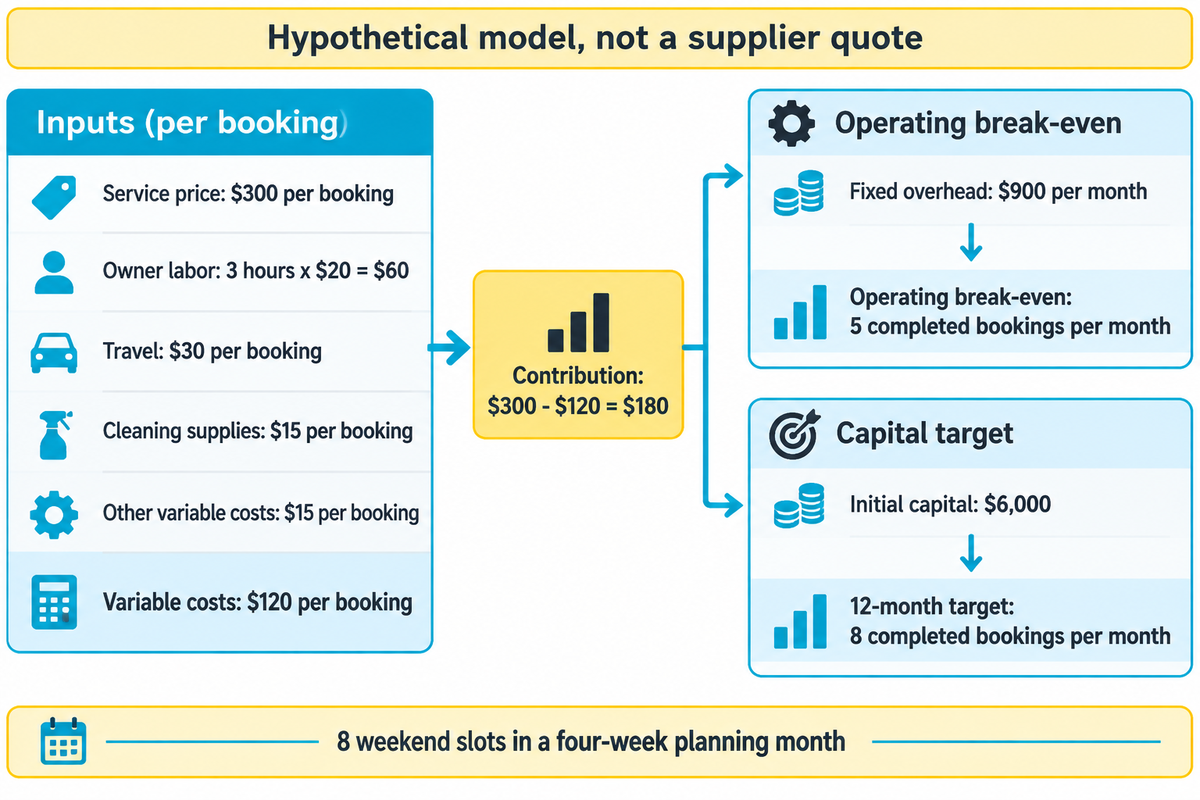
Set the price for the complete job cost and the number of rentals your calendar supports. Contribution is the amount left after variable costs; it must still cover monthly overhead. There’s also the original cost to recoup. These calculations answer different questions, so keep both in the launch budget.
How should I price a soft play rental?
Price the equipment, delivery, setup, collection and care as one defined service, then state any extra charges clearly. Include the time you spend loading and cleaning, even when you do the work yourself. Compare rental packages on equivalent duration, access conditions and included items before using another provider’s headline price as a reference.
“Fixed Costs ÷ (Price – Variable Costs) = Break-Even Point in Units”
Package costs and completed volume determine profitability. Treating one completed booking as a unit can be done by rental businesses if the package is consistent. Keep collected sales tax in separate records and confirm its tax treatment. Delivery charges can belong in revenue, but the associated labor and travel still belong in costs. Longer rental periods, stairs or late collection can change both sides of that calculation.
| Model input or result | Hypothetical value | What to replace with your records |
|---|---|---|
| Realized service price | $300 per completed booking | Actual service revenue, excluding buyer-imposed sales tax collected for the taxing authority |
| Owner labor | 3 hours × $20/hour = $60 | All job hours at your chosen compensation rate |
| Travel | $30 per booking | Complete route costs without counting labor twice |
| Cleaning supplies | $15 per booking | Surface-compatible supplies actually consumed |
| Other variable costs | $15 per booking | Payment fees and minor consumables |
| Total variable costs | $120 per booking | Sum of the four variable-cost lines |
| Contribution | $180 per booking | $300 − $120 |
| Fixed overhead | $900 per month | Storage, insurance and other continuing fixed costs |
| Initial capital | $6,000 | Your itemized upfront investment |
Operating break-even: $900 ÷ $180 = 5 completed bookings per month. At five, this model covers ongoing costs after valuing the owner’s work. It hasn’t yet recovered the initial $6,000.
Twelve-month capital target: $6,000 ÷ 12 = $500 extra per month. ($900 + $500) ÷ $180 = 7.78, rounded up to 8 completed bookings per month. In a four-week planning month with eight available weekend days and one job per day, that consumes every slot. One cancellation or unreleased set can defeat the target.
| Completed bookings/month | Service revenue/month | Contribution less $900 overhead | Simple $6,000 recovery |
|---|---|---|---|
| 4 | $1,200 | −$180/month | No recovery from a continuing loss |
| 6 | $1,800 | $180/month | About 33.3 months |
| 8 | $2,400 | $540/month | About 11.1 months |
This example ignores income tax, financing, inflation, major replacements, and other additional capital purchases. Changes in the volume and type of business affect inputs. Valued owner time is an economic cost; actual cash timing depends on what you pay and when. Don’t subtract depreciation and then use this method to recover capital.
Hypothetical pricing decision: An owner sees the $180 contribution and figures that six monthly jobs will recover the equipment. The equipment helps to produce six jobs, but the bill for the fixed costs comes due. There’s only $180 left after the model’s overhead, so simple recovery takes 33.3 months. Winning another job at a discount may make the position even worse, especially if the lowered rate doesn’t cover the additional work. Look at the service as a whole before reducing the price. Selling a decor add-on requires an equal consideration for handling; the selling price doesn’t necessarily translate to profit. The owner needs better operating results, not simply more business.
Mobile Soft Play: Set Capacity From the Turnaround Cycle
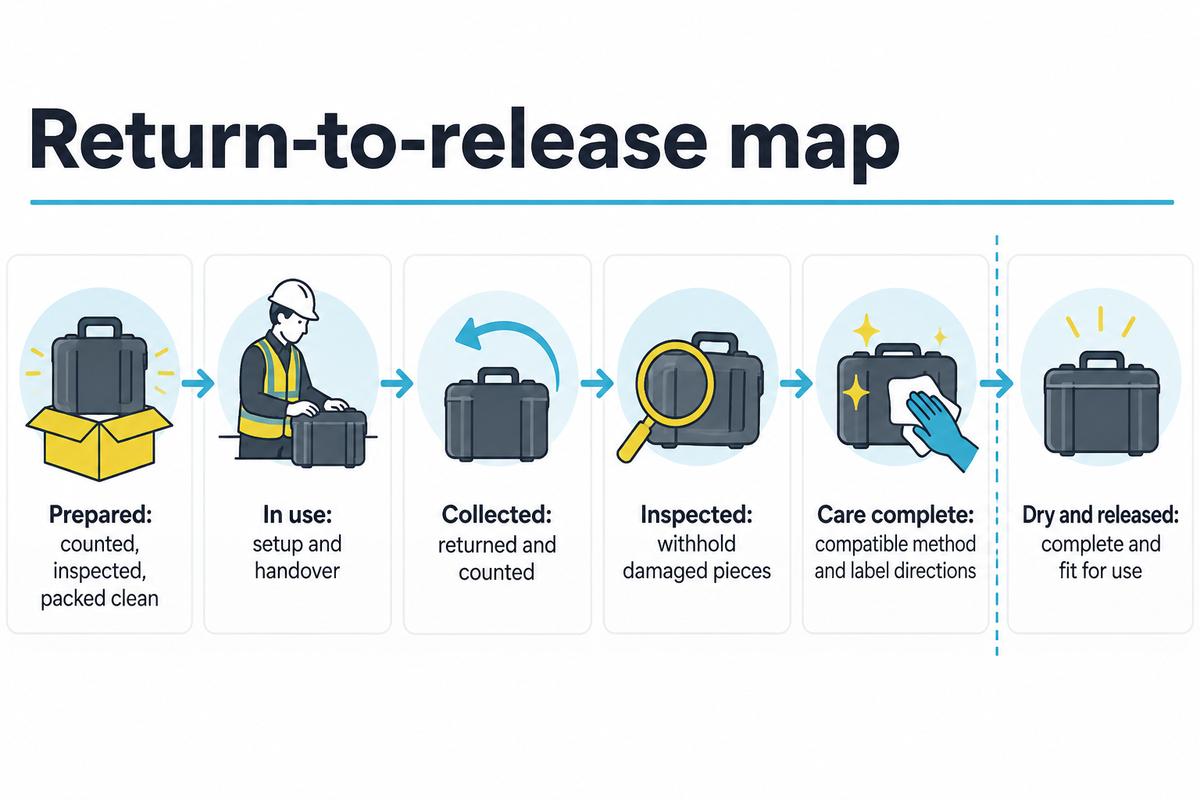
The capacity available for work is the total number of complete jobs that the inventory, crew, vehicle and care area can finish reliably. A set is unavailable while it remains at a customer, in transport, awaiting repair or completing care. Schedule its return to a ready condition before taking on the next job against that equipment.
How many bookings can you handle each weekend?
The correct answer comes from a timed rehearsal of the entire job. Don’t rely on a fixed industry booking count. Include preparation, both delivery journeys where applicable, setup, collection, cleaning time and release. Make sure to coordinate crew availability, and check if there are access windows that overlap. A second set can help when the constraint is inventory. It won’t help to supply an additional driver or drying space.
The CDC’s early-care cleaning guidance distinguishes between cleaning, sanitizing and disinfecting. It calls for surface-suitable products, label directions and complete drying of sanitized nonporous items before storage or use. Apply those principles with the equipment manufacturer’s instructions. Wiping items dry isn’t the same as sanitizing, and a visible wipe isn’t a substitute for contact time or methods.
| State | Release condition | Scheduling consequence |
|---|---|---|
| Prepared for dispatch | Counted, inspected and packed clean | Reserve the complete inventory |
| Delivered and in use | Correct setup and operating handover | Block the customer and access windows |
| Collected | All pieces returned and counted | Keep returns separate from ready stock |
| Inspected | Damage assessed; affected pieces withheld | Remove incomplete configurations from availability |
| Cleaned and treated | Compatible method and applicable label directions completed | Include required contact and handling time |
| Dry and released | Dry, complete and fit for its intended use | Return the set to the bookable inventory |
For rental operators, a ball pit configuration includes adding a collection of individual balls to the process. Confirm access and counting. Confirm containers and the approved care method before making it standard in every package. Use the same cleaning and inspection record to release the complete set. The equipment maintenance planning guide provides a broader context and rationale for planned equipment maintenance; build procedures for the mobile equipment.
Hypothetical scheduling conflict: A customer wants to schedule a collection for a later time on a Saturday. The owner is able to make that collection, but that makes the return time too tight to take proper care of the product before delivering it on a Sunday. Promising both jobs would sell the same unreleased inventory twice. The owner is able to keep the first collection, provide a different ready set with the appropriate crew, or not extend the collection time. The owner makes the decision on collection time extension visible at quotation time, based on a decision made at the end of a full rehearsal. There is no defensible universal cleaning duration that makes every material, weather condition and return state fit the same calendar.
Soft Play Rental Safety: Match Rules to the Actual Equipment
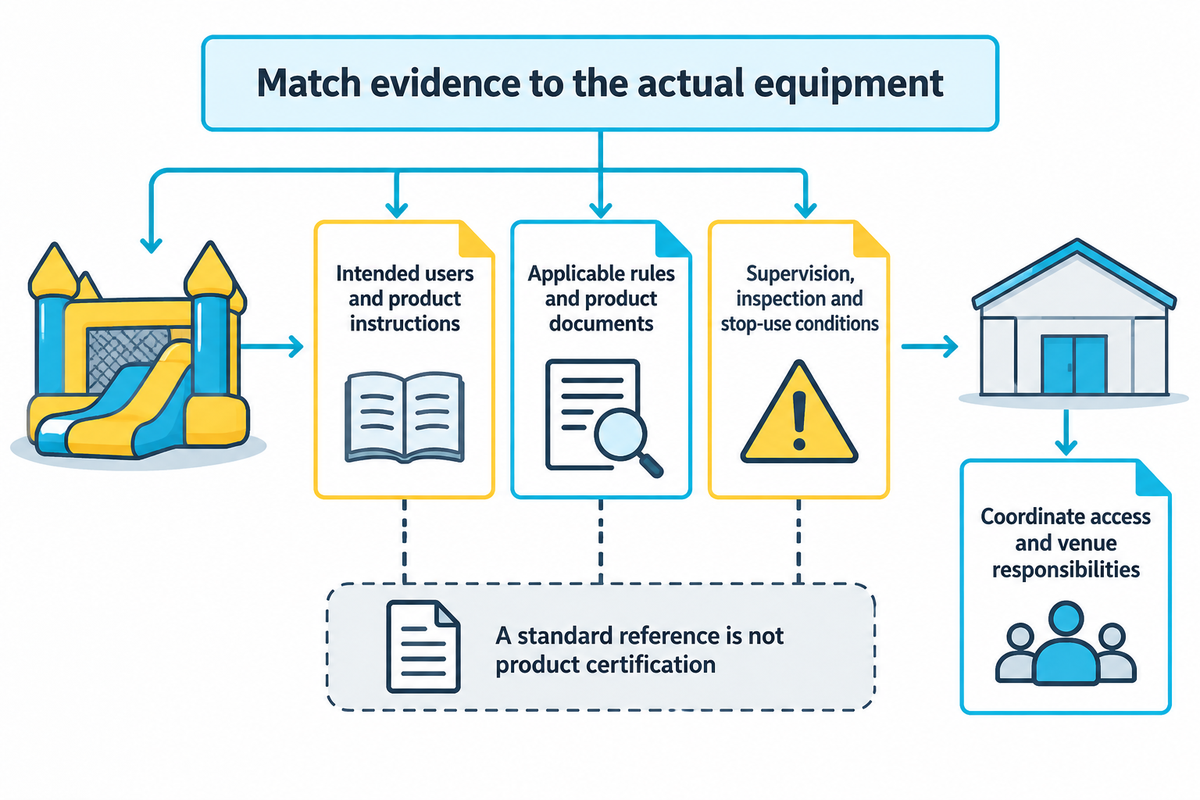
Match each product and configuration to its intended users, instructions and applicable requirements. A padded appearance doesn’t establish infant product suitability, a safe guest count or approve a mixed age layout. Keep product evidence, operational responsibility and venue conditions together so the person overseeing the activity knows which setups and limits apply.
The public ASTM F1918-21 scope, listed Active when checked in October 2026, concerns soft-contained play equipment and excludes specified other product classes. A referenced standard does not certify all portable foam collections. A general “toddler-safe” or “non-toxic” description does not identify the tested product, applicable rules or supporting documentation.
Write a package-specific operating sheet: intended users, capacity from equipment documentation, layout, use restrictions, supervision requirements, inspection and stop-use conditions. The layout toddlers need should be arranged according to their abilities; they shouldn’t be placed with larger users just because there’s space within a boundary. Active adult supervision remains part of the operating plan. Equipment for entertaining children isn’t a substitute for child care.
Identify who will supervise, how the handover will occur and how damaged equipment is removed from service. Keep entrances, exits and circulation clear. Don’t make promises for developmental outcomes based on a set because of climbing, crawling or motor skills opportunities it may provide.
Access needs a separate conversation with the host. The Department of Justice’s public-business guidance addresses equal service access, effective communication and applicable reasonable modifications. Coordinate booking communication and the venue arrangement with those responsibilities; a safety-standard reference doesn’t settle them.
Soft Play Equipment Suppliers: Request a Comparable Quote
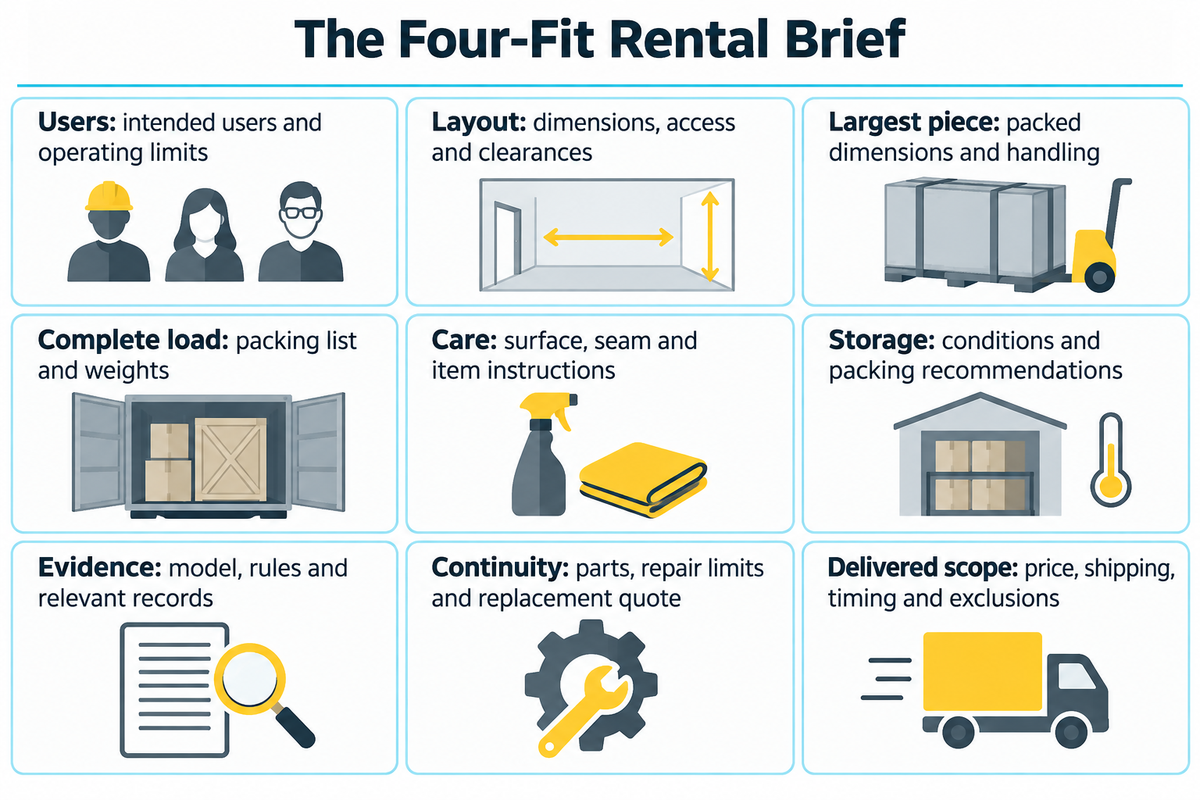
To choose the right supplier, send the same operating brief and compare the exact configuration included. A useful quotation identifies pieces, dimensions, packing, care instructions, applicable product evidence and delivery. This allows procurement to understand what’s included, operations to test the load and finance to understand the upfront commitment before an order is placed.
Complete the table to create The Four-Fit Rental Brief. The example conditions and decisions provide an end state for the request; add your actual venue and vehicle conditions. Fits are user/layout, packed transport, storage/care, and product evidence.
| Fit and field | Example buyer decision | Required quotation deliverable |
|---|---|---|
| Users: intended use | Start with one documented user group | Product-specific intended users and operating limits |
| Layout: installed arrangement | Use an agreed indoor party-room plan | Dimensioned layout, access and specified clearances |
| Transport: largest piece | Require passage through the measured cargo opening | Largest packed dimensions and handling instructions |
| Transport: complete load | Carry the full set plus care and packing supplies | Complete itemized packing list and packed weights |
| Care: material system | Use only documented compatible methods | Surface, seam and care instructions for each item |
| Storage: return and ready areas | Keep returned items apart from released stock | Storage conditions and packing recommendations |
| Evidence: exact product | Match documents to what is being ordered | Model identity, applicable rules and relevant test/certificate records |
| Continuity: replacement pieces | Replace a damaged module without guessing compatibility | Parts identification, repair restrictions and replacement quotation |
| Commercial: delivered scope | Compare the same destination and inclusions | Itemized price, shipping responsibilities, timing and exclusions |
For products subject to applicable children’s-product safety rules, CPSC’s certificate guidance identifies the product, rules and responsible manufacturer or importer. Its certificate FAQ explains that an importer can’t simply pass along a foreign manufacturer’s certificate. Resolve the actual classification and your responsibilities; a factory badge or laboratory logo isn’t the same document.
Ask the equipment manufacturer for data on the design and construction features of repeated use articles. For more detailed material questions, the commercial foam block density guide has that information. “Commercial-grade” alone doesn’t explain the complete material system or service life.
Soft Play Business: Test Demand Before Adding a Second Set
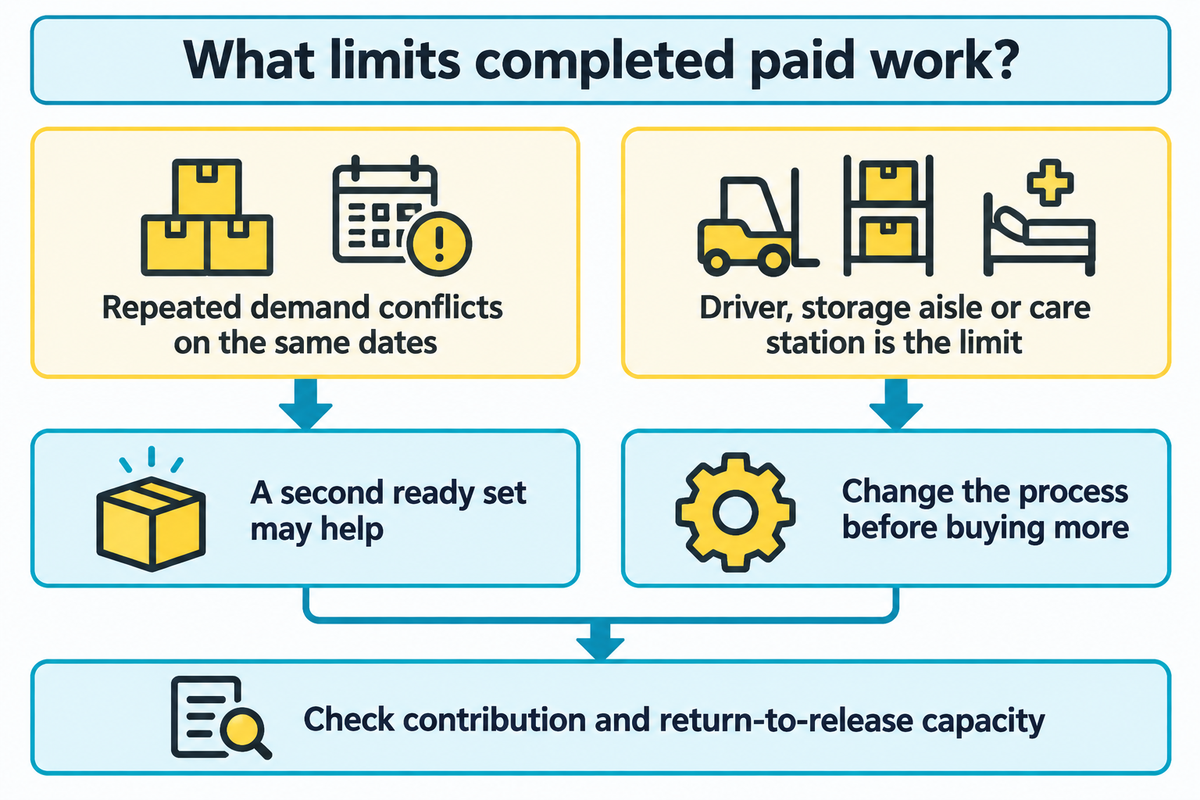
Increase your inventory if records show that a ready set is the limiting resource and the additional jobs make a worthwhile contribution. Other problems, such as low customer demand, difficult routes and an overloaded cleaning area call for different changes. Observing a constraint and acting upon it is the best course of action, even if that means a second purchase.
Market your soft play rental service with a clear offer
Show the components of play setups, dimensions, service area, and included work. Explain what customers receive for a birthday celebration or family gathering. Tie up relationships with party venues and family entertainment. Seek permission for event photographs and ask satisfied customers for honest reviews. Which inquiries turn into completed paid work?
Separate themed upgrades from your core offer, so you can determine their handling costs and contribution. A photo-friendly playroom backdrop isn’t evidence that the underlying service is scalable. Avoid making overly broad statements such as “make your event stress-free”. Provide customers with a clear plan for the arrival, use and collection of the service instead.
Review declined qualified inquiries by date and reason, using SBA’s direct-customer research approach to test the local opportunity. If demand repeatedly conflicts on the same dates, a second ready set may help. If the same driver, storage aisle or care station already limits output, change that process before buying more playground equipment. This is how the booking record becomes a plan for long-term operations.
Key takeaway
Buy the next set when completed-job contribution, documented demand and a workable return-to-release schedule support it. A full-looking calendar is useful only when the equipment and crew can deliver every commitment.
Build a quote around the work you can deliver
Share your intended users, venue arrangement, vehicle constraints and preferred modules with Didi Land. Use the Four-Fit brief to request a configured, scoped and priced solution.
Frequently Asked Questions
Is owning a soft play business profitable?
A rental service can produce a surplus when completed jobs cover variable costs, overhead and the owner’s required compensation.
The worked model shows why positive contribution alone is insufficient. Five completed bookings cover its ongoing monthly costs, while recovering the initial capital requires additional volume. Replace the example inputs with real quotes and recorded hours. Compare a quieter month as well as a full calendar, and keep tax, financing and future purchases separate.
How much does it cost to start up a soft play?
The startup budget depends on whether you are launching mobile rentals or a permanent venue, plus the equipment and resources you already have.
For mobile work, obtain itemized equipment, freight, packing, vehicle, insurance, storage and setup costs. Add working capital for bills that arrive before bookings become dependable. The $6,000 in this article is an illustrative investment input, not a supplier quotation or complete startup allowance. A vehicle purchase or premises lease needs its own funding provision.
How to start a soft play rental business?
Define one service, confirm its operating requirements, obtain a matched set and rehearse the whole job before selling dates.
Complete the local registration, tax, licensing, insurance and storage checks that apply to your operation. Match product documents to the actual equipment. Time preparation through return and release, then price that work. Publish clear inclusions and customer responsibilities. Record completed bookings and their contribution before using demand assumptions to justify more inventory.
What is the most profitable type of rental business?
Rental categories cannot be ranked reliably from advertised prices alone.
Compare contribution, utilization, asset cost and the work needed to deliver each service. A high ticket price can accompany high labor or transport costs. For this decision, test the local customers and operating model you can serve rather than purchasing a category’s headline return.
Can soft play equipment be used outdoors?
Outdoor use depends on the exact product instructions and the proposed site and weather conditions.
Indoor soft play suitability does not establish outdoor suitability. Check the ground, access, temperature exposure and any product-specific securing requirements before accepting the location. Agree on a workable indoor alternative or cancellation process when conditions prevent use. Keep foam modules and constant-air devices within their own instructions. A canopy does not automatically resolve rain, heat or wind risks, and a booking agreement cannot make an unsuitable setup acceptable. Plan the return and drying process as well as the party.
Do I need insurance for a soft play rental company?
Arrange cover for the actual mobile rental activities and the requirements of your venues and jurisdiction.
Describe the equipment, intended users, supervision arrangement, transport and locations to the insurer. Obtain written confirmation of covered activities and exclusions. Do not assume a general business policy, customer waiver or another operator’s coverage limit answers those questions for your service.
Do you need to rent or buy a warehouse for storage?
Choose storage for the full care and dispatch process, not merely the space occupied by stacked equipment.
A home-based arrangement may work if local rules, insurance, access and the equipment’s storage requirements allow it. Check where returned pieces will be inspected and cleaned, where they will dry, and how released stock stays protected. A self-storage unit may restrict cleaning or business activity. Compare those conditions before committing to rent or buy a warehouse. Extra inventory is useful only when the space and operating process can support it without mixing dirty returns with ready equipment.
Our perspective on the first rental purchase
Use this guide to help you determine if a mobile rental equipment purchase is appropriate. Module price and quotation scope, along with the work needed to be done between events, are assessed using the Four-Fit brief and booking test. The Four-Fit brief and booking test are planning tools developed for this article; hypothetical dollar amounts are used throughout. They don’t represent a customer’s result and don’t guarantee equipment performance. Author: GW.
References & Sources
- Plan your business: market research and break-even analysis U.S. Small Business Administration.
- Launch your business U.S. Small Business Administration.
- Constant Air Inflatable Play Devices U.S. Consumer Product Safety Commission.
- Soft Contained Play Equipment Safety Checklist U.S. Consumer Product Safety Commission.
- How To Clean and Disinfect Early Care and Education Settings Centers for Disease Control and Prevention.
- ASTM F1918-21 public scope and active-version listing ASTM International.
- Children’s Product Certificate U.S. Consumer Product Safety Commission.
- Children’s Product Certificate FAQ U.S. Consumer Product Safety Commission; product matching and issuer responsibility.
- Businesses That Are Open to the Public U.S. Department of Justice.