Get in Touch with Didi Land


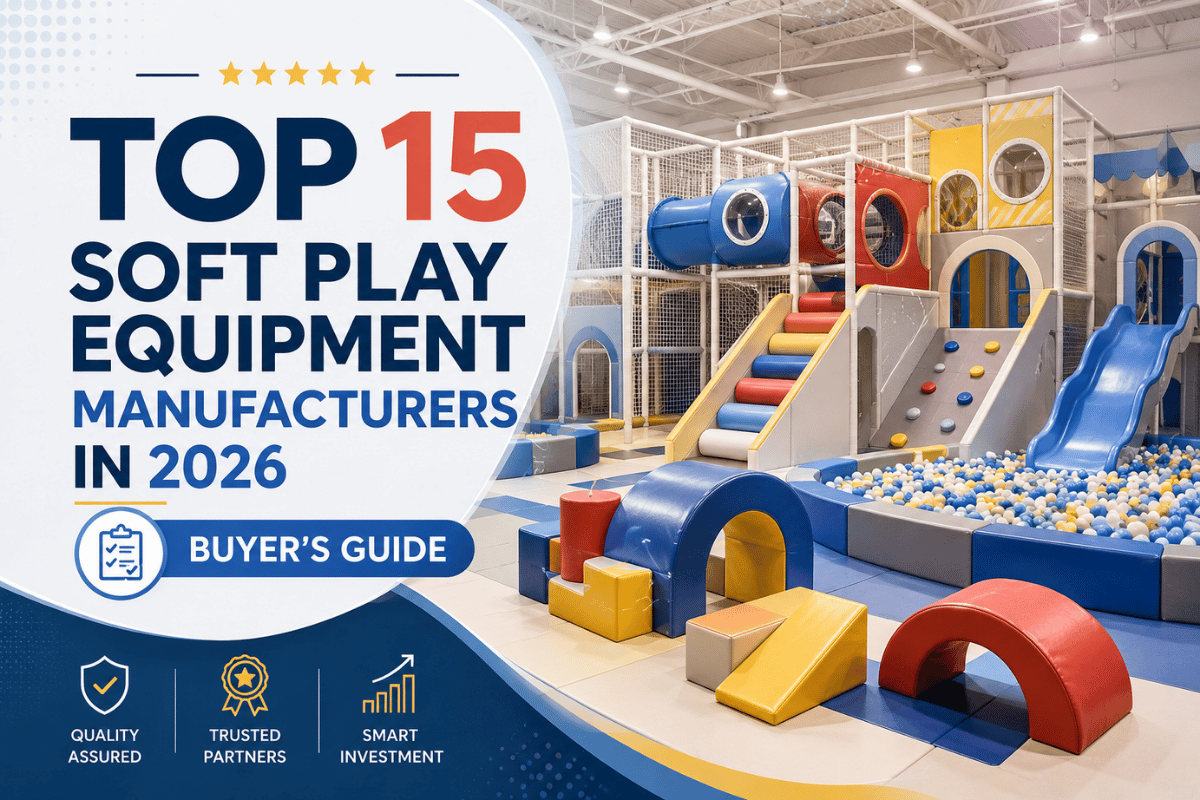
Choosing among soft play equipment manufacturers is one of the highest-stakes calls a play-venue operator makes: the right supplier protects children, your insurance position, and a six-figure capital outlay for a decade; the wrong one leaves you with torn padding and a re-fit bill 18 months after opening. This guide compares the field rather than selling you one brand. We profile 15 manufacturers worldwide – founding year, products, strengths, honest limitations, certifications, and website – and we score every one (including the publisher of this page) on the same five lenses, so you can see why a name ranks where it does.
How to read this list: Rankings reflect a transparent 5-lens score (certifications, customization, capacity, track record, after-sales) applied evenly, not pay-to-play. Competitor websites are shown as plain text for your reference — we don’t link to or endorse them. Founding years are marked verified only where a company states them publicly; five firms that do not disclose a year are labeled accordingly rather than guessed.
What Counts as Soft Play Equipment (and What Doesn’t)
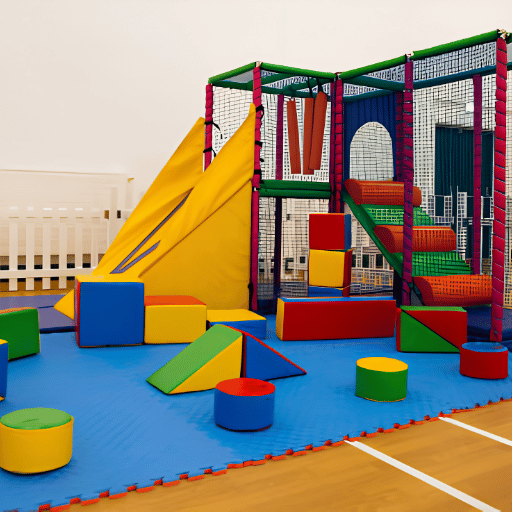
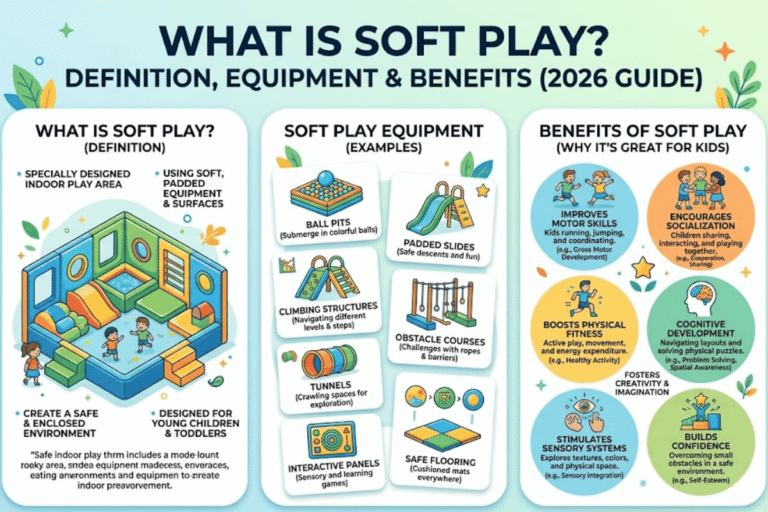
Soft play equipment is foam-padded, vinyl-wrapped modular play apparatus built for children roughly 6 months to 12 years, designed so that climbing, sliding, and tumbling happen on energy-absorbing surfaces inside a contained structure. That last word matters: in the United States, ASTM F1918 is the safety performance specification written specifically for soft contained play equipment, while the broader ASTM F1487 governs public playground equipment generally. Many catalogs blur “soft play” and “indoor playground equipment” into one phrase, but the material and the standard are different.
Most manufacturers on this list build several overlapping product families. Knowing which one you actually need keeps a request for quote from ballooning.
| Equipment Type | Typical age | Fall-height guide | Footprint | Typical buyer |
|---|---|---|---|---|
| Foam soft modules | 6 months–3 years | under 600 mm | 5–15 m² | Daycare, toddler zones |
| Ball pits & pools | 1–8 years | floor level | 4–30 m² | All venues |
| Soft climbers & tunnels | 1–5 years | under 1 m | 6–20 m² | Preschool, restaurants |
| Multi-level play frame | 3–12 years | up to 2.5 m per platform | 30–200 m² | Malls, FECs |
| Wave & spiral slides | 3–12 years | platform-dependent | within frame | Malls, FECs |
| Sensory & inclusive units | All ages | floor level | 4–20 m² | Daycare, SEND, clinics |
| Trampoline modules | 5–12 years | netted enclosure | 9–50 m² | FECs, trampoline parks |
| Ninja & obstacle | 6–12 years | up to 2 m | 20–80 m² | FECs, parks |
| Dedicated toddler zone | 6 months–3 years | under 500 mm | 10–40 m² | Daycare, malls |
| Safety flooring & mats | All ages | impact-rated to fall height | full play area | Every install |
So when someone searches for soft play equipment manufacturers, they usually mean a company that designs, fabricates, and installs at least the first four of these in a commercial package – not a toy retailer.
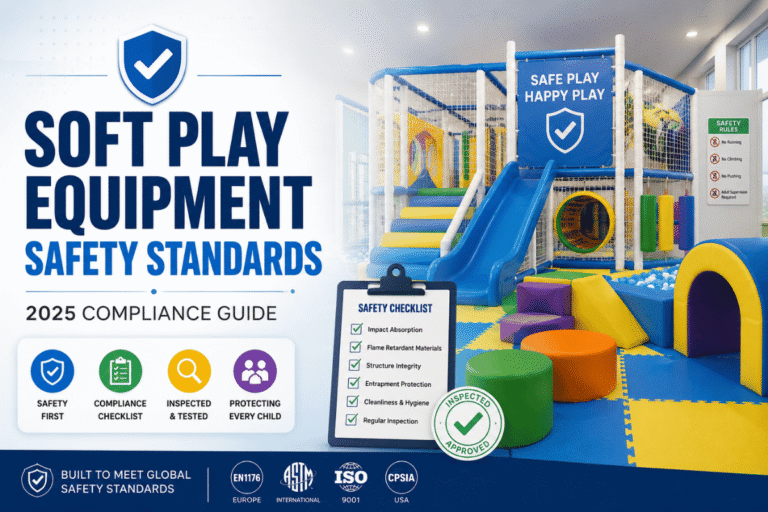
⚠️ Standards, decoded (read before you compare certs)
These layers are separate, and conflating them is the fastest way to misread a quote:
- ASTM F1918 – the spec written for indoor soft contained play equipment. This is the one that governs the structure itself.
- ASTM F1487 – public playground equipment generally. The U.S. Consumer Product Safety Commission handbook is written around this and is adjacent context, not the soft-contained rulebook.
- IPEMA – a third-party seal that certifies F1487 and surfacing, not F1918. A maker can be an IPEMA member yet still need a separate F1918 test report.
- ADA – accessibility is its own layer; F1918 addresses it only for safety, so accessible-route design is a separate check.
- CPSIA / CPC – portable or home-style soft play and accessories can be treated as children’s products, triggering lead, phthalate, and certificate rules.
CPSC notes there is no single legally mandated certification for playground equipment, so treat these as voluntary conformance signals you verify with reports – not boxes a regulator ticks for you.
Key takeaway: match the product to the standard — soft-contained units to ASTM F1918, public structures to ASTM F1487 — using the CPSC playground equipment guidance as your baseline reference.
How We Vetted These Manufacturers: The 5-Lens Manufacturer Vetting Scorecard
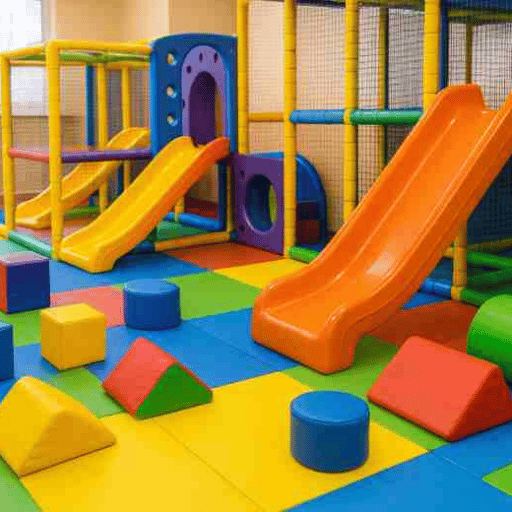
Every manufacturer below – Didi Land included – was scored on the same five lenses. You can run this scorecard on any supplier that pitches you, even ones we didn’t list. It is the most useful thing on this page, because the lowest quote and the biggest brand are both poor proxies for the decision you’re actually making.
| Lens | What to ask for | Red flag |
|---|---|---|
| 1. Certifications & compliance | A test report to ASTM F1918 for the soft-contained structure itself; EN 1176 and ISO 9001 where relevant. Note: an IPEMA seal covers F1487 and surfacing, not F1918. | “ASTM-compliant” with no report (claimed ≠ certified) |
| 2. Customization & design | In-house 3D design, themed concepts, your floor plan honored | Only catalog SKUs, no design team |
| 3. Capacity & lead time | Factory size, written production + shipping weeks | Vague timelines, no freight plan |
| 4. Track record & reach | Years in business, countries served, reference installs | No verifiable projects or age |
| 5. After-sales | Warranty length, spare-parts supply, installation help, and customer support after handover | No parts after handover |
The first class all of the field exercises for five of these lenses; small-business owner discussion group experts say that the issues that kill a play zone – separating seams, tears, corners that refuse to be cleaned, dead spots that thwart employee visibility, which usually only show themselves several months in. Score card pushes the questions before the money, after that.
“Our biggest mistake that we see are people buying on price per square meter, but not matching it to density of foam, the denier of the cover, the labor of cleaning. That you can see that looks the same in the render but that structure can double the cost to open up over the first ten years.”
That is also why we decided to publish this comparison transparency – we get scored on the same 5 lenses that we grade everybody with, we are candid when naming our competitor… a better matched buyer comes out at the bottom line no matter which company has the logo on the building that used our tool.
Key takeaway: the National Program for Playground Safety echoes lens 1 — certification you can verify with a report beats any marketing claim.
The 15 Best Soft Play Equipment Manufacturers in the World (2026)
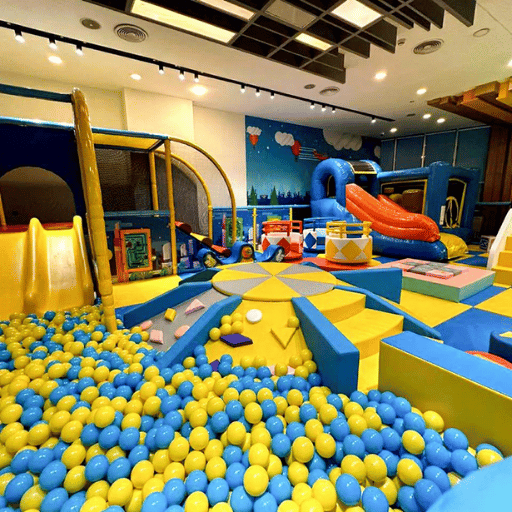
That list covers seven countries. China takes top spot when it comes to manufacturing capacity – that is, if you look at sheer output, since the Asian giant is the most established production center for the sector. At the other extreme, The United States, the United Kingdom, Canada, and the Netherlands dominate design-led and turnkey offerings.
In every one of those locations, the divide between a solid construction that endures a decade, versus a play area that will fall to pieces within two years, comes down to details a render would never reveal: form density, cover strength, the mechanism of anchoring a swing. Each profile provides the factual public claims available from those we’ve interviewed – we state explicitly whenever there is no founding date information available.
1. Didi Land — Best Overall for Turnkey Custom Soft Play
Founded: 2014 · HQ: Guangzhou, China
As the company says: Founder-led with its CEO and founder, Cherry, Didi Land is an in-house architect/builder/manufacturer of soft play sets, multi-level indoor playgrounds, ball pits, trampolines and thematic play worlds, which it delivers as a turnkey product on FOB, CIF or DDP terms. It has delivered in 12 years to 40-plus countries. Roughly 90% of sales are outbound – why does it “top the charts?” It does well in all five lenses and has a complete, download-ready published certified stack.
Core products: bespoke soft play, multi level play structures – slides, ball pits, trampoline parks, ninja and obstacle courses, themed builds (jungle/space)
✔ Strengths: in-house design + manufacturing (no middleman); certifications to ASTM F1487, F1918, F381, EN 1176-1, IPEMA, CPSIA, ISO 9001:2015, CE, and AS 4685.1 with downloadable reports; lifetime parts availability.
⚠ Limitations: factory-direct from China means planned lead times of about 4–16 weeks plus 3–6 weeks sea freight; a soft-play minimum around 30 m² suits commercial venues more than a single tiny corner.
Ideal for use in shopping centres, FEC’s, nurseries / preschool, kid’s club hotel or restaurants.
– Official Website: didiplayarea.com
2. Soft Play LLC — The 40-Year U.S. Pioneer
Founded: ~1984 (verified, 40+ years) · HQ: United States
Soft Play LLC, the company that arguably invented “soft play” in North America, that designs, engineers, and assembles (in the U.S.A.) reached the 40-year mark in global leadership in indoor contained playground equipment, according to Recreation Management. Soft Play LLC designs play spaces in branding ranging from Disney, to Chuck E. Cheese.
Primary products, including contained indoors, toddler play, soft sculptures, themed environments, water play, outdoor lines, safe flooring.
✔ Strengths: four decades of track record; U.S.-made with domestic support; deep custom design and big-attraction experience.
⚠ Limitations: premium U.S. pricing; project/custom-focused rather than an off-the-shelf catalog for small single-item buyers.
Ideal For FECs, malls, attractions, medical play – Official Website softplay.com
3. International Play Company (Iplayco) — Global Turnkey FEC Builder
Founded: 1999 (verified) · HQ: Langley, British Columbia, Canada
Iplayco custom indoor playgrounds are custom-made and built in more than 90 countries over 25 years, with offices in Canada, Italy, and the Philippines. It most keenly targets larger FEC’s and branded attractions and has its in house brand, TAG Active, and Ballocity lines.
Primary offerings: Custom indoor facility design, Soft/toddler zones, trampoline, TAG Active ninja, climbing, interactive/VR, themed builds.
✔ Strengths: 25+ years and 90+ countries; in-house design-make-install; strong interactive and branded-attraction portfolio.
⚠ Limitations: oriented to FEC/attraction scale, so less geared to micro-budget corners; premium custom lead times.
Ideal for:FECs, trampoline parks and branded attractions.Official Site: iplayco.com
4. Liben Group — High-Capacity China Manufacturer
Founded: 2011 (verified) · HQ: Wenzhou, China
Liben is among China’s bigger manufacturers, running two production bases over 60,000 m² with 200+ staff, and reporting 35,000+ projects worldwide and 100+ patents. Even having developed a national standard for play structures, it showcases a deep engineering capability unlike the average export factory.
Main Products: Trampoline Parks, Indoor playgrounds and soft play castles, Outdoor playground, Ninja courses, Outdoor fitness.
✔ Strengths: very high manufacturing capacity; 100+ patents; certifications including ISO 9001, EN 1176, ASTM, CE, GS, TUV; IPEMA member.
⚠ Limitations: export shipping and lead times; a broad catalog that spans outdoor and fitness, so it is less of a pure soft-play specialist.
Best For: trampoline parks, FECs, malls.
– official site:libengroup.com
5. House of Play — UK Designer-Operator
Founded: 1994 (verified) · HQ: United Kingdom
Designing, manufacturing and installing globally since 1994, the Netherlands’ House of Play-uniquely-even owns and runs its own play centre, giving it operational experience from which it tailors practical layouts easier to clean and staff.
Main Products: indoor playground, soft play, trampoline park, sensory equipment, outdoor play, ninja/parkour, interactive.
✔ Strengths: ~30 years; design-make-install under one roof; rare manufacturer-plus-operator insight; free advisory services.
⚠ Limitations: UK-centric install footprint; bespoke project lead times.
Best For: FECs, soft play centres, trampoline park, SEND/sensory rooms.
– official site:houseofplay.com
6. ELI Play — European Tailor-Made Specialist
Founded: ~early 1990s (verified, 30+ years) · HQ: Netherlands
A European major now part of the ABO group, the Netherlands-based ELI Play builds each order to order in its own facilities & states conformity with European playground standards – perfect for buyers prioritizing EU-made equipment with fast intra-European shipping times.
Main Products: indoor playground, trampoline park, sport/ninja course, FEC fit out, kids’ corners, theme design.
✔ Strengths: 30+ years; fully in-house European production; tailor-made design; EN-aligned.
⚠ Limitations: Europe-focused distribution; premium European pricing.
Best For: FECs, trampoline parks, malls (Europe only).
– official site:eliplay.com
7. Dreamland Playground — Turnkey China Exporter
Founded: not publicly stated · HQ: China
Dreamland has more than 400 installations in over 50 countries and uses its own overseas installation teams-an indicator of a real turnkey exporter not merely a drop-shipper. The company publishes a broad multi-region certification set, although a founding date is absent from its web presence.
Main Products: indoor playground equipment, trampoline park, ninja warrior, soft play, climbing wall, ziplines.
✔ Strengths: overseas install crews; competitive China pricing; certifications including TUV, GS-EN1176, CE, ASTM, CPSIA, UL94, NFPA701.
⚠ Limitations: company age not disclosed (ask directly); export lead times.
Best For: FECs, trampoline parks, malls.
– official site:dreamlandplayground.com
8. Tigerplay — Premium Bespoke & Sensory
Founded: 2002 (verified) · HQ: United Kingdom
Dedicated to premium custom-made soft play and sensory rooms, Tigerplay also integrates strong neurodiversity and early-years pedagogy, with projects spanning the UK, USA, France, the UAE, Saudi Arabia, and Australia (including a play space on the AROYA cruise ship).
Main Products: bespoke soft play indoor, TigerSense sensory room, play cafes, nursery/SEND play, home soft play.
✔ Strengths: 20+ years; design-led quality; standout sensory/inclusive credentials; international project list.
⚠ Limitations: premium design-led pricing; focused on boutique play cafés and nurseries rather than large steel FEC frames.
Best For: play cafe, daycare/preschool, sensory room, home, hospitality.
– official site:tigerplay.co.uk
9. Angel Playground — Multi-Market Certification Breadth
Founded: not publicly stated · HQ: China
With roughly 70% of sales going to the USA & 15% to the EU, Angel boasts a large range of published safety certifications and a free design-and-install turnkey solution, making it an excellent option if your clients or insurers require specific compliance testing.
Main Products: indoor structures, soft play equipment, ball pits, climbing walls, spring riders, rope play, theme sets.
✔ Strengths: very broad certifications — ASTM F1487/F1918/F2970/F381/F963, CSA Z614, TUV EN 1176/EN 71/EN 1177, CPSC; multi-market testing; turnkey design.
⚠ Limitations: founding year undisclosed; standard China export logistics.
Best for: malls, FECs, daycare. — official site:angelplayground.com
10. Next Level Parks — U.S. Retrofit & Revitalization
Founded: not publicly stated · HQ: United States
Next Level Parks, unique among U.S. partners, focuses not only on new construction but also on renovating and upgrading existing parks-a valuable capability when acquiring established facilities. The company provides turn-key design-build-install services with ongoing maintenance and local support.
Main Products: indoor playground equipment, trampoline park retrofits, interactive play, sensory play, slides, multi-sport court.
✔ Strengths: U.S.-based service and maintenance; retrofit/upgrade specialization; turnkey delivery.
⚠ Limitations: positions partly as a U.S. partner for overseas brands and lists no founding year, so probe ownership and origin of the structures.
Best For: trampoline parks, FECs, church & day care play.
– official site:nextlevelparks.com
11. Softplay Solutions — UK Catalog Breadth & Low Entry
Founded: not publicly stated · HQ: Bristol, United Kingdom
Softplay Solutions offers one of the largest ranges of kids’ soft play equipment in the UK and sells individual items through an online shop. This makes it easier for an independent nursery to access three pieces as an alternative to a full fit-out. It designs, manufactures and installs systems across its themed ranges and within SEND padded rooms.
Main products: soft play products, ball pits, multi-level structures, mobile soft play, SEND padded rooms, themed ranges, nursery furniture.
✔ Strengths: wide catalog; e-commerce for single items (low minimum); serves nurseries through tourist attractions.
⚠ Limitations: founding year not disclosed; catalog/SME focus rather than large steel FEC structures.
Best for: daycare/preschool, soft play centres, mall and airport enclosures, home. – official site:softplaysolutions.com
12. Cheer Amusement — Patent-Heavy China Maker
Founded: 1994 (verified) · HQ: Nanjing, China
Operating since 1994, Cheer Amusement has over 200 patents and more than 5,000 international installations to its name. Its in-house design team has worked with the IAAPA for over ten years. The manufacturer’s catalog covers a wide array of amusement ride and game products, so you will need to specify that you want its soft play and motion soft play lines.
Main products: indoor playground, toddler play, motion/sculpture soft play, trampoline parks, ball blasters, ninja, rope course, climbing.
✔ Strengths: 30 years; 200+ patents and 5,000+ installs; certifications including ISO 9001/14001/45001, TUV, SGS, ASTM, CE, UL; IAAPA member.
⚠ Limitations: export lead times; a very broad amusement catalog where soft play is one line among many.
Best for: FECs, malls, trampoline parks. – official site:cheeramusement.com
13. Globall Amusement — Soft Play & Event Sets
Founded: not publicly stated · HQ: Wenzhou, China
Globall specialises in soft-play packages, EPP blocks, and sets designed for events and rental purposes. The manufacturer is capable of providing both OEM and ODM services and employs more than 60 technical staff members. Its specialisation makes it a great option for party rental companies and restaurant operators seeking self-contained soft play areas instead of large, multi-level play structures.
Main products: soft play sets and components, EPP building blocks, ball pits, indoor trampolines, bouncy castles, outdoor play.
✔ Strengths: soft-play and event-set focus; OEM/ODM flexibility; international projects in Spain, Australia, and Malaysia.
⚠ Limitations: founding year undisclosed; younger/smaller profile weighted toward rental and event sets over large commercial FEC structures.
Best for: restaurant/event soft play, daycare, home and rental. – official site:globalltoy.com
14. AAA State of Play — U.S. Distributor for Schools & Parks
Founded: 2006 (verified) · HQ: Indianapolis, Indiana, United States
AAA State of Play is a family-owned U.S.-based company that serves the entire country. It has carries ASTM F1487-certified equipment, employs CPSI-certified inspectors and offers a 100-year structural warranty on approved product lines. For U.S. schools or municipalities that require domestic sourcing and inspection, this company is an ideal choice.
Main products: commercial playground, indoor play, park and school equipment, safety surfacing.
✔ Strengths: all-50-state U.S. service; CPSI-certified inspectors; ASTM F1487 equipment; ADA-minded.
⚠ Limitations: a distributor that skews to commercial/outdoor and school/park lines, so it is lighter on bespoke indoor soft play than the specialist makers here.
Best for: U.S. schools, daycares, parks. – official site:aaastateofplay.com
15. FEI FAN (KidsSoftPlay) — Pure Indoor Soft Play Specialist
Founded: 10+ years (verified) · HQ: Guangzhou, China
FEI FAN produces nearly all of its products within the indoor playground and children’s soft play categories on its 6,400-square-meter manufacturing site. With more than 300 commercial projects in over 30 countries to its credit, this company’s focus exclusively on these specific product categories, rather than broadening its scope to outdoor, fitness or arcade solutions, is one of its key advantages.
Main products: indoor playground structures, kids’ soft play, ball pits, soft climbers.
✔ Strengths: pure indoor soft play specialization; ASTM and EN 1176 cited; sized for commercial volume.
⚠ Limitations: approximate founding year; standard China export logistics.
Best for: indoor soft play centres, malls, daycare. – official site:kidssoftplay.com
Before you sign: whichever names you shortlist, confirm each safety claim against the CPSC playground equipment guidance and the supplier’s own test report.
Soft Play Manufacturer Sourcing Quadrant
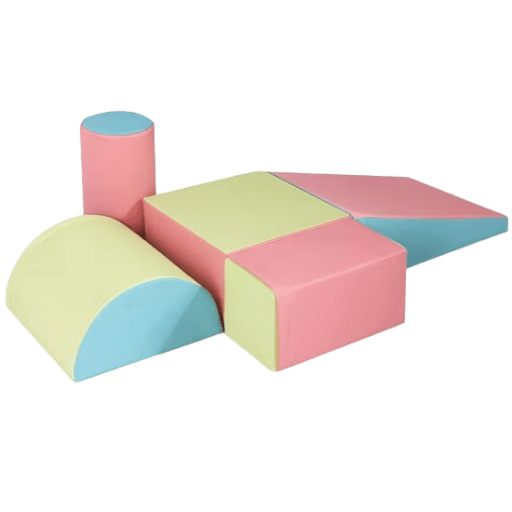
When the available manufacturers are mapped against two axes – the horizontal axis for level of customization (off-the-shelf catalogue → full-custom design) and the vertical axis for the reach and scale of production (regional installs → worldwide turnkey reach) – the list narrows. A manufacturer’s position on the map indicates more than its ranking.
- Customisation + global: Didi Land, Soft Play LLC, Iplayco, House of Play, ELI Play. these firms represent a design-led turnkey solution for those looking to invest in large-scale, bespoke projects.
- Customisation + local reach: Tigerplay, which offers a specialist range of boutique and sensory soft play in the UK; and Next Level Parks, an American company that specialises in retrofitting existing venues.
- Catalogue + global: Liben, Cheer Amusement, Dreamland, Angel, FEI FAN. these companies provide high-capacity, catalogue-based solutions manufactured in China for international markets.
- Catalogue + local/entry-level: Softplay Solutions sells individual items; Globall provides set solutions for event organisers and restaurants; and AAA State of Play distributes catalogue products for U.S. schools and parks.
| Manufacturer | Founded | Country | Key certifications (as stated) | Best for |
|---|---|---|---|---|
| Didi Land | 2014 | China | F1487, F1918, EN 1176-1, IPEMA, CPSIA, ISO 9001, CE | Turnkey custom / FEC / mall |
| Soft Play LLC | ~1984 | USA | Safety/accessibility (codes not listed on site) | FEC / attractions |
| Iplayco | 1999 | Canada | Not listed on site | FEC / attractions |
| Liben Group | 2011 | China | ISO 9001, EN 1176, ASTM, CE, GS, TUV | Trampoline / FEC |
| House of Play | 1994 | UK | Independently inspected (codes not listed) | FEC / SEND sensory |
| ELI Play | ~1990s | Netherlands | European standard (EN-aligned) | FEC / mall (EU) |
| Dreamland | not stated | China | TUV, GS-EN1176, CE, ASTM, CPSIA | FEC / mall |
| Tigerplay | 2002 | UK | Not listed on site | Play café / sensory / home |
| Angel Playground | not stated | China | ASTM F1487/F1918/F2970, CSA, TUV EN 1176, CPSC | Mall / FEC / daycare |
| Next Level Parks | not stated | USA | “Industry standards” (codes not listed) | Trampoline / retrofit |
| Softplay Solutions | not stated | UK | Not listed on site | Daycare / home / low-entry |
| Cheer Amusement | 1994 | China | ISO 9001/14001/45001, TUV, SGS, ASTM, CE, UL | FEC / mall |
| Globall | not stated | China | “International standards” (codes not listed) | Event / rental / home |
| AAA State of Play | 2006 | USA | ASTM F1487, CPSI inspectors, ADA | U.S. schools / parks |
| FEI FAN | 10+ yrs | China | ASTM, EN 1176 | Indoor soft play centres |
Certifications are what each company says publicly, as of 2026. Get the actual test report for the standard that applies to your venue whenever possible. Not listed on site means that the company is not providing this specific code on their website, not that they don’t have one.
Key takeaway: quadrant position sets cost and reach, not safety — every credible maker should still meet the same CPSC and ASTM safety baseline.
4 Soft Play Manufacturer Archetypes (Which Type Fits You?)
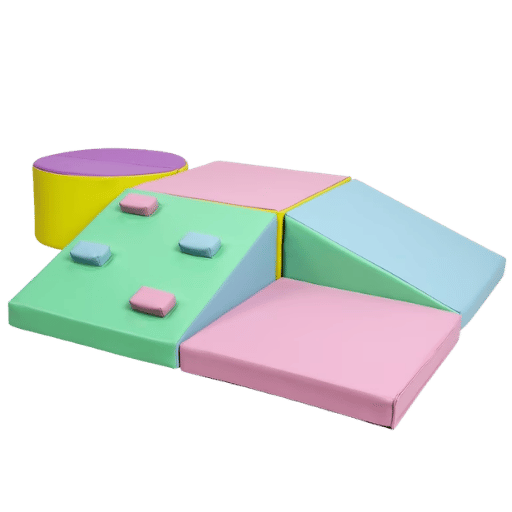
These are the business models behind these 15 logos. Matching up the business archetypes to your company is more important than selecting a ‘perfect’ name, as business types manage project timelines, pricing and support with a different mindset.
| Archetype | Examples | Typical lead time | Price tier | Best buyer |
|---|---|---|---|---|
| Global brand house | Soft Play LLC, Iplayco | 12–20+ weeks | Premium | Flagship FEC / branded attraction |
| Turnkey custom designer | Didi Land, House of Play, Dreamland | 8–16 weeks + freight | Mid–premium | Custom venue wanting one accountable partner |
| Volume OEM factory | Liben, Cheer, Angel, FEI FAN | 6–14 weeks + freight | Value | Cost-led buyer who can manage specs |
| Regional boutique / distributor | Tigerplay, ELI Play, Softplay Solutions, Globall, AAA, Next Level | Varies (local stock to bespoke) | Mixed | Small/SEND/event or local-support buyer |
Lead time’s estimate our typical planning windows and do not quote any custom design and container lead time.
Key takeaway: archetype drives price and lead time, not child safety — all four types should pass the same age-appropriate design checks.
What Soft Play Equipment Costs in 2026
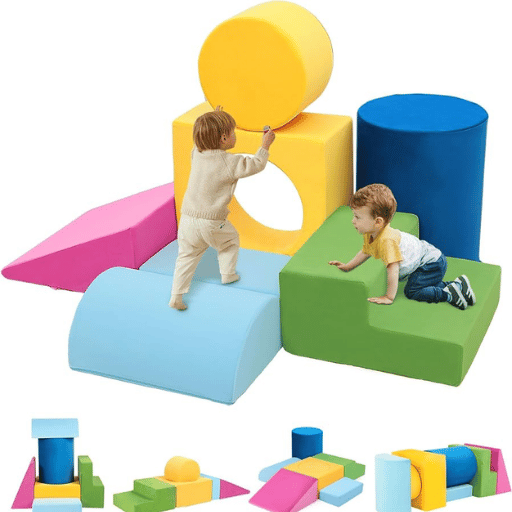
Cost guides are largely focused on venue size, not on brands, so using the two bands below as equipment and fit-out values against your scale provides a reasonable working guide line – don’t take them as hard and fast prices that won’t change depending on customization, provenance, container costs etc.
| Venue scale | Typical budget | What it covers |
|---|---|---|
| Home / party-rental set | $3,000–15,000 | Foam modules, ball pit, mats, transport |
| Small soft play (~500 sq ft) | $8,000–25,000 | Compact structure + soft play, per density |
| Play café / toddler studio | $25,000–100,000 | Commercial equipment, flooring, fit-out |
| Mid indoor playground | $75,000–250,000 | Multi-level structure, party rooms |
| Large FEC | $500,000–1M+ | Full custom build, theming, ancillaries |
You know, there are two other budget items on an equipment order list that are a complete shocker to a brand new buyer. I will budget another 15 to 20% of the cost of the equipment (or more) for shipping and setup, and a portable- style home-use set will potentially have CPSIA toy safety requirements for testing (lead, phthalate, certificate) to be used for the play-equipment standard. You should be told which regulations were tested, according to my suppliers.
The complete conformity information appears in our document about the soft play equipment standards.
💡 The number most buyers miss
Here’s a classic problem small business forums users talk about: “the cheapest soft play set you can find is not the cheapest set to operate; difficult to clean pockets, soft material that tears and designs that require you to have more supervisors slowly increase the cost of owning the item for a decade over the purchase price.” High-quality foam, durable covers with proven durability, and well-anchored play elements are the parts worth paying more for. You’re looking for the total cost of ownership (not the deposit).
Key takeaway: a portable or home set sold as a children’s product can carry CPSIA testing duties — see the CPSC guidance — so confirm which rules a quote was tested against.
How to Choose the Right Manufacturer for Your Venue
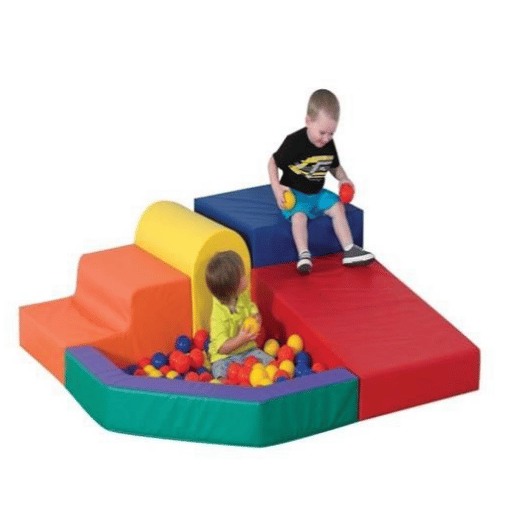
First thing: run the 5-Lens Scorecard, second: filter by venue type. I’ve mapped out some typical venue types with which archetype is a pretty good fit, so the list you pull begins by what you need instead of by whoever the Google result says is the best.
| Your venue | Prioritize this type | Why |
|---|---|---|
| Family entertainment center | Turnkey custom or global brand house | Multi-level scale + theming + install need one accountable partner |
| Daycare / preschool | Regional boutique or volume OEM | Age-zoned toddler soft play, lower height, supervision sightlines |
| Shopping mall enclosure | Volume OEM or turnkey custom | Footprint-efficient structure that engages a wide age range |
| Restaurant / QSR play corner | Regional boutique / event-set maker | Compact, self-contained, easy-clean soft play |
| U.S. school / municipal | U.S. distributor (e.g. AAA) | Domestic procurement + CPSI inspection + ADA support |
China vs Western sourcing: China makers (the majority on this list) usually take it on price and capacity, while the West leads in lead-time, local install, and recourse. It’s truly the compromise on total landed cost and accountability, rather than just on unit cost. A pitfall many operators advise to be cautious about is that not all China factories build to minimal standards-a thinner grille and lower deck may allow lower unit pricing.
Insist on foam, platform height, and cover fabric quality specified in writing and ask for F1918 test reports before paying. If one point of accountable responsibility that takes your project from idea to certification and ship is what you desire, it’s the business model under which Didi Land manufactures the said indoor playground equipment.
Key takeaway: if your venue must be accessible, treat it as a separate layer governed by the U.S. ADA standards, not something a play-equipment cert covers.
Industry Outlook: Where Soft Play Manufacturing Is Headed
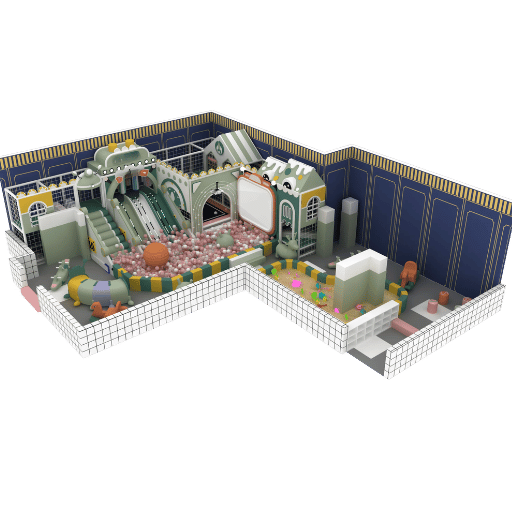
This segment is getting bigger and more regulated. Market researchers predict indoor playground equipment to continue its 6-7.5% compound annual growth rate through the early 2030s, one estimate putting the indoor portion of the market at approximately $4.8 billion in 2025 and about $9.2 billion in 2034. This sounds less like a passing fad and more like a perpetually solid option that could give you the comfort needed for a decade-long capital allocation decision.
Three shifts matter for buyers planning 2026 projects:
- Modular, reconfigurable systems allow designers to restyle or age the play space without an entire new installation – an investment that’s safe no matter where the neighborhood’s age range heads next.
- The rise of sensory and inclusive design – from the exclusive to the mainstream – has brought broader audiences to this market.
- A 2025 regulation update increased rigor. ASTM F1487-25 came out June 2025, while CPSC Public Playground Safety Handbook was revised on July 30, 2025, to matchASTM closely, and further expanded its direction on surfaces.
Timing is Everything (Just like Play!) Timing tip: Commercial play equipment search & procurement demand are highest in late summer (Aug-Sep) when facility managers have the budgets available to open facility in fall. Need some thing installed by the holiday rush?
Contact manufacturers by spring — it can take a full quarter to fully manufacture & deliver a custom build.
Key takeaway: the 2025 baseline shift is documented in the CPSC Public Playground Safety Handbook update — verify any 2026 build against the current edition.
Frequently Asked Questions
What certifications should a soft play equipment manufacturer have?
View Answer
With regards to the soft contained facility structure itself, the U.S. specification is ASTM F1918 and the European equivalent is EN 1176. ISO 9001 represents a quality system and the CPSIA is if your products were children’s products. A specific clarification: An IPEMA logo covers ASTM F1487 and surfacing only – NOT ASTM F1918, so a manufacturer could be an IPEMA member and still need to provide you with a specific F1918 test report.
There is not one certification that is legally required.
What’s the difference between soft play and traditional indoor playground equipment?
View Answer
Soft play is a foam pad, vinyl covered system for low-fall, soft-contained climbing and tumbling, written to the ASTM F1918 specification. “Traditional” indoor playground equipment relies upon the stricter ASTM F1487 standard for public-playground equipment – hard framed decks and slides. Most commercially-run facilities have both types – and may have them side-by-side on the very same pages of a vendor’s catalog, with different materials, different fall heights, and different underlying standards.
What’s the typical lead time for commercial soft play equipment?
View Answer
Design and build and freight have three separate timelines. Factory building is typically six to sixteen weeks depending on capacity, add three to six weeks’ time for sea-freight (for international build), plus installation planning on top of every thing else! This will be quicker for international suppliers not under as tight scheduling and will be considerably quicker for in-stock or domestic products.
A good guide is to consider a custom, international build as a one quarter lead time from initial payment through to day-one of trading.
How much ceiling height do I need for multi-level soft play structures?
View Answer
It depends on the structure, so confirm with your manufacturer against the room plan. Multi-storey frames need clearance above the top platform plus a safety margin. Give designers the ceiling height early.
Are Chinese soft play manufacturers reliable?
View Answer
Indeed they are, and China is the leading supplier of this equipment – some brands that feature below possess their full ASTM and EN test certifications and have their own install crews on site abroad. the real risk is one not of country, but of factory. Nonetheless, there is cause for concern as operators note: “Some factorys [sic] make a product that is barely safe, cutting to the lowest safe spec, and thin gridding, low platforms etc.”Protect yourself: In your contract, demand F1918 compliance and specifying foam density, platform height, cover material, and have the manufacturer produce reference installs in your geographical area before putting down a deposit.
What is the minimum order for wholesale soft play equipment?
View Answer
Minimums vary widely. Many UK catalogue sellers supply single items, while turnkey China makers often set a floor around the soft-play area needed to fill a container (roughly 30 m²). Ask each shortlisted maker for its minimum before comparing prices.
How do I verify a manufacturer’s safety claims?
View Answer
Ensure that any claim to meet the necessary standards (eg ASTM F1918 for soft play) is supported by test documentation; check the laboratory name, and make sure it’s tested on the product itself and not another item or model; If it is going into the US, get aCPS I certified inspector to check the design; and be suspicious of ‘approved’ or ‘certified’ without proof – that document is proof of testing on the particular product, without proof nothing.
Comparing soft play manufacturers for your venue?
Work your top list through the 5 Lens Scorecard and talk to a company that designs, certifies and ships turnkey, such as Didi Land which designs and builds indoor playgrounds, commercial trampolines parks and indoor soft play centres for over 40 countries.
How We Built This Ranking
Disclaimer; This chart is made and published by Didi Land – the indoor and softplay company. The rankings made here use the 5 Lens Scorecard and we award our company first place. The rest we grade in comparison with our own ratings, stating real strengths, and the founded date, the company’s certified safety standard and product facts are all based on companies’ own publicly stated documentation (as at July 2026). If companies don’t make there found dates clear we note it. Always get evidence of certification before you purchase for whatever safety standard is most important to you.
References & Sources
- ASTM F1918-21: Standard Safety Performance Specification for Soft Contained Play Equipment — ASTM International
- ASTM F1487-25: Consumer Safety Performance Specification for Public Playground Equipment — ASTM International
- Playground Equipment Business Guidance — U.S. Consumer Product Safety Commission
- Notice of Availability: Public Playground Safety Handbook Update (2025) — U.S. Federal Register / CPSC
- IPEMA Certification Program (scope: ASTM F1487 & surfacing) — International Play Equipment Manufacturers Association
- Soft Play Celebrates 40 Years of Pioneering Indoor Playground Equipment — Recreation Management
- Indoor Children Playground Equipment Market Size to 2035 — Business Research Insights
- Selecting Age-Appropriate Equipment — National Program for Playground Safety (Univ. of Northern Iowa)
- 2010 ADA Standards for Accessible Design — U.S. Department of Justice
Related Articles
- Soft Play Equipment Safety Standards: ASTM, EN 1176 & IPEMA Explained
- Commercial Indoor Jungle Gym Buyer’s Guide
- Toddler Indoor Playground: Equipment & Layout Guide
- Indoor Playground Slides: Types, Heights & Safety
- Didi Land — Indoor Playground Equipment Manufacturer
- Top 15 Trampoline Park Manufacturers in the World (2026)