Get in Touch with Didi Land


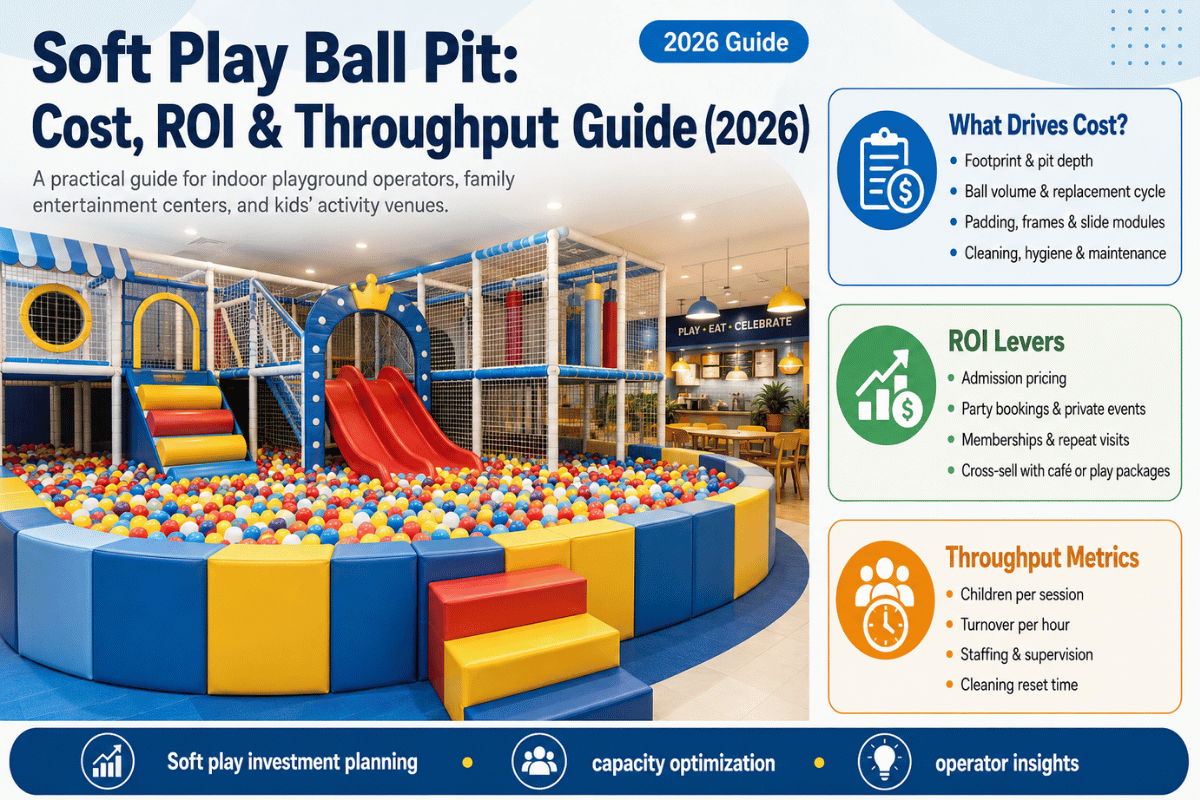
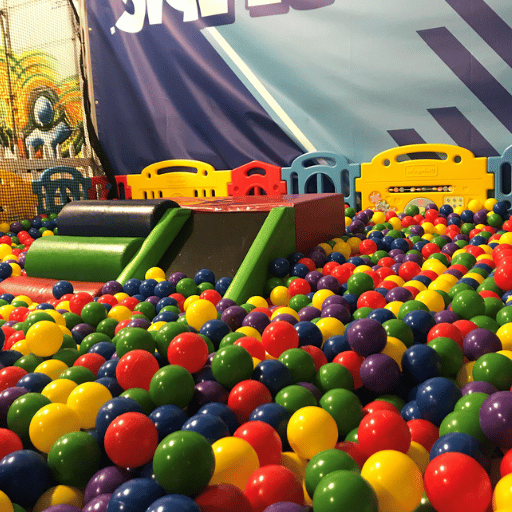
A soft play ball pit, a vinyl-skinned structure edged with foam, is made to withstand the wear and tear of hundreds of thousands of crush-proof, lightweight balls within, and constructed to the commercial ASTM F1918 standard for venues – not the $90 one filling most of your searches. If you’re operating a daycare, family entertainment center (FEC), mall, hotel or restaurant, this guide skips all the technical mumbo jumbo and cuts straight to the decision points that determine whether one is the right fit: what throughput they generate, what they truly cost to operate, what kind of footprint they take up and why you probably shouldn’t get one.
Filling a commercial soft play Ball Pit with balls would be about $185-$215 but will cost $2,000-$7,000+ a year to operate, maintain, and insure. Balls are cheap, running the pit is the expensive part. Dimensioning to the CPSC 1-2 ft fill depth, under supervision in a safe venue, and evaluating profitability and duration is more appropriate than novelty.
The 60-Second Operator Brief
- A ball pit is the least costly to cover, rated “low hazard”. A trampoline can be up to 3-5 times more costly.
- A ~1,200-ball pit filling job would be about $185-$215 to have done. Cleaners, alone, bring $$2,300 in each year.
- Larger isn’t safer. Contamination follows your procedures, not the size of the pit – peer-reviewed sampling proves.
- A ball pit earns indirectly- dwell time, repeat toddler visits, and birthday-party attach, not stand alone tickets.
- There isn’t any binding hygiene standard. Only having cleaning written & supervised will defend you.
📐 Commercial Ball Pit at a Glance
- Standards:ASTM F1918 (soft contained play) +EN1176+ CPSIA
- Fill depth runs 1–2 ft (0.3–0.6 m), per CPSC
- Ball size is 7.5 cm, it must stay at least 7 cm to clear the choke threshold. LDPE, crush-tested to about 20,000 compressions.
- Fill density is around 2,897 balls/m³ at 7.5 cm; about 1,200 balls for a normal small pit
- Footprint & budget: 20–300 m² soft play kits at $8K–$80K per set
- Lifespan reaches 8–20 years; balls topped up ~5–10%/year
- FEC toddler zone, daycare, restaurant corner, birthday/party rentals, party rooms, sensory/therapy room, soft-play toddler area
Who Actually Buys a Commercial Soft Play Ball Pit (and Why)
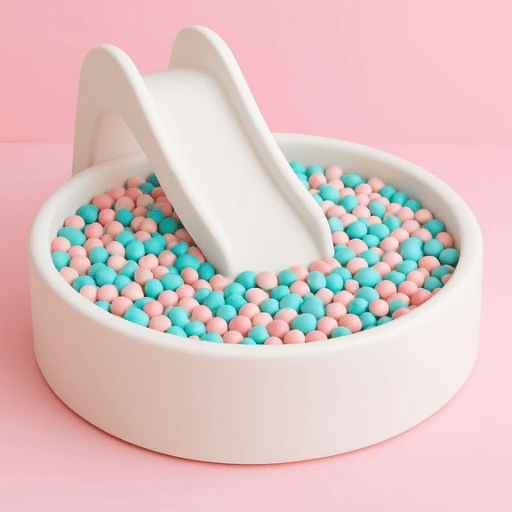
The buyer is rarely a mom or dad. They’re an operator — a child care director creating a sensory area, an FEC constructing a toddler room, a mall vendor drawing crowds, a hotel aiming for differentiated family stays, or a restaurant looking to keep kids busy long enough to snag your dessert. And they’ve got one issue those retail listings don’t touch upon: a pit that’s tough enough to handle hundreds of kids and a government inspector’s clipboard each week.
That’s what separates home goods from commercial equipment. Your store’s version is designed for the occasional attention of one or two kids; a commercial one is made for constant punishment: heavy steel structure, not light metal; dense EPE foam and CPSIA-tested vinyl, not cheap, breakable plastic; and heavy, “crush-rated” LDPE balls rather than brittle brittle ones that shatter into daggers. The compliance frameworks diverge sharply too: ASTM F1918-21 explicitly excludes home and public-playground equipment from its scope, so a ball pit sold for living rooms is not the same legal category as the one an inspector expects in a paid venue. The full material and certification breakdown belongs on the commercial soft play ball pit product page; here we stay on the business decision.
💡 Key takeaway
It is one thing to satisfy a retail search for an item, and another entirely to provide an obligation-tested amusement experience. Specs, costs, and legal considerations are dramatically different when “ball pit” must be understood as, say, 800 children on a Saturday.
Is a Ball Pit Worth It? Throughput, Dwell Time & the Footprint Case
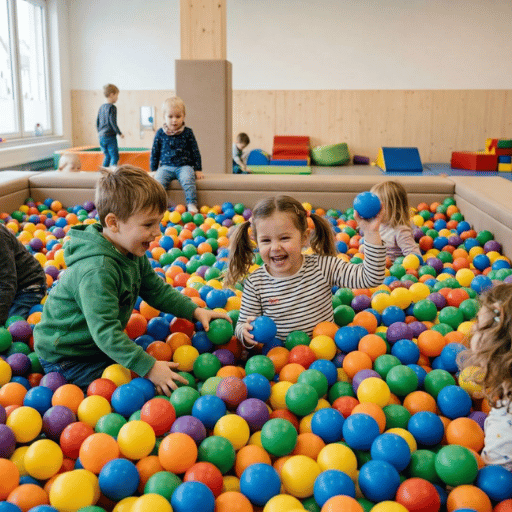
A ball pit earns its floor space through throughput and dwell, not ticket price. A well-placed zone holds about one child per 3 square meters (32 square feet) and turns over every 30-45 minutes, so a 50-square-meter zone realistically serves 20-35 children an hour. What that is worth depends on your revenue model — almost always repeat visits and party attach, not the pit alone.
The Children-Per-Hour Ball Pit Capacity Model
A very straightforward method of estimating your initial throughput potential: space per occupant × hourly turnover. (Use 3m per child and a 40minute dwell, and don’t go much below those, no matter how cheap the space or the balls)
The soft play industry has established a planning target around 3 square meters (or approximately 32 square feet) of “active play” space per child- roughly comparable to the one person per 35 sq ft net for a day care as defined by U.S. building code regulations. that level will allow for both the comfortable interaction between children as well as easy supervision for their respective caretakers, and you’re well beneath the maximum rate recommended for fire evacuation: one occupant per 15 sq ft (never approach that for a playtime limit). for the dwell factor, use the figure of 32 minutes from a peer-reviewed study of playgrounds across ten cities, and you can assume the “dwell time” inside your indoor commercial venue where the ball pit would be just one component of the day will naturally be lower-so 30-45 minuted is a solid average assumption to start from.
Capacity formula (Didi Land planning model)
Children/hour = (space in area / space per occupant) * (hourly turnover, derived from minutes per occupant per space)
60 minutes/hour / (Minutes/occupant/space) * (total space in m2 / m2/occupant) = Children/Hour
For instance: an example calculation. a 50 sq m pit will hold about 16-17 children if spaced in accordance with planning standards – this can mean anywhere between approximately 22/hr and 33/hr, depending on what you’re doing to drive repeat play (45 or 30-minute cycles respectively). The same analysis applied to a much larger 150 sq m space could estimate between 67 and 100 children an hour, assuming you can factor in a realistic utilization of maybe 50-70 percent. These are, again, merely theoretical figures; your actual, day-to-day results will likely vary.
That’s also why ball pits win out over trampoline parks in small sites and those with low ceilings. Where soft play is a good proposition for 200-300m² with a 2.9m ceiling for a returning weekly toddler audience, a trampoline park requires >1,000m² and a >5.5m ceiling, while carrying a higher risk and insurance profile. Check out our soft play centre vs indoor playground guide to help make the choice.
What a Soft Play Ball Pit Really Costs to Run (Not Just Buy)
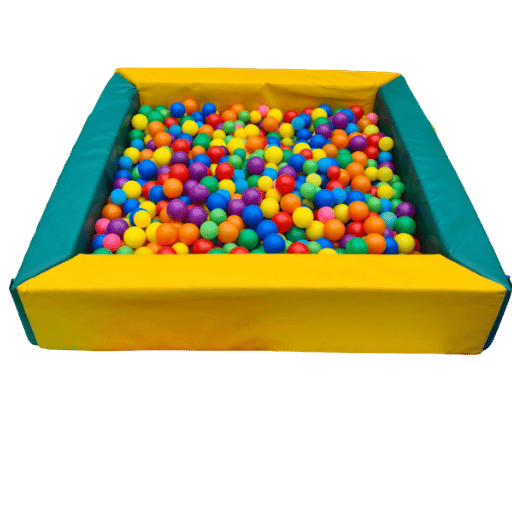
If one thing operators have to get straight in their heads before signing, it’s the flip: the balls are cheapest. Filling a standard ~1,200-ball pit costs $185–$215 at listed commercial bulk prices of about $0.15–$0.18 per 7.5 cm ball. Ongoing cleaning labor, insurance, safety audits and liner replacement dwarf that initial ball fill over any sensible ownership cycle.
Here are the numbers, which will undoubtedly shift with scale, traffic and location wages – as you can’t get an exact government ballpark figure for how much ball pits cost to operate: the following figures reflect operator and industry-sourced estimates based on vendor bulk pricing data, salary aggregators, forums and underwriting guide lines for a small, one-mid-size-pit venue. The supporting data on authority/standardization (filling depth, durability, and contamination) is laid out separately below.
The 5-Year Ball Pit Total-Cost-of-Ownership Curve
| Cost line (small pit, small venue) | One-time | Annual | 5-year (modeled) |
|---|---|---|---|
| Ball fill (initial, ~1,200 balls) | $185–$215 | — | $185–$215 |
| Ball top-up / shrinkage (~5–10%/yr) | — | ~$15–$25 | ~$75–$125 |
| Cleaning labor (manual, ~3 hr/wk × $15/hr) | — | ~$2,340 | ~$11,700 |
| Disinfectant & consumables | — | ~$150–$400 | ~$750–$2,000 |
| Liability insurance — ball-pit marginal share | — | ~$0–$300 | ~$0–$1,500 |
| Third-party safety audit (every 2–3 yr) | — | ~$1,000–$3,000 | ~$2,000–$4,500 |
| Foam / liner refresh (re-cover, 12–18 mo cycle) | — | — | ~$1,000–$3,000 |
| Reactive repairs & netting | — | ~$200–$600 | ~$1,000–$3,000 |
| Optional ball-washer machine (labor-saver) | $329–$3,250 | offsets ~$2,300 labor | ~1-yr payback |
| Downtime (weekly deep-clean closure) | — | opportunity cost | foregone slots |
The 5-Year Ball Pit Total-Cost-of-Ownership Curve represents a modeled synthesis of vendor pricing, an estimated $15/hr attendant wage, an estimated industry standard cleaning frequency, and underwriting and lifespan guidelines. Individual outcomes will vary by venue size and visitor volume.
You can’t miss the message: the single ball purchase makes up less than 2 percent of the 5-year cost of ownership, with cleaning staff and insurance comprising the bulk of cost. Which is exactly where automation comes into play. An automated ball-washer in the $2,375 range can wash about 15,000 balls an hour, offsetting close to a full year of manual cleaning labor while gentler handling extends ball life. Insurance is the pleasant surprise: a standalone pit is underwritten as low hazard, so one fun-center owner reported first-year liability near $1,700, and the premium only climbed after stacking riskier attractions. Put our Soft Play FEC ROI Calculator to work for a full payback analysis.
“When I started Didi Land in 2014, the failure I kept seeing was structural deterioration after a single season — equipment that looked fine on opening day and cracked by month 18. A commercial ball pit has to be engineered for the running cost across 40+ countries of duty — our soft-play kits run $8K–$80K — not just the sticker price.”
Sizing & Ball Count: Fill Depth, Footprint and How Many Balls
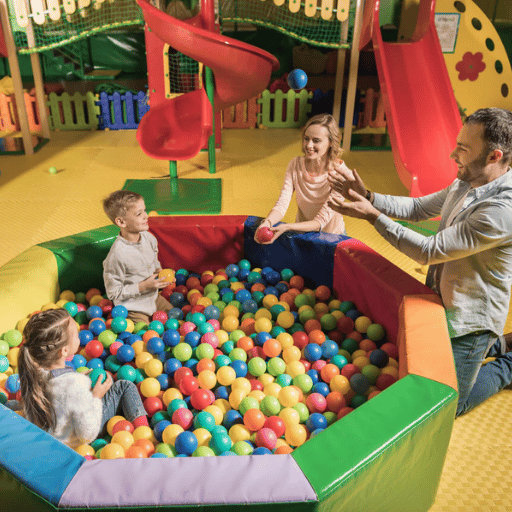
You size for depth first, then footprint. According to the U.S. CPSC Soft Contained Play Equipment review, a commercial ball pool is a contained body of plastic balls at ground-level depths ranging between one foot and two feet (0.3m – 0.6m). Filling too shallow risks a child hitting bottom, while going too deep invites burrowing and supervision blind spots. Set depth in that band first, then back into footprint.
Next, ball count follows from volume. At the 7.5 cm commercial standard, a cubic meter holds about 2,897 balls, so a typical small pit lands near 1,200 balls, filled to 100% for proper play. Home pits, by comparison, sit at 60-70% fill. A 2 m x 1.5 m pit filled to 0.5 m deep needs more than 3,000 balls, so budget the fill from the bulk price curve rather than a guess.
⚠️ Do not buy under-size balls to “add more”
Anything smaller than seven centimeters begins to enter the land of choking hazards, a prospect which cannot be entirely eliminated through placing your older children in what should be an older-child facility. The seven and a half centimeter commercial ball provides the minimum safety standard, not the sales number. Compromise on that number to get “more balls for less” and your ball pit may ultimately fail to inspect.
Ball Pit Fit by Venue: Daycare, FEC, Mall, Hotel & Restaurant
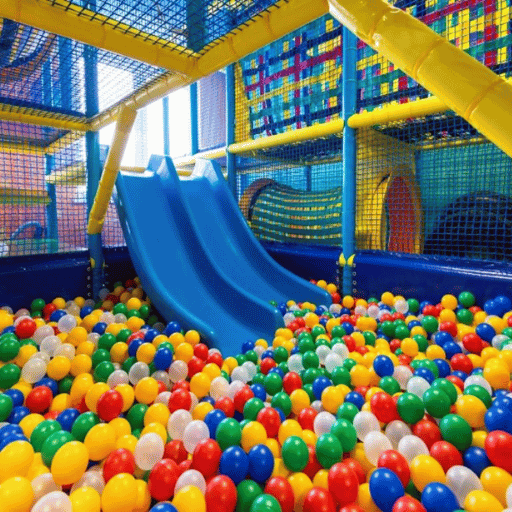
One venue’s “feature” ball pit could be another’s… hazard. It boils down to square footage, operational supervision style, and what generates profit. The matrix below combines data points of all types and uses it to plot out operating models of all types ofball pit venues-everything from licensed childcare to FEC facilities.
| Venue type | Typical footprint | Supervision | Revenue model | Fit |
|---|---|---|---|---|
| Daycare | Corner ~10–25 sq ft (25–50 sq ft/child room) | Staffed, fixed ratios | Tuition / amenity | Conditional |
| Preschool / kindergarten | Rotating station in 600–1,000+ sq ft room | Staffed, teacher-led | Tuition / amenity | Conditional |
| FEC toddler zone | Few hundred–1,000 sq ft, age-gated | Parent + staffed facility | Discounted toddler ticket ($18–22) | Strong |
| FEC main floor | 10,000–25,000+ sq ft anchor | Staffed + parent | Ticket + parties + membership + F&B | Conditional |
| Mall kiosk / activation | ~50–200 sq ft cart | Staffed (1 attendant) | Pay-per-play timed session | Conditional |
| Mall anchor tenant | 10,000–25,000 sq ft | Staffed + parent | Ticket + membership + parties + F&B | Strong |
| Hotel lobby | Corner / alcove, tens–low hundreds sq ft | Unsupervised amenity | Amenity (drives bookings) | Poor |
| Hotel kids-club | Dedicated room, hundreds sq ft | Staffed (drop-off) | Amenity / per-hour add-on | Conditional |
| Family restaurant corner | 320–540 sq ft retention; 1,070+ paid | Servers (<50 m²) / 1 supervisor (paid) | Retention or $8–20/child session | Strong |
| Sensory / therapy room | Clinic room; purpose-built unit | Staffed 1:1 (therapist) | Session fee / membership ($150/mo) | Strong |
| Party rental (mobile) | Portable ~100–300 sq ft | Parent (+$40/hr attendant) | Day-rate $300–$600/event | Strong |
| Pop-up / seasonal | Small–medium, temporary lease | Staffed (timed sessions) | Pay-per-play / activation fee | Conditional |
The conclusion isn’t a new insight: the ideal spot for a ball pit is where there’s adequate supervision, an intended customer base that’s in the one-to-five age bracket, and revenue opportunities for repeated business. Think daycare, preschool, party spaces, kid-friendly restaurant amenities, and occupational/sensory therapy clinics. A free-floating hotel ball pit lobby? It’s more of a financial and safety concern than anything beneficial because they typically provide little, if any, revenue and lack appropriate supervision. Licensing in daycares and preschools may dictate your pit’s decision more so than a return on your investment, although our indoor playground for kindergartens and FEC playground pages detail the required size per sector.
When a Ball Pit Is the Wrong Buy
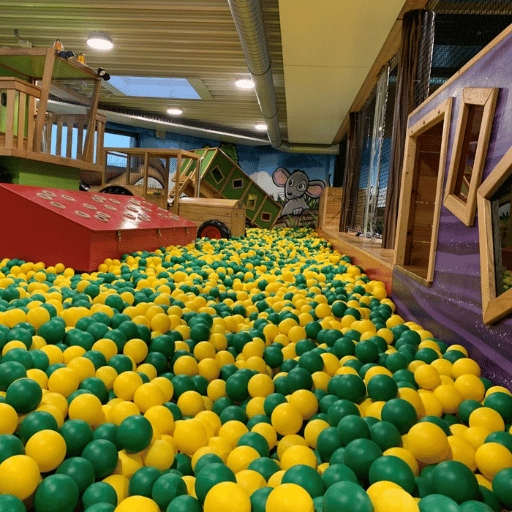
A ball pit is the wrong buy when your venue cannot carry the operating burden behind it. As the manufacturer, we would rather you walk away than run a pit you cannot maintain, because a neglected pit damages your brand and ours. Screen your venue against the four disqualifier signals below; any single one should pause the purchase until you fix it.
- There are no resources for daily cleaning labor dedicated to your pit. Commercial ball pits are subject to weekly, top-down disinfections as well as individual spot cleaning throughout the week, which must be performed on every individual ball. That breaks down to an estimated 8-10 hours of scrubbing for a basic clean by hand each cycle. According to industry news sources, one particular venue boasting 33,000 balls shuts down their site every Monday and utilizes 11 individuals to manage a “not” excessively large building. If you don’t have people power for such tasks, you can expect an unhygienic facility.
- Continuous supervision to ensure that the ages in the pit don’t mingle isn’t present. As confirmed by the Consumer Product Safety Commission, a ball pit is only secure if properly tended to and kept clean. Age-mix is a named risk with more significant consequences – one documented child ball-pool death was related to a teen getting trapped at the base of a slide. You can’t allow your ball pit to operate “ unattended” – zero eyeballs mean zero play.
- Your venue lacks the footprint for a sufficient depth.If your space will only accommodate a foot or two depth of fill and maintain the necessary standards, the architecture simply isn’t playing in your favor. A constricted, overly-deep area presents hazards including entrapment and visibility challenges – and cramming more balls will only make it worse.
- High-volume traffic, unattended facility without established tracking mechanisms. Open, drop-in operations that don’t implement systematic, periodic, full teardown protocol become incubators for “ foreign objects” and communicable diseases. Several individuals who used to work in highly busy venues have described finding items such as used hypodermic needles and more within pit-fills. if it would be difficult for you to maintain the dated log records required by inspectors then you need to consider an attraction that’s less labor-intensive.
When two or more apply, it’s time for a different soft play set, a climber, slide or interactive panel, which tends to deliver better revenue per square foot for far less work and lower risk, all within the same commercial soft play equipment range.
Why “bigger and more balls” is the wrong instinct
Deeper pits with more balls are neither safer nor more impressive, and the data refutes both instincts. A study of six ball pits found contamination anywhere from near-zero to several thousand microbial cells per ball, tied to cleaning frequency rather than pit size. Unlike pool water, ball-pit balls get no continuous disinfection, so a pit is only as clean as the routine behind it.
CPSC also notes children bury themselves under deep fills, which is why slides into pits and climbs over pits were withdrawn by manufacturers. Real safety comes from supervision, clear sightlines and a 1-2 foot fill — not from maximizing balls or depth.
Keeping Ongoing Cost Down: Ball Loss, Wear & Replacement
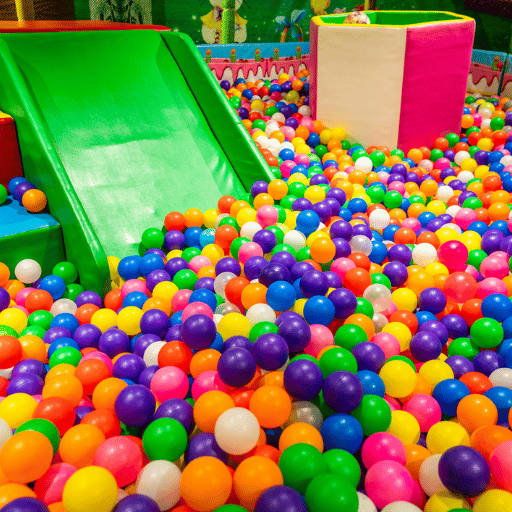
You’ll be in good shape as long as you remember that quality, professional LDPE balls will last around 20,000 compression cycles and come back “wash after wash.” What you do is top off balls lost or cracked along the way and run a full refresh periodically, the frequency depending on the use your pit gets. Use these five signs to help determine when it’s time to refresh your supply:
The 5-Signal Ball-Replacement Trigger Flag
- Physical damage. A ball cracked with a split will trap moisture and can’t be disinfected with liquid sanitizer. Pull it out before your next full refresher-cycle change out.
- Discoloration. After a washing, if stains remain, you’ve got embedded soil.
- Fill depth dropping below the safe band. Steady ball loss eventually pulls the pit below the CPSC one-to-two-foot (0.3–0.6 m) band; top up before children start hitting the base.
- Sticky balls. Whether your balls are clinging to each other or the kids who play in them, persistent surface “stickiness” after a cleaning or that gives off a telltale odor is a warning-they’re about to fail.
- Periodic refresher. That’s time even for clean balls for which you haven’t otherwise met any of the above-noted signs, and it ideally happens about once a year along with any scheduled refurbishment of your foam liner components.
Factor 5-10 percent year-over-year for routine replacements and your scheduled refresh line item, and your cost per- ball becomes almost negligible in comparison to your labor costs. By handling maintenance, you can keep that number much lower still-an automated washing system goes a long way towards preventing significant abrasion to extend ball life and cut down your deep-cleaning time and manpower.
The Hygiene Question, Answered in One Honest Paragraph
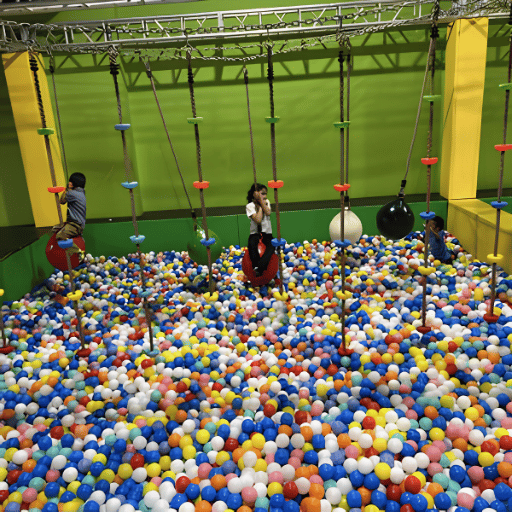
Yes, ball pits get dirty, that’s the whole reason cleaning labor dominates the cost table. Peer-reviewed sampling has found dozens of bacterial species in neglected pits, and because contamination tracks your cleaning frequency rather than the equipment, the risk is entirely operator-controllable. The fix isn’t a product feature. It’s a routine, not a product feature. Rather than repeat the full protocol here, we’ve written it out, daily, weekly and deep-clean cadence with disinfectant and bodily-fluid response, in our toddler ball-pit depth and cleaning protocol. If you can’t commit to that routine, revisit the disqualifier signals above before buying.
Ball Pit as a Marketing Asset: Dwell, Repeat Visits & Party Pull
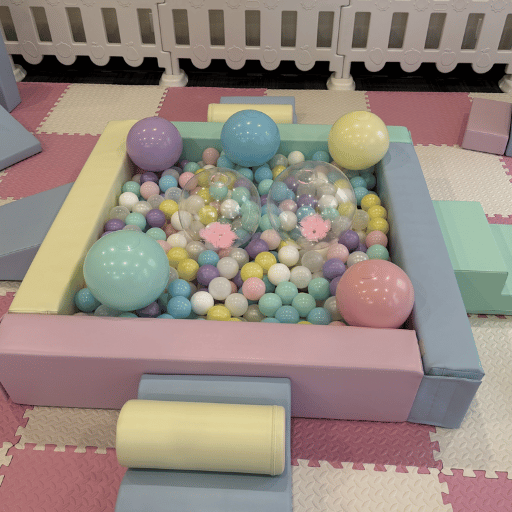
Judge a ball pit on standalone ticket revenue and it looks weak; judge it as a traffic and dwell engine and the case changes. Across the FEC industry, tickets tend to cover overhead while the profit comes from food, beverage and birthday parties, party rooms commonly book at $300–$800, and operators describe them as the most trend-resistant revenue they’ve. A ball pit is a reliable party centerpiece and a sticky toddler draw, which is why a venue can run a roughly $425 package once a day and clear several thousand dollars a month from parties alone.
There’s a quiet opportunity cost to weigh against that pull: cleaning eats bookable time. A weekly deep clean can cost a full closed day, and party slots are usually booked as a 1.5-hour party plus a mandatory half-hour cleanup. The marketing value, visual appeal, repeat visits, party attach, is real, but it’s partly paid for in time off the calendar.
What’s Changing for Ball Pit Operators in 2026
The market environment for the space is stable growth; U.S. children’s family-entertainment market is projected to more than double, from just north of $5.25 billion to approximately $10.55 billion from 2024 to 2034 at an annualized high-single digit growth rate. Private, brick-and-mortar institutions are likely headed for a similar rate globally. Physical play demand is also supported structurally, it’s the compliance questions that will shape 2026 and not if families turn out.
The biggest sea change comes from documentations-hygiene standards, more specifically. Ball-pit cleaning lacks anything approaching a mandated regimen, but there’s now focus on other three. Insurers now demand annual third party safety inspection; one liability-claim raises 25% price tag on policy for three years minimum. CPSC’s 2025 refresh of the Public Playground Safety Handbook sets standard for courts and policies-an incomplete cleaning log is treated as incomplete – and be warned – there’s three-year minimum requirement to have on-site documentation on record. Parent standards, on the other hand have adjusted the global standards. Now, cleaning is considered the key factor when parents decide if they visit again.
On the equipment front, antimicrobial balls are maturing. Silver-ion additives built into the LDPE are tested for antibacterial performance under ISO 22196 – the standard test method for treated plastic surfaces – and makers report strong reductions in surface microorganisms over time. Useful, but read the limit the additive makers print themselves: it “supports improved surface performance alongside routine cleaning practices.” It is a supplement that helps with odor and material life, not a substitute for the documented cadence. If you are planning a 2026 build, the winning move is to spec for cleanability and supervision from day one and treat antimicrobial balls as a bonus, not a shortcut.
Frequently Asked Questions
Q: What ages are commercial soft play ball pits best for?
View Answer
Commercial soft play targets the 1-5 age band, where a ball pit delivers genuine sensory and gross-motor value and the strongest repeat-visit loyalty. ASTM F1918 frames soft contained play around children up to 12, but mixing toddlers with older, rougher children is the named collision hazard, so the practical sweet spot is an age-gated toddler zone with continuous supervision. In daycare and preschool settings, the pit works best as a rotating station, not a permanent fixture.
Q: Are ball pits suitable for pediatric or sensory therapy?
View Answer
Yes – a ball pit is a core sensory-integration tool, valued by occupational therapists for the deep proprioceptive input it provides. Therapy buyers prioritize clean, easily sanitized LDPE balls and tight 1:1 supervision over throughput, and they often choose purpose-built clinic units rather than venue-scale pits. Because these settings serve children who may have skin lesions or compromised immunity, the cleaning protocol matters even more here than in a general-admission venue.
Q: What developmental benefits do ball pits offer?
View Answer
Ball pits support gross-motor development, balance and coordination as children wade, climb and right themselves against the shifting surface, and they deliver calming proprioceptive and tactile sensory input. For operators, that developmental story is also a marketing asset: parents who see the pit as enriching rather than just fun are more likely to return and to book it for parties.
Q: How many balls do I need to fill a commercial ball pit?
View Answer
At the 7.5 cm commercial standard, plan about 2,897 balls per cubic meter — roughly 1,200 for a small pit, or around 3,500 for a 2 m by 1.5 m pit at 0.4 m depth, since commercial pits run a full 100 percent fill rather than the 60-70 percent typical at home.
Q: How much does a commercial ball pit cost to run per year?
View Answer
For a small venue, plan on a few thousand dollars a year once you add manual cleaning labor (around $2,300), disinfectant and consumables, periodic safety audits and the ball-pit share of liability insurance. The one-time ball fill of $185-$215 is trivial by comparison, and a standalone pit is the cheapest soft-play attraction to insure. An automated ball-washer is the main lever to cut the recurring labor line, often paying for itself within a year.
Q: What’s the difference between a home and a commercial ball pit?
View Answer
Material grade, compliance scope and duty cycle. Commercial pits use reinforced structure, CPSIA-compliant vinyl, high-density foam and crush-rated balls and fall under ASTM F1918 and EN 1176; home pits sit outside those standards. Full specs are on the commercial ball pit product page.
Q: How often does a commercial ball pit need cleaning?
View Answer
Run a daily spot clean, a full weekly deep clean with every ball removed and disinfected, and a monthly check — more in heavy traffic, with dated logs kept three years. The routine is in our toddler ball-pit cleaning protocol.
Scoping a ball pit for your venue?
Send us your floor plan, target age band and venue type, and we will size the pit, ball count and fill depth to your room. You get back an all-in quote on a FOB, CIF or DDP basis, with the five-year running-cost model included so you can budget the real number before you buy.
Why a Ball Pit Manufacturer Published a Cost Guide (Not a Sales Sheet)
We have installed commercial soft play and ball pits for venues more than 600 times across 40+ countries since 2014 — from 80 m² kindergarten rooms to 1,500 m² family entertainment centers. That day-in, day-out field experience is where the venue-fit and operating-cost figures in this guide come from. We sell ball pits, which is exactly why the honest “when not to buy one” section exists: a pit a client cannot afford to run is a problem for everyone.
References & Sources
- Soft Contained Play Equipment Safety ReviewU.S. Consumer Product Safety Commission
- ASTM F1918-21: Standard Safety Performance Specification for Soft Contained Play EquipmentASTM International
- Examining Ball Pits as a Playground for Pathogenic GermsAssociation for Professionals in Infection Control (AJIC, 2019; DOI 10.1016/j.ajic.2018.09.031)
- Are ball pits the playground for potentially harmful bacteria?Pediatric Nursing (PubMed)
- Observational study of playground use and visit durationInternational Journal of Environmental Research and Public Health / RAND (PMC)
- Child Care Center Licensing Regulations (indoor floor-space minimums)U.S. HHS Administration for Children & Families
- DCFS Rules 407: Staff-to-Child RatiosIllinois Department of Children & Family Services
- Indoor play-area capacity requirement (15 Miss. Code R. 11-55-1.11.10)Cornell Legal Information Institute
- How an indoor playground keeps its ball pit cleanCBC News