Get in Touch with Didi Land

★★★★★
Excellent • Trustpilot
Toddler Indoor Playground
Toddler Indoor Playground Equipment for Commercial Operators
Toddler indoor playground equipment built to four international safety codes — EN 1176-10:2023, AS 4685.1:2021, ASTM F2373 (6–23 months), and ASTM F1292 (HIC < 1,000) — for daycares, family entertainment centers, malls, and hotel kids zones across 40+ countries.
EN 1176-1/-10
AS 4685.1
ASTM F2373/F1292
CE
ISO 9001

Why operators choose Didi for toddler zones
600+
commissioned projects since 2014
40+
countries served (France, Mexico, Sri Lanka, Malaysia…)
5
international standards: EN 1176-1/-10, AS 4685.1, ASTM F2373/F1292, CE, ISO 9001
25–35d
standard lead time, 45–60d for deep custom builds
Why Toddler Indoor Playgrounds Need Different Equipment
Standard 5–12-year-old indoor playground equipment fails toddlers in measurable ways. CPSC’s special study counted 8,250 emergency-department visits for under-2 children injured on playground equipment in a single year — 50% from falls and 22% from impact with the equipment itself.
50% Falls
Most common toddler injury — driven by platform heights designed for 5–12 yo, not 6–23 mo
22% Impact
Collision with equipment edges and structural members rated for older kids
52% Lacerations
Sharp edges, protrusions, and pinch points uncovered by F1487 (2–12) but addressed in F2373
ASTM F2373 was created precisely because public-playground standards were applied in child-care facilities where they were not appropriate. If your daycare, FEC, or mall toddler zone runs on equipment certified only to ASTM F1487 or generic CE marking, you are operating outside the standard written for the under-2 user.
Three pain points repeat across the operator community we serve:
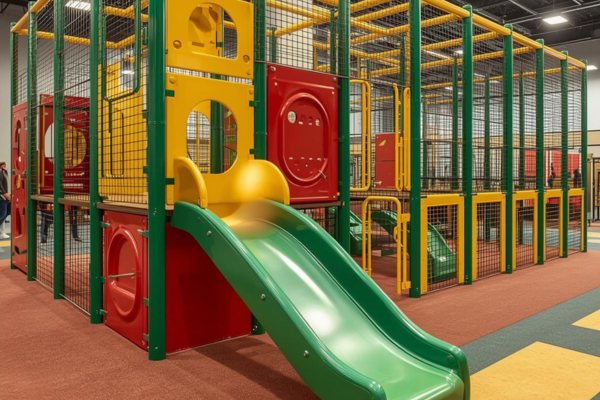
Procurement opacity
operators ask online for “cost breakdowns” because indoor-playground vendors rarely publish tier pricing.

Brand verification
“what brand is safe to trust” is the recurring question on r/smallbusiness threads from new investors.
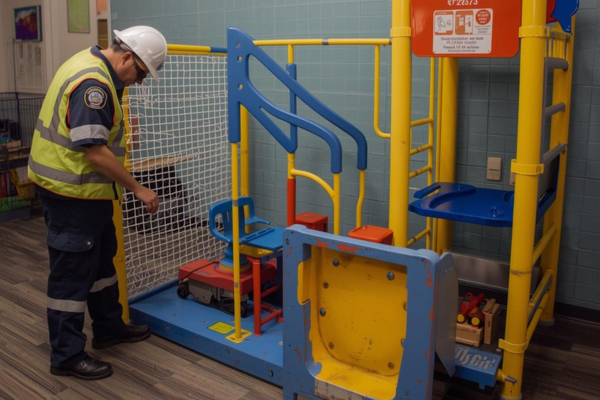
Compliance gaps
older-kid equipment installed in toddler zones because the daycare or FEC team didn’t know F2373 exists.
As a vertically integrated manufacturer, Didi addresses each gap with toddler-specific product engineering, transparent tier pricing (below), turnkey 3D-design-to-installation service, and per-project compliance documentation tied to the four codes that actually govern toddler equipment.
View Tier PricingDidi Toddler Equipment Lineup — 4 Series for Commercial Spaces
Each series is engineered for a specific space-and-budget profile and configurable for 6–24-month and 2–5-year zoning rules.

EN 1176-10:2023
ASTM F1292 (HIC < 1,000)
Soft Play Series
Foam climbers, blocks, tunnels, crawl tubes, and ball pits engineered for the 6-23-month window where ASTM F2373 applies.
- Typical footprint: 50–200 m²
- Modular zones for 6–24 mo and 2–5 yr
- EVA-foam padding throughout, certified to HIC < 1,000 surface tests
EN 1176-1:2017
AS 4685.1:2021
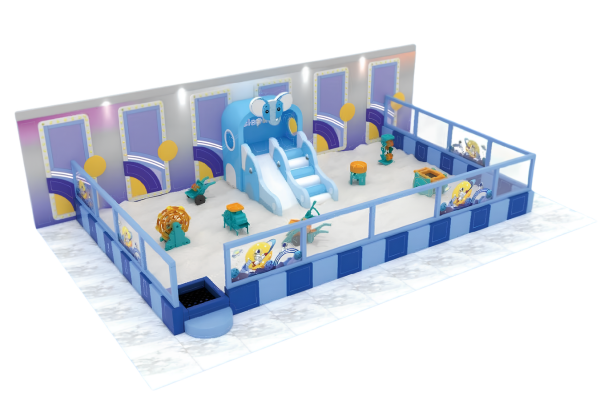
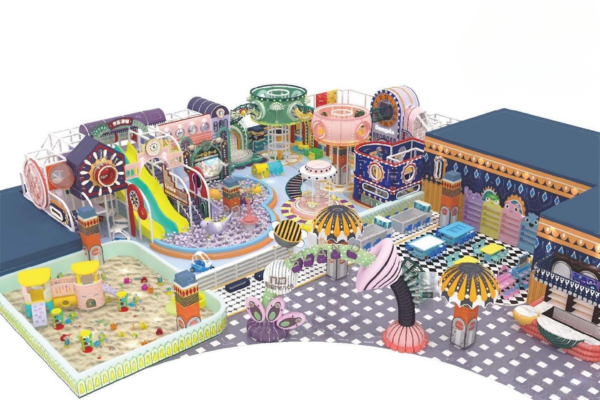
Sand Pit Series
Sealed EPP-based sand cells with anti-choke sieve covers and integrated dust capture for indoor air quality.
- Typical footprint: 10–50 m²
- Age window: 2–5 years
- Sieve apertures sized outside the 89–230 mm entrapment range per EN 1176-1
EN 1176-1:2017
CE
Themed Role-Play Series
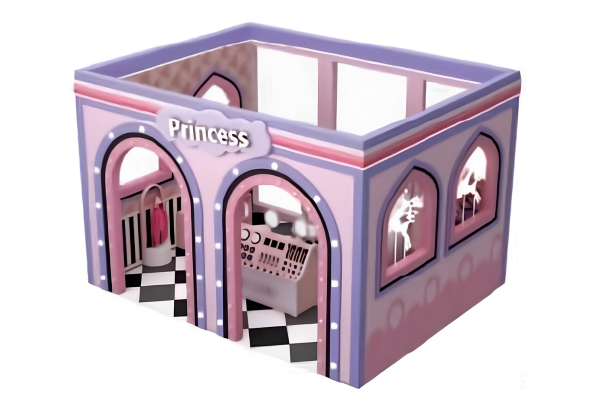
Princess House, Kids Kitchen, Kids Hospital, Kids Supermarket, Kids Police — five fixed role-play themes plus full custom theming, including interactive activity panels.
- Component sizes: 2.10×2.10×2.70 m to 3.60×2.80×2.40 m
- Age window: 2–5 years
- Pretend-play structures with rounded edges and shatter-safe acrylic windows
Cross-series finish overlay
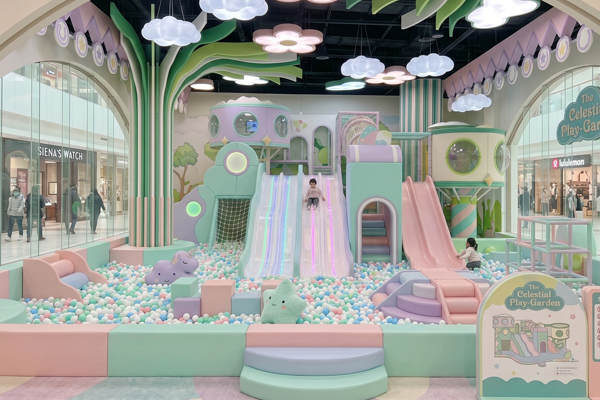
Macaron Pastel Theme
Low-saturation pastel finish applied across any of the three engineered series — engineered for 0–5-year visual development and high-end mall aesthetics.
- Compliant with the certification of the underlying series
- Strong fit for malls, premium daycares, restaurant kid zones
- Reduced glare ratings for sensitive-light environments
| Series | Age window | Typical area | Primary code | MOQ |
|---|---|---|---|---|
| Soft Play | 6 mo – 5 yr | 50–200 m² | EN 1176-10:2023, ASTM F1292 | 1 set |
| Sand Pit | 2–5 yr | 10–50 m² | EN 1176-1, AS 4685.1:2021 | 1 set |
| Themed Role-Play | 2–5 yr | 4–9 m² per pod | EN 1176-1, CE | 1 pod |
| Macaron | 0–5 yr | Cross-series | Inherits underlying series | — |
Toddler Spec Comparison — How We Differ from Standard Indoor Play
The single biggest reason toddler injury rates run higher than older-kid rates is dimensional mismatch. Toddlers cannot fall safely from heights designed for school-age children, and entrapment hazards scale with body size. The comparison below outlines our toddler-zone configuration against generic ASTM F1487 (2–12 years) indoor-play equipment.
Specification
Toddler-safe (Didi)
Standard 2–12 yr indoor
Source / authority
Max platform height (6–23 mo)
32 in / 813 mm
Up to 72 in / 1,829 mm
ASTM F2373 / CPSC
Max platform height (2–5 yr)
48 in / 1,219 mm
Up to 72 in / 1,829 mm
ASTM F1487 (preschool)
Max slide height (6–23 mo)
< 24 in / 610 mm
Unrestricted within fall-height code
CPSC under-2 guidance
Surface impact attenuation
HIC < 1,000 mandatory; HIC < 700 on premium builds
HIC < 1,000 baseline only
ASTM F1292
Opening dimensions
Outside 89–230 mm forbidden range
Same range applies, often poorly enforced
EN 1176-1 entrapment
Overhead / climbing equipment
Removed from 6–23 mo zone
Retained throughout
CPSC handbook
Edge geometry
Rounded, no protrusions; field reports indicate ≥ R 20 mm typical
Per ASTM F1487 sharp-edge clause
Industry practice
Safety Standards Compliance Matrix — Five International Codes
Every Didi toddler installation ships with documentation tied to the five codes below. Where two codes overlap (for example AS 4685.1:2021 is a modified adoption of EN 1176-1:2017), our test reports cite the original European source as the primary reference.
EN 1176-1:2017
EN 1176-10:2023
AS 4685.1:2021
ASTM F2373
ASTM F1292
CE
ISO 9001:2015
EN 1176-1:2017
EU general safety, public play equipment
Entrapment 89–230 mm forbidden range; fall heights by age
Test report PDF on file
EN 1176-10:2023
EU fully enclosed indoor / outdoor play
Soft-play structural integrity; emergency egress
Test report PDF on file
AS 4685.1:2021
Australia (= EN 1176-1:2017 MOD)
Australian-specific entrapment + fall-height limits
TQT8040B09E full test report
ASTM F2373
USA — children 6 mo through 23 mo
Layout, surfacing, performance unique to child-care
Conformance dossier per project
ASTM F1292
USA — surface impact attenuation
HIC < 1,000 mandatory ceiling for all play surfaces
Surface attenuation report per project
CE + ISO 9001:2015
EU market access + manufacturing quality
Whole-product CE declaration; ISO 9001 audit trail
Annual recertification
Toddler Zone Design Tips for Five Operator Types
Toddler-zone design is not a smaller version of a 5–12-year-old playground. The supervision model, sightlines, and accessory program are all different. We’ve installed toddler zones into the five operator profiles below; sizing and theme weighting shift in each.
Daycare & Early-Learning
Footprint 30–80 m² • Role-Play heavy
Critical compliance:
EN 1176 + CPSIA compliance for any toy-class accessories.
EN 1176 + CPSIA compliance for any toy-class accessories.
Family Entertainment Center
Footprint 100–300 m² • Soft Play + Macaron
Critical compliance:
EN + ASTM dual filing for international travel-spend operators.
EN + ASTM dual filing for international travel-spend operators.
Shopping Mall
Footprint 80–200 m² • Macaron + Themed
Critical compliance:
CE plus local fire-rating certification.
CE plus local fire-rating certification.
Restaurant Kids Zone
Footprint 15–40 m² • Compact Soft Play
Critical compliance:
EN 1176-10:2023 (fully enclosed).
EN 1176-10:2023 (fully enclosed).
Hotel Family Floor
Footprint 50–150 m² • Themed + Sand Pit
Critical compliance:
EN compliance plus easy-clean surface specs.
EN compliance plus easy-clean surface specs.
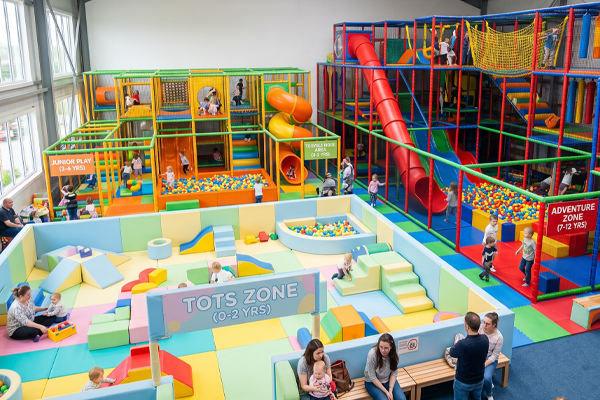
Six rules we apply to every toddler zone

1
Physical separation from older-kid play
Fence ≥ 600 mm or floor-grade differential, not just signage.
2
Sight-line first design
Equipment kept under 1.2 m so caregivers see across the entire zone.

3
Double-door entry / exit
Handles above toddler reach, no single-leaf gates.

4
Caregiver utility
Adjacent 5–8 m² nursing-and-changing alcove, often under-spec’d by mall designers.
5
Continuous attenuating surface
HIC < 1,000 unbroken across the whole footprint, not just under fall-zones.
6
Color saturation by age
High-contrast for 0–2, mid-saturation for 3–5; both backed by visual-development literature.
Procurement Guide — Cost Tiers, MOQ, Lead Time, Customization
Operators ask for cost breakdowns more than any other procurement question. We publish the working ranges we quote against, so you can scope a project before requesting a formal quotation. The figures below are FOB Guangzhou and reflect 2024–2025 production costs across our 600+ projects.
Basic
Daycare, Restaurant Kids Zone
$5K–25K
$400–650 per m²
Configuration:
Single Soft Play zone or one Themed pod.
Single Soft Play zone or one Themed pod.
Mid
Mall, Mid-size FEC
$25K–80K
$650–900 per m²
Configuration:
Soft Play + 1 themed pod + small Sand Pit.
Soft Play + 1 themed pod + small Sand Pit.
Most Complete
Premium
Large FEC, Flagship Hotel
$80K–300K+
$900–1,400 per m²
Configuration:
Full four-series with Macaron overlay + custom theming.
Full four-series with Macaron overlay + custom theming.
All tiers include 3D rendering, export-grade packaging, full compliance documentation, and remote installation guidance. Tier ranges depend mainly on theming complexity, surface attenuation grade chosen, and whether on-site installation supervision is included.
Procurement terms at a glance
MOQ
1 set, with a minimum project value of US$5,000
Lead time
25–35 days for standard configurations · 45–60 days for deep custom builds
Customization scope
Sizing, color, theming, brand logo, jurisdictional compliance label — 100% configurable
Shipping terms
FOB Guangzhou (default) · EXW · DDP available on request
Payment terms
30% T/T deposit + 70% before dispatch · L/C · Sinosure-backed terms for vetted buyers
Warranty
24 months on structural elements · 12 months on soft-cushion components
After-sales
24/7 online support · video-led installation · dedicated project manager per build
TCO note for FEC and mall operators
FEC operators typically allocate 15–25% of total play-floor area to toddler zones — and toddler-zone admissions, when paired with siblings, drive a disproportionate share of weekday foot traffic. Field reports from the IAAPA 2025 Benchmark Series indicate that family-with-kids attractions raise mall dwell time and per-visit spending across the whole tenant mix.
Where a Premium-tier toddler zone replaces an underperforming retail bay, the floor-area economics typically convert within 18–30 months on conservative ticketing assumptions. Exact ROI varies by catchment density and pricing model — request a custom analysis with your floor plan.
Customer Results — 600+ Projects Across 40+ Countries
Three representative toddler-zone deployments out of the 600+ commissioned projects we’ve shipped since 2014. Each example below pairs a different operator type and theme bias.
FR
Daycare — France
200 m² toddler zone · 2–5 yr
Macaron palette over Themed Role-Play (Princess House + Kids Kitchen). EN 1176-1:2017 file submitted to local authorities.
LK
FEC — Sri Lanka
500 m² mixed-age FEC · 6–24 mo + 2–5 yr
Soft Play + Sand Pit + 2 Themed pods. Dual EN + ASTM compliance filing for internationally branded mall tenant.
MX
Mall — Mexico
100 m² mall toddler zone
Macaron-finished Soft Play, designed for sight-line supervision from adjacent cafe seating. CE + local fire compliance.
Beyond these three: production records show repeat orders across France, India, Sri Lanka, South Africa, Mexico, Malaysia, and Poland. Repeat-order rate is the metric we watch most closely — it reflects whether the equipment held up to commercial operating conditions, not just sample-day inspection.
Seeking the full 600-project gallery filtered to your operator type?
Request the case-study packet →
Interactive Planning Tools
Leverage our proprietary calculators and compliance engines to scope your next toddler zone project. Free, instant, and data-driven.
Zone Sizer & Estimator
Input your space dimensions and operator profile to generate a working USD budget range and equipment configuration tier.
Launch Sizer →Compliance Code Selector
Map your local jurisdiction and target age group to the exact ASTM, EN, or AS safety standards required for your commercial build.
Find Your Codes →Safety Risk Assessment
Audit your existing or planned toddler zone against five critical international safety benchmarks in under two minutes.
Start Assessment →Frequently Asked Questions
Find answers to common questions about our commercial toddler playground equipment.
Our toddler indoor playground equipment is strictly designed for under-2 users (6–23 months). It complies precisely with the ASTM F2373 safety standard, featuring age-appropriate platform heights, barrier spacings, and soft-cushioning tailored to the biomechanics of early walkers, unlike standard 5–12-year-old structures.
Standard equipment is engineered for older kids (2-12 years) and often contains rigid structures, higher platforms, and larger gaps that pose fall and entrapment risks for infants. Soft Play features fully padded environments, zero sharp edges or protrusions, and reduced elevation, actively preventing the 50% fall and 22% impact injury rates commonly seen when toddlers use older-kid zones.
Pricing depends on the footprint and customization tier. Our Basic tier (Daycares/Restaurants) ranges from $5K–$25K ($400–$650/m²). The Mid tier (Malls/FECs) ranges from $25K–$80K. For large-scale Premium flagship projects with full custom theming, prices range from $80K–$300K+ ($900–$1,400/m²).
Yes. Every Didi toddler installation is built and tested to four rigorous international safety codes: EN 1176-10:2023 (EU Fully Enclosed Play), AS 4685.1:2021 (Australia), ASTM F2373 (6–23 months), and ASTM F1292 (Impact Attenuation HIC < 1,000). We also provide CE and ISO 9001 certifications.
Absolutely. Our equipment is 100% configurable. As a vertically integrated manufacturer, we handle sizing adjustments, custom color palettes (like our Macaron overlay), deeply integrated brand logos, and specific thematic elements to seamlessly match your facility’s aesthetic and jurisdictional compliance labels.
25–35 days for standard configurations, 45–60 days for deep custom builds. FOB Guangzhou is the default Incoterm; EXW and DDP are available. Documentation pack (compliance dossier, installation guide, surface-attenuation report) ships with the freight, not after — so your local code officials can review during install, not after.
![Custom Dinosaur Playground Equipment [Design Guide]](https://didiplayarea.com/wp-content/uploads/2026/09/custom-dinosaur-playground-equipment-r2-featured-1-150x150.png)