Get in Touch with Didi Land

Technical Specifications
Indoor Playground for Family Entertainment Centers
Revenue-Generating Design from Didi Land – 40+ Countries Proven, ISO/ASTM/EN/AS/CE Certified
Indoor playground equipment for family entertainment centers earns its return through three things: which 11 attraction categories you choose, how the FEC layout converts square footage into revenue, and whether the indoor play structure outlasts the lease. Unlike outdoor playground systems, FEC indoor play equipment runs at full utilization year-round regardless of weather. Didi Land has been engineering all three for FEC investors across 40+ countries since 2014, with in-house metal fabrication and five international safety certifications backing every project.
What You Get From Didi Land
- 11 product categories: ninja course, trampoline park, soft play, climbing walls, ball pits, ropes course, sand play, themed zones, electric play, tube ball blow, macaron-style — fully customizable
- 5 international certifications: ASTM F1918 + EN 1176 + AS 4685 + ISO 9001 + CE — every product, not selective items
- In-house metal fabrication: laser tube cutting, MIG/TIG/CO₂ welding, robotic welding, press brakes — we build the steel ourselves, not source it
Free FEC zone planning + 3D design: revenue-driven layout for your specific square footage and target age groups
Lead time 25-35 days from final design lock + global installation + 24/7 multilingual support
40+ export countries: France, India, Sri Lanka, South Africa, Mexico, Malaysia, Poland — full case portfolio available
Why Most FEC Indoor Playgrounds Underperform — And the Revenue-Driven Solution
Most FEC indoor playgrounds underperform not because the equipment is bad, but because the equipment was specified in isolation from three commercial decisions: which attractions match local demand, how zones are sized for traffic flow, and which standards the materials hold against five years of daily use. A family entertainment center is a square-foot revenue engine — every square meter that doesn’t pull guests through a paid attraction is rent paid for empty floor.
Global Growth & Investment Reality
The global FEC industry was valued near $28-33 billion in 2024 and is projected to grow at a CAGR of 8.7% to 11.5% through 2030 across multiple market reports . That growth is not guaranteed for every operator. Investors who succeed treat indoor playground equipment as a profit-per-square-foot system — soft play structures next to a coffee zone for parents, ninja courses sized for repeat-visit pricing, birthday parties booked into rooms placed for circulation, and activity zones routed so the whole family flows through without bottlenecks. Investors who struggle treat equipment as a one-time capital line and discover the operating gaps after opening day.
Industry Post-Mortems & Real Costs
Industry post-mortems reveal a pattern: the most expensive FEC mistakes are not equipment failures. A LinkedIn-published case study on FEC investment errors documented an operator who saved €100,000 on equipment purchase, then spent €131,500 more in operating conditions — substandard materials, unplanned maintenance, and lost guest hours during repairs . Another operator analysis on the r/Indoorplaygrounds community noted that “most indoor playgrounds fail to scale, and it’s not because of the equipment” — it’s because the layout, zone allocation, and traffic flow were never engineered for guest-hour throughput.
The Three Decisions That Drive FEC Revenue
Attraction Mix:
Which combination of soft play, climbing walls, trampoline park, ninja course, ball pit, ropes course, laser tag arena, ride-on attractions and party rooms matches your local catchment area and price ladder.
Zone Layout:
how those attractions are sized and placed inside your floor plan so toddlers, older children, teens and parent-supervisors all flow through the destination without bottlenecks.
Material & Compliance Standards:
whether the play structure meets ASTM F1918, EN 1176, AS 4685 and ISO 9001 – because every safety incident closes the room until repairs and audits are complete.
Didi Land was founded in 2014 specifically to solve all three for FEC investors who buy from offshore manufacturers. Our CEO and co-founder, Ms Cherry, started the company after her own market analysis found that most indoor playground equipment shipped from Asia suffered from poor quality, opaque pricing and slow after-sales response – three things that turned investor capital into operator headaches. The 11-category product line, the in-house metal fabrication shop, and the five-certification quality system were all built to remove those three risks from the buyer’s side of the contract.
Didi Land FEC Indoor Playground Equipment — 11 Product Categories
Buyer focus: Operations Managers · Procurement (RFQ matching)
Eleven product categories covers the full attraction mix an FEC needs from the toddler play zone through the teen-and-adult ninja course. These categories are designed to be combined inside one custom indoor playground project rather than purchased as off-the-shelf items. Each category supports custom theming, color palette matching your brand and modular sizing so the same product family fits a 1,500sqft mall kiosk and a 25,000sqft destination FEC.
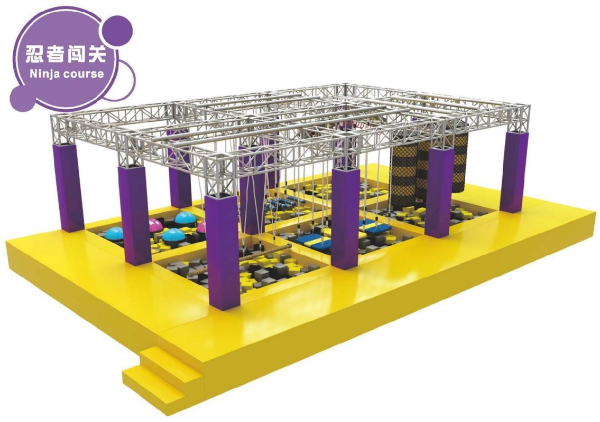
1. Ninja Course (忍者闯关)
Ninja warrior course equipment for ages 6+. Modular obstacle frames, padded landing zones, hangboards, salmon ladders, timed-challenge sections. Built on 48mm galvanized steel frames; load tested per ASTM F1918.
FEC fit: 800-3,000 sqft footprint serving ages 6 to adult, with timed-session pricing as the typical revenue model for ninja attractions.
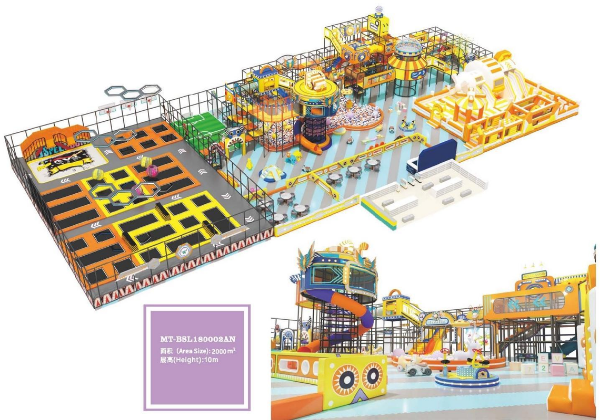
2. Soft Play Area (软体游乐场)
Soft contained play equipment for ages 0-6. Padded climbing structures, ball pits, sensory tunnels, foam blocks. EPP foam interior with PVC cover; meets ASTM F1918 soft-contained play standards directly.
FEC fit: 600-2,500 sqft footprint serving ages 0 to 6 — typically the highest dwell-time zone in any FEC operating model.

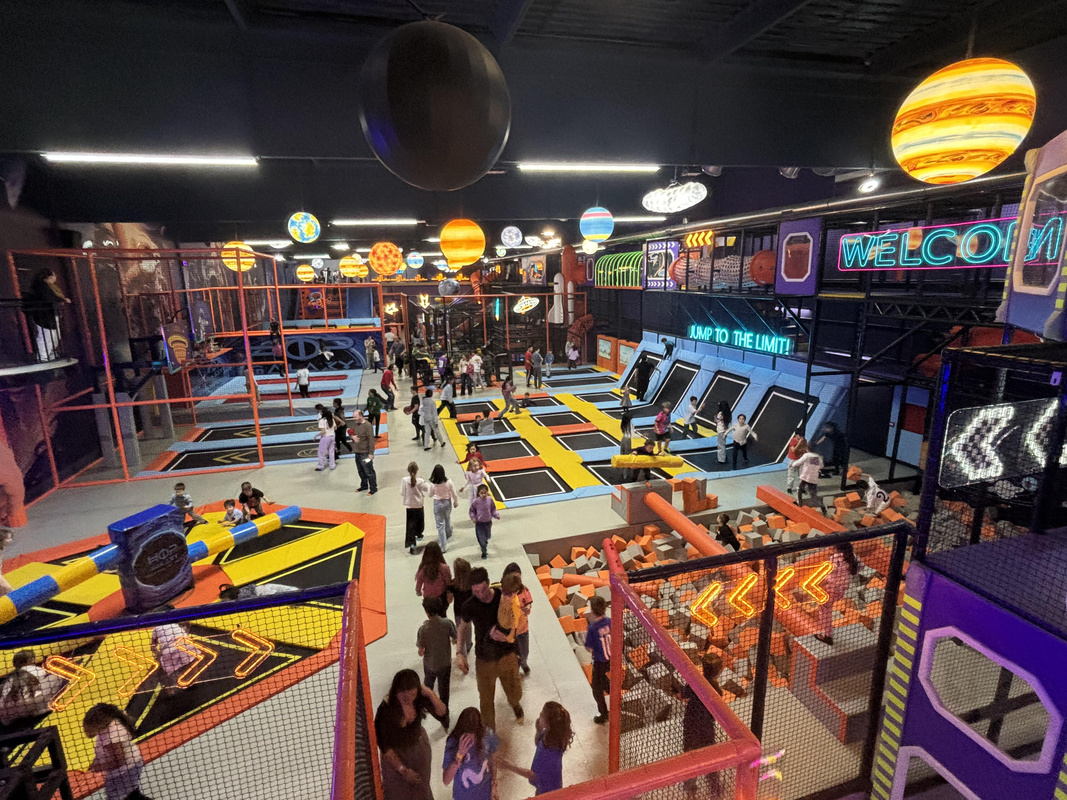
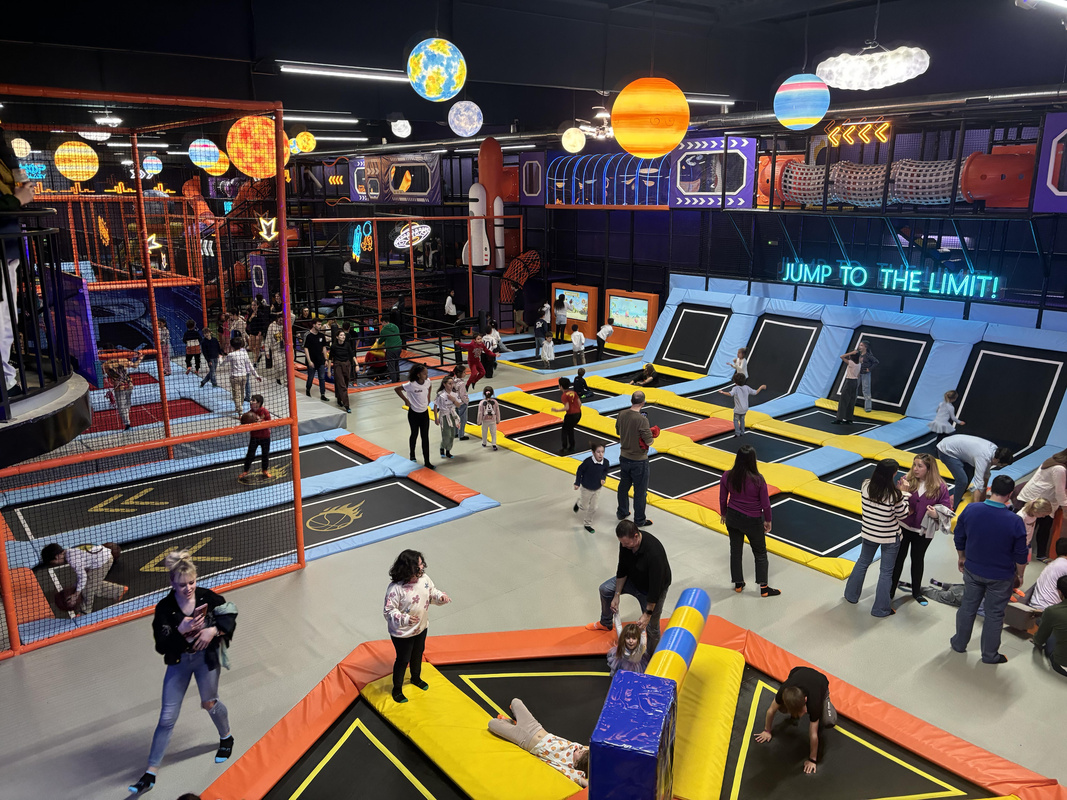
3. Trampoline Park (蹦床公园)
Trampoline park equipment with interconnected court systems, foam pits, dodgeball arenas and basketball lanes. Frames welded in-house using MIG/TIG; tested to ASTM F381-16 trampoline standard.
FEC fit: 1,500-6,000 sqft footprint serving ages 6 and above on timed sessions, the standard pricing model for trampoline parks.
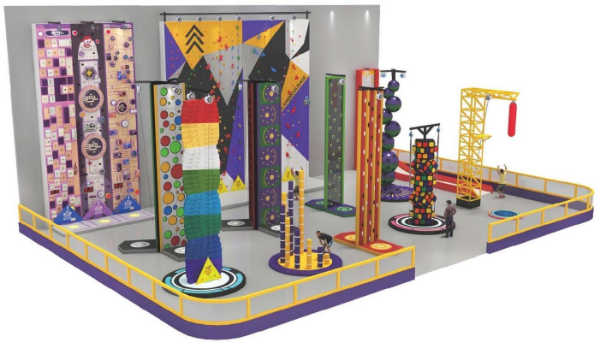
4. Climbing Walls & Fun Climbing (趣味攀岩)
Indoor climbing wall systems with auto-belay options, traverse walls for younger kids, and themed climbing structures – effectively an indoor jungle gym sized for commercial playground equipment standards rather than home use. Hold attachments support the full T-nut grade range, allowing route refresh on a quarterly cycle as climbers progress.
FEC fit: 200-1,200 sqft footprint serving ages 4 and above, operated as staff-led climbing routes or self-service auto-belay stations.
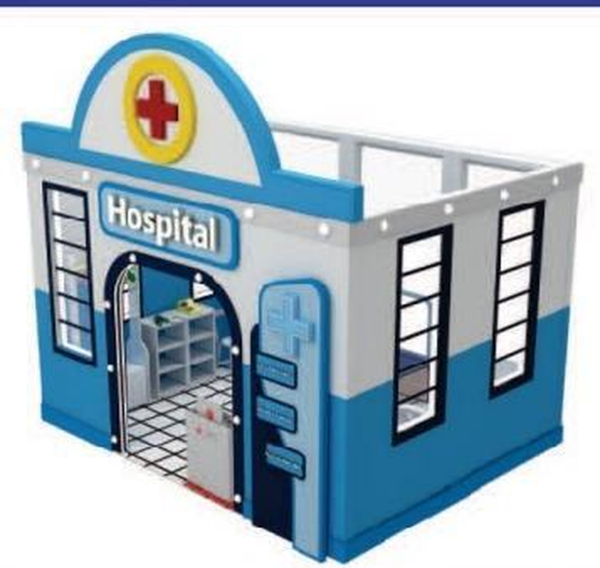
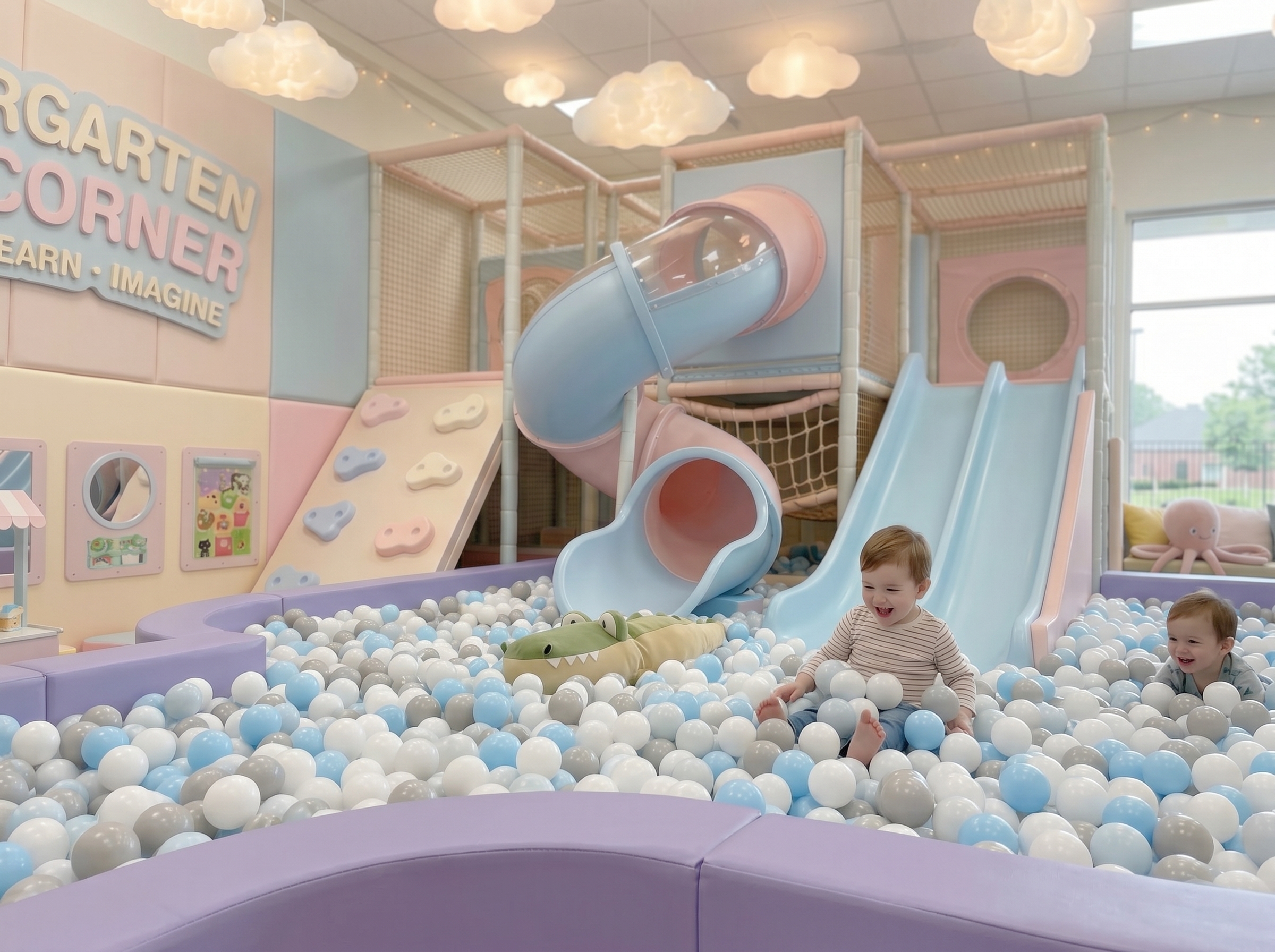
5. Ball Pit & Themed Zones (情景乐园)
Commercial ball pit configurations from compact toddler pits to multi level adventure pits with slides and climbing structures. Pit balls meet phthalate and lead content standards for child contact.
FEC fit: 400-2,000 sqft · age 1-12.
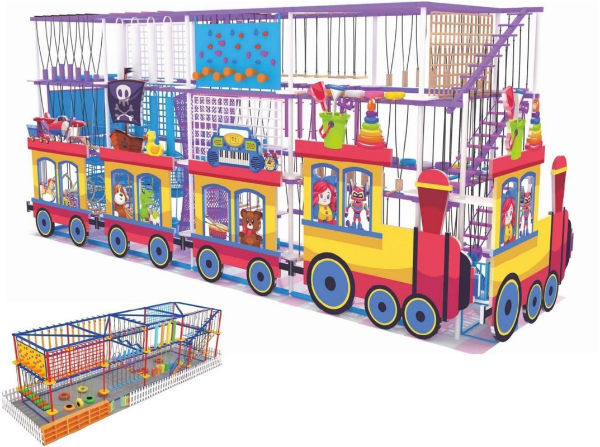
6. Adventure Park (拓展乐园)
Multi-level adventure structures with ropes course elements, suspension bridges, cargo nets and elevated walkways. Designed as the visual centerpiece of your FEC — the photo most parents post on social media.
FEC fit: 1,500-5,000 sqft footprint serving ages 4 and above and delivering the highest visual impact across our product portfolio.
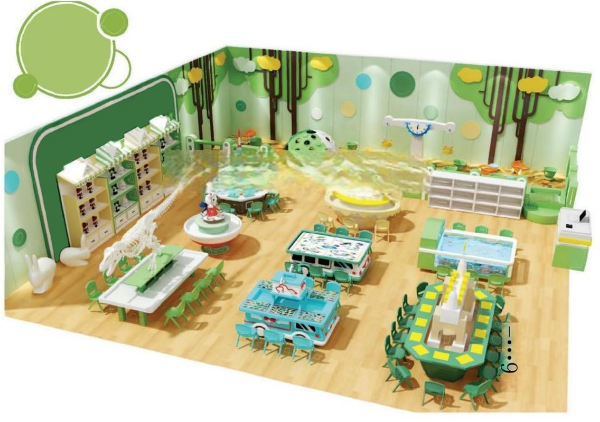
7. Educational STEM Play (智力手工)
Hands-on educational stations: building blocks, magnetic walls, gear systems, sensory boards. Captures the parent-pays-for-learning segment that pure-play equipment misses.
FEC fit: 200-800 sqft footprint serving ages 2 to 10, with strong fit for daycare partnerships and education-focused FEC investors.
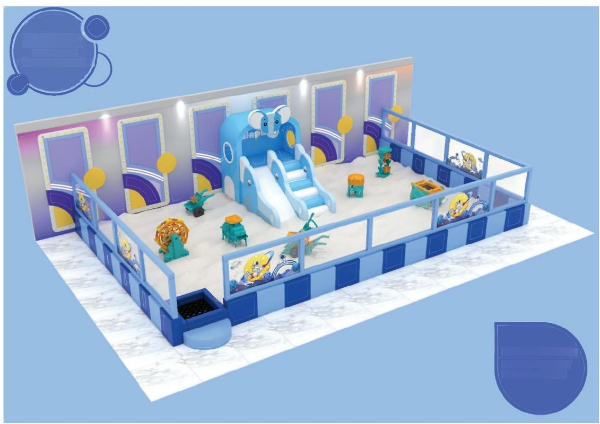
8. Sand Play Zone (沙池乐园)
Indoor sandplay attractions with kinetic sand, digging stations and themed sand tables. Sealed edge design keeps sand contained for cleanliness within an indoor environment that runs 12 hours a day.
FEC fit: 200-600 sqft footprint serving ages 1 to 8 with long dwell time — sand play retains young children for 30-45 minute sessions.
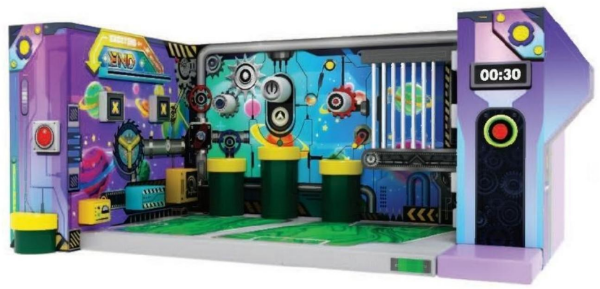
9. Electric / Interactive Course (电动闯关)
Electric and interactive play attractions: motion-sensor games, LED-floor reactants, VR booths, gamified obstacle course with scoring, laser maze for older children. Globally creates a memorable challenge mechanic that creates return trips.
FEC fit: 400-1,500 sqft footprint serving ages 4 and above with session-based revenue and built-in scoreboard mechanics for repeat visits.
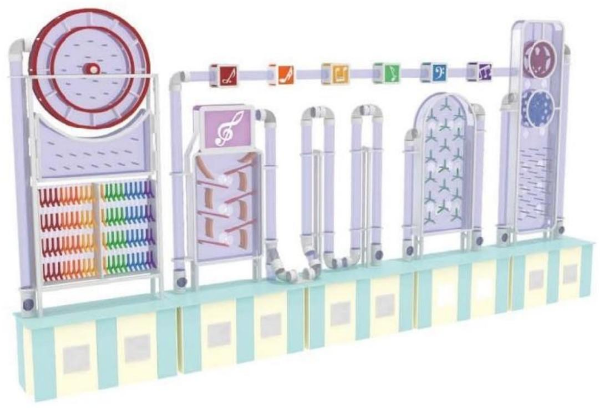
10. Tube Ball Blow Zone (管道吹球)
A pneumatic tube feature can move foam balls through transparent tubes as part of an indoor play area.
FEC fit: 100-400 sqft footprint serving ages 3 to 10 with no time-limit pricing — operates as an always-on attraction across the FEC.
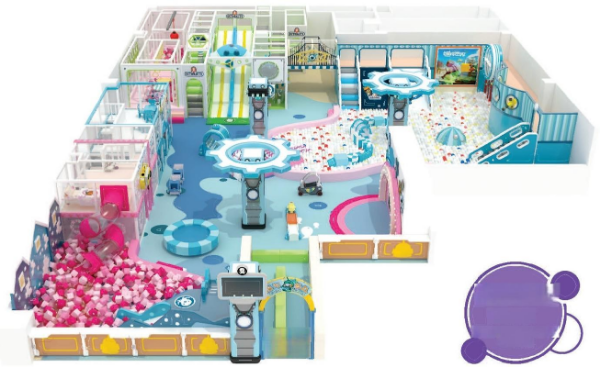
11. Macaron-Style Themed Playground (马卡龙风格)
Pastel-tone themed play zones with our signatures macaron palette: rose, mint, lavender, lemon-yellow. Strong Instagram-shareable visual aesthetic for FECs seeking young demographic.
FEC fit: 600-2,500 sqft footprint serving ages 0 to 8, generating social-media-driven foot traffic from photo-friendly pastel theming.
Decision Matrix — Match Your FEC Size to Category Mix
| FEC Size | Recommended Category Mix | Capital Range (Equipment Only) | Target Age Coverage | Typical Footprint Allocation |
|---|---|---|---|---|
| Compact FEC 1,500-3,000 sqft |
Soft play + ball pit + tube ball blow + macaron-themed corner + 1 small climbing structure | $25,000 – $50,000 | 0-8 years | Soft play 50% / Ball pit 20% / Themed 15% / Climbing 8% / Circulation 7% |
| Standard FEC 3,000-8,000 sqft |
Above + trampoline + adventure park + ninja course (junior) + party room + sand play | $50,000 – $150,000 | 0-12 years | Soft play 25% / Active play 35% / Climbing 12% / Party 10% / Cafe 8% / Circulation 10% |
| Large FEC 8,000-25,000 sqft |
Above + full ninja course + ropes course + electric/interactive zones + STEM play + multi-level adventure | $150,000 – $500,000+ | 0-adult | Soft play 18% / Active 35% / Climbing 15% / Trampoline 12% / Party 8% / Cafe 8% / Circulation 4% |
FEC Layout & Zone Planning — The Revenue-Maximizing Floor Plan
Buyer focus: Investors / Directors (primary) · Operations Managers
Indoor play layout is the determiner of whether your FEC earns $120 per sq. ft. per year or $200+. And the layout determination is made before equipment ships, not after. The conventional planning rule for FEC revenues uses $120-200/sq ft/year as a benchmark; logical high-performing FECs in well-positioned catchments generally rise above $200/sqft annually. To reach this level of operational success, zone planning must answer five operational questions most floor plans simply ignore.
Five-problem framework. Every FEC floor plan must answer:
01
Where should the toddler area go? Kids need enclosed sight lines for their parents, soft surfaces, and proximity to restroom and cafe.
02
Where should the energy-burn zone go relative to the toddler area and the cafe? Ninja, trampoline, climbing – loud, high-throughput attractions that drive timed-session revenue.
03
Where should parent supervisors wait so they can see multiple zones at once? Comfortable sitting with sight lines into multiple zones is the difference between a one-time visit and a re-visit for your FEC.
04
Where should party rooms sit so noise and catering flow do not collide? Party spaces require acoustic separation, easy catering access, and a pathway that does not cross the toddler area.
05
Where will throughput bottlenecks emerge during peak weekend visitor traffic patterns? Entry gates, restrooms, cafe queue and party room transits – these are the four chokepoints that will determine peak-hour throughput.
Six-Zone FEC Layout Allocation
In our project portfolio across 40+ countries, the FECs and family play centres that achieve at the high end of the $120-200/sqft revenue range tend to follow a familiar blueprint of indoor play equipment distribution by zone. While the specific proportions change depending on a range of factors, the model is consistent.
Zone 1: Toddler & 0-3 yrs
18-22%
Soft play + ball pit + macaron-themed sensory zone. Sight lines from cafe.
Zone 2: Active Play 4-12 yrs
35-40%
Adventure park + soft contained play structure + ball pit slides + tube ball blow.
Zone 3: Climbing & Sport 8+ yrs
12-15%
Climbing wall + ninja course + ropes course. Acoustic separation from toddler zone.
Zone 4: Trampoline / Energy Burn
10-15%
Trampoline park, foam pits, dodgeball court. Highest noise zone — buffer with circulation.
Zone 5: Party Rooms
10-12%
Minimum 300 sqft per room . Acoustic-isolated. 3+ rooms recommended for weekend turnover.
Zone 6: Cafe + Parent Rest + Circulation
8-12%
Coffee, light food, charging stations. Supervisor corridors at 36-48 inches wide for stroller and coffee-holder traffic .
Traffic Flow & Revenue Hot Spots
The proven pattern of customer traffic through your FEC starts:
entry reception (band/wristband) → toddler zone (parents leaving older children temporarily) → active play → optional party room → exit through cafe.
For each 15-25% shift of the placement of the cafe zone, and for each 10% change in the proximity of the trampoline zone to the toddler zone, you may nearly double or cut in half your intake for a year of operations.
Three architectural rules from successful FEC layouts:
Two-level structures command a premium over one-level: the ceiling height in many tropical climates accommodates a second, or even third, level. Soft play and adventure park categories are already two-to-three-level shapes. This installation density has doubled for only one-third as much rent.
Party rooms should face away from the play floor. Glass walls look out over the play zones and doors open to the food-court corridor. The party rooms are separated to shield hearing, and do not interrupt the caterering staff delivering snacks through the toddler zone.
Restroom access near the toddler zone is critical. Leaving the zone to use the restroom across the shopping mall drives early exits. Saving 30 seconds every restroom trip becomes very common over a peak weekend.
“We tested fourteen layout variations across our project portfolio in mall-anchored FECs before settling on the six-zone framework. Here is the pattern that emerged: the operators who hit $200+/sqft consistently had toddler zone within 40 feet of the cafe and party rooms with their backs to the highest-noise attraction. The operators who struggled to clear $120/sqft had party rooms facing the entrance – visible from the street, but isolated from the food revenue path.”— Didi Land Design Team, FEC Floor Plan Engineering
Free Floor Plan Consult — Send your FEC dimensions and we’ll return a six-zone layout with attraction sizing
Get Strategy →
Custom Didi Land vs Off-the-Shelf vs Used — Performance & ROI Comparison
Buyer focus: Operations Managers + Investors Purchasing (price comparison)
FEC investors comparing commercial indoor playground equipment usually settle on each of three procurement options: custom-built equipment by a manufacturer like Didi Land, an off-the-shelf modular kit by a US/EU distributor, or used playground equipment inherited from a closed FEC. Each path has a five year total cost different from another, different theming options, and different resale values. The comparison below shows 5-year total cost of ownership, not some fictitious total cost of ownership- comparison, because saving 100,000 on equipment only cost 131,500 more to operate. Whoops.
| Dimension | Custom Didi Land | Off-the-Shelf Modular Kit (US/EU) | Used Equipment from Closed FEC |
|---|---|---|---|
| Upfront Equipment Cost (3,000 sqft) | $50,000 – $80,000 | $80,000 – $130,000 | $15,000 – $40,000 |
| Theming & Brand Customization | Full custom — colors, theme, brand integration | Limited to manufacturer’s theme catalog | None — inherit previous operator’s theme |
| Material Spec Transparency | 48mm galvanized steel · LLDPE shell · EPP foam · EVA mat — disclosed | Spec sheet provided · brand-locked | Unknown · inspection required · possible degradation |
| 5-Year Maintenance Cost (estimate) | 5-10% of equipment cost / year | 5-8% of equipment cost / year | 15-30% of equipment cost / year (higher failure rate) |
| Service Life Expectation | 7-10 years with proper maintenance | 8-12 years with proper maintenance | 2-5 years remaining (depending on age) |
| Lead Time | 25-35 days production + 28-45 days sea freight | 4-12 weeks (US/EU manufacturers) | Immediate (after inspection & transport) |
| Compliance Documentation | ASTM F1918 + EN 1176 + AS 4685 + ISO 9001 + CE certificates per project | Local certifications (varies by manufacturer) | Original certificates may not transfer |
| Resale Value at Year 5 | 30-50% of original cost (if well maintained) | 40-60% of original cost (brand-recognized) | 0-15% (already on second life) |
| Best For | FEC investors who want brand differentiation + lower TCO + global compliance | FEC investors with US/EU brand-preference customers + shorter shipping needs | FEC pop-ups, short-lease venues, budget-constrained tests |
TCO Math That Most FEC Buyers Miss
Compare project options using a complete, itemized cost estimate and the assumptions that apply to your own venue.
Customer Results — Featured Projects from 40+ Countries
More than forty export destinations represent more than a number; they represent forty-plus regulatory environments and thirteen different safety inspections (and postal tariffs) where Didi Land equipment arrived having passed local safety inspection, customs paperwork, and operator hand-over. Every shipment learns what an indoor playground investor wants from a global supplier.
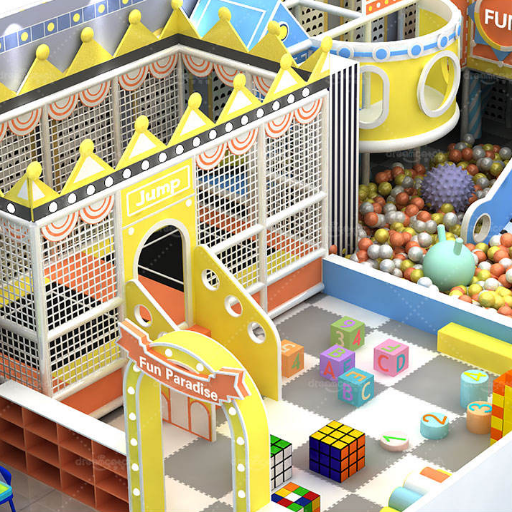
Mall-Anchored FEC, Sri Lanka
Within a medium-shopping-mall setting, operator sought equally compelling toddler and elementary appeal to be good family-day-out anchor. We provided 4,200 square-footspace concept using our six-zone framework to encompass the entire family experience: 22% toddler / 38% active play / 12% climbing / 11% party room / 9% cafe / 8% circulation. Work was approved and identified for no revision before the roll-out of 2 x 40 foot containers, which took 9 days to install on site.
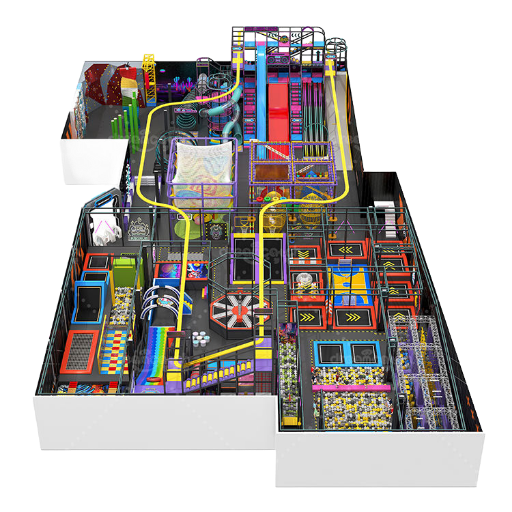
Standalone FEC, Mexico
The investor wanted the FEC to function as a destination rather than a mall add-on, which meant trampoline park and ninja course as the centerpiece attractions. We engineered the trampoline frames in-house and matched the ninja course color palette to the building’s brand identity. The investor also added a laser maze room and a mini golf corner to extend dwell time for older siblings and parents. Layout included three party rooms back-to-back with shared catering access — a configuration that supports peak-weekend party turnover.

Family Restaurant FEC, Poland
A family-friendly restaurant added an indoor playground to extend dwell time and capture weekend brunch traffic. Compact-FEC layout: 50% soft play / 20% ball pit / 18% macaron-themed sensory zone / 12% circulation. Lead time was 28 days due to the simpler product mix; install took 4 days. Restaurant owner reported increased weekend table turnover after the playground opened — exact figures are operator-confidential.
FEC Revenue Benchmark Card (Industry Context)
The numbers below are industry-average benchmarks — your specific FEC’s ROI depends on local market, pricing strategy, and operating discipline. Verify with your local FEC consultant or financial advisor.
$120-200
Revenue per sqft per year (industry benchmark, well-positioned FECs)
2-4 yrs
Average payback period (successful FECs with strong management)
≤30%
Recommended rent-to-revenue ratio (industry rule of thumb)
7-10 yrs
Didi Land equipment service life with proper maintenance
Sources: industry FEC budget guides and operator analyses. Didi Land does not warrant any specific revenue or payback outcome — these are benchmark figures only.
Safety Certifications & Material Specifications
Buyer focus: Procurement · Operations Managers (standards applicability)
Indoor playground astm compliance is the single hardest credential for offshore manufacturers to verify, and the single most important credential for FEC investors to insist on. Every Didi Land project ships with five international certificates — not selective items, every product. Our in-house metal fabrication shop and quality control program were built around these standards from day one.
ASTM F1918-22
EN 1176-1:2017
AS 4685.1:2014
ISO 9001:2015
CE Marking
What Each Standard Covers
ASTM F1918-22
is “Standard Safety Performance Specification for Soft Contained Play Equipment”, which addresses integrity and anticlimbing issues for commercial soft-play equipment. This is the leading North American indoor playground compliance standard at this point.
EN 1176-1:2017
European indoor commercial playgrounds standard is EN 1176-1:2017. It mandates design basic safety and trial method requirements for all permanently installed equipment.
AS 4685.1:2014
Confirm the standards and regulatory requirements that apply to your equipment and installation in the destination market before making compliance claims.
ISO 9001:2015
Quality Management System certification, audited annually. Covers our entire manufacturing facility, from raw material intake through final inspection.
CE Marking
(positive) for inclusion into European EEA territories sales. Collectively, establishing that our playground products are part of the Goods concerned and exhibit conformity with health and safety directives.
Procurement Guide — Pricing, Lead Time & Global Installation
The equipment sourcing discussion Didi Land has with FEC customers is rarely about the equipment line item alone. Total project cost must also include design, manufacturing, sea freight, customs clearance, installation labor and travel, training, and the first year warranty support period. Here is the cost framework Didi Land uses with FEC clients, plus the lead-time sequence you will need to create a credible project schedule.
Pricing Tier Framework (Equipment Only)
Tier
Equipment Range
FEC Size
Typical Configuration
Starter
$25,000 – $50,000
1,500 – 3,000 sqft
Soft play + ball pit + 1-2 themed zones; toddler-focused
Standard
$50,000 – $150,000
3,000 – 8,000 sqft
Full mix incl. trampoline + ninja + adventure + party rooms
Premium
$150,000 – $500,000+
8,000 – 25,000+ sqft
Multi-level structures + interactive zones + STEM + full ninja course
Pricing Factors Framework — What Drives Your Final Quote
Final equipment price within a tier range depends on the following considerations. We try to bring transparency to these variables so project budgets can be managed:
Theming complexity
standard color palette vs fully branded theming with custom graphics work. A macaron-themed compact FEC uses our standard palette; an all-branded theme park-like FEC must pay for custom graphic production.
Structural height
Two-level adventure parks require heavier-gauge steel and additional engineering review. Three-level structures add another 15-25% to the base price for the same footprint.
Interactive technology
Interactive/score-tracking courses with motion sensors, luminous LED reactive flooring, or electronic scoring will require the addition of electronic content over time.
Scope of compliance
Projects requesting specific country certifications or compliance beyond our five standard markets (e.g., specific Latin American or Middle Eastern standards) will pay for additional testing and certification costs.
Project air shipment details
Cost of sea freight fluctuates according to destination port. We do not include these costs in the lump sum quote but provide them as a separate estimate.
Total Cost of Ownership — The Full 5-Year View
FEC investors who focus exclusively on capital expenditure often seriously under-estimate operating costs. The five-year TCO is approximately:
Capex, ops & logistics (year 0)
100% of the equipment line item; approximately 5-10% of the equipment line item for most destinations in sea freight; approximately 5-15% of the equipment line item for site-specific installation and transportation.
Year 1–5 annual maintenance and consumables
Replacement balls for ball pits; EVA mat segments; soft cover repairs; fastener checks. Allocate five to ten percent of equipment cost for each year.
Operations compliance audits and re-inspection
(costs vary by jurisdiction): Most jurisdictions require periodic safety inspection of commercial play equipment. Budget for annual or biennial inspection.
Major refurbishment to sustain market relevance (year 4–6)
Re-theming, re-coloring, or expansion plan.
Lead Time & Installation Sequence
Phase 1. Initial design & quote
5-7 days
Free 3D layout, attraction mix, equipment list, preliminary quote
Phase 2. Design lock & deposit
Variable (your decision speed)
Final design with theme/colors locked; 30% deposit triggers production
Phase 3. Manufacturing
25-35 days
In-house steel fabrication + soft component sewing + final QC + photo/video confirmation before shipment
Phase 4. Sea freight
28-45 days (destination dependent)
Container loading + ocean transit + documentation
Phase 5. Customs clearance
3-10 days
We provide complete shipping paperwork; local customs broker handles clearance
Phase 6. Installation
5-15 days (size dependent)
Our installation team or our certified local partner; site assembly + safety inspection + operator handover
Phase 7. Operator training
1-2 days
Daily inspection routine, repair basics, parts inventory recommendations
Payment, Warranty & Support
Payment structure:
30% deposit on design lock+70% balance payable before shipping (T/T or L/C); Project can be financed for big $100,000 projects by your choice of trade finance provider, must be arranged before building contract award.
Warranty:
Confirm covered components, exclusions, and warranty terms in the written quotation or contract.
After sales support:
24/7 multilingual online support through native speaking coaches. free layout consultants & installation coordinator during your first operating year.
How much does a commercial indoor playground cost for a typical FEC?
For a Starter / Standard / Premium FEC of 3,000-8,000 sqft with the full range of attraction types (soft play + trampoline + ninja course + party rooms) equipment alone is $50,000-$150,000. Expect to pay approximately +5 – 10% sea freight and +5-15% installation labor depending on your country. The Pricing Tier Framework above shows the full Starter / Standard / Premium ranges and what drives the variation within each tier.
What is the typical FEC indoor playground ROI and payback period?
Benchmark mid-to-high density catchment FECs achieve $120-200/sqft/year revenue, and 2-4 year payback under popular management standards. The 30% rent-to-revenue guide line is very common in the industry. Your returns are always determined by local market pricing power, foot traffic & operating excellence. Conduct country-specific feasibility studies prior to investment.
What safety certifications do I need for my country?
Most countries accept either ASTM F1918 (North America) or EN 1176 (Europe and most international markets) as the primary safety standard for soft contained play equipment. Australia and New Zealand require AS 4685. Every Didi Land project ships with all five — ASTM F1918 + EN 1176 + AS 4685 + ISO 9001 + CE — so you have the certificate that matches whichever inspection regime your local authority follows. We also work with you if your country has an additional national-level certification.
How long is the lead time from order to opening day?
Time from initial design quotation to delivering the operator handover is normally 90-130 days, with 5-7 days for initial quotes+ other time required for design lock decision+ 25-35 days for manufacturing+ 28-45 days for sea freight+ 3-10 days for customs clearance+ 5-15 days for installation, the rest for operator training & commissioning. Our recommendation is 4-5 months from design lock to FEC opening.
Do you provide installation support globally?
Yes, we provide installation in two formats: (1) our team travels to your site for direct installation in most major markets, or (2) we provide detailed installation drawings, technical support, and remote video supervision while a certified local installation partner handles physical assembly. Both formats include final safety inspection before operator handover and the same 5-year structural warranty.
Can I customize the theme, colors, and branding?
Custom theming (paint & theme graphics, signage zones, brand fits & shape variations) is included as part of every project – adding to ourselves rather than upgrading product. This is a distinguishing factor that separates us from knock-off modular packages where theme choices are set by the manufacturer. Forward us your style standards and we will match it.
What’s the difference between custom and off-the-shelf indoor playground equipment?
Designed-to-order theme/ FEC equipment (our way) is built specifically to your FEC’s theme and capacity targets—11dimensions all blended together in a unique solution. Off-the-shelf modular kits are pre-designed kits that you choose from a catalog. They arrive more quickly but ensure that you are stuck with the theme and dimensions of the catalog. Custom generally beats off-the-shelf on theming flexibility and cost per square foot; off-the-shelf generally wins on shipping speed and availability of brand- name parts. Our 5-yr TCO comparison above discusses both paths.
What are the maintenance requirements for a Didi Land FEC?
Use the equipment documentation and qualified assessment to set maintenance tasks, inspection intervals, replacement decisions, and budget assumptions for your installation.
Do you offer financing or staged payment terms?
Standard order payment terms are 30% deposit when design lock, balance 70% before shipment through 3rd party T/T, L/C. For projects over $100,000, we partner with our trade finance providers who can offer deferred payment; depending on your credit profile and country. We do not offer finance ourselves but can introduce you to provision providers we have worked on previous FEC projects.
Can the FEC layout host birthday parties and weekend events for the whole family?
Each Category Standard or Premium FEC will have one to three party rooms (each at least 300 sF, acoustically separated from active play areas). Birthday parties exist on a scheduled booking flow schedule and are typically the high margin revenue line in FECs–limited day of booking flow makes weekend days afternoon hours the most profitable hours in a week. We plan the party room such that the entire family can circulate between the play floor, party room and cafe without walking through noisy areas.
How is your equipment different from used FEC equipment available locally?
Secondhand equipment from a closed FEC has three structural disadvantages against custom-built: (1) you take the previous operator’s theme and dimensions; (2) the original certificates may no longer be valid; you will have to get (2a) it inspected again; (2b) the TUV-equivalent service life assessed and documented; (3) remaining service life C7-8 years vs (4) 7-10 years for a new design; used may make sense when delivering a 2- to 4-year long lease pop-up concept or if sales- and financial budgets are very tight for an assortment test. However, with a 5-10 years FEC investment the TCO assessment always makes a point for new design investments and equipment as stated on the comparison table of above. The operator who reportedly saved 100,000 on equipment by buying secondhand and then spent 131,500 more over operating conditions for 3 years is a documented case worth watching out for before making this call.
![Custom Dinosaur Playground Equipment [Design Guide]](https://didiplayarea.com/wp-content/uploads/2026/09/custom-dinosaur-playground-equipment-r2-featured-1-150x150.png)