Entre em Contato com Didi Land



Grande ideias de design de playground com tema oceânico faça mais do que um trepa-trepa azul que pode pintar um recife de coral, transforme uma área de recreação em uma criança pequena, um naufrágio para crianças mais velhas possa escalar e uma história que as famílias voltam para visitar Este guia cobre os princípios de design, elementos marinhos, paletas de cores, zoneamento de idade e lógica de layout que separam um playground com tema oceânico genuinamente imersivo de um playground temático que é apenas adesivos em equipamentos padrão.
Visão geral do design oceânico
| Melhor faixa etária | 11, dividido em 3 zonas (recife toddler, coral médio, enseada pirata mais antiga) |
| Paleta central | Azul profundo → aqua → espuma branca, com acentos de coral/areia |
| Elementos de assinatura | Submarino alpinista, recife de coral, tubarão/escorrega de onda, poço de bola de tesouro |
| Camadas de pegada | 30 m² de canto 100 m² de zona 300 m² carro-chefe |
| Não negociável | Tema integrado à segurança (CPSC /EN 1176 / ASTM), não decoração |
O que faz um playground temático oceânico realmente funcionar? 5 Princípios de design

Um playground com tema oceânico deve permitir que as crianças brinquem em o mar, não em isso.
A distinção entre uma experiência genuinamente envolvente e apenas mais um trepa-trepa colorido depende de 5 fatores-chave de design (ou, se desejar, do teste de imersão oceânica de 5 camadas).Teste cada proposta ou especificação de design de acordo com esses critérios.
O teste imersão oceano 5 camadas
- Imersão 3 D: as crianças devem subir e entrar em recifes esculpidos, submarinos e criaturas marinhas, e não em fotos planas deles.
- Escala de Zona Etária: altura, complexidade e desafio dimensionados para todas as idades, do tot ao tween.
- Jornada Narrativa: crie um arco de história (um farol, um naufrágio, mar aberto, tesouro escondido!) para incentivar visitas repetidas.
- Camadas sensoriais: inclua textura, som e movimento junto com cores para uma experiência mais envolvente.
- Tema Integrado à Segurança: tubarões, corais e tudo mais passam por rigorosos testes de segurança para garantir que não prejudicarão as crianças que usam o equipamento lúdico.
Por que o tema é importante além do visual?
Isso não é sobre estética 't apenas playgrounds com tela fornecem uma das soluções mais poderosas para o problema moderno de crianças' tempo excessivo Com a média de crianças entre as idades de 0-8 cronometrando em cerca de 2,5 horas por dia em telas e adolescentes gastando mais de 7,5 horas, obter crianças ativas ao ar livre é uma questão crítica Orientação de saúde pública do Departamento de Saúde e Serviços Humanos dos EUA coloca a meta em 60 minutos de atividade por dia 1 fantástico playground com tema oceânico pode fazer com que pareça menos exercício e mais uma aventura subaquática.
Desafios físicos, como escalar um recife de coral, equilibrar-se em um carrossel de polvo ou deslizar por uma onda gigante, constroem as habilidades motoras das crianças, o equilíbrio, a coordenação e a consciência espacial, todos ligados ao desempenho aprimorado na sala de aula. Então, você tem o WHAT (crianças sobem e giram em equipamentos lúdicos com tema oceânico), o WHY (desenvolvimento motor e vestibular) e o SO WHAT (uma área de recreação com tema oceânico que os faz voltar para mais).
“Muitos clientes cometem o erro de considerar o ‘tema’ como um acabamento estético e não como um elemento estrutural fundamental.
Um playground oceânico verdadeiramente autêntico é concebido como uma peça escultural primeiro, um acabamento decorativo segundo Se o recife de coral é apenas um alpinista com uma camada de tinta azul, sua história imersiva é perdida para as crianças após sua primeira visita.”
💡 Dica profissional
Ao avaliar projetos de playground ou propostas de fornecedores, sempre solicite renderizações de elementos 3 D. Um fabricante legítimo de temas oceânicos mostrará a escultura detalhada e formas geométricas; um decorador provavelmente mostrará uma amostra de cores em uma página de catálogo.
9 ideias de design de playground com tema oceânico, elemento por elemento

Um conjunto diversificado de vida marinha forma a base de qualquer playground com tema oceânico excepcional Abaixo está uma lista de nove elementos que efetivamente estabelecem o ambiente subaquático Selecione uma combinação de quatro a seis, pois utilizar todos os nove é muitas vezes desnecessário e pode levar a um espaço excessivamente desordenado.
| Elemento | Valor jogar | Faixa etária |
|---|---|---|
| 1. Submarino alpinista tubo | Jogo imaginativo + escalada; detalhes do periscópio e vigia | 4–12 |
| 2. escalador macio de recife de coral | Brincadeira suave infantil, quedas baixas, textura esculpida | 2–6 |
| 3. Shark-jaw /deslizamento em forma de onda | Estridente + “surfing as ondas” narrativa | 5–12 |
| Carrossel de polvo 4./spinner | Jogo vestibular (spin), cooperativo | 3–8 |
| Torre do farol 5 | Peça central da foto-zona; foco do projeto da queda-altura | 4–12 |
| poço de bola da enseada do tesouro 6 | Imersão sensorial; jogo social | 2–8 |
| 7. teto sensorial de águas-vivas | Luz & camadas sensoriais acima | Todas as idades |
| 8. cavaleiro da mola do golfinho | Motion play da criança, equilíbrio | 2–6 |
| 9. Túnel de rastreamento com cauda de baleia | Rastejando, gross-motor, esconde-esconde | 1–4 |
Você pode ver a mistura de alguns são puramente alpinistas, outros são slides, jogo de movimento como see shees e outros springers, a água-viva é o teto de bola, os pits de bola são simplesmente para experiência sensorial em camadas Se você quer que seu tema oceano para crescer em uma enseada pirata para crianças mais velhas, um navio pirata é o elemento ponte natural Se você está compilando um catálogo de produtos para uso comercial, nosso equipamento interno personalizado do campo de jogos do tema do oceano detalhes da página 14 elementos marítimos projetados com referências de cláusulas de segurança correspondentes.
Paletas, materiais e iluminação de cores oceânicas que vendem a ilusão

É aqui que a maioria das ideias de design de playgrounds com tema oceânico dão errado (o) onde você pode ganhar Outras pessoas vão te dizer para “use blues and greens.” Isso não é uma paleta de cores; é uma admissão de derrota Um ambiente oceânico convincente depende de um esquema de cores de três níveis com materiais e iluminação bem escolhidos Aqui estão três paletas que podem funcionar:
| Paleta | História colorida | Melhor para |
|---|---|---|
| Oceano Aberto | Marinha profunda → ciano → cristas de espuma branca | Zonas para crianças mais velhas, narrativas submarinas/de águas profundas |
| Recife Coral | Cicatriz + coral + areia + sotaque amarelo-sol | Zonas de recife para crianças pequenas, creches, espaços de alta energia |
| Porto Pôr do Sol | Amber/laranja + violeta + horizonte marinho | Fotos-zonas, centrais de farol, hotéis |
Um bom exemplo prático: usar um primário ciano brilhante (aproximadamente #00D8FF) com uma cor de destaque quente, como um rico tesouro dourado (#FFD848), instantaneamente oferece uma sensação de “oceano + aventura” sem o mash-up de cores turvas que faz muitos espaços temáticos parecerem desorganizados Selecione um azul dominante, uma água complementar e um acento quente e use essas cores em todos os componentes para criar uma experiência unificada.
A cor só funciona quando os materiais a carregam Na construção interna de soft-play, os materiais do núcleo são espuma EVA para elementos de jogo macio esculpidos, lona de PVC durável para o estofamento e tecido de design e polietileno rotomoldado resistente para itens rígidos, como slides A densidade adequada do material e o acabamento garantirão que seus elementos de recife de coral mantenham sua aparência de coral por anos.
Nota de Engenharia
Certifique-se de que sua espuma EV é 600 kg/m³ de densidade para esculturas macias destinadas a sentar e escalar (muito macio cairá e nunca mais voltará à forma, muito firme parece mais com móveis).Opt para corantes resistentes a UV em qualquer coisa exposta à luz solar e solicitar certificação de classificação de incêndio interno (como Euroclass B-s1, d0 a EN 13501-1).Projete medusas e iluminação de recife para usar LEDs de baixa tensão seguros e selados (leads de baixa tensão) nunca expostos à eletricidade em zonas úmidas.
Projetando para todas as idades: Toddler Reef vs Mid Coral vs Pirate Cove

Uma das falhas de design mais frequentes no jogo interno temático é impor o mesmo oceano em todas as faixas etárias o mesmo tamanho de slide de design mais frequente, a mesma profundidade do poço de bola, a altura da estrutura As crianças ficam sobrecarregadas; as crianças mais velhas ficam entediadas A solução: estruturar o tema do oceano em três zonas etárias distintas que compartilham um esquema de cores e narrativa, mas diferem em escala e dificuldade.
Como você escolhe elementos com tema oceânico para diferentes faixas etárias?
Idade, não estética Se as idades são 1-4 (um “toddler recife”), mantê-lo baixo e suave: tartaruga jogo suave, túnel rastejamento cauda de baleia, golfinhos primavera cavaleiros As quedas devem ser pequenas, cada canto espumado Idade 3-8 (“mid-coral zona”) recebe escalada moderada: carrossel polvo, poço de bola tesouro-cova Idade 5-12 (“older pirata cove”) usa elementos mais elevados: alpinista submarino, deslizamento de mandíbula de tubarão, torre do farol, com algum risco percebido pretendido Manter uma paleta azul consistente e caracteres para uma experiência oceânica unificada, se 2 e 9 anos de idade atender ou apenas um 3-year-old.
Quadro de Decisão: Faixa Etária → Design de Zona
- Para um local voltado para pré-5 anos, pense em escaladores de corais suaves Toddler Reef (Todelos de corais moles), túneis rastejantes, quedas rasas e excelentes linhas de visão.
- Para acomodar toda a faixa etária de 2 a 12 anos, integre todas as três zonas em uma paleta de cores compartilhada, colocando o Recife Toddler adjacente às áreas de entrada/assentos.
- Onde a clientela tem principalmente 6-1 anos, comece com o Pirate Cove e recursos de oceano aberto, um submarino, um escorregador de tubarão e um escorregador de tubarão, mas coloque um pequeno recife para os irmãos mais novos.
Um cenário simples demonstra o valor das zonas: a 60 m2 recife em uma praça de alimentação: Alpinista coral modular, 3 esculturas de tartarugas, 6 almofadas de estrelas do mar, queda de água-viva no teto Em azul de um shopping, as crianças ficam onde estão enquanto os pais comem e ficam por mais tempo É comercialmente bem sucedido porque foi construído para uma faixa etária específica que patrocinou o local.
Construindo a história: transforme elementos em uma jornada oceânica

Pedaços náuticos dispersos não vão cortar; a história vai Os playgrounds oceânicos mais eficazes levam as crianças a uma viagem imaginativa É uma narrativa que nenhum concorrente oferece, fazendo das visitas de primeira viagem o início de uma jornada habitual.
É um arco clássico: sair de um farol, descer um alpinista de coral, atravessar um jardim de polvos e explodir em um poço de bola de enseada de tesouro As crianças podem repetir a jornada com novos desafios ou sequências Trocas sazonais de personagens, adições temáticas e até zonas repintadas podem sustentar o frescor por anos O jogo imaginário de navios piratas pode apoiar o desenvolvimento cognitivo e social da linguagem citado por pesquisadores de educação e pediatria.
💡 Dica profissional
Integrar elementos do tema com o fluxo Uma corrente pintada “ocean,” trilha ou corda “tide line” dá às crianças pistas sobre como progredir, evitando gargalos no slide.
Idéias de design oceânico por espaço: de um canto de 30 m² a um carro-chefe
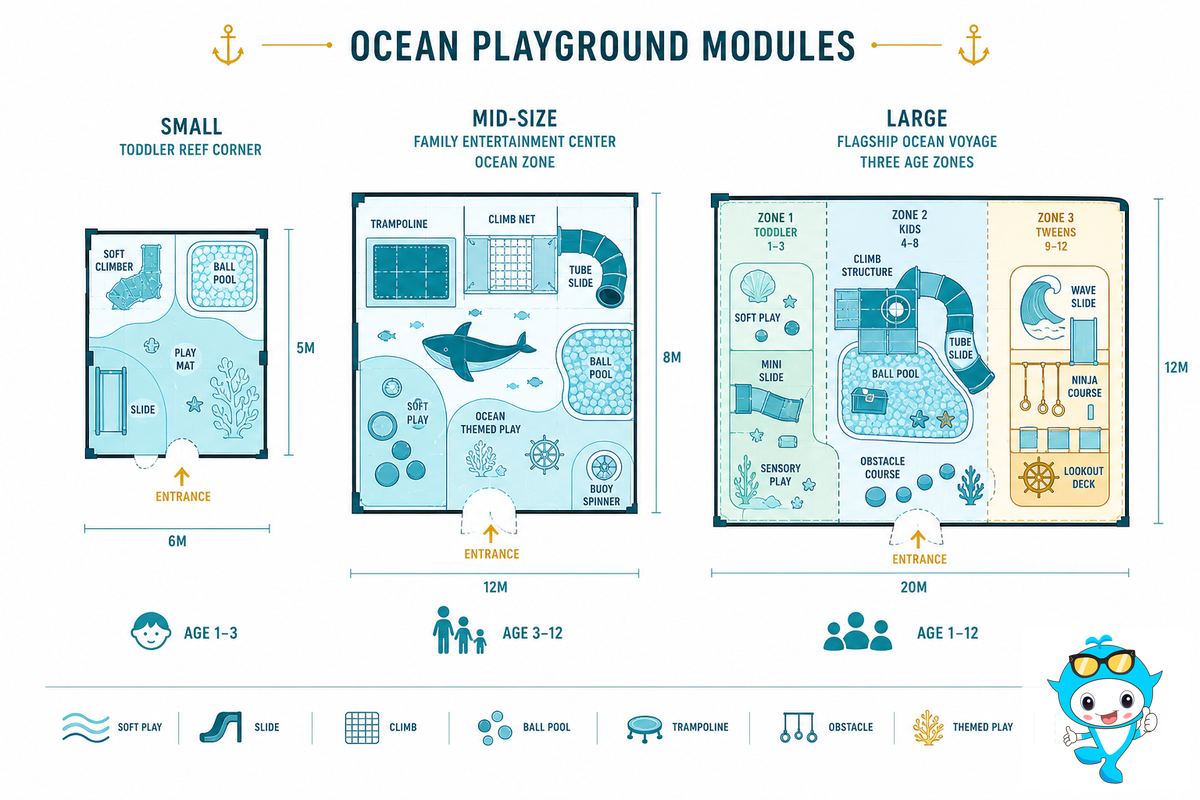
Quer sejam compactos ou extensos, os playgrounds com grandes temas oceânicos podem ser ajustados para o tamanho do espaço A lógica de layout varia com o tamanho do local e como você dimensiona os elementos. Veja como um tema funciona em três escalas espaciais.
| Pegada | Foco design | Conjunto de elementos recomendado |
|---|---|---|
| 30 (Canto do Recife Oddler) 000 m² | Uma âncora + jogo suave; linhas de visão dos pais | Alpinista de recife de coral + jogo suave de tartaruga + almofadas de estrelas do mar + teto de águas-vivas |
| 1000 m² (Zona Oceânica FEC Média) | Central de peças + laço de circulação | Torre do farol + carrossel de polvo + escorregador de tubarão + poço de bola do tesouro + cavaleiros de golfinhos |
| 300 m²+ (Flagship Ocean Voyage) | 3 zonas etárias + jornada narrativa + adjacência F & B | Submarino + navio pirata crossover + recife de vários níveis + teto sensorial completo |
Não importa o tamanho, três regras de layout são válidas: coloque seus filhos mais novos mais próximos do assento e da entrada, mantenha linhas de visão claras para que um adulto possa supervisionar uma ampla faixa etária de crianças e dê à zona central de foto-op espaço suficiente para uma cena impressionante e memorável Nós nos aprofundamos em nosso modelos de plantas de chão de playground indoor, e se você está falando sério sobre ROI, é uma boa ideia ver se playgrounds internos são lucrativos.
Design oceânico sensorial, educacional e inclusivo
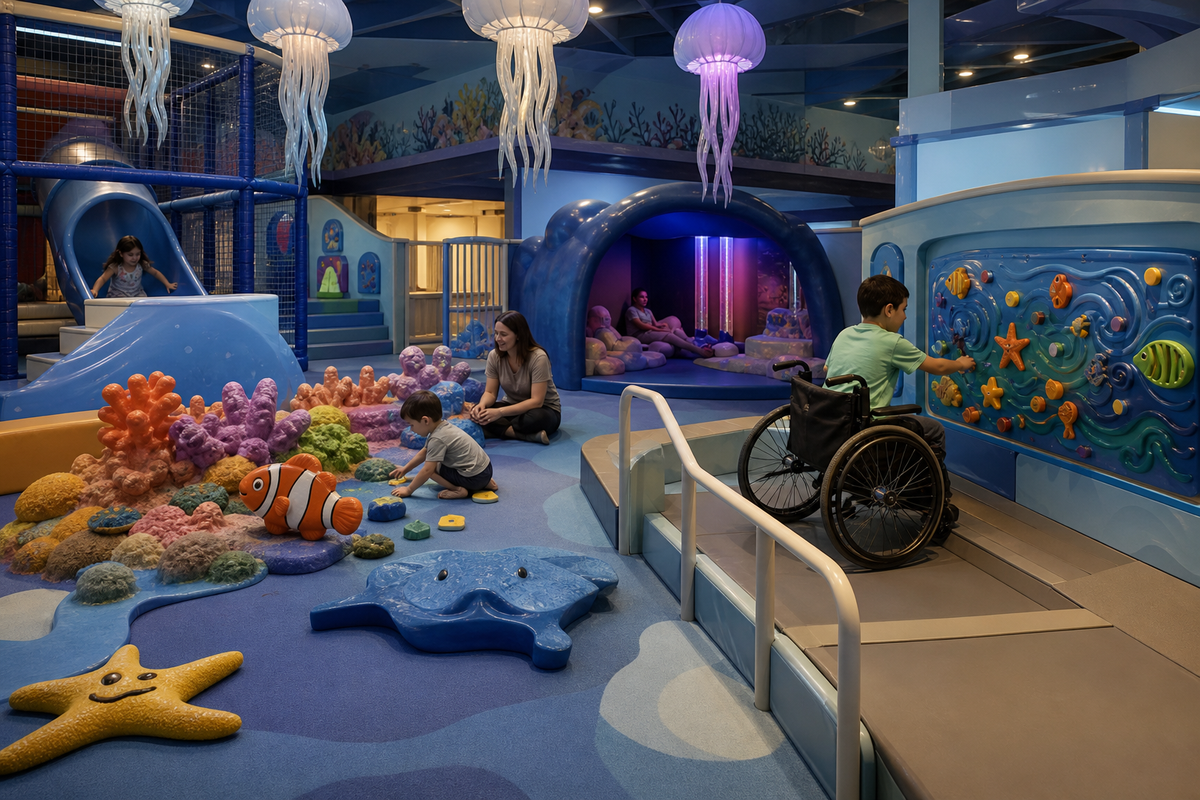
O oceano é uma mina de ouro para duas coisas que os concorrentes muitas vezes perdem: educação e inclusão Além da estética, o mundo marinho oferece oportunidades únicas para envolver crianças de todas as idades, aprendendo e explorando com experiências táteis e maravilhas naturais.
Educacionalmente, isso significa que você pode incorporar tudo, desde painéis de aprendizagem explicando os ciclos de vida das tartarugas marinhas, vistas de deck de observação das costas de um farol e enseadas de tesouro projetadas para jogos de contagem imaginativos, ao mesmo tempo em que promove o desenvolvimento da linguagem A aprendizagem pode se tornar perfeitamente integrada em jogos cooperativos e abertos usando os princípios das filosofias de Reggio Emilia e Montessori.
Do lado da inclusão, leve o design a sério, aderindo aos padrões de acessibilidade, e não apenas aos chavões. Diretrizes de acessibilidade para áreas de recreação exigir acesso a todos os elementos para crianças a partir de dois anos, tanto ao nível do solo como em posições elevadas, com pesquisas indicando que playgrounds inclusivos proporcionam o maior benefício quando a acessibilidade e os elementos sensoriais são parte integrante do design, não um complemento, Características como seções de recife no nível do solo, pontos de transferência de navios piratas e áreas sensoriais calmas atendem às diversas necessidades de crianças neurodiversas, tornando seu playground oceânico acolhedor para todos Associação Internacional de Brincadeiras (IPA EUA) oferece recursos para uma exploração mais profunda de práticas lúdicas inclusivas.
Idéias para jogos aquáticos internos e externos

Onde o playground do oceano vive determina como você projeta seu espaço de jogo do oceano Para espaços internos, use elementos macios e acolchoados, como esculturas de EVA, poços de bola e estruturas de escalada almofadadas com iluminação cuidadosamente controlada para alcançar uma atmosfera autêntica sob o mar que é difícil de replicar ao ar livre Um playground ao ar livre, por outro lado, utiliza estruturas rotomoldadas e de aço duráveis projetadas para suportar os elementos, atendendo a padrões de segurança mais altos.
Depois, há a água real As verdadeiras características da água do splash-pad envolvem diferentes requisitos de construção e manutenção, e é por isso que muitos operadores optam pela abordagem “water play without water” de imitar a sensação do mar em ambientes internos sem litoral, sem a necessidade de água Isso pode envolver a utilização de slides em forma de onda, painéis de bolhas e efeitos de luz azul Devido às diferenças gritantes no material e proteção contra quedas entre soft play interno e estruturas externas, familiarize-se com o relevante padrões de segurança de playgrounds AS 4685 vs EN 1176 vs ASTM F148 em nosso guia.
4 erros de design de temas oceânicos a serem evitados
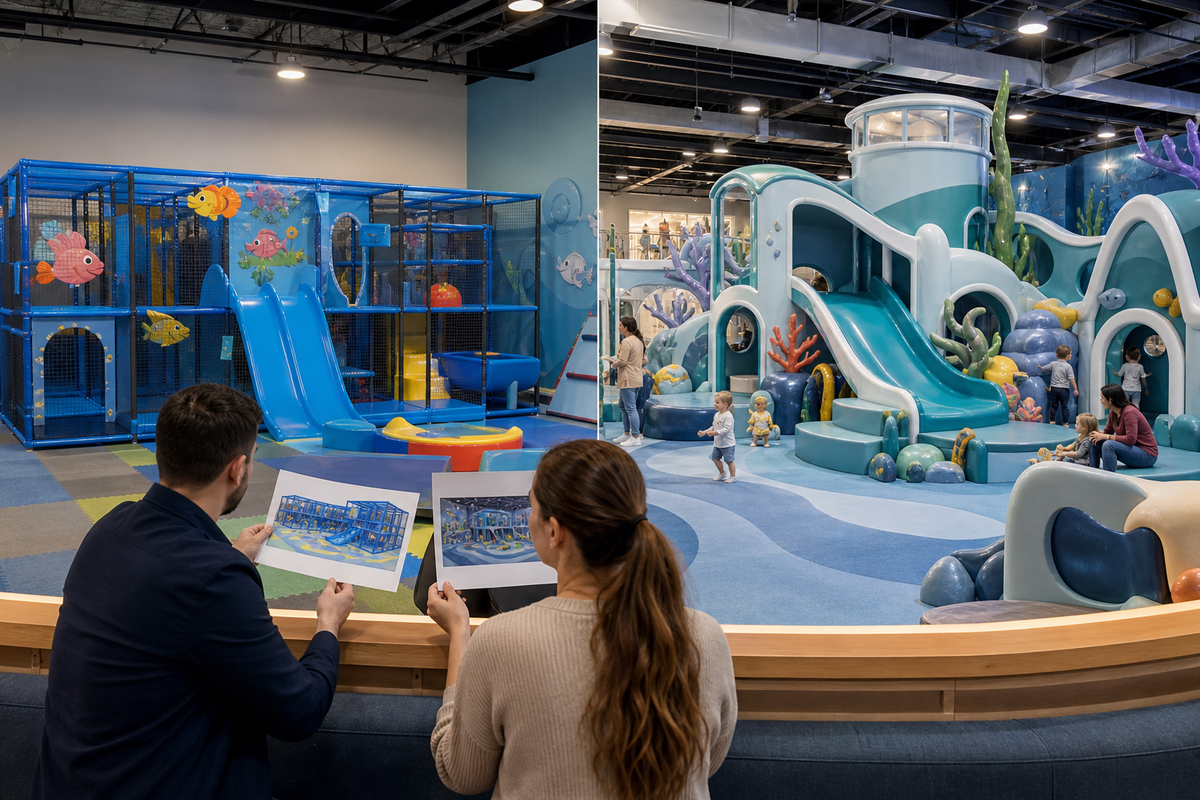
Aqui estão quatro falhas de design que continuamos vendo em projetos inspirados no oceano, ou projetos com temas marítimos Cada um é uma escolha de design e não uma restrição orçamentária, então eles podem e devem ser evitados antes que qualquer coisa vá para a produção.
️ Erro 1 Tema como tinta e adesivos
Seu ginásio de selva pintado de azul médio com alguns peixes de plástico não é um tema do oceano Exija esculturas 3 D de criaturas marinhas que as crianças podem subir, se esconder atrás, etc., e peça renderizações antes de produzir qualquer coisa.
️ Erro 2 Tema que combate a segurança
Dentes de tubarão, pontos de estrela do mar e bordas de ancoragem são fotografáveis, mas não resistem a testes de impacto e aprisionamento Um fabricante respeitável de equipamentos de playground pode identificar onde cada componente se relaciona com as cláusulas EN 1176 ou ASTM F1918, em vez de colocar um logotipo genérico em um folheto de marketing.
️ Erro 3 Escala um para cada idade
Forçar um único oceano em crianças pequenas e jovens de 12 anos aterroriza os mais pequenos e aborrece os grandes. Zoneie-o em uma paleta compartilhada através do recife infantil, meio coral e enseada pirata.
️ Erro 4 No narrativa
Elementos colocados aleatoriamente sem enredo significam que as crianças exploram uma vez e nunca mais voltam Projete uma jornada e planeje atualizações sazonais para que o oceano permaneça fresco até o quarto ano e além.
Tendências de design de playgrounds oceânicos para 2026

Há um grande crescimento no jogo temático, e vale a pena ter certeza de sua direção de viagem, caso contrário, seu design parecerá datado dentro de cinco anos Globalmente, o mercado de centros de diversões indoor era cerca de 54,7 mil milhões de dólares em 2025, projectados para atingir 58,8 mil milhões de dólares até 2026 e 121,5 mil milhões de dólares até 2033, a uma taxa de crescimento anual composta de 10.91TP3 T. É ambientes temáticos e imersivos que estão comandando uma quantidade crescente dessa despesa.
Três tendências de design se destacam para 2026 Primeiro, o design inclusivo e universal está mudando de agradável-para-ter para a expectativa de linha de base (baseline) reforçado pelas diretrizes do Access Board acima, então planeje elementos oceânicos acessíveis ao nível do solo desde o primeiro dia Segundo, a imersão rica em sensoriais está se aprofundando, com projeção, luz interativa e som em camadas sobre escultura física, em vez de apenas tinta mais brilhante Terceiro, materiais sustentáveis e duráveis e ciclos de atualização projetados estão substituindo o rip-and-replace, porque os operadores aprenderam que a novidade temática desaparece mensuravelmente por volta do ano três ao quatro Lembre-se, também, que o CPSC dos EUA atualizou seu Manual de Segurança de Playgrounds Públicos em 2025, 'design contra a edição atual, não uma cópia de uma década.
As instalações temáticas oceânicas Didi Land exporta para mais de 40 países desde 2014 tornam isso particularmente evidente em parques sem litoral e locais urbanos, onde os temas oceânicos “bring the sea inland” estão superando de forma confiável uma estrutura lúdica indefinida em visitas repetidas Se você está pensando em uma construção de 2026, certifique-se de incluir espaço para acessibilidade e orçamento para um kit de atualização (tentando modernizar isso é significativamente mais caro).
Perguntas frequentes: Design de playground com tema oceânico
Qual é a melhor faixa etária para um playground com tema oceânico?
Ver Resposta
Este tema do oceano se traduz bem para uma ampla faixa etária de 1 a 12 anos, dividindo-o em 3 zonas: recife infantil (1-4) que é plano e macio, coral médio (3-8) que permite uma quantidade moderada de escalada e fiação, e enseada pirata mais antiga (5-12) com estrutura de escalada alta e escorregador. Este esquema funciona porque apresenta uma paleta e um conjunto de personagens por toda parte.
Quais cores funcionam melhor para um playground com tema oceânico?
Ver Resposta
Use um azul dominante, uma cor de suporte de água ou cerceta e um acento quente, como coral ou ouro. Repetir esse trio em pisos, redes, painéis e esculturas suaves mantém o mundo do mar legível.
Um tema oceânico pode caber em um pequeno espaço interno?
Ver Resposta
De fato. uma seção de recife infantil (30-100 m2) pode ter sucesso com um foco central (uma estrutura modular de escalada de recife de coral), alguns animais marinhos macios, um piso de almofadas do mar e uma instalação de teto semelhante a uma água-viva para brincadeiras sensoriais aéreas Pequenas zonas oceânicas são cada vez mais populares em shoppings, creches, hotéis e seções voltadas para a família dos restaurantes.
Oceano vs pirata vs selva qual tema de playground é o melhor?
Ver Resposta
Não há um tema universalmente ótimo; depende do seu público-alvo, clima, tamanho do espaço e da história que você deseja que as famílias se lembrem Os temas oceânicos e os temas piratas estão naturalmente ligados porque o covil de um pirata pode se sentar dentro de uma aventura marítima maior, tantas empresas os combinam Os temas da selva e da natureza funcionam bem para locais construídos em torno da vegetação, vida animal ou descoberta ao ar livre O tema do oceano tem uma clara vantagem em shoppings interiores, hotéis, restaurantes e centros de entretenimento familiar, onde uma experiência de jogo de água sem água“ parece nova, fotogênica e mais fácil de manter do que uma zona de respingo real.
Como você torna um playground com tema oceânico seguro para crianças pequenas?
Ver Resposta
Use componentes específicos da idade, como uma área de recreação macia para tartarugas marinhas, almofadas para estrelas do mar ou um túnel de rastreamento para cauda de baleia, projetado especificamente e rigorosamente testado para cumprir as cláusulas para crianças pequenas da EN 1176 e o padrão de jogo independente ASTM F1918. arredonde quaisquer cantos temáticos (por exemplo, dentes de tubarão, âncoras), evite emaranhados de cabeça, pescoço e dedos e siga as diretrizes de espaçamento CPSC para garantir que as quedas ocorram em zonas seguras e acolchoadas.
Os playgrounds com tema oceânico precisam de algo refrescante com o tempo?
Ver Resposta
Sim, a novidade temática tende a diminuir em cerca de três a quatro anos, à medida que os visitantes frequentes esgotam a narrativa original Planeje atualizações na fase de design: troque decalques e capas de soft-play, atualize o esquema de cores e adicione dois ou três novos elementos temáticos para prolongar a percepção de novidade por até sete ou oito anos sem alterar os componentes estruturais.
Pronto para projetar seu oceano?
Traga sua planta baixa, a mistura de idades de seus usuários pretendidos, e seu tamanho de espaço, e Didi Land transformará suas ideias de playgrounds com tema oceânico em um conceito 3 D gratuito com todos os elementos em conformidade com os regulamentos de segurança EN 1176 e ASTM.
Por que escrevemos este guia
Desde 2014, a Didi Land cria e fabrica equipamentos personalizados de playground interno com tema oceânico, entregando-os a mais de 40 países para uso em shoppings, centros de entretenimento familiar, creches e hotéis Os princípios de design, estratégias de zoneamento de idade e considerações materiais mencionados acima decorrem de nosso extenso histórico de instalação, e quando uma reivindicação depende das especificidades do seu local, afirmamos explicitamente, porque a única maneira de fornecer uma resposta precisa à pergunta, “O que funcionará para o meu espaço?” é primeiro revisando sua planta baixa.
Artigos Relacionados
- Plantas de chão de playground indoor: 12 modelos de layout – circulação oceânica e zoneamento para sua construção oceânica
- AS 4685 vs EN 1176 vs ASTM F1487 – padrão de segurança de playground que seu mercado precisa
- Equipamento de playground interno com tema oceânico 14-elemento catálogo marinho completo e processo de design de 6 etapas
- Como iniciar um negócio de playground indoor Guia de inicialização passo a passo 2026
Referências e fontes
- Manual de Segurança em Parques Públicos (2025) • Comissão de Segurança de Produtos de Consumo
- Capítulo 10: Áreas de lazer (Play Areas) Diretrizes de acessibilidade da ADA Ônibus. Placa de Acesso
- Diretrizes de Atividade Física para Americanos, 2a Edição Ônibus. Departamento de Saúde e Serviços Humanos
- Uso de parques infantis inclusivos: um estudo naturalista (PMC)
- Recursos inclusivos do Playground (IPA EUA) Play Association
- Relatório de tamanho de mercado do centro de diversões interno 202 2033 Ên Grande Visualização Pesquisa
![Certificação sustentável de materiais de playground indoor [2026]](https://didiplayarea.com/wp-content/uploads/2026/07/sustainable-materials-certification-en1176-astm-as4685-featured-768x512.png)