تواصل مع ديدي لاند


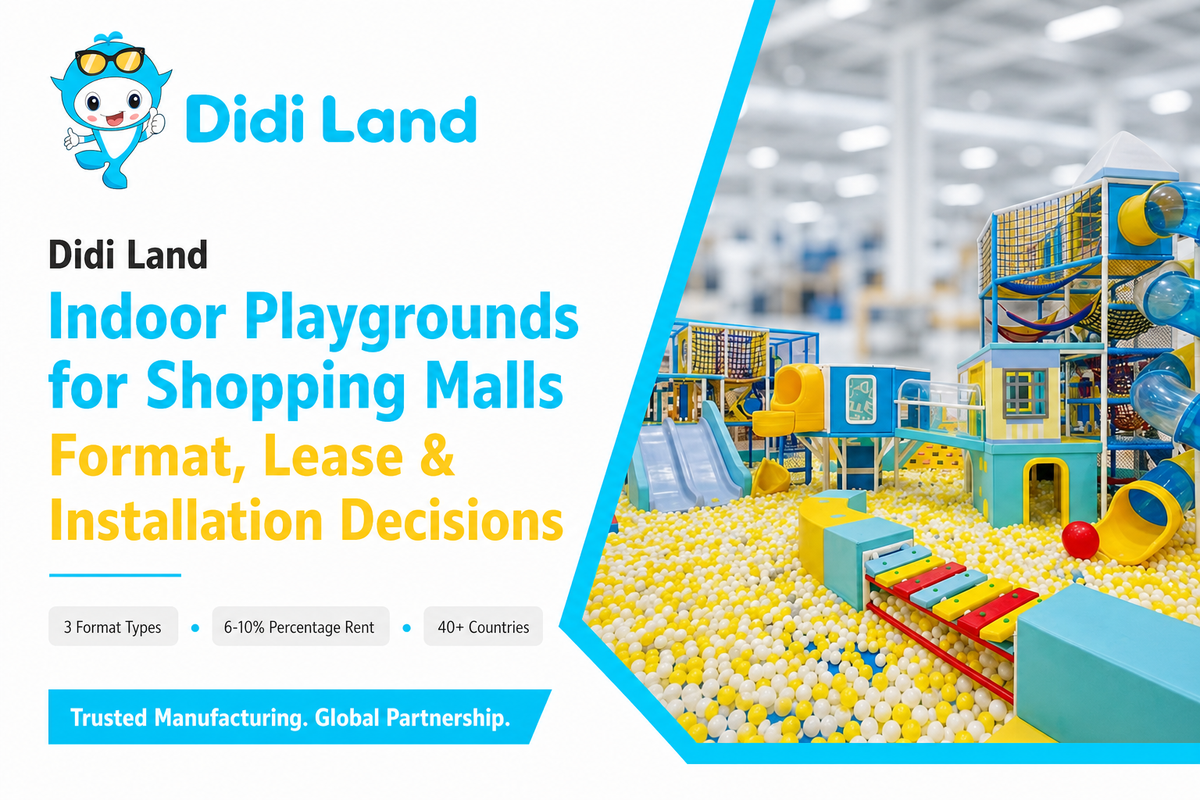
لا يُعد الملعب الداخلي لمراكز التسوق مجرد مرفق للأطفال يُضاف إلى مساحة تجزئة شاغرة، بل هو قرار يتعلق بالتأجير والتشغيل والامتثال، وهو ما تتجاهله معظم أدلة مواصفات المعدات. وبينما سيقدم لكم المورّدون خطوط المنتجات وشرائح الأسعار، يوضح هذا الدليل ما لا يخبرونكم به: أي شكل سينجح فعليًا في مركزكم التجاري، وكيف ينبغي هيكلة عقد إيجار المستأجر، ومن يتولى التركيب، وما تدابير الامتثال للمناطق المشتركة المطلوبة إلى جانب شهادة ASTM أو EN1176.
تندرج القرارات المتعلقة بملاعب الأطفال الداخلية في مراكز التسوق ضمن أربعة محاور تسبق اختيار المعدات: الصيغة التشغيلية (منطقة ألعاب لينة داخل صف المحال مقابل جناح مستقل مقابل FEC يرتكز على الترامبولين)، وهيكل عقد الإيجار (يبلغ الإيجار القائم على نسبة من الإيرادات عادةً نحو 10% من إجمالي الدخل)، ونموذج التركيب، والامتثال لمتطلبات المناطق المشتركة (بما يتجاوز شهادة المعدات).
النقاط الرئيسية
- لا توجد صيغة موحّدة لحساب ROI. تبلغ نسبة الإشغال في مراكز التسوق من الفئة A نحو 95%، بينما يبلغ متوسطها في الفئة B نحو 89%، ولذلك تختلف جدوى الاستثمار في ملعب أطفال داخلي باختلاف فئة المركز التجاري، ولا تخضع لمعادلة واحدة.
- يبلغ بند الإيجار النسبي في عقد إيجار مستأجر منطقة اللعب عادةً نحو 10% من إجمالي الدخل فوق نقطة فصل متفق عليها، وفقًا للممارسات المتبعة في قطاع الإيجارات التجارية.
- يمكن لمركز التسوق اختبار ملعب أطفال داخلي قبل الالتزام بعقد إيجار طويل الأجل وأعمال التجهيز، وذلك باختيار تركيب مؤقت أو منبثق.
- لا تعادل شهادة المعدات (ASTM F1487، EN 1176) الامتثال لمتطلبات المناطق المشتركة؛ إذ يشكل كل من إتاحة الوصول وفق ADA، ومسارات الخروج وفق كود الحريق، وتأمين المسؤولية العامة طبقة امتثال مستقلة على مستوى مركز التسوق.
- مع وصول تكلفة النقرة CPC لعمليات البحث عن خدمات تركيب معدات الملاعب إلى نحو $28، توازي أهمية اختيار نموذج التركيب أهمية قرارات اختيار المعدات.
مواصفات سريعة
| النطاق المعتاد للمساحة المشغولة | من 80 م² (ركن بجوار منطقة المطاعم) إلى 1,500 م² (جناح مستقل) |
| الإيجار النسبي المعتاد | نحو 10% من إجمالي الدخل فوق نقطة فصل متفاوض عليها |
| تأمين المسؤولية العامة المعتاد لمركز FEC | $1M لكل واقعة / $2M إجمالًا (حدود شائعة في القطاع) |
| طبقات الامتثال الحاكمة | شهادات المعدات (ASTM F1487/EN 1176) + قواعد المناطق المشتركة (ADA Title III، NFPA 101) — منفصلة، وكلتاهما مطلوبة |
| المدة المعتادة للتركيب | 30-90 يومًا حسب الشكل ومدى تعقيد التصنيع المُخصّص حسب الطلب |
لماذا تضيف مراكز التسوق ملاعب أطفال داخلية الآن
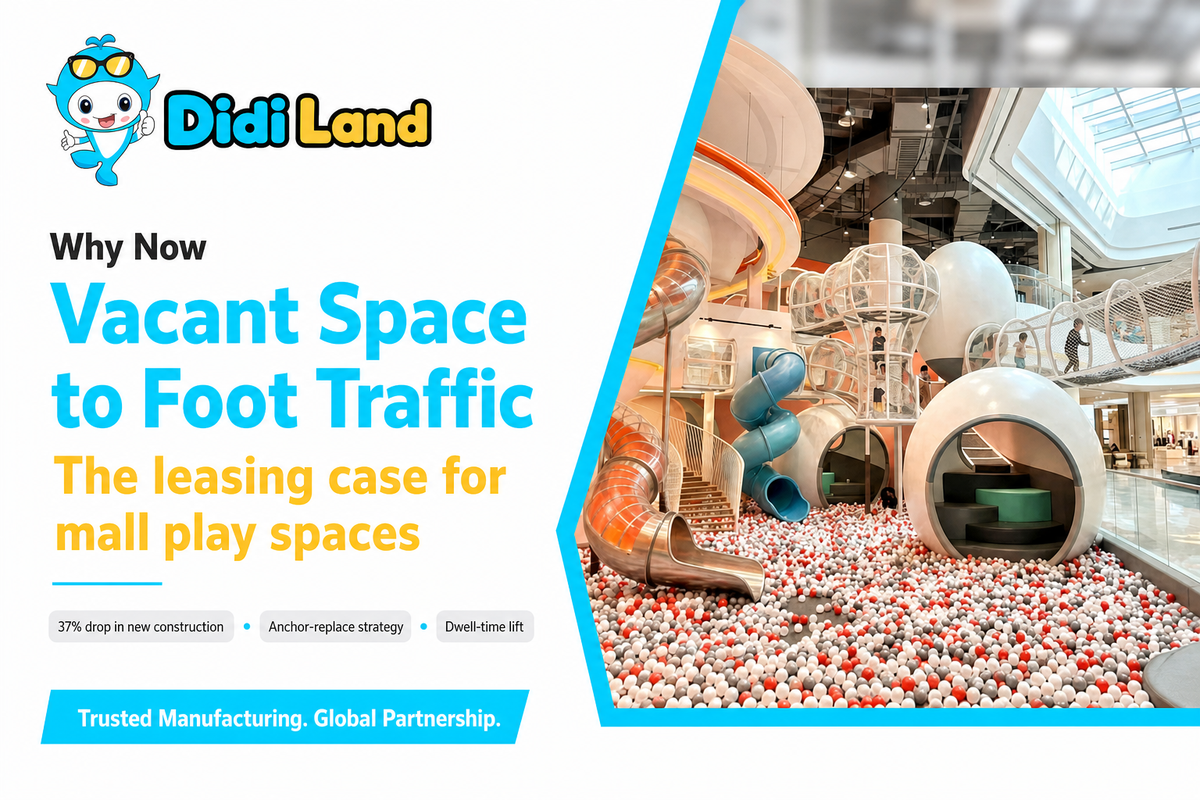
تركّب مراكز التسوق ملاعب أطفال داخلية في المساحات الشاغرة لتحويل عبء التأجير إلى حركة زوار ومدة بقاء أطول؛ فهو قرار تأجيري أولًا ومرفق للأطفال ثانيًا. ويتوقع المحللون انخفاض إنشاء مساحات التجزئة الجديدة بنسبة 37% في 2026، مع استمرار قوة طلب المستأجرين وأنشطة التوسع، ما يجبر المالكين على استخلاص قيمة أكبر من المساحات الحالية بدلًا من انتظار معروض جديد.
لا تعني المسألة أن ملاعب الأطفال الداخلية «تتغلب» على تجارة التجزئة عبر الإنترنت؛ إذ يبيّن تقرير مبيعات تجارة التجزئة الإلكترونية ربع السنوي الصادر عن U.S. Census Bureau أن التجارة الإلكترونية ارتفعت في الربع 1 من 2026 بنسبة 9.8% على أساس سنوي، مقابل 3.9% لإجمالي تجارة التجزئة. والطرح الأكثر واقعية هو الاستحواذ على حصة أكبر من زيارات المتاجر الفعلية المتبقية، لا عكس التحول الأوسع نحو الإنترنت.
ومع ذلك، لا تحقق كل العقارات الزيادة نفسها. ولا تتفق الجهات المتخصصة في رصد عقارات التجزئة على رقم دقيق، وقد تختلف الأرقام المنشورة بفاصل ربع سنة من مزوّدي بيانات مختلفين اختلافًا ملحوظًا، لكن النمط العام يظهر باستمرار: تميل مراكز التسوق من الفئة A إلى تسجيل إشغال في نطاق منتصف 90 بالمئة، بينما تسجل عقارات الفئة B في الغالب نسبًا ضمن أواخر نطاق 80 بالمئة، وتكون عقارات الفئة A أعلى إشغالًا بصورة موثوقة من عقارات الفئة B. لذا، تعاملوا مع أي نسبة مئوية منفردة مقتبسة بوصفها توضيحًا لهذا الفارق، لا رقمًا دقيقًا متفقًا عليه عالميًا. وغالبًا ما تتجاوز مبيعات الفئة A مبلغ $500 لكل قدم مربع، بينما تقع مبيعات الفئة B عادةً ضمن نطاق $350-$500 لكل قدم مربع. وبالنسبة إلى مركز تسوق يقترب من الإشغال الكامل ويحقق مبيعات قوية لكل قدم مربع، يضيف ملعب أطفال داخلي وقت بقاء أطول بكثير وإنفاقًا إضافيًا أكبر مقارنةً بمركز من الفئة B أو C، حيث يمكن استخدام استثمار مماثل لمعالجة وحدة شاغرة وتحسين مزيج المستأجرين. وقد لخّص أحد المخضرمين في القطاع الأمر بوضوح: “السياح لا يحافظون على استدامة مركز التسوق؛ بل يفعل ذلك الإقبال اليومي من منطقة الاستقطاب، وهذا لا ينطبق دائمًا على كل عقار.”
⚠️ مفهوم شائع خاطئ
إن النظر إلى ملعب الأطفال الداخلي باعتباره مجرد «مرفق للأطفال» يقلل من قيمة قرار التأجير نفسه. فقد يكون أداة فعالة لفرق ملكية العقارات والتأجير التي تسعى إلى استبدال مستأجر وتحسين مزيج المستأجرين واستقطاب حركة الزوار. فالمعدات هي العنصر المرئي، لكن هيكل عقد الإيجار واقتصاديات المساحة هما ما سيحددان ROI النهائي. وستشجع المساحة المُدارة جيدًا الأطفال والبالغين المرافقين لهم على قصد مركز التسوق والاستمتاع بالأنشطة المتاحة والبقاء مدة أطول، وربما التسوق من المتاجر القريبة في طريق المغادرة.
الخلاصة الرئيسية: ابنوا دراسة الجدوى لمركزكم التجاري وفق فئة العقار ونطاق استقطابه، لا على حجة عامة من قبيل «زيادة حركة الزوار»، لأن ROI سيختلف كثيرًا بين مركز من الفئة A يكاد يكون كامل الإشغال ومركز من الفئة B يعاني كثرة الشواغر.
أي شكل يناسب مركزكم التجاري؟ منطقة ضمن صف المتاجر أم جناح مستقل أم مركز FEC يرتكز على الترامبولين
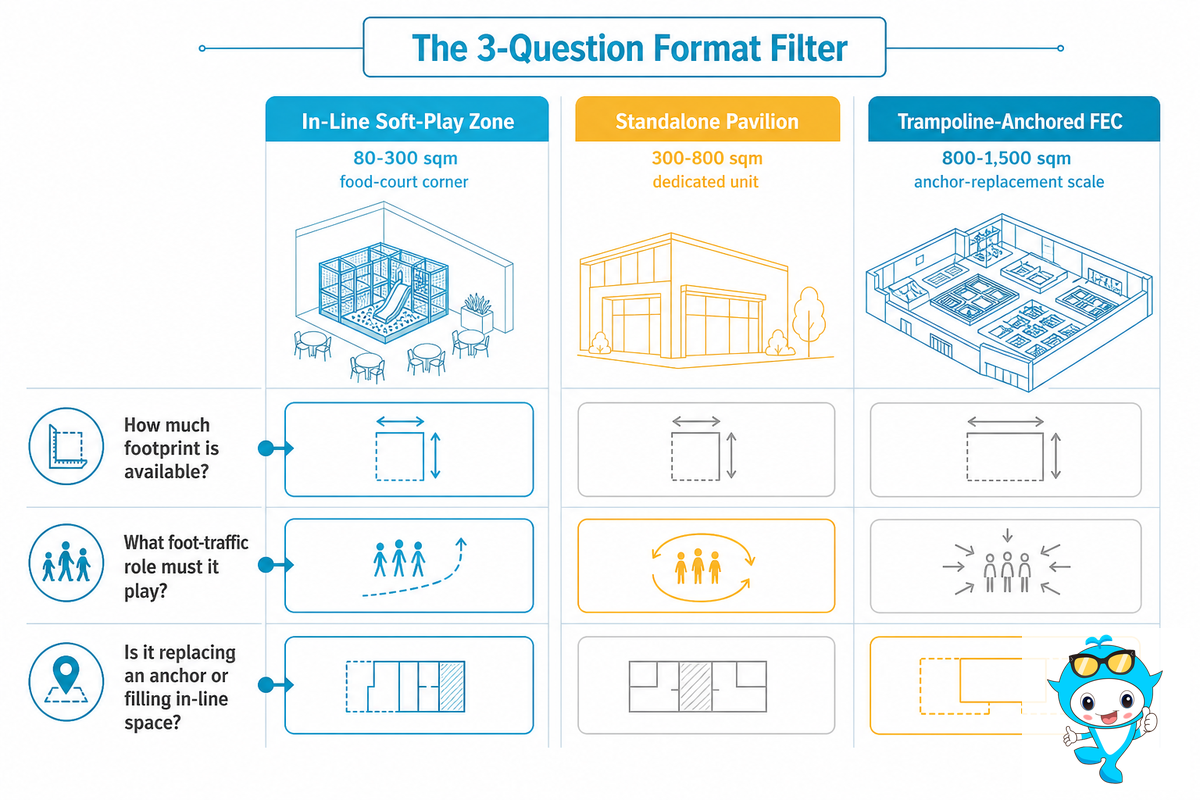
قبل النظر في أي معدات، يجب على مركز التسوق تحديد نوع منطقة اللعب التي سيعتمدها فعليًا. وهناك 3 فئات عامة للشكل: منطقة ألعاب لينة صغيرة ضمن صف المتاجر (صغيرة)، وجناح مستقل متوسط الحجم، ومركز ترفيه عائلي كبير يرتكز على الترامبولين. ويعالج كل منها مشكلات عقارية مختلفة؛ أما اختيار الشكل الخطأ فيعني هدر المساحة وإضعاف الموقف التفاوضي بشأن عقد الإيجار.
نطلق على هذا النهج اسم «مرشّح الشكل القائم على 3 أسئلة»: ويتطلب طرح 3 أسئلة بسيطة بالترتيب لتحديد الشكل قبل مناقشة أول قطعة من المعدات.
مرشّح الشكل القائم على 3 أسئلة
| السؤال | إذا كانت الإجابة… | فإنها تشير إلى |
|---|---|---|
| ما مقدار المساحة الشاغرة المتصلة فعليًا؟ | أقل من 200 م²، بجوار منطقة المطاعم | منطقة ألعاب لينة ضمن صف المتاجر |
| هل المساحة وحدة شبكية إنشائية كان يشغلها مستأجر رئيسي أم قطعة مستقلة شاغرة؟ | 250–600 م²، وحدة شبكية إنشائية كان يشغلها متجر متعدد الأقسام | جناح مستقل |
| هل تحتاجون إلى مرفق ترفيهي جاذب للزوار من أجيال متعددة يعتمد على حفلات أعياد الميلاد؟ | نعم، مع توافر 500+ م² | مركز FEC يرتكز على الترامبولين |
نادرًا ما تتناسب متطلبات ارتفاع السقف وتحمل الأحمال للترامبولين مع ركن بجوار منطقة المطاعم. كما أن حشر مشروع مركز FEC متكامل في المساحة الصغيرة المتاحة ضمن صف المتاجر سيجذب حركة المشاة بعيدًا عن بقية مركز التسوق، لكنه سيفوّت تدفق إيرادات غرف الحفلات الذي يعتمد عليه هذا الشكل. ويؤدي اختيار الشكل الصحيح منذ البداية إلى تجنب إعادة التفاوض على عقد الإيجار بعد أن تكشف مراجعة الأنظمة الميكانيكية ومسارات الخروج في حالات الحريق عن مشكلة إنشائية.
ينبغي أن تتوافق خيارات المعدات مع قرار الشكل، وليس العكس: يناسب ركن بجوار منطقة المطاعم هياكل التسلّق اللينة وزحليقة قصيرة بحجم مناسب للأطفال الصغار، بينما قد يضم الجناح المستقل ألعاب تسلّق متعددة المستويات وزحاليق أطول وحتى لعبة ترفيهية تعمل بالعملات عند المدخل لتكون علامة واضحة للمنطقة من مسافة بعيدة. ويقود اختيار الشكل الصحيح بصورة طبيعية إلى اختيار بسيط للمعدات بدلًا من التخمين. ولتقدير الحجم، يصنّف ICSC/CoStar مراكز التسوق الإقليمية ضمن مساحة إجمالية قابلة للتأجير GLA تقارب 400,000-800,000 قدم مربع، وتضم 40-80 متجرًا، مقارنةً بمساحة إجمالية قابلة للتأجير GLA تبلغ 80,000-250,000 قدم مربع للمراكز ذات الطابع التصميمي/الترفيهي، ما يوضح الحجم الواقعي لمنطقة اللعب ضمن إجمالي GLA لديكم.
💡 نصيحة مهنية
يُعد مركز FEC القائم على الترامبولين فئة مستقلة، وليس مجرد ملعب أطفال كبير. يدرج دليل CPSC لسلامة ملاعب الأطفال العامة الترامبولين ضمن المعدات غير الموصى باستخدامها في ملاعب الأطفال العامة، لكن هذه الإرشادات تخص تحديدًا الملاعب البلدية وملاعب الحدائق؛ أما أجهزة الترامبولين المصممة للمنشآت المؤسسية، بما فيها مواقع مراكز التسوق، فتخضع لمعيار ASTM F2970. وتأكدوا من التزام المورّد وفريق التركيب لديكم بمعيار F2970، لا بالإرشادات العامة لملاعب الأطفال العامة.
الخلاصة الرئيسية: حدّدوا الشكل وفق المساحة الشاغرة المتاحة وأنماط حركة العملاء قبل اختيار المعدات.
المعدات التجارية الجديدة مقابل المستعملة: ما الذي يصمد فعليًا في مركز تسوق كثيف الزوار؟
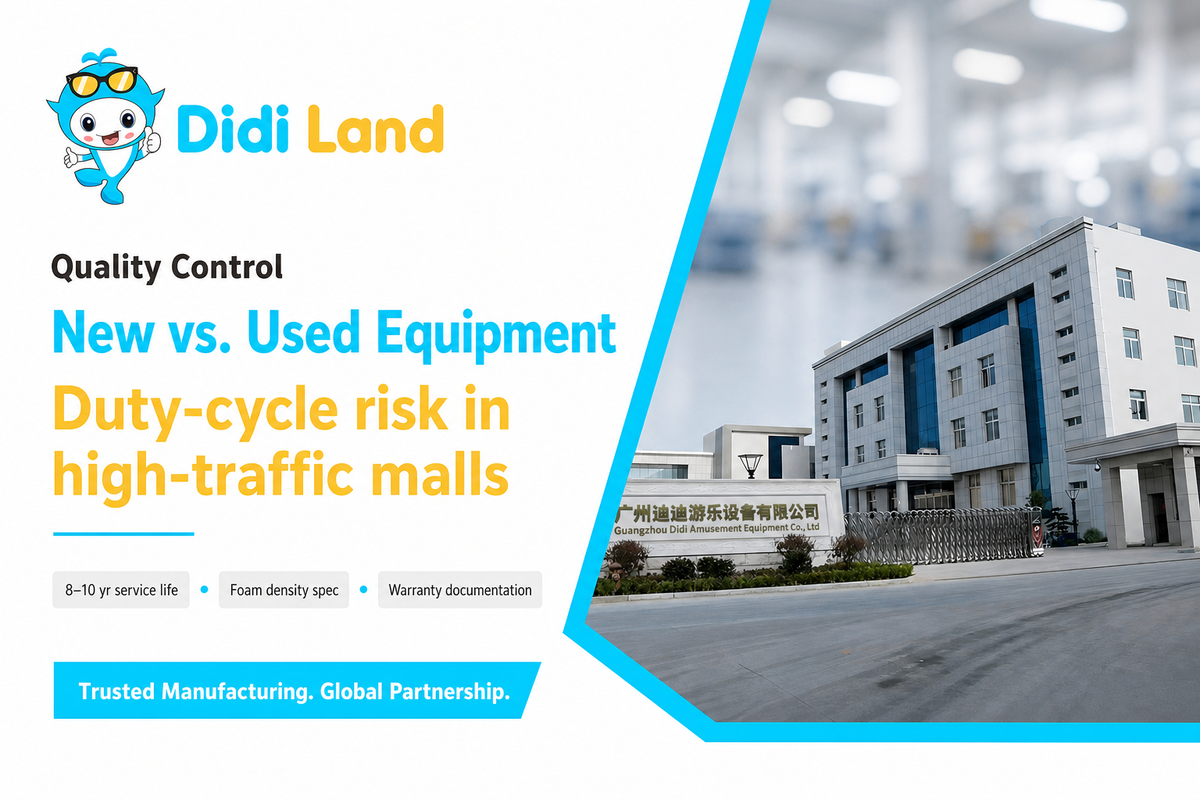
تكون التكلفة الأولية لمعدات ملاعب الأطفال التجارية المستعملة أقل، وهو أمر جذاب لمركز تسوق تستقبل منطقة اللعب فيه 50-1,000 طفل يوميًا وتواجه ميزانية إطلاق محدودة. غير أن الاستخدام التراكمي، لا العمر الزمني للمكوّن، هو ما يُهلك المعدات، من كثافة الإسفنج وسلامة غلاف PVC إلى إجهاد الإطار الفولاذي. وقد تكون القطعة التي تبدو مثالية في الصورة قد استنفدت بالفعل معظم عمرها التشغيلي.
أيًا كان الشكل الذي تختارونه، ينبغي لمعدات اللعب نفسها أن تبرر المساحة التي تشغلها: محطات لعب تفاعلية، وجسر أو جسران لتنمية الحركة الكبرى، وهياكل لعب تخيلية تدعو إلى الاستكشاف والإبداع بدلًا من إطار تسلّق ثابت واحد. كما يحافظ وجود دوّامة لينة أو عنصر دوّار لأصغر الزوار على إحساس أن مخطط التوزيع وجهة مقصودة ولمسة سحرية لطفل يبلغ 5 سنوات، لا غرفة انتظار، وتوحي المناطق الملونة والمحاطة جيدًا بالأمان للوالد الذي يمر بجوارها، وهو غالبًا ما يدفع الأسرة إلى الدخول فعلًا بدلًا من مواصلة السير. وبعد التركيب، لن تبعث أي من هذه العناصر على الثقة إذا كانت مرافق المنطقة المشتركة في مركز التسوق دون المستوى؛ فوجود دورة مياه عائلية وغرفة رضاعة قرب المدخل يشير إلى بيئة صحية تضع الأسرة أولًا، ومصممة لألعاب الأطفال ولراحة الآباء المرهقين، لا مجرد ممر لتصريف طاقة الأطفال مدة 20 دقيقة قبل انتقال المستأجر التالي إليه.
✔ معدات جديدة من الدرجة التجارية
- تغطية ضمان كاملة للإطار والمواد الاستهلاكية
- تصنيف معروف لدورة التشغيل يتوافق مع حركة الزوار المتوقعة لديكم
- وثائق شهادة سارية لمراجعة شركة التأمين ومسؤول الإطفاء
⚠ معدات مستعملة / مملوكة سابقًا
- عادةً لا يكون العمر التشغيلي المتبقي موثقًا
- نادرًا ما تنتقل وثائق الضمان والشهادة إلى المالك الجديد
- قد يزيد أثر دورات التشغيل المجهولة من مخاطر الاكتتاب التأميني
- تحققوا من طراز أي وحدة مستعملة ومصنّعها بالرجوع إلى قاعدة بيانات CPSC للاستدعاءات وتحذيرات سلامة المنتجات قبل الشراء؛ فالوحدة المستدعاة تُبطل أي حجة تأمينية لإعادتها إلى الخدمة
ذكر مشغّل في منتدى بريطاني للشركات الصغيرة أن هوامش ربح الألعاب اللينة ضيقة جدًا، لكن الشركات التي تستمر تنجح باختيار الموقع الصحيح، لا بتحقيق أكبر وفر ممكن في نفقات المعدات. وهذا تؤكده خبرة المصنّعين الميدانية.
«نحدّد كثافة الإسفنج ومواصفات غلاف PVC لتحقيق عمر تشغيلي يبلغ 8-10 سنوات عند استقبال 50-1,000 طفل يوميًا. أما شراء معدات مستعملة دون سجلات لدورة التشغيل فهو مجازفة بالأرقام ذاتها التي تحدد متى ستتعطل اللوحة، لا ما إذا كانت ستتعطل.»
الخلاصة الرئيسية: قارنوا التكلفة الأولية للمعدات المستعملة بدورة تشغيلها المتبقية المجهولة. يرتبط النجاح بعقد الإيجار والموقع المناسبين أكثر من ارتباطه بتوفير المال في المعدات.
من يتولى التركيب: فرق المنشأة الداخلية أم فرق تركيب المورّد أم المقاولون المحليون المرخّصون؟
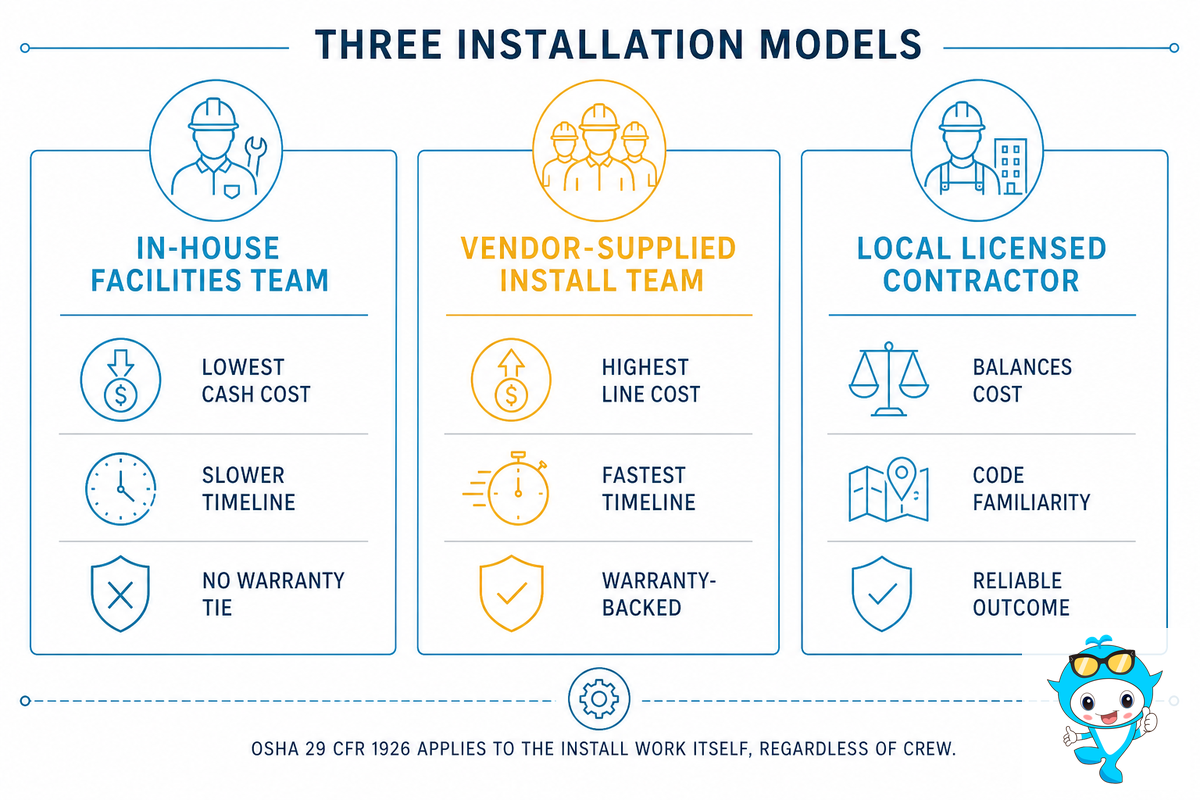
يمثل التركيب نقطة قرار حقيقية تدرجها معظم أدلة الشراء ضمن «مسؤولية المورّد»، لكن الطلب في البحث يروي قصة مختلفة؛ إذ يشكل متوسط CPC لعمليات البحث عن تركيب معدات الملاعب ($28) مؤشرًا قويًا على أن كثيرًا من المشترين يوازنون بنشاط بين خيارات فرق التركيب، ولا يكتفون بإحالة المورّد.
| الطراز | الأنسب له | المفاضلة |
|---|---|---|
| فريق مرافق داخلي | مناطق ألعاب لينة صغيرة ضمن صف المتاجر بتركيب معياري | أقل تكلفة نقدية؛ مدة تنفيذ أطول؛ لا يرتبط الضمان بجودة التركيب |
| فريق تركيب يوفّره المورّد | أجنحة مستقلة أو هياكل متعددة المستويات أو ذات طابع تصميمي | الأسرع ومدعوم بالضمان؛ أعلى تكلفة كبند مستقل |
| مقاول محلي مرخّص | المشروعات التي تحتاج إلى اعتماد الامتثال لكود البناء المحلي إلى جانب التجميع | يوازن بين التكلفة والإلمام بالكود؛ ويتطلب مخططات التركيب الهندسية من المورّد وضمان جودة عن بُعد |
الخلاصة الرئيسية: ضعوا ميزانية تركيب الطراز كبند مستقل ومحرك للجدول الزمني. وفي كل الحالات باستثناء ركن الألعاب اللينة المعياري في مركز التسوق، فإن تولّي المورّد للتركيب أو الإشراف عليه سيحمي ضمانكم عند نقاط التعطل الأكثر احتمالًا، ويظل أي فريق تركيب تستخدمونه ملزمًا بمعايير OSHA لسلامة أعمال الإنشاء (29 CFR 1926) في أعمال التركيب نفسها، بمعزل عن شهادة المنتج الخاصة بالمعدات.
دليل عقد إيجار المستأجر الرئيسي: هيكلة عقد الإيجار لمنطقة لعب في مركز تسوق
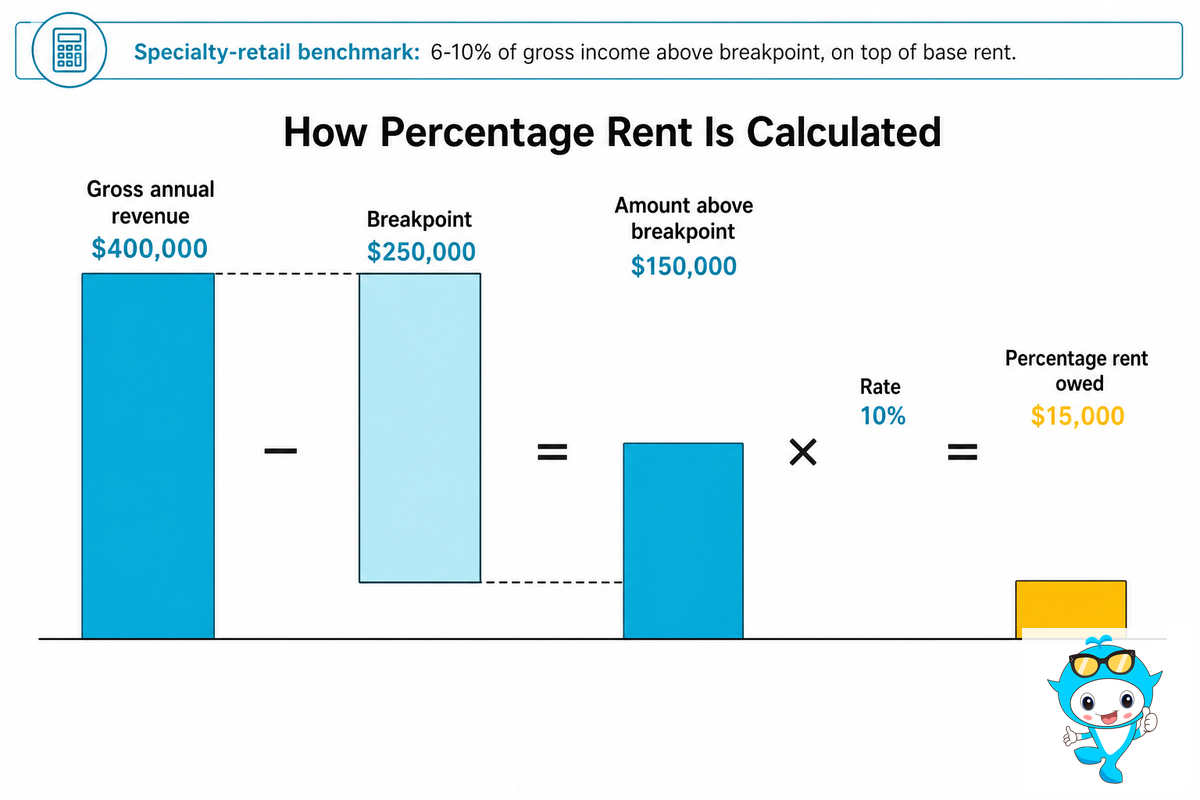
هنا يكتسب فريق التأجير، لا فريق المرافق، موقفه التفاوضي فعليًا. وقد يغفل المورّدون ذلك، لكنكم تستخدمون مصطلح «المستأجر الرئيسي» بالمعنى الذي قد يستخدمه فريقكم العقاري، أي مستأجر بحجم الجهة التي ستحل محل وحدة شبكية إنشائية يشغلها مستأجر رئيسي حالي أو يُنقل إليها. وسندرج منطقة لعب داخل صف المتاجر في مركز التسوق ضمن هذه المفاوضات، ولكن بصفتها مستأجرًا متخصصًا بدلًا من مستأجر رئيسي لوحدة شبكية إنشائية. وفي كلتا الحالتين، سيُتفاوض مع مستأجر منطقة اللعب، سواء كان علامة تجارية مملوكة تُدار مباشرةً أو مشغّلًا متخصصًا مستأجرًا، مثل أي مستأجر متخصص آخر: بموجب عقد إيجار مرتبط بالإيجار الأساسي والإيجار النسبي وبدل تحسينات المستأجر (TI).
هذه الفئة التالية من المفاوضات هي ما تفشل الغالبية العظمى من المشغّلين في تسعيره بصورة صحيحة. ولا تتوافر بيانات يسهل الوصول إليها لتحديد أعراف القطاع لاتفاقيات الإيجار النسبي الخاصة تحديدًا بمستأجري ملاعب الأطفال الداخلية أو مناطق اللعب، لذا تعاملوا مع الإيجار النسبي المذكور هنا بوصفه معيارًا مرجعيًا لتجارة التجزئة المتخصصة لاختبار سلامة صفقتكم، لا معيارًا للقطاع. وعادةً ما يدفع المستأجرون المتخصصون 6-10% من إجمالي دخلهم فوق «نقطة فصل طبيعية» محددة، حيث يبدأ تراكم الإيجار النسبي إضافةً إلى الإيجار الأساسي. وإليكم آلية تطبيق الحد الأعلى من هذا النطاق: إذا بلغ إجمالي الإيرادات السنوية لمستأجر منطقة اللعب من رسوم الدخول والعضويات والحفلات $400,000، ونص عقد الإيجار على 10% من إجمالي الدخل فوق نقطة فصل قدرها $250,000، فسيدين المستأجر بإيجار نسبي سنوي قدره 10% × ($400,000 − $250,000) = $15,000، إضافةً إلى الإيجار الأساسي. وهذا حساب ينبغي لمدير التأجير لديكم إجراؤه باستخدام النسبة المطلوبة قبل الموافقة أصلًا على أي رقم لنقطة الفصل، لا بعد الاطلاع على أرقام مبيعات المستأجر الفعلية من السنة 1.
| البند | النطاق المعتاد | ما يعنيه لمركز التسوق |
|---|---|---|
| الإيجار النسبي | نحو 6-10% من إجمالي الدخل فوق نقطة الفصل (معيار مرجعي لتجارة التجزئة المتخصصة) | عائد إضافي إذا تجاوز المستأجر التوقعات؛ ويتطلب تقارير مبيعات مدققة |
| الحد الأدنى المضمون (الإيجار الأساسي) | يُحدّد بمعزل عن الإيجار النسبي | حد أدنى للدخل بصرف النظر عن أداء المستأجر |
| بدل تحسينات المستأجر (TI) | يُتفاوض عليه وفق تكلفة التجهيز، ويكون أعلى للمساحات المشغولة التي تستلزم تركيب نظام إخماد حريق | يعوّض تكلفة التجهيز؛ وترفع المساحات المشغولة الأكبر (راجعوا قسم المناطق المشتركة أدناه) هذا الرقم |
| عمولة التأجير | نحو 4-8% من إجمالي قيمة الصفقة | تكلفة إتمام الصفقة للوسيط/فريق التأجير، وتُرصد لها ميزانية منفصلة عن الإيجار |
الخلاصة الرئيسية: قبل توقيع عقد الإيجار، احسبوا الإيجار النسبي المستحق بناءً على نقطة فصل معقولة، إذ قد يعني الفرق بين نقطة فصل محددة عند $200,000 وأخرى عند $300,000 عشرات الآلاف من الدولارات سنويًا كعائد إضافي لمركز التسوق، رغم تطابق نتائج مبيعات المستأجر. وأيًا كان جانب التفاوض الذي تمثلونه، تمثل الإرشادات العامة الصادرة عن U.S. Small Business Administration بشأن المفاضلة بين الإيجار والشراء اختبارًا منطقيًا مفيدًا لهيكل عقد الإيجار التشغيلي قبل أن يراجع المحامي الشروط النهائية.
ما بعد شهادة المعدات: طبقة الامتثال للمناطق المشتركة
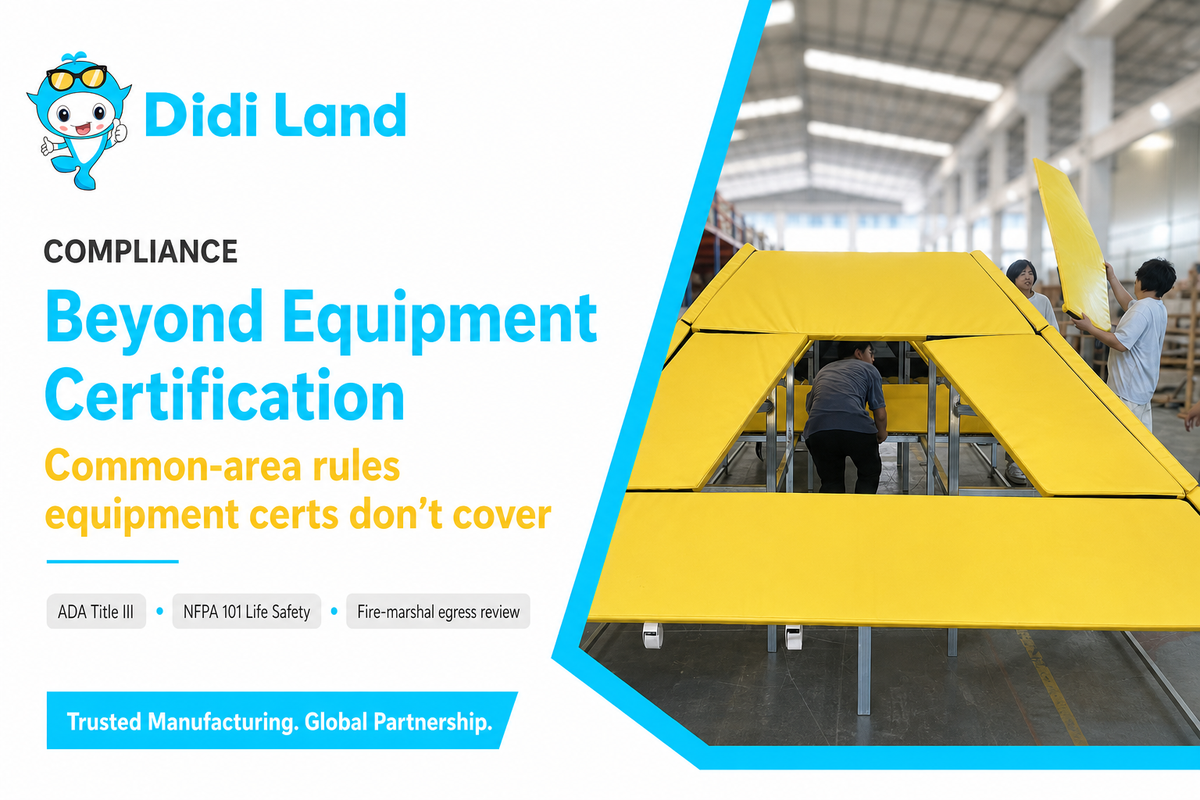
تغطي شهادة ASTM F1487 أو EN 1176 للمعدات قطعة المعدات المحددة تلك. لكنها لا تغطي المبنى أو الهيكل.وعندما تركّب مراكز التسوق منطقة لعب داخل منطقة مشتركة يتنقل فيها الأشخاص بين أرجاء المركز والمتاجر الأخرى، تدخل حيز التطبيق طبقة ثانية من الامتثال لا تتناولها شهادة المعدات مطلقًا. وتنطبق هذه الطبقة الثانية بغض النظر عن عمر الطفل الذي يستخدم المعدات، من الأطفال الصغار إلى تلاميذ المدارس.
- ستنطبق معايير التصميم الميسّر وفق ADA Title III للأماكن المفتوحة للجمهور على منطقة اللعب لديكم بصرف النظر عن محتوياتها، سواء فيما يتعلق بالمقاعد أو مسارات الحركة الميسّرة أو دورات المياه المجاورة للمنشأة.
- يتناول NFPA 101 (كود سلامة الأرواح) وسائل الخروج في المنطقة المعتادة. وتضمنت مراجعة الكود لعام 2024 تغييرات تتعلق بتصنيف الإشغال وكيفية أداء مخططات الغرف المعيارية لاجتياز مراجعة مسؤول الإطفاء في مركز التسوق.
- عادةً ما يحصل المستأجر/صاحب الامتياز على تغطية للمسؤولية العامة بقيمة $1M لكل واقعة/$2M إجمالًا، مع إضافة تأمين الممتلكات إليها، فضلًا عن أي ضمان تقدمه الجهة المصنّعة للمعدات.
- غالبًا ما تكون مرشّات الحريق العامل الأول الذي يحدد حجم المساحة المشغولة؛ إذ ستسمعون كثيرًا من المتخصصين العقاريين أن المساحات التي تقارب 5,000 قدم مربع تحتاج إلى تزويدها بمرشّات، وهو عامل حاسم يغيّر تكلفة التجهيز. واحصلوا على الرقم الدقيق من مسؤول الإطفاء المحلي، فهو يختلف من بلدية إلى أخرى.
- سيحدد اختياركم السابق معيار فئة المعدات الخاص بالجهاز الذي ينطبق إلى جانب متطلبات الهيكل الأساسية: تخضع معدات اللعب اللين المحصور لمعيار ASTM F1918؛ وأجهزة الملاهي القابلة للنفخ لمعيار ASTM F2374؛ وملاعب الترامبولين لمعيار ASTM F2970، وتتضمن جميعها تعليمات صريحة بشأن الاستخدام في مراكز التسوق والاستخدام المؤقت والمنبثق، ولذلك يظل استئجار جهاز قابل للنفخ أو ترامبولين للتجربة خاضعًا للمعايير الخاصة بذلك الجهاز.
- إرشادات ADA الخاصة بمنطقة اللعب أوسع نطاقًا بكثير من متطلبات إتاحة الوصول الأساسية للمناطق المشتركة وفق Title III؛ إذ تطبق لوائح إتاحة الوصول إلى مناطق اللعب الصادرة عن US Access Board متطلبات مسارات الوصول إلى اللعب وفق عدد عناصر اللعب وفئاتها وما إذا كانت على مستوى الأرض أو مرتفعة، وهو ما يختلف عن مسائل الخروج وإتاحة الوصول في المناطق المشتركة المذكورة أعلاه.
⚠️ مهم
«المعدات حاصلة على شهادة، إذًا استوفينا كل المتطلبات»؛ هذه أكثر حالات قصور الامتثال شيوعًا بفارق كبير مما نواجهه. وتقيّم جهات مستقلة كلًا من شهادة المنتج والامتثال العام للمنطقة (مختبرات اختبار سلامة المنتجات وإدارة الإطفاء المحلية لديكم)، ولا يمكن لأي منهما أن تحل محل الأخرى.
أهم درس مستفاد: مرّروا امتثال المناطق المشتركة (ADA وكود الحريق والتأمين) عبر فريقي التأجير والمرافق لديكم كمسار عمل موازٍ لشراء المعدات؛ فافتراض كفاية شهادة المعدات هو الثغرة التي تظهر متأخرةً أثناء إصدار التصاريح.
من يتولى التشغيل: إدارة ذاتية أم تأجير لمشغّل أم استقدام امتياز تجاري؟
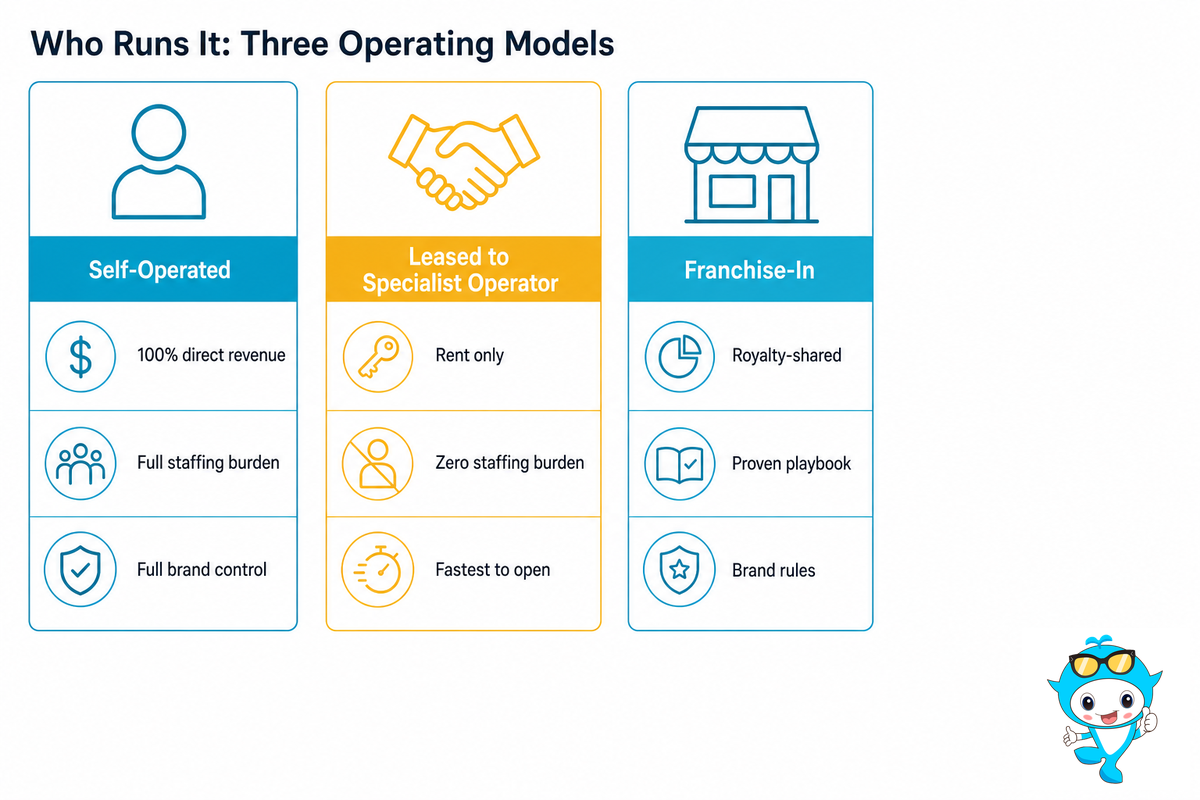
بعد حسم صيغة المشروع وعقد الإيجار ومتطلبات الامتثال، يجب على مركز التسوق تحديد من سيدير المساحة يوميًا: إما تشغيلها ذاتيًا كمرفق تابع للمبنى، أو تأجيرها لمشغّل متخصص في مساحات اللعب وفق هيكل الإيجار القائم على نسبة من الإيرادات الموضح أعلاه، أو استقطاب علامة امتياز راسخة بصفتها مستأجرًا.
وهذه مسألة منفصلة عن قرار رائد الأعمال المستقل بشأن تأسيس شركته الخاصة لملاعب الأطفال بنظام الامتياز أو العمل منفردًا – فهذا قرار يخص المشغّل نفسه، وتتناوله بالتفصيل مقالتنا المصاحبة حول امتلاك ملعب أطفال داخلي بنظام الامتياز مقابل الملكية المستقلة، وليس قرار مركز التسوق.
| البُعد | التشغيل الذاتي | التأجير لمشغّل متخصص | استقدام صاحب امتياز |
|---|---|---|---|
| تحصيل الإيرادات | 100% مباشرة، وأعلى عائد محتمل | الإيجار فقط (أساسي + نسبة مئوية) | تقاسم الإيرادات عبر رسوم الامتياز، بعائد متوسط |
| عبء التوظيف | كامل — يتولى مركز التسوق التوظيف والتدريب | منعدم — يتولى المشغّل توفير الموظفين | مشترك وفق اتفاقية الامتياز |
| مسؤولية التأمين والالتزامات القانونية | يتحمل مركز التسوق وثيقة المسؤولية العامة الأساسية | يتحمل المشغّل وثيقة المسؤولية العامة الأساسية | يتحملها صاحب الامتياز وفق شروط الامتياز |
| التحكم في العلامة التجارية | كامل — مفهوم خاص بمركز التسوق | محدود — العلامة التجارية للمشغّل | مقيّد بمعايير علامة الامتياز |
| التعرض الرأسمالي | الأعلى — يمول مركز التسوق أعمال التجهيز + المعدات | الأدنى — يمول المشغّل أعمال التجهيز | متوسط — وغالبًا ما يكون مشتركًا وفق شروط الامتياز |
| المدة اللازمة للافتتاح | الأبطأ — يؤسس مركز التسوق العمليات من الصفر | الأسرع — لدى المشغّل دليل تشغيل قائم | سريع — يوفر الامتياز دليل تشغيل مجرّبًا |
| مرونة التجديد | تحكم كامل لمركز التسوق | تحكمها مدة عقد الإيجار | تحكمها مدة الامتياز + عقد الإيجار |
| مخاطر البرامج والفعاليات | يتولى مركز التسوق جميع قرارات البرامج | يتولى المشغّل البرامج | يفرض نظام الامتياز معظم البرامج |
| الملف الأنسب لمركز التسوق | توافر طاقم قائم لعمليات FEC/الترفيه | يريد إيجارًا يمكن التنبؤ به، ومن دون مخاطر مرتبطة بالبرامج | يريد علامة تجارية استهلاكية معروفة + دليل تشغيل مجرّب |
ينطوي التشغيل الذاتي على أكبر تعرض مباشر لأعباء العمالة – إذ يشرف موظفو قسم الأنشطة الترفيهية والمرافق الجاذبة للزوار على الأنشطة، ويقدمون بعض الإسعافات الأولية البسيطة، ويعملون أحيانًا لساعات طويلة في عطلات نهاية الأسبوع والعطلات الرسمية. وتُصنّف بيانات الإصابات والأمراض الصادرة عن U.S. Bureau of Labor Statistics وظائف العاملين في الأنشطة الترفيهية ضمن الوظائف ذات أعلى معدلات الإصابات والأمراض المهنية. ويتعين على مركز التسوق تحمّل تكلفة ذلك الإشراف والجهد اللازم له-إلى جانب فرصة تحقيق الأرباح.
للوهلة الأولى، يبدو استقدام صاحب امتياز أسهل طريقة لتسليم مهام التشغيل. ومع ذلك، توجد بعض التفاصيل الجديرة بالمعرفة قبل توقيع العقد: أولًا، تُلزم قاعدة الامتياز الصادرة عن Federal Trade Commission (16 CFR Part 436) جميع مانحي الامتياز بتقديم وثيقة FDD (وثيقة الإفصاح عن الامتياز) التي تتضمن 23 بندًا للإفصاح في موعد أقصاه 14 يومًا تقويميًا قبل توقيع عقد الإيجار و/أو سداد أي مبلغ، لذا خصصوا وقتًا كافيًا لمراجعة وثيقة FDD. كما لا يعفي أي نموذج تشغيل مركز التسوق بالكامل من مسؤولية السلامة: إذ توضح IAAPA أن “مشغّل المنشأة ومورّد المعدات والمتخصصين في التشغيل يتقاسمون جميعًا مسؤولية سلامة الزوار. فهي لا تقع على عاتق طرف واحد فقط.”
كتب أحد المشغّلين بصراحة عن افتتاح منشأة ترامبولين: كان الخطآن المبكران الأعلى تكلفة هما توقيع عقد الإيجار قبل التحقق من مدى توافق النمط الفعلي لحركة زوار مركز التسوق مع احتياجات الإيرادات المحددة لنشاط الترامبولين، وافتراض أن وسيط تأمين عام سيفهم المخاطر الخاصة بالترامبولين من دون مراجعة اكتتاب تأميني متخصصة فيه. وينطبق الدرسان على مركز التسوق الذي يقيّم شريك تشغيل بقدر انطباقهما على المشغّل نفسه، لذا أضيفوا أيضًا إلى قائمة التحقق لديكم مراجعة متعمقة لإجراءات العناية الواجبة التي أجراها شريك التشغيل بشأن عقد الإيجار والتأمين الخاصين به.
أيًا كان نموذج التشغيل الذي تختارونه، فإن تجربة الوالدين اليومية هي ما يجعل المساحة مربحة. فالمقاعد المريحة وطاولات الحفلات بجوار المدخل توفر للوالد مساحة لمراقبة أطفاله والاسترخاء على بُعد خطوات من صخب اللعب – وهذا النوع من التفاصيل ينعكس مباشرةً على الزيارات المتكررة.
الخلاصة الرئيسية: اختاروا نموذج التشغيل الأكثر توافقًا مع التوافر الفعلي لموظفي مركز التسوق وقدرته على تحمّل المخاطر، لا النموذج الذي يفترضه مسبقًا أول عرض يقدمه لكم مورّد – إذ سيظهر عدم التوافق في عقد الإيجار والتأمين، لا في المعدات.
توقعات القطاع لعامي 2026-2027: ما الذي يتغير فعليًا في مساحات اللعب داخل مراكز التسوق؟
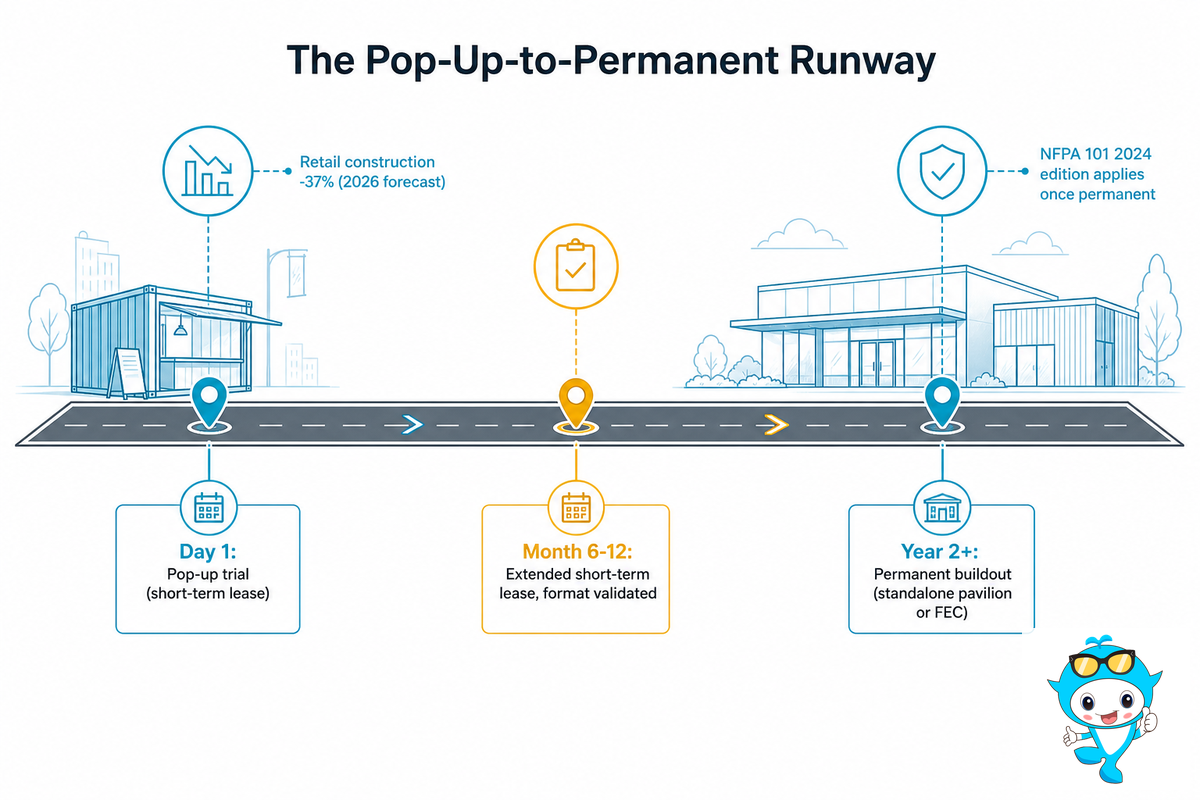
أوضح عامل اقتصادي داعم نتجه به إلى 2026 ليس أن “السوق يتوسع.” بل يتمثل في أن تشييد مباني التجزئة الجديدة يُتوقع أن ينخفض بنسبة 37% في العام المقبل (وهو اتجاه يظهر في مسح الإنفاق على التشييد الصادر عن U.S. Census Bureau)، بينما يظل نشاط التأجير وتوسع المستأجرين عند مستويات مرتفعة تاريخيًا. وتجبر هاتان الديناميكيتان معًا مُلّاك العقارات على تعظيم الاستفادة من المساحات الأرضية القائمة بدلًا من التعويل على معروض جديد-وهذا تحديدًا هو الدافع الذي يعزز جدوى إحلال ملعب أطفال داخلي محل المستأجر الرئيسي، وهي جدوى لم تكن واضحة بالقدر نفسه حين كان المعروض ينمو سريعًا.
أما التحول التكتيكي الأكثر فائدة لمشتري مراكز التسوق الذين يدرسون هذه المعضلة تحديدًا، فهو ما نطلق عليه مسار الانتقال من المشروع المؤقت إلى الدائم، أي الاستخدام المتزايد للصيغ المؤقتة وعقود الإيجار قصيرة الأجل للحد من مخاطر اختيار الصيغة التي تناولناها سابقًا في هذا الدليل. ويمكن أن تتراوح مدة عقود الإيجار المؤقتة للعقارات التجارية من يوم واحد فقط إلى نحو عام؛ وهي مصممة لتفرض على مركز التسوق مخاطر التزام أقل بكثير من عقد الإيجار التقليدي طويل الأجل. ويمنح ذلك مركز التسوق خيارًا لم يكن متاحًا حتى قبل بضع سنوات، وهو اختبار مفهوم ألعاب لينة داخل صف المحال بموجب عقد إيجار قصير الأجل، بدلًا من الاضطرار إلى ضخ رأس المال فورًا في أعمال تجهيز مركز FEC أو جناح مستقل. غير أن مرونة عقد الإيجار لا ينبغي اعتبارها حلًا سهلًا لتحديات الامتثال الموضحة سابقًا؛ فتجربة مؤقتة للألعاب القابلة للنفخ أو الترامبولين، على سبيل المثال، تظل خاضعة على التوالي للمعيارين ASTM F2374 أو F2970، وكلاهما يتضمن صراحةً أحكامًا للتركيبات المؤقتة وتركيبات الفعاليات الخاصة. وفي سياق الامتثال في المناطق المشتركة، ينبغي مراجعة تحديثات إصدار 2024 من NFPA 101 المتعلقة بتصنيف الإشغال ومواصفات الغرف المعيارية مع مسؤول الوقاية من الحرائق إذا كنتم تفكرون في تنفيذ أعمال تجهيز خلال 2026، لأن التصميم النهائي المعد وفق إصدار أقدم قد يظل بحاجة إلى تعديل كبير في مرحلة متأخرة من عملية التصميم والاعتماد.
الخلاصة: إذا كنتم مترددين في الالتزام الكامل بصيغة دائمة، فإن المشروع المؤقت أو عقد الإيجار قصير الأجل يمثل وسيلة صالحة تمامًا وأقل مخاطرة للتحقق من الطلب، ويمكنه بعد ذلك إرشادكم في مناقشات عقد إيجار المستأجر الرئيسي الواردة لاحقًا في هذا الدليل.
الأسئلة الشائعة
س: استئجار المعدات أم شراؤها، أيهما أفضل لملعب أطفال داخلي في مركز تسوق؟
عرض الإجابة
يعتمد ذلك فعليًا على الأطراف المعنية تحديدًا. فإذا كنتم تمثلون مركز التسوق، فإن عقد الإيجار المعني هو عقد إيجار المستأجر الموضح هنا، وليس عقدًا لاستئجار المعدات نفسها. أما إذا كنتم مشغّلًا يبحث عن تمويل لاقتناء المعدات مباشرةً، فيُفضّل عمومًا شراء معدات جديدة بمواصفات تجارية على استئجارها أو شراء معدات مستعملة، نظرًا إلى الحماية الممتدة التي يوفرها الضمان وتصنيفات دورات التشغيل المفصلة التي تمنع الأعطال في منتصف العمر التشغيلي، والتي قد تستنزف سريعًا هوامش الربح الضيقة لنشاط قائم. وقد يكون تمويل المعدات أو استئجارها مناسبًا لإدارة التدفق النقدي في أعمال التجهيز الكبيرة، لكن هذا النوع من الترتيبات لن يلغي الإيجار القائم على النسبة المئوية لمركز التسوق ولا بدل تحسينات المستأجر وفق الهيكل الموضح سابقًا.
س: هل يمكنني اختبار ملعب أطفال داخلي في مركز تسوق بتركيب مؤقت أو مشروع مؤقت أولًا؟
عرض الإجابة
نعم. يمكن توقيع عقود إيجار العقارات التجارية المؤقتة لمدة تبدأ من يوم واحد وتصل إلى نحو عام، وعادةً ما تمثل التزامًا ماليًا أقل بكثير من جانب التصميم مقارنةً بعقد إيجار طويل الأجل. ويُعد استخدام عقد إيجار قصير الأجل لتجربة مفهوم ألعاب لينة داخل صف المحال وسيلة ممتازة لتقييم صحة التوقعات المتعلقة بحركة الزوار والإيرادات قبل الاستثمار في أعمال تجهيز بحجم مركز FEC أو جناح مستقل.
س: من المسؤول عن التأمين، مالك مركز التسوق أم مشغّل منطقة اللعب؟
عرض الإجابة
بوجه عام، يحتفظ كل طرف بتغطيته التأمينية الخاصة وفق ما تحدده شروط عقد الإيجار. وعادةً ما يتحمل مشغّل منطقة اللعب أو صاحب الامتياز وثيقة المسؤولية العامة الأساسية (بحدود تغطية شائعة تبلغ $1M/$2M) للإصابات والأضرار المادية المرتبطة بالأنشطة التشغيلية. وتحدد وثيقة تأمين المسؤولية العامة لمركز التسوق وأحكام التعويض في عقد الإيجار المسؤوليات عن المخاطر المشتركة المرتبطة بالمناطق العامة. ونوصي بمناقشة ذلك مع مستشاركم القانوني وممثل شركة التأمين قبل توقيع عقد الإيجار.
س: هل تؤثر إضافة ملعب أطفال داخلي في التزامات امتثال مركز التسوق لمتطلبات ADA؟
عرض الإجابة
نعم. تنطبق إرشادات التصميم الميسّر وفق الباب الثالث من ADA أيضًا على مساحة اللعب نفسها باعتبارها مرفقًا مفتوحًا للجمهور. وتشمل هذه الإرشادات اللوائح المتعلقة بمسارات الوصول والمقاعد والمرافق المجاورة، بالإضافة إلى شهادة المنتج التي يقدمها المصنّع للمعدات.
س: ما الهيكل المعتاد لعقد إيجار مساحة لعب تحل محل مستأجر رئيسي؟
عرض الإجابة
تتضمن معظم عقود إيجار مساحات اللعب التي تحل محل مستأجر رئيسي حدًا أدنى مضمونًا (إيجارًا ثابتًا بصرف النظر عن أداء المستأجر)، وإيجارًا قائمًا على نسبة مئوية (عادةً بين 6%-10% من إجمالي الإيجار فوق نقطة تعادل متفق عليها، بما يعكس إرشادات عقود إيجار متاجر التجزئة المتخصصة)، وبدلًا لتحسينات المستأجر يستند إلى تكاليف أعمال التجهيز. وعادةً ما تُرصد بصورة منفصلة عمولة إيجار تبلغ نحو 4%-8% من القيمة الإجمالية للصفقة. وينبغي تحليل أي نقطة تعادل أو مبلغ لتحسينات المستأجر يجري التفاوض عليهما باستخدام توقعات المبيعات المنتظرة للمستأجر قبل تنفيذ عقد الإيجار، وألا يُعاد تعديلهما بعد احتساب نتائج أداء العام الأول.
س: هل ينبغي لمركز التسوق تشغيل منطقة اللعب ذاتيًا أم تأجيرها لمشغّل متخصص؟
عرض الإجابة
شغّلوها بأنفسكم إذا كان لديكم بالفعل طاقم قائم للترفيه/FEC وترغبون في تحصيل الإيرادات؛ وأجّروها لمشغّل مستقل إذا كنتم تريدون إيرادات متوقعة من تأجير الطاولات من دون تحمل مسؤولية البرامج أو التوظيف. وأبرموا امتيازًا مع شركة مستقلة؛ فالإيجار الذي تحصلون عليه من مشغّل مستقل أقل من إيرادات تشغيلكم الذاتي، لكن المستأجر يتحمل مخاطر البرامج والتوظيف.
س: كم يستغرق التركيب بعد اختيار الصيغة والمورّد؟
عرض الإجابة
تتطلب تركيبات الألعاب اللينة المعيارية القياسية مسبقة الصنع عمومًا 30-45 يومًا من تاريخ قبول الطلب؛ بينما تستغرق المنشآت المصممة حسب الطلب أو ذات الطابع التصميمي المحدد أو متعددة المستويات 60-90 يومًا. وضعوا في الحسبان مهلة تصنيع وتوريد إضافية إذا كانت خطة التنفيذ تتضمن الاستعانة بمقاولين محليين مرخصين للتنسيق مع إدارة مركز التسوق المحلي وسلطات الإطفاء المحلية ومتطلبات التصاريح.
لماذا نكتب هذا الدليل؟
منذ 2014، زوّدت Guangzhou Didi Land Amusement Equipment Co., Ltd. مراكز التسوق ومراكز FEC والمراكز القائمة على الأنشطة الترفيهية في أكثر من 40 دولة بمعدات ملاعب داخلية للاستخدام التجاري. وشملت مشاريع التركيب، على سبيل المثال لا الحصر، مواقع مجاورة للمستأجرين الرئيسيين، وداخل ردهات المطاعم، وفي أجنحة مستقلة في أنحاء فرنسا والمكسيك ودول أخرى. يستعرض هذا المستند مسائل التأجير والجوانب القانونية والتشغيلية قبل تحديد مواصفات المنتج-وهي الشواغل المتكررة لمطوري مراكز التسوق الذين يتواصلون معنا قبل اتخاذ أي قرارات بشأن المنتجات.
المراجع والمصادر
- التقرير ربع السنوي لمبيعات تجارة التجزئة الإلكترونية، الربع 1 من 2026 — U.S. Census Bureau
- معايير ADA للتصميم الميسّر — U.S. Department of Justice, ADA.gov
- معايير ADA لإمكانية الوصول — U.S. Access Board
- NFPA 101: كود سلامة الأرواح — National Fire Protection Association
- الممارسة القياسية F2374 لأجهزة الملاهي القابلة للنفخ — ASTM International
- دليل التغييرات المرتقبة في إصدار 2024 من NFPA 101 — Consulting-Specifying Engineer
- الاعتبارات القانونية لتشغيل مشروع مؤقت — Toronto Metropolitan University Pressbooks
- 11 توقعًا لعقارات التجزئة في 2026 — International Council of Shopping Centers (ICSC)
- دليل مالك المغسلة إلى عقود الإيجار — Coin Laundry Association (هيكل الإيجار القائم على نسبة مئوية في العقود التجارية)
- الاتجاهات الناشئة في العقارات، توقعات قطاع التجزئة — PwC / Urban Land Institute
- الإمكانات غير المستغلة لمراكز التسوق من الفئة B — Placer.ai
- تحديد أداء مراكز التسوق من الفئة B من منظور علوي — Trepp
- كيفية حساب عمولات التأجير — 3E Management
- تأمين مراكز الترفيه العائلية — SterlingRisk
- 16 CFR Part 436، قاعدة الامتياز — U.S. Federal Trade Commission (النسخة الإلكترونية من Code of Federal Regulations)
- شراء نشاط تجاري قائم أو امتياز — U.S. Small Business Administration
- السلامة والأمن — الرابطة الدولية لمدن الملاهي والمرافق الترفيهية الجاذبة للزوار (IAAPA)
مقالات ذات صلة
- هل ملاعب الأطفال الداخلية مربحة؟ حسابات ROI لعام 2026 — نموذج الربحية من جانب المشغّل الذي تستند إليه الجوانب الاقتصادية لمركز التسوق الموضحة هنا
- امتياز ملعب أطفال داخلي مقابل التشغيل المستقل — لقرار المشغّل المستقل بشأن العمل بنظام الامتياز أو منفردًا (وهو سؤال مختلف عن قرار نموذج تشغيل مركز التسوق في هذا الدليل)
- AS 4685 مقابل EN 1176 مقابل ASTM F1487 — طبقة شهادات المعدات المصاحبة لامتثال المناطق المشتركة الموضح هنا
- كيفية بدء نشاط تجاري لملاعب الأطفال الداخلية — دليل تأسيس خطوة بخطوة للمشغّلين
- مخططات المسقط لملاعب الأطفال الداخلية: 12 قالبًا لمخطط توزيع المعدات — قوالب لمخططات توزيع المعدات في مشاريع FEC ومراكز التسوق والحضانات
![معدات ملاعب الديناصورات المخصصة حسب الطلب [دليل التصميم]](https://didiplayarea.com/wp-content/uploads/2026/09/custom-dinosaur-playground-equipment-r2-featured-1-768x512.png)
![معدات ملاعب الديناصورات المخصصة حسب الطلب [دليل التصميم]](https://didiplayarea.com/wp-content/uploads/2026/09/custom-dinosaur-playground-equipment-r2-featured-1-150x150.png)